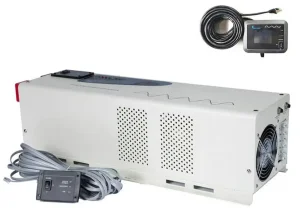
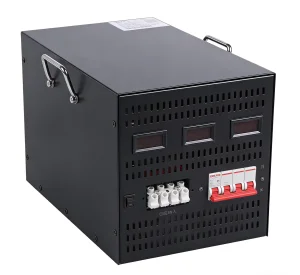
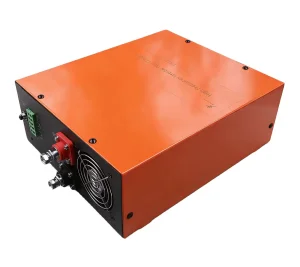
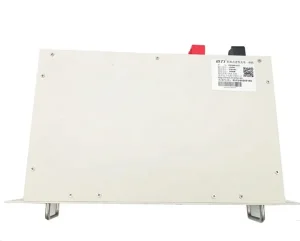
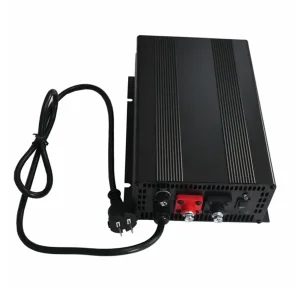
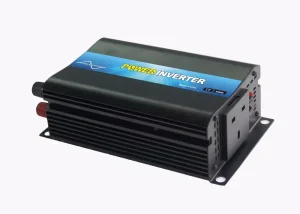
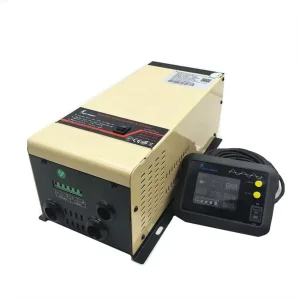
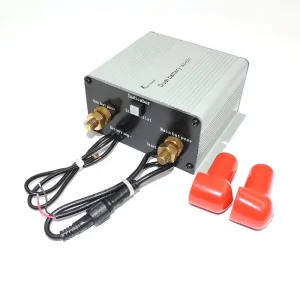
OEM & Wholesale Certified Units Ready for Custom B2B Engineering Integration
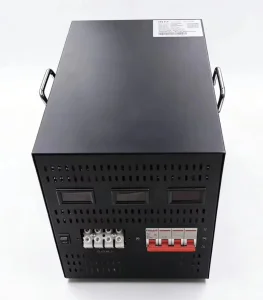
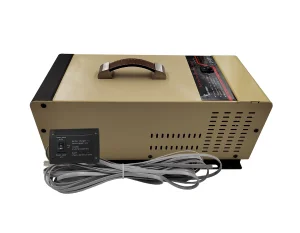
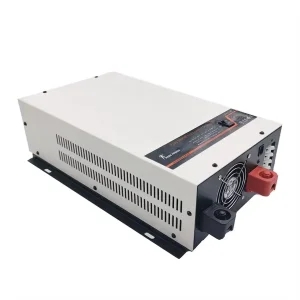
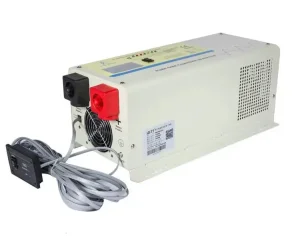
Engineering Whitepaper: Advanced Cell Balancing Architectures, High-Efficiency Topologies, and Industrial OEM Integration
As global industries accelerate electrification across light electric vehicles (LEVs), automated guided vehicles (AGVs), unmanned aerial vehicles (UAVs), and stationary battery energy storage systems (BESS), the operational bottleneck inevitably shifts from raw energy density to long-term battery pack health and safety. In any multi-cell series battery array (whether utilizing Lithium Iron Phosphate [LiFePO4], Nickel Manganese Cobalt [NMC], Lithium Titanate [LTO], or next-generation Solid-State chemistries), inherent manufacturing variations in internal resistance, self-discharge rates, and thermal gradients create cell capacity imbalances during cyclic charging and discharging.
An unmanaged imbalance causes premature voltage cutoff, severing effective capacity by up to 35% over 500 charge cycles and drastically elevating thermal runaway risks. As an enterprise-tier custom balance charger factory and global exporter, our engineering core develops active and passive balance charging topologies capable of maintaining inter-cell voltage differentials under 5 millivolts (mV) across aggressive high-C charging routines.
Employs dynamic energy storage inductors to transfer charge directly from higher-voltage cells to under-charged cells with minimal heat generation. Designed for high-current multi-channel battery platforms requiring up to 10A active balancing current per channel.
Utilizes multi-winding isolated high-frequency transformers to execute bi-directional energy transfer between individual cells and the entire pack bus. Achieves ultra-high transfer efficiency (>94%) for 16S to 32S industrial battery strings.
Combines micro-processor-controlled passive resistive dissipation for micro-imbalances with rapid boost charging cycles. Cost-optimized for commercial standby power systems, lightweight mobility arrays, and cost-sensitive consumer equipment.
Tailored Power Topology Design, Firmware Calibration, and Mechanical Enclosure Integration
Procuring off-the-shelf charging units often introduces fatal incompatibilities with proprietary Battery Management Systems (BMS), proprietary communication protocols, and unique spatial form factors. Our engineering custom manufacturing matrix allows global OEMs to specify parameters from power semiconductor selection to real-time telematics integration.
| Customization Domain | Engineering Options Available | Technical Specifications / Capabilities |
|---|---|---|
| Cell Chemistry & Voltage | LiFePO4, NMC, LTO, Solid-State, AGM, Gel | 1S to 32S series; DC input ranges 12V to 800V HV platforms |
| Power Semiconductors | Silicon MOSFETs, GaN FETs, SiC Cascodes | Resonant LLC topologies operating at switching speeds up to 500kHz |
| Communication Protocols | CAN-bus 2.0B, CANopen, RS485, Modbus-RTU, SMBus | Full telemetry reporting: individual cell voltages, temperature, SoC, SoH |
| Thermal Management | Air Cooled, Phase-Change Material, Liquid Cold Plate | Operating temperature range: -40°C to +65°C ambient with derating |
| Enclosure Protection | Extruded Aluminum, Sheet Metal, IP67 Sealed Potting | Vibration immunity conforming to MIL-STD-810G / IEC 60068 standards |
| Firmware & Algorithms | Adaptive Constant Current / Constant Voltage (CC/CV) | Custom dV/dt & dT/dt cell safety termination curves, dynamic pulse balancing |
By integrating Wide Bandgap (WBG) SiC switches into our primary PFC and LLC resonant stages, our custom balance chargers achieve peak conversion efficiencies exceeding 96.5%, significantly scaling down heat sink volumes and enabling ultra-compact industrial designs.
Custom firmware algorithms continually evaluate cell internal resistance (IR) during charge cycles, automatically altering balance current vectors to prevent thermal spikes in older or slightly degraded cells within aging packs.
Integrated Bluetooth 5.0, Wi-Fi, or cellular NB-IoT modules relay real-time charging curves, historical balancing logs, and predictive maintenance alerts straight to enterprise cloud management portals.
Anticipating the Evolution of Energy Storage, AI-Assisted Electrochemical Maintenance, and High-Voltage Platforms
The next decade of balance charging belongs to machine-learning-assisted charging controllers. By training neural networks on millions of charging telemetry profiles, our future charger firmware predicts dendrite growth and internal micro-shorts prior to thermal events, adjusting individual cell charge currents in real-time to extend overall battery pack lifecycle by up to 40%.
As EV batteries retire from automotive service into secondary energy storage installations (Second-Life ESS), cell capacity variance increases dramatically. Our technological roadmap prioritizes ultra-high-capacity bi-directional balance chargers that allow second-life battery arrays to stabilize utility grids while maintaining active individual cell balancing.
Solid-state electrolytes mandate strict pressure-temperature-voltage charging envelope constraints. We are actively developing proprietary pulse-charging dynamic balance routines engineered specifically to mitigate inter-facial degradation in solid-state cell stacks.
Deploying Heavy-Duty Custom Chargers Across Critical Industrial & Defense Sectors
Automated Guided Vehicles operating in 24/7 warehouse logistics demand rapid "opportunity charging" cycles. Our embedded balance chargers deliver up to 80A charging currents with instantaneous active cell equalizing during brief docking windows, preventing cumulative capacity drift.
High-power multi-rotor and fixed-wing UAVs rely on lightweight high-C LiPo/NMC batteries. Our custom high-density balance charger platforms incorporate multi-channel simultaneous charging with precise balance cutoffs, maximizing battery safety and flight endurance cycles.
Modular solar energy storage banks face uneven solar panel yields and inconsistent discharge loads. Our balance chargers interface directly with solar MPPT controllers and battery banks, protecting long-series LiFePO4 packs against cell over-voltage shutdown.
Marine environments subject chargers to high humidity, salt spray, and continuous vibration. We provide fully potted IP67-rated balance chargers engineered with stainless hardware, conformal coated circuit boards, and isolated CAN communication interfaces.
Advanced Automation, Component-Level Traceability, and High-Capacity Production Lines
Operating a modernized manufacturing facility in China's prime electronics technology cluster enables us to synthesize high-tier engineering quality with uncompromised cost efficiency. Our Industry 4.0 smart plant infrastructure enforces rigorous production controls across every fabrication stage:
High-speed Yamaha surface mount technology (SMT) lines place microscopic components down to 0201 package sizes with sub-micron repeatability. Integrated 3D Automated Optical Inspection (AOI) and Solder Paste Inspection (SPI) prevent solder bridge defects and tombstoning.
100% of manufactured balance chargers undergo elevated ambient thermal burn-in under full electrical load for a minimum of 4 hours inside automated environmental test chambers, eliminating early-life semiconductor infant mortality.
Direct strategic sourcing partnerships with tier-one semiconductor vendors, magnetic core fabricators, and aluminum extruder mills shield our B2B procurement partners from component lead time volatility and unannounced end-of-life (EOL) component changes.
Navigating International Product Regulatory Certifications & Electrical Grid Compatibility
Deploying industrial electrical equipment worldwide requires localized regulatory compliance. Our custom balance chargers are designed, tested, and certified to meet the world’s most stringent electrical safety, electromagnetic compatibility (EMC), and transport mandates:
UL 1564 (Industrial Battery Chargers), UL 2580 (Batteries for Use in Electric Vehicles), FCC Part 15 Class A/B EMI compliance, and CSA C22.2 standards.
CE-EMC (EN 61000-6-2, EN 61000-6-4), Low Voltage Directive (LVD EN 62368-1), RoHS 3 (2015/863/EU), REACH, and UKCA certification markings.
UN 38.3 transport safety validation, IEC 62133 compliance, CB Scheme universal test certificates, and BIS / KC market access support.
Detailed Insights for Power Engineers, Supply Chain Directors, and Equipment OEMs
High-Efficiency Industrial Solutions Manufactured under ISO 9001:2015 Strict Quality Standards