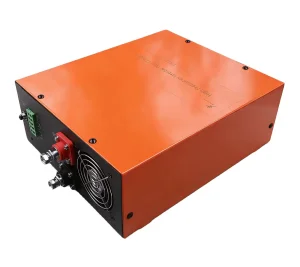
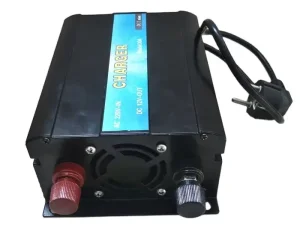
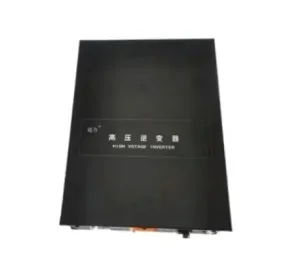
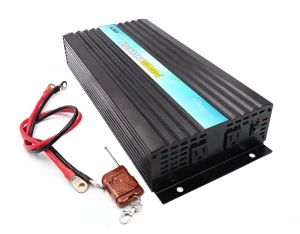
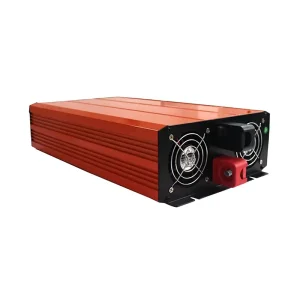
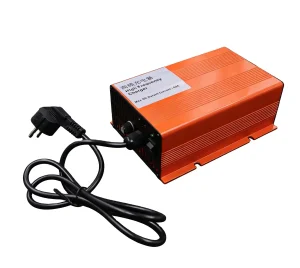
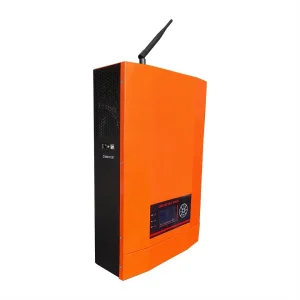
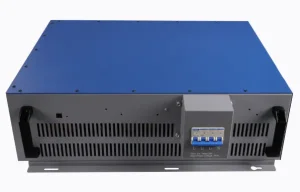
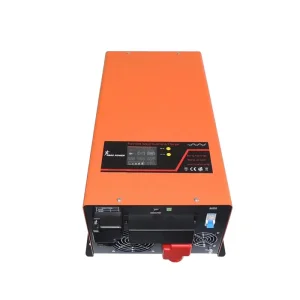
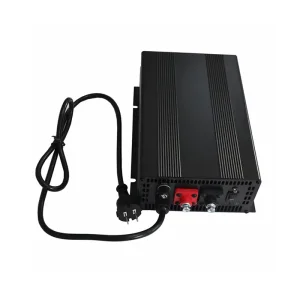
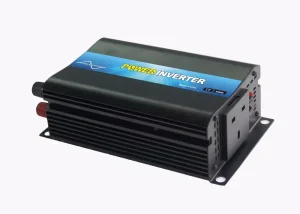
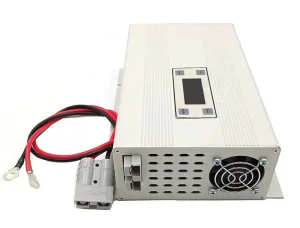
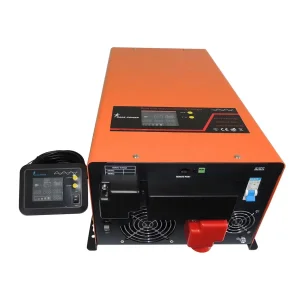
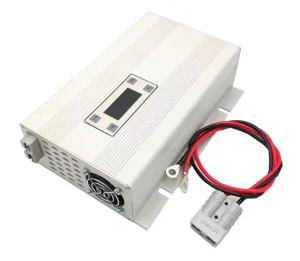
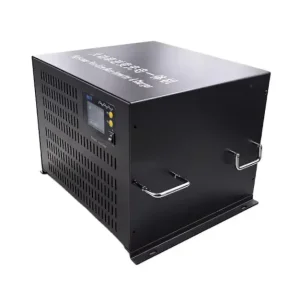
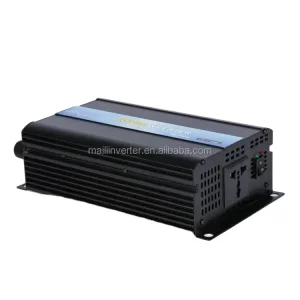
Top-tier high frequency, low frequency, and hybrid charging inverter solutions engineered directly in our specialized manufacturing lines.
An authoritative technical analysis of modern power electronics, dual DC-bus topologies, and bi-directional charging integration for commercial and industrial OEM/ODM buyers.
In modern power conversion electronics, the convergence of high-density battery energy storage, renewable power generation, and mobile industrial loads has mandated a paradigm shift from traditional single-direction DC-AC inverters to sophisticated Custom Bipolar Inverter and Integrated Charging Inverter topologies. As a leading specialized manufacturer based in Suzhou, China, Maili Electric (Pass Power) engineers integrated power conditioning units that combine low-frequency pulse-width modulation (PWM), high-voltage DC bus regulation, active power factor correction (PFC), and dynamic bi-directional battery charging within a single unified enclosure.
A standard unipolar inverter architecture operates across a single positive DC rail and a neutral reference, imposing physical limitations on voltage swing and harmonic distortion control. By contrast, a Bipolar Inverter System utilizes a dual DC bus structure—typically featuring positive (+DC), negative (-DC), and neutral (N) rails. This configuration enables the power switches (MOSFETs or SiC IGBTs) to switch between +VDC/0 and -VDC/0, effectively doubling the apparent switching frequency observed at the output filter while halving the voltage step stress across individual semiconductor junctions.
Key technical dividends of the bipolar topology engineered in our Suzhou factory include:
Eliminating discrete chargers and separate standalone inverters reduces installation footprint by up to 45% while eliminating redundant microcontrollers and cabling interfaces. Our integrated charging inverters incorporate a 3-stage dynamic stage algorithm (Bulk, Absorption, Float) coupled with automatic grid-to-battery transfer switches operating at sub-10 millisecond response times. Whether processing 12V/24V low-voltage high-current DC inputs or high-voltage 380V/540V industrial DC buses, these units automatically adjust internal transformer taps and duty cycles to protect battery health during fast-charging cycles.
Analysis of macro-market drivers accelerating demand for integrated bipolar charging inverters across North America, Europe, Australia, and Emerging Asia.
Electric service vans, mobile repair units, and heavy commercial transport rely on high-efficiency integrated charging inverters (such as DC 540V to AC 220V systems) to operate high-draw power tools and onboard diagnostic units without depleting primary traction batteries.
Global demand for resilient off-grid living has shifted preferences toward low-frequency toroidal transformer inverters capable of handling peak surge starts from air conditioners, well pumps, and refrigeration units in regions with unstable grid access.
Factories and data centers employ 3-phase customized 15kVA to 100kW integrated inverter platforms to store power during off-peak rate hours and discharge seamlessly during peak demand, avoiding utility penalty tariffs.
Ambulances, mobile surgical stations, and emergency communications trucks require pure sine wave inverters with isolated dual-battery charging logic to ensure life-saving medical telemetry remains noise-free under harsh operations.
Why Tier-1 global energy distributors choose Maili Electric's Suzhou facility for precision OEM/ODM customization.
The global energy electronics industry is highly competitive, making raw component sourcing, thermal engineering, and automated assembly crucial for product reliability and cost-performance ratio. Operating out of a state-of-the-art 2,770 square meter manufacturing plant in Suzhou, Jiangsu Province, Maili Electric leverages China’s premier power electronics supply chain cluster within the Yangtze River Delta.
| Manufacturing Moat Dimension | Traditional Offshore Facility | Maili Electric Suzhou Factory Advantage |
|---|---|---|
| Magnetic Core Sourcing | Outsourced standard transformers with limited custom winding. | In-house winding of high-grain grain-oriented silicon steel toroidal transformers for maximum surge density. |
| SMT Assembly Precision | Semi-automated manual insertion lines with higher fault rates. | Fully automated SMT lines with optical 3D AOI inspection for zero defect rates on gate drive PCBs. |
| Full-Load Aging Tests | Batch sample aging at 50% rated load for 2-4 hours. | 100% full-load thermal burn-in aging for 12-24 hours under environmental chamber control. |
| Custom Voltage Flexibility | Rigid catalog limits (e.g., only 12V/24V standard models). | Non-standard custom DC input engineering (12V, 24V, 48V, 96V, 380V, 540V) for unique B2B applications. |
Our Suzhou facility enforces strict total quality control (TQC) standard operating procedures across every phase of production. Incoming components—including genuine imported MOSFETs, SiC diodes, long-life Japanese capacitors, and heavy-gauge copper busbars—undergo rigorous IQC screening before entering the production floor. Furthermore, every completed unit is validated against high-voltage dielectric insulation tests, ground resistance checks, and dynamic load transient spikes before final packaging.
Deploying integrated bipolar charging inverters across specialized regional and industrial environments.
Scenario: Off-grid caravans operating roof-mounted air conditioners (15,000 BTU) in high ambient temperatures across Australia and North America.
Engineered Solution: Low frequency 3000W to 5000W pure sine wave inverter chargers with toroidal transformers. Features 300% peak surge support for 20 seconds to kickstart heavy compressor motors easily while drawing from a 12V or 24V lithium battery bank.
Scenario: Mobile roadside assistance vehicles requiring on-site energy transfer to stranded electric passenger vehicles.
Engineered Solution: Custom High Voltage DC 540V to AC 220V/380V single and three-phase bipolar inverters with dynamic current limiters, reaching up to 95% efficiency for rapid power transfer with minimal thermal buildup.
Scenario: Island and mountain telecom relay stations utilizing combined wind turbine generators and solar PV arrays.
Engineered Solution: Hybrid wind/solar inverters featuring high-speed MPPT controllers and integrated AC chargers, regulating fluctuating DC voltages into smooth, continuous single-phase or three-phase output.
Key technology developments driving the next decade of inverter manufacturing and smart energy storage integration.
The transition from silicon IGBTs to Wide-Bandgap (WBG) Silicon Carbide MOSFETs enables switching speeds beyond 100 kHz. This reduces switching power losses by over 60%, allows drastic downsizing of passive magnetics, and pushes thermal operational tolerances to 175°C.
Integrated charging inverters are evolving from simple unidirectionally powered nodes into bi-directional energy routers. Under ISO 15118-20 standards, our future-ready OEM platforms support V2H (Vehicle-to-Home) and V2G protocols, allowing stationary energy storage and vehicle battery packs to stabilize local power grids during blackouts.
By embedding microcontrollers running machine learning thermal-throttling algorithms, modern inverters continuously predict hot-spot junction temperatures based on ambient telemetry and load curves, dynamicly tuning PWM switching schedules to optimize efficiency without triggering protection shutdowns.
Select the optimal power topology based on load profiles, surge requirements, and space constraints.
| Performance Specification | Low Frequency Toroidal Inverter Charger | High Frequency Switching Inverter Charger | Integrated Bipolar High-Voltage Inverter |
|---|---|---|---|
| Primary Topology | Heavy Iron-Core Toroidal Transformer | High-Freq PWM with Ferrite Transformer | Dual-Rail Bipolar Switch Bus (+VDC / -VDC) |
| Peak Surge Capacity | 300% Rated Power (up to 20 seconds) | 150% - 200% Rated Power (approx. 2 seconds) | 200% - 250% Rated Power (up to 10 seconds) |
| Conversion Efficiency | 88% - 92% Typical | 93% - 95% Peak | 94% - 97% Peak |
| Weight & Physical Footprint | Heavy / Robust (Best for stationary/heavy vehicle) | Compact / Lightweight (Best for tight spaces) | Ultra-Compact Power Density |
| Ideal Application Focus | Inductive loads: AC units, pumps, compressors | Resistive & IT loads: Computers, LED lighting, tools | EV fleets, high-voltage battery storage, industrial microgrids |
| OEM Customization Options | DC Voltage, Charger Current, Toroidal taps | PCB footprint, Shell color, LCD interface | Communication bus (CANbus/RS485), High Voltage DC inputs |
Explore more certified low-frequency transformers, intelligent chargers, and custom off-grid power solutions available for worldwide export.
Direct answers to crucial OEM engineering, B2B compliance, and custom manufacturing inquiries.
A standard (unipolar) inverter switches its power semiconductors between positive VDC and neutral ground, creating higher voltage step strain and requiring larger inductive filter components to produce smooth sine waves. A bipolar inverter operates across dual DC rails (+VDC, 0V, -VDC), allowing the power switches to alternate across half-step levels. This doubles the effective switching frequency seen by the output filter, slashes Total Harmonic Distortion (THD) below 2%, substantially lowers electromagnetic radiation (EMC), and reduces overall magnetic component weight.
Inductive loads—such as air conditioner compressors, water pumps, refrigerators, and power tools—require high initial surge current (inrush current) to start up, often 3 to 5 times their continuous rated wattage. Low frequency inverters feature heavy iron-core toroidal transformers that store magnetic energy physically, enabling them to sustain up to 300% peak surge capacity for up to 20 seconds without tripping overload protections. High frequency inverters, while lighter, rely purely on electronic switching and typically trip under severe inductive surges.
Our Suzhou manufacturing engineering team supports customization across eight key dimensions: 1. DC Voltage Input: 12V, 24V, 48V, 96V, up to high-voltage DC 380V or 540V buses. 2. AC Output Voltage & Frequency: 110V/120V (North America/Japan) or 220V/230V/240V (Europe/Oceania) at 50Hz, 60Hz, or split-phase/3-phase configurations. 3. Charging Profiles: Multi-stage algorithms optimized specifically for LiFePO4, Gel, AGM, or flooded lead-acid batteries. 4. Input & Output Sockets: Universal, US NEMA, Schuko, UK, Australian, or heavy terminal block connections. 5. Communication Protocols: RS485, CANbus, Modbus integration for central vehicle or building management controllers. 6. LCD Display Interfaces: Custom brand logos, telemetry telemetry metrics, and user menu flow. 7. Enclosure Color & Material: Aluminum-magnesium alloy or steel cases with powder coating. 8. Protection Ratings: IP30 standard up to IP65 weatherproofing options for outdoor installations.
Integrated units feature an internal automatic transfer switch (ATS). When utility grid power or shore power is connected, the inverter senses the incoming AC voltage, synchronizes phase frequency, and passes the AC grid power directly to connected loads while simultaneously redirecting surplus power to charge the battery bank via its internal multi-stage charger. If grid power fails or drops out, the ATS automatically transfers the load back to the battery-powered pure sine wave inverter in under 10 milliseconds, preventing computers and industrial controllers from resetting.
Our factory operates under a strictly certified ISO 9001:2015 Quality Management System. Our product series carry full CE testing compliance (Low Voltage Directive 2014/35/EU and EMC Directive 2014/30/EU), RoHS environmental compliance, CB international test certificates, SAA certification for Australian grid entry, and verified SGS testing reports.
Partner with Suzhou Maili Electrical Appliance Co., Ltd. for engineered OEM/ODM bipolar inverters, high-surge chargers, and solar power platforms tailored precisely to your market standards.