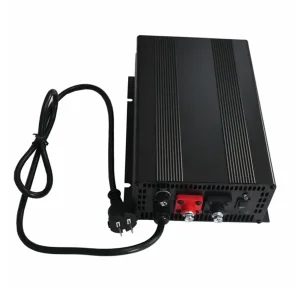
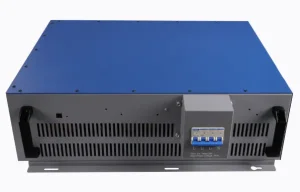
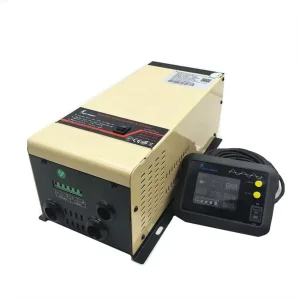
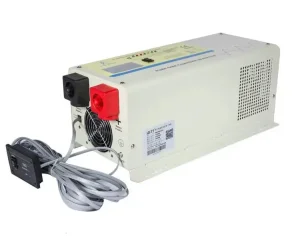
Factory-direct high-voltage inverters, intelligent multi-stage chargers, and off-grid power conversion architectures.
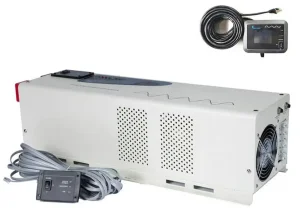
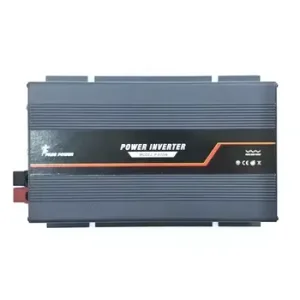
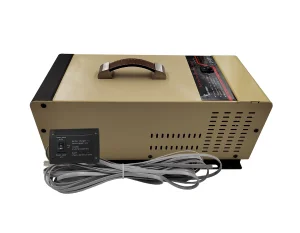
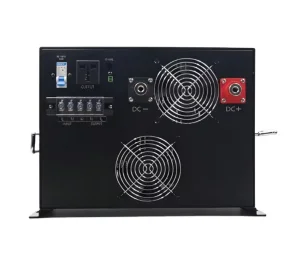
A definitive engineering white paper on electrical safety, electromagnetic compatibility, and multi-jurisdictional compliance for commercial energy equipment.
In the rapidly evolving power conversion industry, procuring from an established, highly qualified manufacturer that maintains rigorous quality control systems is no longer just a supply chain consideration—it is a critical requirement for global market entry. Commercial and industrial deployment of off-grid solar inverters, high-voltage vehicle power converters, and intelligent multi-stage battery chargers demands verifiable adherence to strict international compliance frameworks. An authentic CE, CB, and SAA certified factory guarantees that equipment not only meets basic operational performance benchmarks, but also adheres to robust functional safety, thermal isolation, electromagnetic interference (EMI) containment, and environmental degradation parameters.
Encompasses the Low Voltage Directive (LVD 2014/35/EU) and Electromagnetic Compatibility Directive (EMC 2014/30/EU). Standardized testing protocols under EN 62109-1/-2 guarantee high-voltage insulation protection, structural integrity, and minimal harmonic distortion on public distribution networks.
Facilitates seamless international recognition across more than 50 participating member states. Based on IEC 62109 and IEC 62368-1 standard frameworks, CB certificates eliminate redundant national testing, validating galvanic isolation, electrical creepage, and fire protection boundaries.
Mandatory safety certification accredited by JAS-ANZ for deployment across Australia and New Zealand. Governed by stringent standards such as AS/NZS 4777.2 for grid-interactive solar inverters and AS/NZS 3100 for general electrical equipment, ensuring resistance to extreme environmental stress.
Analyzing wide-bandgap semiconductors, high-density topologies, and smart grid interoperability.
Transitioning from conventional Silicon MOSFETs/IGBTs to SiC and Gallium Nitride (GaN) switching devices allows for dramatically higher switching frequencies (above 100 kHz). This substantially reduces the size of passive magnetic components (transformers and inductors), increases volumetric power density, and boosts conversion efficiency beyond 96% under full-load conditions.
Modern industrial platforms and commercial electric vehicles are migrating from legacy 12V/24V/48V systems to direct high-voltage DC buses (such as 380V, 540V, or 750V DC). Operating at higher voltages minimizes $I^2R$ copper resistive losses, reduces cable mass, and allows high-power systems (10kW to 100kW) to run at significantly lower operating current.
The integration of dual-core Digital Signal Processors (DSP) enables real-time Space Vector Pulse Width Modulation (SVPWM) and active phase matching. This ensures ultra-low Total Harmonic Distortion (THD < 2%) under heavy non-linear loads, preserving power quality for sensitive electronics and industrial telemetry hardware.
Engineered to operate reliably across demanding industrial, commercial vehicle, marine, and remote infrastructure environments.
Industrial applications place unique physical and electrical demands on power conversion hardware. Equipment operating in tropical, desert, marine, or alpine climates must withstand severe mechanical vibration, moisture ingress, thermal cycling, and erratic input voltages. Certified power inverters engineered with rugged toroidal transformers or advanced high-frequency topologies serve as the operational backbone for multiple key sectors worldwide:
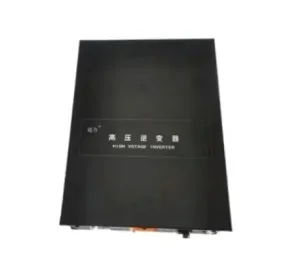
High-voltage DC to AC inverters (such as 540V DC to 220V AC single/three-phase systems) provide clean auxiliary power directly from main EV traction battery banks. Used extensively in automated guided vehicles (AGVs), mobile equipment testing units, and commercial electric bus auxiliary circuits requiring up to 94% operating efficiency.
Hybrid solar MPPT inverter-chargers seamlessly integrate utility grid input, photovoltaic array inputs, and stationary battery storage banks. Built-in high-speed transfer switches guarantee uninterrupted backup power (<10 ms) for remote telecom base stations, agricultural monitoring hubs, and off-grid residential installations.
Engineered with high surge margins (up to 300% rated capacity for 20 seconds), low-frequency toroidal transformer inverters easily start heavy inductive loads like roof-mounted air conditioners, air compressors, and power tools inside mobile command units, ambulances, fire trucks, and luxury motorhomes.
From board-level circuit topology design to bespoke thermal management and digital communications protocols.
As a leading power converter manufacturer operating under ISO 9001:2015 quality control systems, our production facilities deliver comprehensive OEM/ODM solutions tailored to exact client specifications. We support custom voltage platforms, specialized firmware, and custom physical form factors designed for seamless drop-in integration into OEM equipment cabinets.
Engineering custom DC input configurations from 12V, 24V, 48V, 96V up to 540V DC, paired with customizable single-phase, split-phase, or 3-phase AC outputs (110V/120V/220V/230V/380V at 50Hz, 60Hz, or 400Hz).
Full software integration supporting CAN-bus (J1939), RS485 (Modbus-RTU), Bluetooth telemetry, and SNMP modules for remote cloud monitoring, state-of-charge (SOC) telemetry, and automated diagnostic signaling.
Factory-calibrated 3-stage intelligent charging profiles optimized for Lithium Iron Phosphate ($\text{LiFePO}_4$), Lithium Nickel Manganese Cobalt (NMC), Sealed Lead-Acid (SLA), GEL, AGM, and flooded lead-acid battery banks.
Detailed answers to critical procurement, compliance, and engineering questions.
Explore our extended portfolio of commercial-grade power conversion and battery charging solutions.