
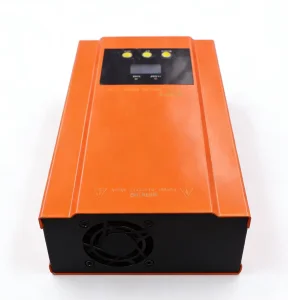


Factory-direct industrial power solutions featuring advanced tracking algorithms, toroidal transformer architectures, and multi-stage battery management.
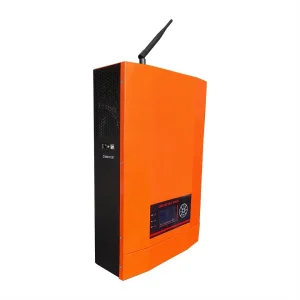
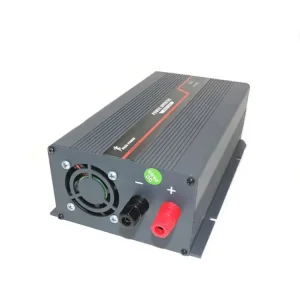
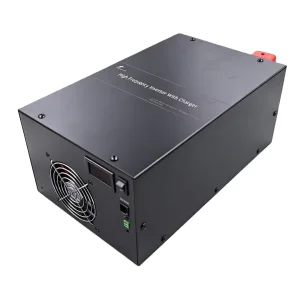
An authoritative analysis of Maximum Power Point Tracking physics, dynamic mathematical modeling, and digital signal control in modern off-grid solar and energy storage systems.
In modern photovoltaic (PV) power harvesting, the output characteristic of a solar array is highly non-linear, dictated by ambient temperature, solar irradiance, and panel degradation curves. The current-voltage (I-V) and power-voltage (P-V) curves exhibit a single operational coordinate where power extraction reaches its mathematical peak—known as the Maximum Power Point (MPP).
Traditional Pulse Width Modulation (PWM) controllers pull array voltage down near battery bank voltage, dissipating up to 30% to 40% of generated power as thermal loss. Conversely, sophisticated Maximum Power Point Tracking (MPPT) controllers continuously calculate real-time voltage and current to lock system performance onto the MPP.
To achieve and sustain high dynamic accuracy ($\ge 99.5\%$), our custom power electronic systems employ dual-core 32-bit Texas Instruments (TI) Digital Signal Processors (DSPs) coupled with ultra-fast sampling ADCs. We integrate multi-modal tracking logic:
It is vital for system procurement engineers to differentiate between MPPT Tracking Efficiency and DC-DC Power Conversion Efficiency:
While dynamic tracking efficiency measures how accurately software algorithms pin point solar energy peaks, peak conversion efficiency reflects the physical hardware topology (MOSFET switching losses, toroidal transformer core losses, copper loss, and thermal dissipation management). Combining $\ge 99.5\%$ tracking precision with a 98%+ synchronous rectification hardware power stage ensures maximum watt-hour energy delivery to energy storage batteries.
High-efficiency tracking is meaningless if thermal saturation forces system throttling. Our controllers utilize heavy-duty extruded aluminum heat sinks, thermal interface materials with high dielectric strength, and intelligent variable-speed cooling fans. Operable across wide ambient temperature spectrums (-25°C to +60°C), full rated power output is preserved without aggressive thermal derating.
Combining state-of-the-art automated production, rigorous ISO 9001:2015 quality control, and vertical engineering integration in China's premier power electronics cluster.
Our ISO 9001:2015 certified Suzhou facility utilizes fully automated Surface Mount Technology (SMT) assembly lines with 3D Automated Optical Inspection (AOI) and SPI solder paste monitoring. Human error is eliminated at the component placement level, ensuring consistent electrical contact resistance and long-term joint reliability.
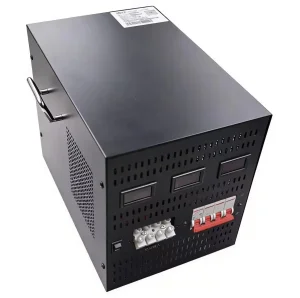
Low-frequency inverters require immense surge handling capabilities. By winding high-purity copper toroidal transformers in-house, Maili Electric controls core permeability, vacuum pressure impregnation, and thermal insulation grade (Class H 180°C), resulting in lower no-load current loss and 300% peak surge support for motor startup loads.
Every single MPPT controller, hybrid inverter, and smart charger undergoes 100% full-load 48-hour burn-in testing under dynamic high-temperature cycling. High-voltage insulation testing, thermal imaging scanning, and surge suppression verification guarantee ZERO out-of-box failures for international OEM orders.
Market dynamics driving B2B demand for ultra-efficient tracking MPPT systems, multi-chemistry battery compatibility, and ruggedized power inversion platforms worldwide.
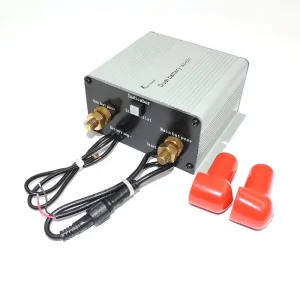
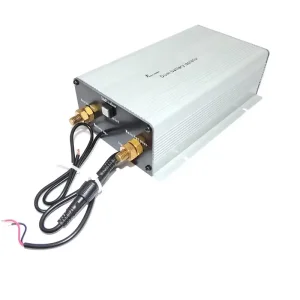
Global logistics operators, service fleets, and recreational vehicle builders are rapidly replacing legacy fossil-fuel generators with high-efficiency DC-DC charging systems, lithium battery banks, and low-frequency pure sine wave inverters. The requirement for dynamic battery isolation (such as dual battery isolators with voltage-sensitive switching) and fast alternator/solar harvesting is at an all-time high to meet commercial ESG standards.
In developing markets across Southeast Asia, Africa, and Latin America—as well as off-grid industrial deployments in North America and Australia—stable grid power is unreliable or absent. Solar hybrid inverters with $\ge 99.5\%$ tracking MPPT controllers serve as the primary power backbone, supporting 24/7 continuous operation for off-grid cell towers, water pumping networks, and remote agricultural sites.
Proven reliability engineered for high-vibration mobile environments, critical emergency infrastructure, marine electronics, and harsh off-grid installations.
Mobile living requires silent, reliable AC power for rooftop air conditioners, induction cooktops, and medical CPAP machines. Low-frequency inverters handle massive compressor startup surges while high-efficiency MPPT controllers maximize limited roof solar panel square footage.
Ambulances and rescue trucks demand dual battery isolation (e.g., BS-153 / BS-173 series) to safeguard starting batteries while delivering clean, pure sine wave power (THD < 3%) to life-support diagnostic equipment without electromagnetic interference.
Marine salt-spray environments necessitate conformal-coated circuit boards, IP30+ enclosure protections, and intelligent multi-stage battery chargers capable of switching seamless charge profiles between starter lead-acid and house LiFePO4 battery banks.
Direct comparison of core operational parameters between commodity solar controllers and our high-precision customized industrial controllers.
| Performance Specification | Standard PWM Controller | Generic Commercial MPPT | Custom High-Precision MPPT (≥99.5%) |
|---|---|---|---|
| Dynamic MPPT Tracking Efficiency | N/A (Fixed Voltage) | 90.0% – 95.0% | ≥ 99.5% (DSP Real-Time Sweep) |
| Peak DC-DC Conversion Efficiency | 70.0% – 75.0% | 92.0% – 95.0% | 98.2% (Synchronous Rectification) |
| Dynamic Tracking Speed | None | > 5000 ms | < 200 ms (Rapid Response) |
| Partial Shading Recovery | Fails (Stalls Array) | Locks on Local Maxima | Global Curve Scanning (True MPP) |
| Battery Chemistry Support | Standard Sealed Lead-Acid | Basic Gel / AGM | Custom LiFePO4, AGM, GEL, User Custom |
| Surge Capacity Handling | 100% Rated Power | 150% Rated Power | 300% Peak Power (Toroidal Platform) |
| Operational MTBF | < 15,000 Hours | ~ 30,000 Hours | > 100,000 Hours (Industrial Grade) |
In-depth answers to critical technical questions asked by system integrators, electrical engineers, and global wholesale distributors.
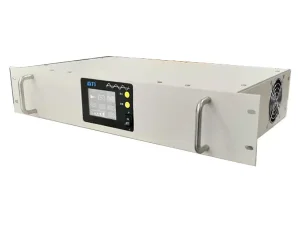
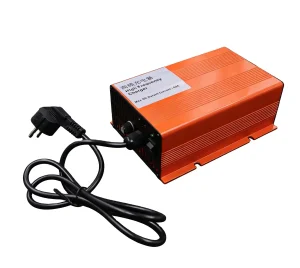
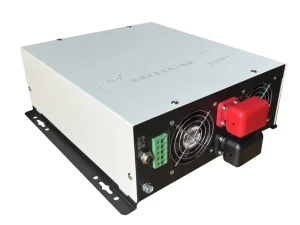
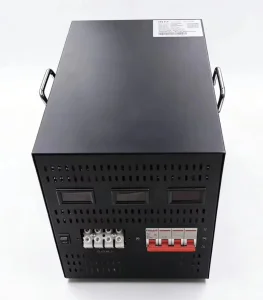
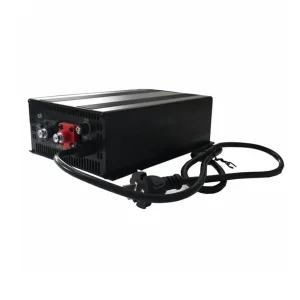
Explore our full catalogue of portable high-frequency chargers, 3-phase high-power inverters, rack-mounted integrated systems, and smart battery isolators.
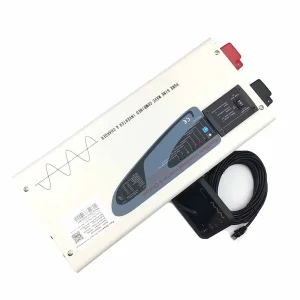
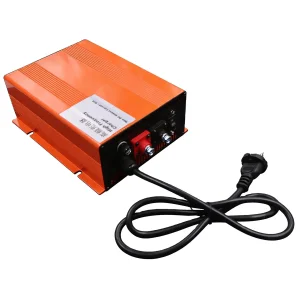
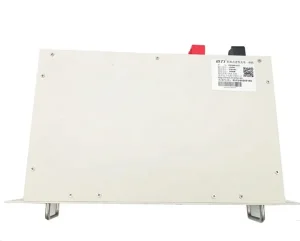
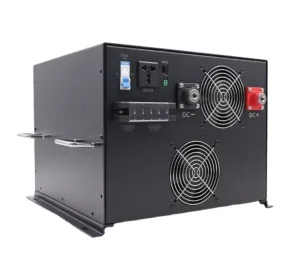
Connect directly with our engineering team in Suzhou, China to evaluate custom MPPT tracking requirements (≥99.5%), request engineering samples, or receive factory-direct B2B OEM wholesale pricing.
Request Engineering Consultation