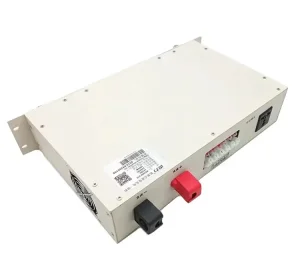
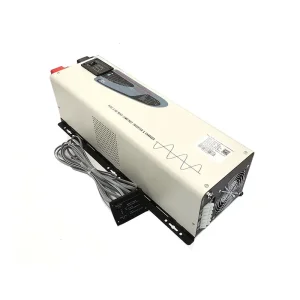
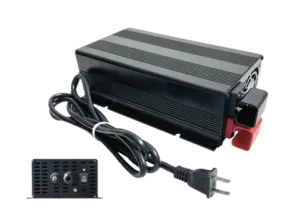
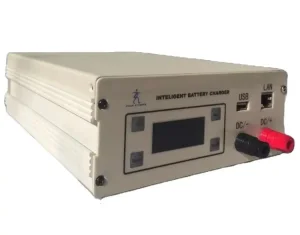
Direct factory solutions optimized for 12V/24V/48V energy storage, commercial mobility, and off-grid power ecosystems.
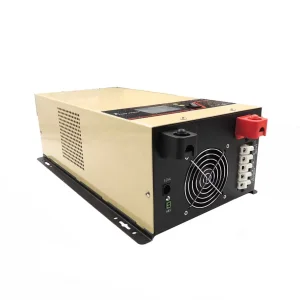
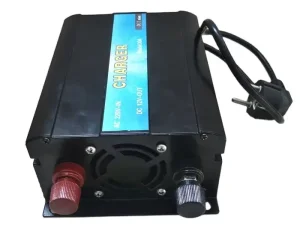
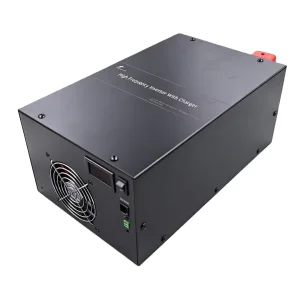
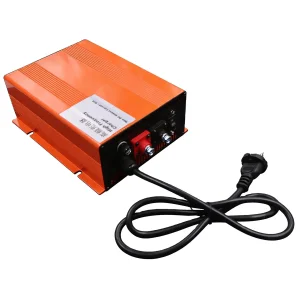
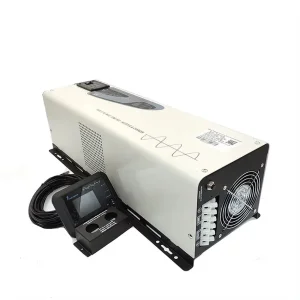
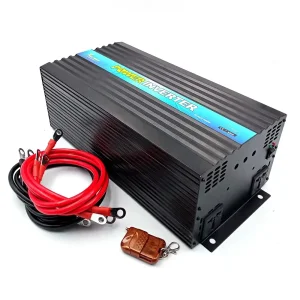
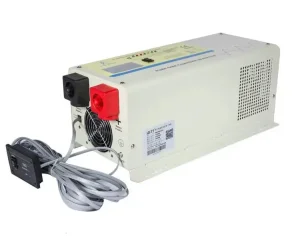
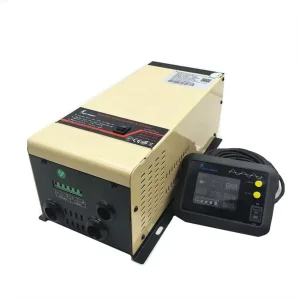
Analyzing global market adoption, energy density breakthroughs, and technical convergence between LiFePO4 chemistries and high-frequency power electronics.
The global transition from traditional lead-acid (AGM, GEL, Flooded) batteries toward Lithium Iron Phosphate (LiFePO4) 12V architectures represents one of the most substantial technological leaps in off-grid energy storage, marine engineering, commercial mobility, and remote telecommunications. Driven by demands for higher usable capacity, zero maintenance, drastically reduced weight, and extended cycle life, 12V lithium systems have moved from niche enthusiast applications to the mandatory industry baseline for OEM builders and commercial procurement buyers.
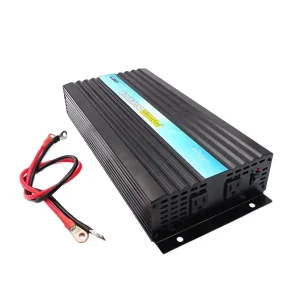
However, the rapid transition to 12V lithium chemistry introduces critical operational challenges. Lithium batteries feature extremely low internal resistance and steep charge voltage curves, making them intolerant to improper charging profiles. Pairing a high-spec 12 Volt LiFePO4 battery with an outdated, uncalibrated lead-acid charger can cause severe thermal stress, BMS tripping, premature cell degradation, or total system shutdown. Consequently, global enterprise buyers are seeking unified manufacturing partners capable of delivering matched, turnkey eco-systems: highly reliable 12V lithium storage cells paired seamlessly with intelligent multi-stage battery chargers and low-idle-current pure sine wave inverters.
12V LiFePO4 batteries provide 70% lighter weight and 3x the volume-specific energy density of equivalent lead-acid banks, enabling compact installations in RVs, service trucks, and marine vessels.
Integrated microprocessors manage cell balancing, over-voltage thresholds, low-temperature charging cut-offs, and short-circuit fault clearing in real-time without human intervention.
Micro-controlled Constant Current / Constant Voltage (CC/CV) profiles prevent cell plating and voltage spiking, maximizing overall pack longevity and safety compliance.
A comprehensive examination of electrical matching, zero-volt wake-up routines, and heat dissipation mechanics in enterprise battery charger design.
A standard 12 Volt lithium battery pack comprises four series-connected (4S) Lithium Iron Phosphate cells, yielding a nominal system voltage of 12.8V (3.2V per cell). Unlike lead-acid batteries, which exhibit a continuous linear drop in voltage throughout discharge, LiFePO4 cells maintain an exceptionally flat voltage curve between 20% and 90% State of Charge (SOC) at roughly 13.2V to 13.0V. The rapid terminal voltage ramp occurs only during the final 5% of charge or discharge.
This unique electrochemical curve demands extreme precision from battery chargers. Standard chargers relying solely on voltage thresholds fail to accurately estimate remaining capacity or properly complete the saturation phase. OEM chargers designed specifically for 12V lithium chemistries employ precise CC/CV (Constant Current/Constant Voltage) charging logic combined with programmable timer cut-offs to ensure 100% full state-of-charge without over-saturating the cell cathode.
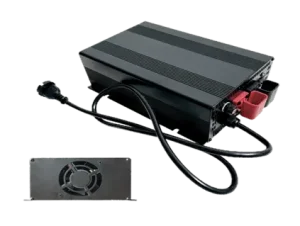
High-reliability commercial chargers utilize high-frequency switching technology (typically >100kHz PWM switching) coupled with active Power Factor Correction (PFC) to deliver continuous, clean DC output. The three tailored charging stages for 12V Lithium systems operate as follows:
A frequent field failure in off-grid mobile systems occurs when a battery discharges below its protection threshold, causing the BMS to open its internal MOSFET switches and drop output terminal voltage to 0V. Standard chargers interpret this as an open circuit or disconnected battery and refuse to output current. High-quality enterprise chargers integrate a dedicated "0V Wake-up / Recovery Function," outputting a low-current pulse to signal the BMS to reset and close its circuit, restoring normal charging operations smoothly.
Furthermore, charging lithium batteries below 0°C (32°F) without thermal management causes permanent lithium metal plating on the anode, resulting in internal micro-short circuits and severe safety hazards. Our integrated OEM charging solutions incorporate temperature sensor probes (NTC) and CANbus/RS485 communication lines to suspend charging automatically or activate internal warming films before delivering current.
| Electrical Parameter | Traditional Lead-Acid (AGM/GEL) | High-Quality 12V LiFePO4 (Maili Spec) | Enterprise Sourcing Advantage |
|---|---|---|---|
| Usable Depth of Discharge (DOD) | 50% (To prevent grid degradation) | 90% – 100% Usable DOD | Double usable energy in identical footprint |
| Cycle Longevity (@ 80% DOD) | 300 – 500 Cycles | 3,500 – 6,000+ Cycles | 8x longer operational lifespan; low LCOE |
| Charge Acceptance Efficiency | 75% – 85% (High thermal losses) | 96% – 98% Ultra-high conversion | Faster solar/generator charge recovery |
| Weight to Capacity Ratio | ~30 kg / 100Ah | ~11 kg / 100Ah | 65% structural weight reduction |
| BMS Protection Mechanism | None (Requires external thermal fuses) | Integrated Smart Microprocessor BMS | Automated over/under voltage & temp cut-offs |
Tailored engineering workflows for Tier-1 distributors, vehicle outfitters, and industrial equipment integrators.
Custom engineering for non-standard DC inputs (12V, 24V, 48V up to 380V DC) and configurable charging outputs up to 110A continuous rating.
Full integration of CANbus 2.0B, RS485, and Modbus communication protocols for remote fleet monitoring and smart dashboard telemetry.
Private label silk-screening, custom extruded aluminum color treatments, and customized LCD interface logic with client boot logos.
Selection of heavy-duty Anderson connectors, M8 copper studs, terminal blocks, and regional AC output sockets (US, EU, UK, AU, Universal).
To ensure flawless quality execution for global distributors, our ISO 9001:2015 certified manufacturing facility follows a rigorous 4-step procurement lifecycle:
Discover how integrated 12V lithium and smart charging hardware drive operational excellence across key global industries.
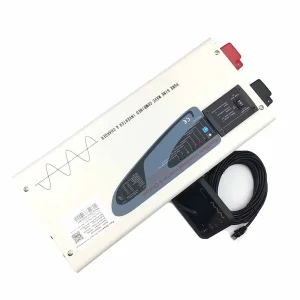
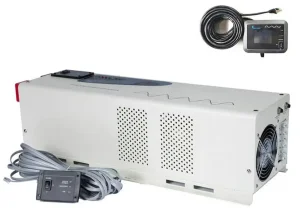
Emergency medical vehicles, mobile utility trucks, and service fleets require instantaneous AC power for medical pumps, compressors, and high-draw tools. Low-frequency 12V inverter chargers with toroidal transformers provide 300% surge capacity for 20 seconds without voltage collapse.
Salt-fog resistance and moisture protection are paramount. Our 12V portable and fixed multi-stage chargers feature conformal-coated internal PCBs, aluminum alloy housings, and smart isolation relays to eliminate galvanic corrosion while delivering rapid shore-power charging.
Ideal for off-grid cabins, telecom base stations, and agricultural pumping. Hybrid solar inverters combine 60A/110A MPPT controllers with high-efficiency inverter circuits, priority-routing solar power while keeping 12V lithium banks safely balanced.
Ensuring complete peace of mind through rigorous testing, full traceability, and global market certifications.
Manufacturing process governed by total quality management (TQM), incoming raw material inspection (IQC), and in-line automated optical inspection (AOI).
Full compliance with Low Voltage Directive (LVD 2014/35/EU) and Electromagnetic Compatibility (EMC 2014/30/EU), guaranteeing non-interference with vehicle electronics.
Direct export qualification for Australian, New Zealand, and Oceanian markets, verified through IEC 62109-1 / IEC 62109-2 safety testing standards.
Lithium battery modules and embedded charging hardware verified under UN38.3 transport protocols for air freight and ocean logistics compliance.
Pioneering advancements in Gallium Nitride (GaN) switching, solid-state cell compatibility, and AI-driven predictive maintenance.
The power electronics and energy storage industries are experiencing unprecedented technological convergence. Over the next five years, three core technological breakthroughs will define high-quality 12V lithium batteries and chargers:
Traditional silicon MOSFET chargers are reaching physical limits in switching frequency and thermal dissipation. The integration of Wide Bandgap (WBG) Gallium Nitride (GaN) semiconductors allows charger switching frequencies to exceed 500kHz. This results in a 40% reduction in internal transformer footprint, 96%+ operating efficiencies, and virtually silent passive cooling across standard 12V 30A to 80A desktop and vehicle-mounted chargers.
Future 12V lithium systems will move beyond reactive BMS protection into proactive predictive maintenance. Embedded edge-computing microchips will continuously monitor impedance shifts, partial thermal rises, and cell degradation vectors. Using localized machine learning algorithms, the system communicates with the charger to dynamic adjust charging rates, preventing cell degradation before it starts and reporting health metrics via integrated Bluetooth 5.3 or IoT cellular gateways.
As commercial electric vehicles (EVs) dominate municipal transport, 12V lithium auxiliary systems are evolving to support bi-directional power flow (Vehicle-to-Load and Vehicle-to-Grid). Intelligent 12V chargers and inverter systems will automatically arbitrate power flow between the 12V house battery, high-voltage traction pack, and local AC microgrid, optimizing energy costs through automated peak-shaving routines.
Expert insights addressing key technical, purchasing, and operational questions for 12V lithium batteries and smart chargers.
Reliable power conversion hardware backed by ISO 9001 quality management and a comprehensive warranty.