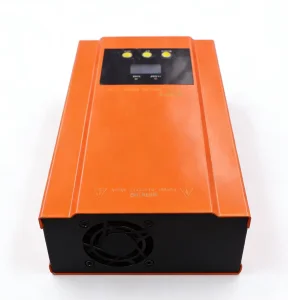
Factory-direct power conversion equipment designed for high-surge industrial, solar, automotive, and deep-cycle lithium-ion management.
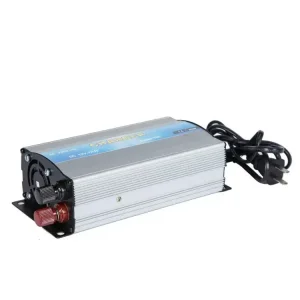
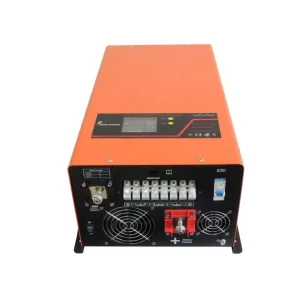
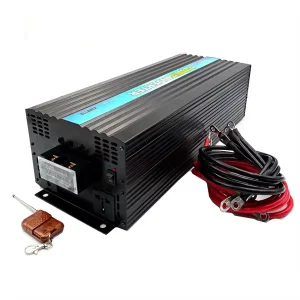
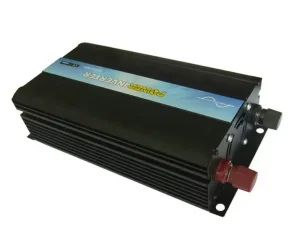
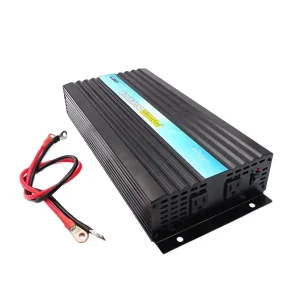
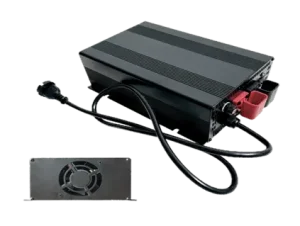
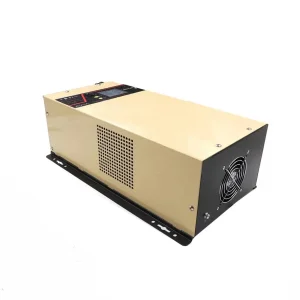
An in-depth whitepaper overview of macro trends driving high-capacity 12V power supply units, smart battery maintainers, and bi-directional DC-DC chargers across global industrial markets.
The global energy landscape is undergoing a monumental shift toward localized power storage, mobile electrification, and off-grid resilience. At the core of this transition is the humble yet technically vital 12volt charging system. Once limited to basic automotive trickle charging, modern 12V battery chargers have transformed into sophisticated, software-defined power electronics modules capable of controlling multi-kilowatt power transfers, managing complex battery chemistries, and integrating seamlessly into smart energy grids.
As an established high-capacity 12volt charger manufacturer and global exporter, Suzhou Maili Electrical Appliance Co., Ltd. (Pass Power) operates at the nexus of power semiconductor engineering and precision factory manufacturing. The global market demand for premium 12V charging equipment is projected to grow at a Compound Annual Growth Rate (CAGR) exceeding 8.5% over the next decade. Key macro drivers include:
Work trucks, emergency service ambulances, and commercial delivery fleets require ruggedized secondary 12V battery charging solutions that dynamically draw power from alternating current (AC) shore power or high-output vehicle alternators without causing parasitic drains.
Solar photovoltaic (PV) arrays paired with low-frequency or high-frequency hybrid inverter-chargers rely on intelligent 12V micro-grids to supply immediate DC loads while protecting energy storage investments against over-charging, thermal runaway, and deep discharge.
Yachts, fishing vessels, and offshore research stations demand corrosion-resistant, IP30/IP65 protected 12V battery chargers capable of operating continuously under wide ambient temperature ranges (-20°C to +60°C) with ultra-low ripple voltage.
How cutting-edge power topologies, wide-bandgap semiconductors, and multi-stage algorithms define next-generation manufacturing.
Conventional constant-voltage chargers degrade lead-acid batteries through sulfation and overheat lithium cells by violating BMS (Battery Management System) charge envelopes. Advanced 12V chargers implement digitally controlled multi-stage charge algorithms:
The manufacturing transition from heavy iron-core line frequency transformers to high-frequency soft-switching topologies (LLC resonant converters) has revolutionized power density. Modern 12V intelligent chargers achieve over 92-95% electrical conversion efficiency, dramatically reducing chassis dimensions and weight while eliminating fan noise during float states.
To support high-end industrial and marine installations, 12V charging units are increasingly engineered with RS485, CAN bus, and Bluetooth connectivity. This allows continuous real-time handshake between the charger and the battery's micro-controller, enabling dynamic current adjustment based on cell temperature, state of health (SOH), and individual cell voltage balance.
Industrial deployment demands zero-fail hardware security. Premium 12V exporter products incorporate heavy-duty extruded aluminum casings, conformal-coated PCB assemblies to resist moisture/dust, active short-circuit protection, reverse polarity protection, over-temperature shutdown, and input over/under-voltage cutoffs.
Tailored 12V charging, inversion, and energy storage architectures configured for real-world environmental and operational constraints.
Operational Need: Dual-battery isolation, fast AC-to-DC bulk charging when connected to campground shore power, and seamless inverter switching.
Solution Deployment: Combined 12V 30A/60A multi-stage battery chargers paired with low-frequency pure sine wave inverter chargers (1kW to 3kW). Built-in AC transfer switches ensure automated changeover between grid power and 12V house battery power without resetting onboard appliances or travel trailer air conditioning.
Operational Need: Zero-downtime reliability for medical defibrillators, radios, power tools, and auxiliary lighting in ambulances and fire trucks.
Solution Deployment: Intelligent dual battery isolators (12V 200A) coupled with ultra-thin aluminum casing high-frequency DC-AC inverter-chargers. Features rapid recharge capabilities to replenish starting and house batteries during engine idling.
Operational Need: Converting unregulated photovoltaic energy into regulated 12V DC battery power to run remote irrigation pumps and homestead lighting.
Solution Deployment: Integrated MPPT solar charge controllers and low-frequency off-grid hybrid power inverters. High surge tolerance (up to 300% peak capacity) easily handles inductive motor startup surges from water pumps and compressors.
A strategic engineering vision for the next generation of smart power conversion, software-defined charging, and bidirectional energy exchange.
Future 12V charger architectures will move beyond unidirectional AC-to-DC conversion. Bi-directional DC-DC and AC-DC bridges will allow auxiliary 12V energy storage systems to feed power back into portable micro-grids during power outages or peak grid pricing windows.
By embedding micro-edge AI compute into charger control boards, next-gen chargers will continuously measure battery internal impedance (AC IR), dynamic temperature decay rates, and charge acceptance curves to predict battery failure months before terminal breakdown occurs.
Full adoption of Gallium Nitride (GaN) and Silicon Carbide (SiC) MOSFETs will shrink charger chassis volume by an additional 40% while raising thermal tolerance limits, enabling silent, fanless IP67-rated chargers suitable for harsh marine washdown conditions.
Delivering end-to-end manufacturing flexibility, international certification adherence, and turnkey private-label solutions for global power equipment brand owners.
For international importers, brand owners, and regional distributors, sourcing power electronics requires more than off-the-shelf procurement. It demands a manufacturing partner with ISO 9001:2015 certified quality systems, robust supply chain integration, and deep custom engineering capabilities. Suzhou Maili Electrical Appliance Co., Ltd. provides a full OEM/ODM engineering matrix engineered to address regional electrical regulations and private-label positioning:
Our in-house R&D engineering team supports modification across 8 key hardware dimensions:
Regulatory compliance is non-negotiable when exporting high-power electronic equipment into North American, European, and Asia-Pacific markets. Every Maili product series undergoes rigorous quality verification:
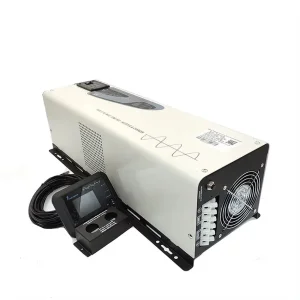
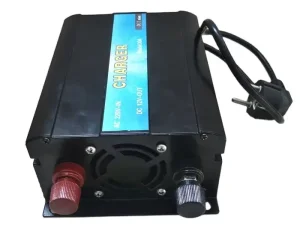
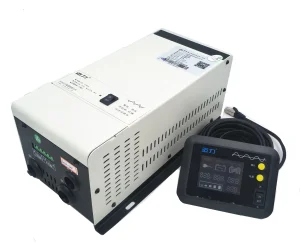
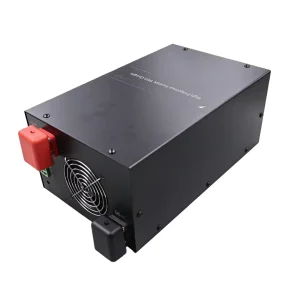
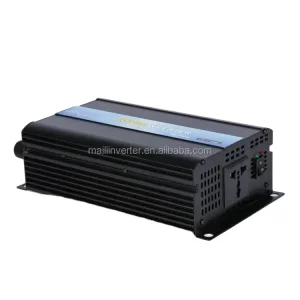
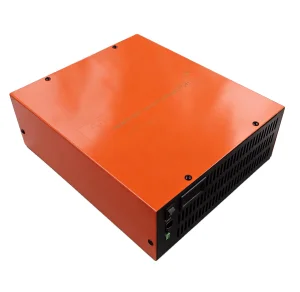
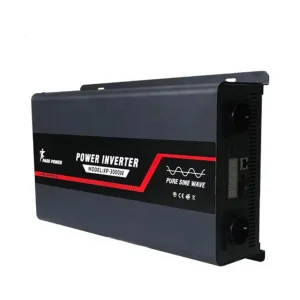
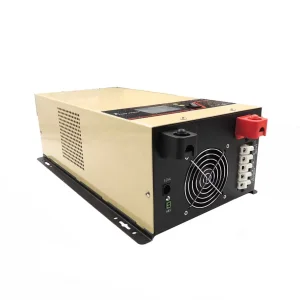
Explore our export-ready range of customizable low-frequency inverter-chargers, portable battery maintainers, and hybrid solar power units.
Technical clarity on selecting, customizing, and importing high-quality 12V battery chargers and inverter systems.
High-frequency chargers utilize electronic soft-switching circuits and compact high-frequency transformers, making them lightweight, compact, and highly efficient (ideal for consumer automotive, portable solar, and light electronic loads). Low-frequency inverter-chargers incorporate a heavy-duty toroidal copper line-frequency transformer. This provides exceptional peak surge capacity (up to 300% rated power for 20 seconds), making low-frequency models essential for starting heavy inductive loads like air conditioners, air compressors, industrial motors, and heavy power tools in commercial vehicles and off-grid homesteads.
Yes. Our smart 12V battery chargers feature selectable or programmable charging profiles. For traditional lead-acid chemistries (AGM, GEL, Wet Cell), the charger executes a 3-stage or 7-stage curve (Desulfation, Bulk, Absorption, Float, Equalization) to prevent sulfation and water loss. For Lithium Iron Phosphate (LiFePO4) chemistries, the charger switches to a precise Constant Current/Constant Voltage (CC/CV) profile with a 14.6V absorption limit, 13.5V float, and zero trickle current to protect the internal battery management system (BMS) from over-voltage degradation.
All Maili 12V charger models come equipped with multi-layered hardware and firmware protections: 1) Short Circuit Protection with automatic recovery; 2) Reverse Polarity Protection via electronic MOS protection or high-amperage internal fuses; 3) Over-Temperature Protection (thermal shutdown at >75°C chassis temperature); 4) Over-Voltage and Over-Charge Protection; 5) Low Input AC Voltage Cut-off; and 6) Spark-proof terminal contact design for explosion-proof safety in engine compartments.
A general rule of thumb for lead-acid batteries is to size the charging current at approximately 10% to 20% of the total battery bank Amp-Hour (Ah) capacity (e.g., a 100Ah battery pairs well with a 10A to 20A 12V charger). For Lithium LiFePO4 batteries, which accept higher charge rates, you can safely size the charger at 30% to 50% of the Ah rating (e.g., a 100Ah lithium cell can accept a 30A to 50A charger). Choosing an adjustable-current charger model allows users to tune amperage based on generator capacity or temperature constraints.
As a direct manufacturer in Suzhou, China, we support OEM/ODM projects starting from low minimum order quantities (MOQs). Customization encompasses DC input / AC output voltage calibration, custom charging algorithms, private-label branding, customized LCD telemetry screen layouts, customized aluminum casing colors, specific AC wire plug types (US, EU, UK, AU), custom CAN bus / RS485 communication protocols, and custom color gift-box packaging.
Our ISO 9001:2015 certified manufacturing facility produces power equipment certified to major international quality and safety benchmarks, including CE (LVD & EMC directives), RoHS environmental compliance, SGS audit approval, CB Scheme reports, SAA certification for Australasia, and IP30 ingress protection testing. Detailed laboratory test reports are provided to distributors for smooth customs clearance.