


Discover engineered power conversion units, pure sine wave inverter chargers, and multi-stage intelligent chargers manufactured to rigorous ISO 9001:2015 and CE/RoHS compliance standards.
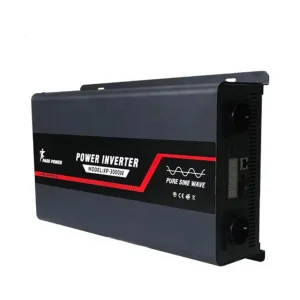
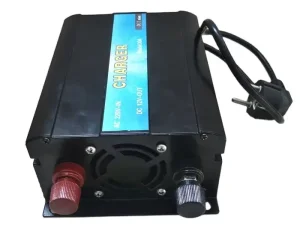

An in-depth whitepaper analysis of resonant power conversion, battery management integration, and multi-stage CC/CV algorithm optimization for modern industrial motive and stationary batteries.
Modern high-efficiency 36V lithium chargers utilize Zero Voltage Switching (ZVS) LLC resonant topologies combined with Active Power Factor Correction (PFC >0.99). This reduces switching losses dramatically across silicon and GaN FETs, allowing high power density enclosures to operate continuously under elevated ambient temperatures without thermal throttling.
36V Lithium Iron Phosphate (LiFePO4 - 12S configuration, max 43.8V) and Nickel Manganese Cobalt (NCM - 10S configuration, max 42.0V) chemistries require strict voltage boundaries. Our digital DSP control units deliver ±0.1V output regulation with zero-voltage wake-up triggers for BMS low-voltage disconnect recovery scenarios.
Integrated CAN 2.0B / CANopen protocols allow dynamic communication between the battery pack BMS and the charger. Operating parameters such as real-time cell temperatures, maximum allowable charging current, and state-of-charge (SoC) profiles are negotiated dynamically to maximize cycle life up to 4,000+ cycles.
| Specification Feature | Standard 36V Lead-Acid Charger | Advanced 36V LiFePO4 Charger (12S) | High-End 36V NCM Industrial Charger (10S) |
|---|---|---|---|
| Nominal Voltage / Max Voltage | 36V Nominal / 44.1V Float | 38.4V Nominal / 43.8V Max Cut-Off | 36.0V Nominal / 42.0V Max Cut-Off |
| Conversion Topology | Hard-switching Flyback / Line Frequency | LLC Resonant ZVS + Active PFC | GaN-Based LLC Resonant Dual-PFC |
| Power Factor (PFC) | < 0.75 (Uncompensated) | > 0.98 at Full Load | > 0.99 Wide AC Voltage Input |
| Peak Energy Efficiency | 80% – 85% | 94.5% – 96.0% | 96.5% – 97.2% |
| Communication Protocol | None / Simple LED Relay | CAN 2.0B / RS485 / Bluetooth | CANopen / J1939 Telematics / IoT |
| Ingress Protection (IP Rating) | IP20 (Indoor Open Vents) | IP65 / IP67 Fully Encapsulated | IP67 Heavy-Duty Die-Cast Aluminum |
Deploying 36V lithium charger hardware across critical mobility, material handling, energy storage, and marine ecosystems worldwide.
Transitioning fleet golf cars (EZGO, Club Car, Yamaha) from 36V lead-acid battery banks to high-density LiFePO4 packs requires intelligent charging systems capable of fast 1-2 hour opportunity charging. On-board and off-board IP67 designs withstand severe road vibration and washdown environments while preventing thermal runaway.
Warehouse robotics require continuous 24/7 uptime. Modern 36V AGV chargers integrate automated wireless or copper contact pad docking with sub-10ms response times. Autonomous fleet management systems remotely read charger diagnostics over Wi-Fi or CAN telemetry to maintain optimal battery health.
36V trolling motor systems (Minn Kota, MotorGuide, Garmin) demand waterproof, corrosion-resistant chargers. Aluminum alloy enclosures with thermal potting compound safeguard internal magnetics from saltwater atmosphere while providing vibration isolation under rough sea states.
High-reach equipment rental fleets demand ruggedized charging units with universal AC input (90V–264V AC, 45–65Hz) to ensure smooth operation on unconditioned job-site generators. Built-in over-voltage protection (OVP) and thermal derating allow continuous operation under direct sunlight.
Combining solar photovoltaic inputs with grid/generator AC power, 36V hybrid charger systems efficiently charge battery banks supplying residential, agricultural, and remote telecommunications infrastructure with clean, uninterruptible power.
Exploring future advancements in wide bandgap semiconductors, predictive AI diagnostic software, dynamic vehicle-to-grid power conversion, and extreme-temperature charging capabilities.
Replacing legacy Silicon MOSFETs with high-frequency GaN semiconductors increases switching speeds 5-fold, enabling a 40% reduction in magnetic core mass and achieving benchmark efficiency ratings above 97.5%.
Machine learning algorithms embedded into the charger firmware analyze internal impedance evolution and micro-delta voltages across individual cells, detecting early dendrite formation and preventing battery failures before they occur.
Next-generation 36V charging systems support dual-direction power conversion, transforming electric fleet vehicles into distributed energy storage resources that feed AC grid power back during peak tariff periods.
How our high-tech manufacturing campus in Suzhou combines precision automation, rigid QA verification, and component integration to deliver superior total cost of ownership for B2B buyers.
Every circuit board is populated using high-speed SMT lines backed by 3D Automated Optical Inspection (AOI) and In-Circuit Testing (ICT). High-frequency transformers, microcontrollers, and heat-sink assemblies undergo 100% automated solder joint verification to eliminate latent defect risks.
Zero-defect quality commitment: 100% of manufactured 36V chargers undergo a rigorous 4-hour full-load burn-in cycle inside 50°C thermal stress chambers. Dynamic voltage cycling tests confirm long-term stability under severe real-world operational profiles.
From tooling die-cast aluminum enclosures to custom winding toroidal transformers and designing custom firmware microcontrollers, our vertically integrated model guarantees short production lead times and stable material pricing.
Strategic proximity to Eastern China shipping hubs (Shanghai and Ningbo Ports) facilitates rapid container consolidation, expedited air-freight sampling, and flexible DDP/FOB supply arrangements for worldwide buyers.
Complete brand localization options include customized aluminum housing colors, silk-screened logos, custom dynamic LCD UI boot graphics, bespoke charging cable lengths, and customer-specified AC/DC connector configurations.
Industrial hardware requirements for global B2B procurement officers, technical directors, and electrical engineers.
Secondary hardware comparator circuit shuts down output pulses within 10 microseconds if output voltage exceeds 44.5V, preventing cell damage.
Automatic constant-current foldback limiting prevents overload during deep battery discharge states, preserving internal magnetic chokes.
Dual NTC thermal sensors monitor internal power FETs and transformers, initiating linear current derating above 65°C ambient internal enclosure temperature.
Active MOSFET reverse protection circuitry prevents arc damage, blown internal fuses, or electrical sparks if output leads are connected backward.
Ensuring seamless market entry and regulatory peace of mind across North American, European, and Asia-Pacific commercial distribution networks.
Our 36V chargers strictly adhere to global industrial battery charger safety mandates, featuring dielectric isolation tested to 3,000V AC input-to-output and creepage/clearance distance compliance.
Advanced multi-stage EMI filter networks eliminate conducted and radiated electrical interference, enabling safe usage near sensitive medical, communication, and electronic equipment.
Backed by multi-year global factory warranties, local replacement module reserves, and direct line access to senior firmware engineers for rapid system troubleshooting.
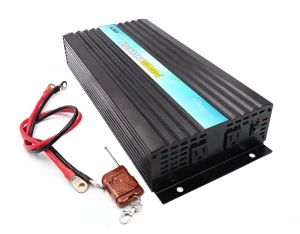
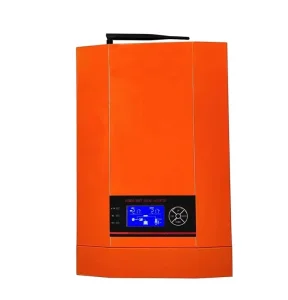
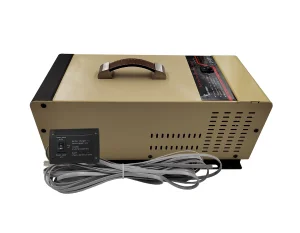
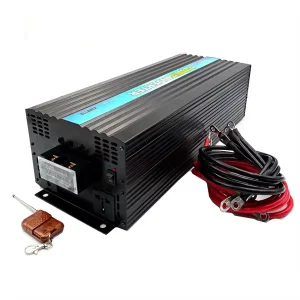
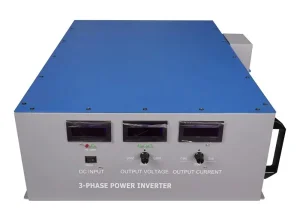
Explore related high-voltage power inverters, portable rapid chargers, and off-grid MPPT solar combined systems.

In-depth technical responses addressing common engineering, procurement, and deployment queries for 36V lithium charger installations.
A nominal 36V Lithium Iron Phosphate (LiFePO4) battery pack consists of 12 series cells (12S). At 3.65V maximum per cell, the charger cut-off threshold must be calibrated precisely to 43.8V. Conversely, a nominal 36V Nickel Manganese Cobalt (NCM/NMC) battery uses a 10 series cell arrangement (10S) with a 4.20V max cell threshold, requiring a strict 42.0V charger cut-off setting. Connecting a standard 44.1V lead-acid charger will cause BMS over-voltage lockouts or permanent lithium cell degradation.
Active PFC forces the input AC current waveform to mirror the sinusoidal AC voltage waveform, driving the power factor above 0.98. In industrial environments such as warehouses or equipment yards, uncompensated low power factor chargers create high harmonic distortion, trip AC circuit breakers prematurely, overheat supply transformers, and generate penalizing utility reactive power fees.
Yes. Our intelligent 36V lithium chargers incorporate a specialized "Zero-Voltage BMS Wake-Up" mode. When a battery's internal BMS disconnects the terminal output due to over-discharge, standard chargers fail to detect open terminal voltage and will not initiate charging. Our units inject a low-current (0.5A–1A) voltage pulse to reset the BMS FETs before transitioning into the main Constant Current (CC) phase.
For on-board vehicle and marine environments exposed to road spray, high ambient humidity, dust, or pressure washing, an IP67 rating is strongly recommended. IP67 enclosures are completely dust-tight and fully sealed against water immersion up to 1 meter depth for 30 minutes, utilizing polyurethane thermal potting compound inside die-cast aluminum alloy housings.
CAN-Bus integration allows the charger to become a fully dynamic node on the vehicle network. Rather than relying solely on static voltage feedback, the charger continuously adjusts current based on real-time cell temperatures, individual cell voltage balance, and max allowable charge rates communicated directly by the BMS. This prevents thermal stress during rapid opportunity charging and transmits telemetry data back to central fleet dashboards.
Custom firmware tuning for specific CC/CV thresholds, CANopen communication mapping, or mechanical mounting bracket modifications takes approximately 10 to 14 working days for engineering prototypes. Once samples are validated and approved, volume production lead times typically range from 20 to 25 days under our ISO 9001:2015 manufacturing framework.
