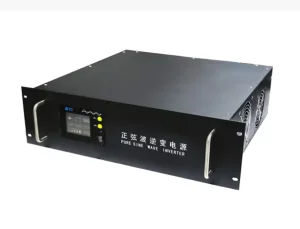
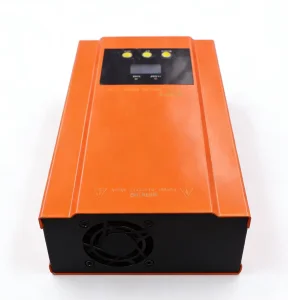
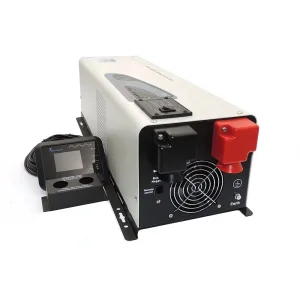
Explore our high-frequency and low-frequency power conversion systems engineered for rigorous global deployments.
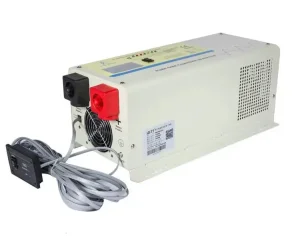
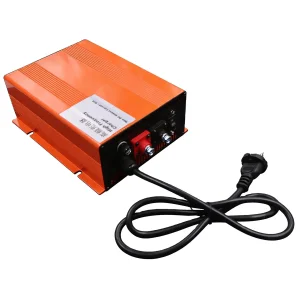
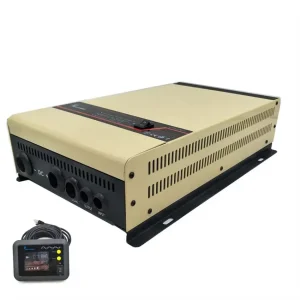
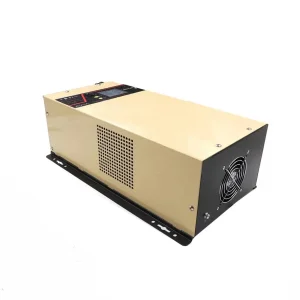
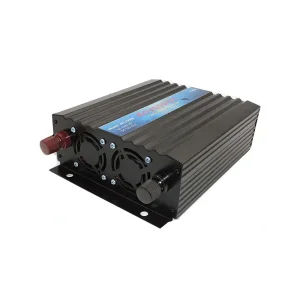
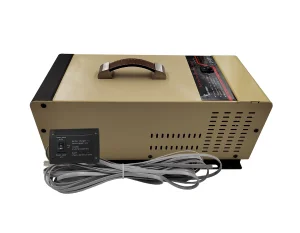
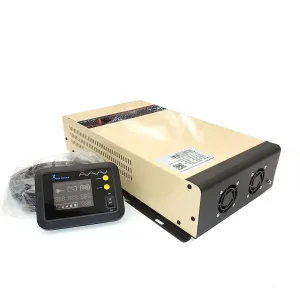
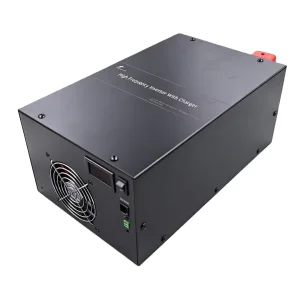
As industrial automation, renewable energy integration, and heavy-duty electric mobility accelerate globally, the demand for high-reliability 48V Lithium-Ion Battery Chargers has reached an unprecedented peak. 48V DC nominal systems represent the optimal engineering sweet spot between safety extra-low voltage (SELV) regulatory limits and high-power operational efficiency.
Operating at nominal 48V (with maximum charging cutoff voltages reaching 54.6V to 58.8V depending on Lithium Nickel Manganese Cobalt Oxide (NMC) or Lithium Iron Phosphate (LiFePO4) cell chemistry), modern charging architecture minimizes resistive copper thermal losses (I²R) while eliminating the requirement for complex high-voltage isolation safety protocols mandated in >60V industrial environments.
The transition from traditional lead-acid batteries to advanced 48V lithium platforms across industrial and commercial sectors is driven by strict decarbonization directives, operational total cost of ownership (TCO) optimization, and energy density requirements.
Modern smart logistics centers demand continuous, 24/7 opportunity charging capability. 48V chargers equipped with automated docking interfaces and ultra-fast CC (Constant Current) charge profiles enable 1C to 2C rapid replenishment without thermal degradation of internal battery management systems (BMS).
5G expansion has doubled power consumption at cellular tower sites. 48V LiFePO4 battery banks are now the universal standard for telecommunications backup power. OEM 48V chargers provide high surge immunity, low ripple voltage (<100mV peak-to-peak), and SNMP remote management integration.
Off-grid commercial solar storage units rely on robust 48V hybrid chargers that intelligently arbitrate between photovoltaic input, AC grid power, and auxiliary diesel generator lines to deliver multi-stage charging algorithms tailored for deep-cycle energy storage setups.
In contrast to legacy lead-acid chargers that employ simple trickle-charge mechanisms, industrial 48V lithium-ion chargers require real-time micro-controller (MCU) regulated state machines. Charging a 48V (15S or 16S LiFePO4 / 13S or 14S NMC) battery pack safely requires precise closed-loop control.
| Technical Parameter | 48V LiFePO4 Profile (16S Configuration) | 48V NMC Profile (14S Configuration) | Engineering Significance |
|---|---|---|---|
| Nominal System Voltage | 51.2V DC | 51.8V DC | Standard SELV-compliant voltage floor for high-density power delivery. |
| Absorption / Cutoff Voltage | 58.4V ± 0.2V DC | 58.8V ± 0.2V DC | Prevents lithium plating and cathode breakdown at peak state of charge (SoC). |
| CC Stage Current Density | 0.5C - 1.0C Programmable | 0.33C - 0.7C Programmable | Matches cell manufacturer maximum continuous charge accept rates. |
| Pre-Charge Threshold | 40.0V DC (2.5V/cell) | 42.0V DC (3.0V/cell) | Safe recovery mechanism for deeply discharged battery packs before full CC mode. |
| BMS Communication Protocol | CAN 2.0B / RS485 (Modbus) | CAN 2.0B / RS485 (Modbus) | Allows BMS to override charger voltage/current output based on individual cell temps. |
| Conversion Topology | LLC Resonant Soft-Switching | LLC Resonant Soft-Switching | Reduces MOSFET switching stress, lowers EMI emissions, and enhances efficiency. |
The microcontroller executes a rigorous three-phase algorithm:
Thermal stress is the primary failure vector for high-power conversion hardware. Premium 48V charger designs integrate multi-tier protection:
China commands over 80% of the world's power electronics manufacturing supply chain. Buying directly from integrated export factories provides distinct technical and economic advantages for international OEMs and distributors.
Proximity to Tier-1 semiconductor vendors, planar transformer fabricators, and advanced aluminum heatsink extruders in clusters like Jiangsu and Shenzhen drastically reduces component lead times and prototype iteration cycles from months to days.
State-of-the-art factories employ high-speed Surface Mount Technology (SMT) lines paired with Automated Optical Inspection (AOI) and Automated Test Equipment (ATE) burn-in racks. Every 48V charger undergoes 100% full-load thermal aging test before export packaging.
Unlike rigid Western OEMs, leading Chinese charger exporters provide flexible ODM engineering—customizing DC connectors (Anderson, REMA, M12 pinouts), enclosure form factors, custom LCD boot graphics, and proprietary CAN-bus firmware frames at low minimum order quantities (MOQs).
Understanding the specific electrical and environmental conditions of end-use applications ensures optimal hardware specification and field longevity.
Industrial forklifts and warehouse AGVs operate under rigorous multi-shift routines where battery charging downtime equals lost revenue.
Light Electric Vehicles (LEVs) are rapidly transitioning from legacy flooded lead-acid batteries to drop-in 48V LiFePO4 packs.
Marine motor yachts and commercial expedition vehicles utilize high-capacity 48V house battery banks to run high-load air conditioning without running loud diesel generators continuously.
Remote telecommunication shelters located in harsh desert or sub-zero climates require ultra-reliable power rectification.
Sourcing commercial 48V lithium chargers requires verifying stringent safety, electromagnetic compatibility (EMC), and environmental international standards.
Verify that your exporter holds authentic test reports and factory inspection certificates from accredited testing bodies (SGS, TÜV, Intertek):
Inquire about the factory's Bill of Materials (BOM) quality control tier:
Evaluate charger performance beyond initial unit purchase price:
The next decade of power electronics will be defined by wide-bandgap semiconductors, bidirectional energy flow, and AI-driven adaptive charging loops.
GaN FET switching technologies enable ultra-high frequency switching (100kHz to >500kHz), reducing charger magnetic component sizes by up to 40% while raising efficiency curves above 97.5%. Next-gen 48V chargers will be half the physical weight of legacy silicon units.
48V chargers are evolving from simple power sinks to bidirectional converters. Vehicles and industrial battery fleets can feed excess energy back into site microgrids or provide emergency backup during peak grid demand hours via Vehicle-to-Grid (V2G) standard protocols.
On-board microprocessors equipped with machine learning algorithms analyze real-time internal resistance (IR) shifts, ambient thermal patterns, and cycle history to dynamically alter charge voltage profiles—extending lithium cell cycle lifespan by up to 25%.
Expert engineering answers to critical commercial and technical inquiries regarding 48V Lithium-Ion Chargers.
A standard 48V LiFePO4 (Lithium Iron Phosphate) pack utilizes a 16S configuration (16 cells in series), giving a nominal voltage of 51.2V and a recommended peak charging cutoff voltage of 58.4V DC (3.65V per cell). In contrast, a 48V NMC (Nickel Manganese Cobalt) pack typically uses a 14S configuration, yielding a nominal 51.8V and a peak cutoff voltage of 58.8V DC (4.20V per cell). Using an incorrect charger profile will lead to incomplete charging or trigger BMS over-voltage fault protections.
Generally, dedicated lithium chargers should not be used on lead-acid batteries unless the charger features a multi-chemistry DIP switch or programmable software interface. Lithium chargers apply constant current (CC) up to the maximum cutoff voltage without applying prolonged high-voltage equalization charges required by flooded lead-acid batteries. Furthermore, lead-acid float voltages differ significantly from lithium standby requirements.
CAN-bus (Controller Area Network) integration allows real-time telemetry communication between the Battery Management System (BMS) and the charger logic controller. Instead of relying solely on overall terminal voltage, the BMS can instruct the charger to dynamically limit current or halt charging instantly if an individual cell experiences over-temperature, low-temperature lithium plating risk (<0°C), or individual cell voltage imbalance.
Active PFC adjusts the input current waveform to match the AC mains voltage waveform, achieving a Power Factor (PF) > 0.99. For fleet operators charging dozens of AGVs or golf carts simultaneously, Active PFC eliminates reactive power penalties from utility companies, reduces AC line current draw by 20-30%, prevents line harmonics, and reduces thermal stress on electrical distribution panels.
Standard export production lead times range from 15 to 25 working days depending on order volume. Full OEM/ODM engineering support includes customized DC terminal cables (Anderson SB50/SB175, REMA DIN connectors), specialized charge curves flashing, private-label branding, customized LCD status screens, and IP67 waterproof enclosure designs tailored for your local market.
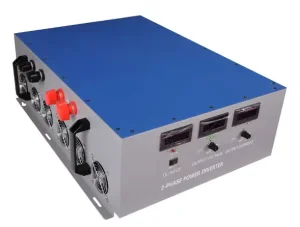
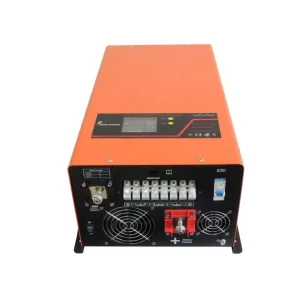
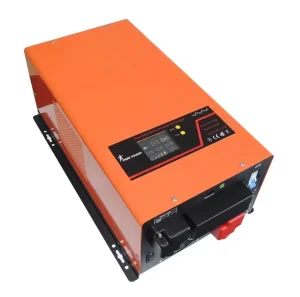
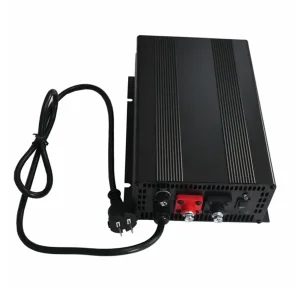
Review our supplementary pure sine wave inverters, solar controllers, and integrated high-power chargers.
Whether you require custom CAN-bus firmware integration, IP67 waterproof enclosures, or factory-direct OEM manufacturing pricing, our engineering team is ready to assist your technical specifications.