Explore key high-efficiency pure sine wave inverter chargers and intelligent multi-stage battery chargers engineered for industrial, solar, and mobile automotive applications.
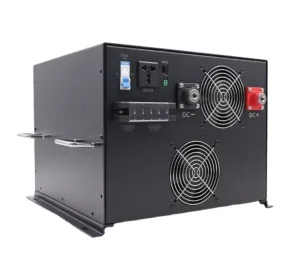
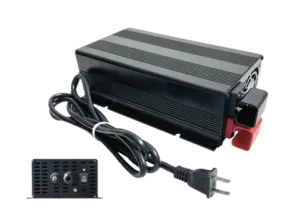
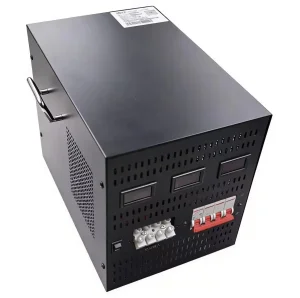
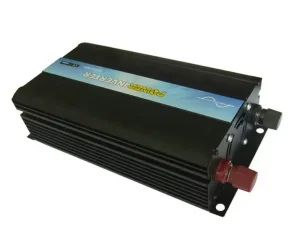
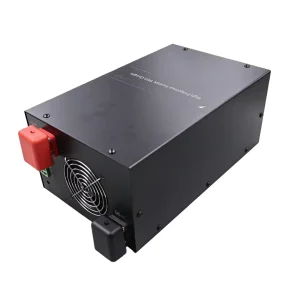
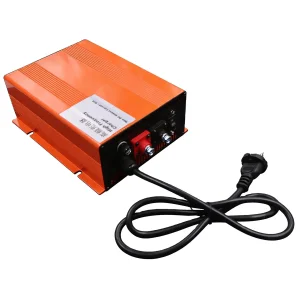
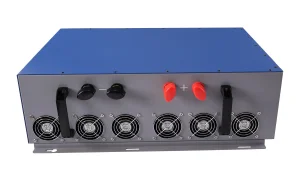
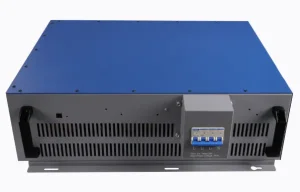
The global transition toward decentralized power systems, electrified commercial fleets, off-grid energy storage systems (BESS), and specialized marine-rv setups has catalyzed an exponential demand for versatile, high-output industrial battery chargers. Among modern current classes, the 80A 12V/24V high-frequency smart battery charger occupies a critical operational sweet spot. It provides sufficient current density to rapidly replenish deep-cycle battery banks (ranging from 200Ah to 1000Ah) without exceeding safe thermal thresholds or forcing expensive structural overhaul of utility grid tie-ins.
Historically, procurement managers were forced to source dedicated chargers for specific battery chemistries. Legacy lead-acid systems relied on linear transformer topologies that suffered from poor energy efficiency (often under 70%), immense bulk, and rigid voltage curves. Today, modern industrial fleets and off-grid infrastructure mix legacy AGM/GEL energy storage with ultra-high-density Lithium Iron Phosphate (LiFePO4) battery banks. Consequently, premier global OEM/ODM suppliers must engineer universal 80A charging systems equipped with dynamic firmware profiles capable of adapting to Lithium, GEL, and AGM chemistry demands in real-time.
Modern B2B buyers no longer seek single-purpose power supplies. Leading OEMs require 80A charger platforms featuring programmable microcontrollers, digitally selectable charging curves, internal active Power Factor Correction (PFC), and seamless integration with Lithium Battery Management Systems (BMS) via CANbus or RS485 protocols.
Charging an 80A battery system requires precise digital closed-loop feedback. Applying unmodulated current into AGM, GEL, or Lithium batteries risks thermal runaway, plate sulfation, or premature BMS low-voltage lockouts. Top-tier Chinese battery charger manufacturers utilize sophisticated microcontroller units (MCUs) running multi-stage algorithms tailored precisely to each chemical structure.
Supplies a constant current (CC) phase up to maximum rated voltage (typically 14.4V - 14.6V for 12V systems), followed by a brief constant voltage (CV) stage until current drops to 0.05C. Crucially, it omits float charge stages that degrade lithium cathode structures and features 0V BMS wake-up pulse initiation.
Requires strict ceiling voltage control (rarely exceeding 14.2V) during absorption to prevent gas pocket formation within the gelled silica electrolyte. Uses extended float charge phases at lowered voltage (13.5V - 13.8V) to sustain chemical equilibrium without fluid loss.
Supports aggressive bulk charging up to 14.7V, followed by controlled absorption stage and temperature-compensated float charge. Integrates pulse desulfation routines during initial soft-start phases to break down lead sulfate crystals on starved electrolyte plates.
| Parameter | Lithium (LiFePO4) | GEL (Gel Electrolyte) | AGM (Absorbed Glass Mat) |
|---|---|---|---|
| Bulk Charge Voltage (12V) | 14.4V - 14.6V (CC Phase) | 14.0V - 14.2V (Strict Ceiling) | 14.4V - 14.7V (Fast Absorption) |
| Float Stage Requirement | Not Required / Disabled | 13.5V - 13.7V (Continuous) | 13.5V - 13.8V (Temperature Compensated) |
| Thermal Sensitivity | Moderate (BMS High/Low Temp Cutoff) | High (Vulnerable to Thermal Runaway) | Moderate to High (-3mV/°C/cell offset) |
| Special Algorithmic Mode | 0V BMS Activation Pulse | Controlled Micro-Current Float | Periodic High-Voltage Equalization |
| Typical Charger Efficiency Target | > 94% High Frequency LLC | > 92% High Frequency Switching | > 92% High Frequency Switching |
When global enterprises select an OEM or ODM partner for high-current (80A) chargers, Chinese manufacturing hubs—particularly specialized electrical clusters in Jiangsu and Guangdong—deliver unmatched competitive advantages. This efficiency is not merely rooted in labor economics, but in structural supply chain density, automated manufacturing processes, and cutting-edge high-frequency topologies.
Chinese charger factories lead the transition from bulky 50Hz/60Hz line-frequency transformers to high-frequency Soft-Switching LLC Resonant Topologies operating above 100kHz. This slashes unit weight by up to 75% and reduces casing footprint, enabling compact 80A portable and rack-mount form factors.
Tier-1 facilities deploy fully automated Surface Mount Technology (SMT) pick-and-place lines, Automated Optical Inspection (AOI), and computer-controlled full-load burn-in testing chambers. Every 80A charger undergoes rigorous burn-in aging under elevated temperatures to guarantee low field-failure rates (<0.2%).
By co-locating power semiconductor MOSFET suppliers, custom magnetic core planar transformer manufacturers, extruded aluminum heatsink fabricators, and wire harness plants within a 50km radius, turnaround times for custom OEM samples drop from months to as few as 10–14 days.
An 80A multi-chemistry charger serves as a critical infrastructure backbone across diverse global operational environments. Its robust current delivery addresses high-demand scenarios where rapid energy restoration is vital for operational continuity.
Large motorhomes and overland rigs utilize massive 12V LiFePO4 battery banks (600Ah–1000Ah) to power off-grid induction cooktops, heavy-duty AC units, and satellite communications. An 80A charger connects to shore power or campsite AC hookups, completely replenishing a fully depleted 600Ah lithium bank in under 7.5 hours.
Yachts, fishing boats, and workboats rely on sealed AGM or GEL house batteries due to harsh vibration and salt-spray moisture. Industrial 80A chargers featuring IP30 or IP65 conformally coated PCBA designs prevent corrosion while maintaining continuous bulk charging in hot engine compartments.
Ambulances, utility repair trucks, and fire command units operate high-draw secondary DC equipment (winches, emergency lighting, medical refrigerators). Modern dual-battery isolators paired with high-output 80A chargers allow fast depot charging between emergency calls.
Remote cellular towers and off-grid solar microgrids require immediate fuel-generator battery top-offs during prolonged overcast weather. The high power factor (PFC >0.98) of modern 80A high-frequency chargers optimizes diesel generator output, reducing fuel burn and carbon emissions.
The industrial battery charger market is undergoing rapid technological convergence. Forward-looking buyers must align with factories actively investing in next-generation power electronics architectures.
Replacing silicon MOSFETs with GaN wide-bandgap transistors allows switching frequencies to jump from 100kHz to well over 500kHz. This slashes passive component sizes, achieving thermal dissipation reductions up to 30% and pushing power density past 1.5W/cm³.
Instead of relying strictly on external voltage sensing, next-generation 80A chargers dynamically negotiate real-time current limits directly with the internal battery management system (BMS) over CAN 2.0B protocol, adapting charge curves dynamically based on internal cell temperatures and state-of-health (SOH).
Onboard firmware leverages AI-driven thermal predictive modeling. Rather than shutting down abruptly during ambient high-temperature spikes in engine bays, the charger intelligently de-rates output current smoothly (e.g., from 80A to 60A to 40A), maintaining maximum possible energy delivery without exceeding component junction safety zones.
Evaluating international 80A charger manufacturers requires a systematic compliance and quality assurance checklist. B2B importers, distributors, and system integrators should assess prospective factories across four key evaluation pillars:
Verify that factory certifications are genuine and issued by accredited bodies (SGS, TUV, Intertek). Ensure full testing reports exist for CE (LVD EN62368-1 / EN60335-2-29), EMC (EN55032 / EN55035 Class B for residential usage), RoHS compliance, and optional UL1236 / UL458 standards for North American automotive/marine markets.
Demand multi-layered hardware and firmware protections: Reverse Polarity Protection (via MOSFET physical disconnect or fuse), Over-Voltage Protection (OVP), Short Circuit Shutoff with auto-recovery, Over-Temperature Protection (OTP) with localized thermistors, and AC Input Under/Over Voltage Lockout.
Confirm factory support for tailored DC output terminal blocks (M8 studs, Anderson connectors, or Euro-style terminal strips), customizable AC plug pin configurations (US, EU, UK, AU standard), branded LCD/LED display graphics, custom aluminum enclosure anodization, and private-label silk screening.
Audit factory QA protocols: look for ISO 9001:2015 certification, 100% automated high-voltage hipot testing, ambient temperature burn-in chambers, clear RMA spare-part support policies (e.g., 1% free board-level spares), and transparent 1-to-3 year warranty terms.
Detailed engineering answers addressing intent-focused questions raised by industrial buyers and electrical contractors.
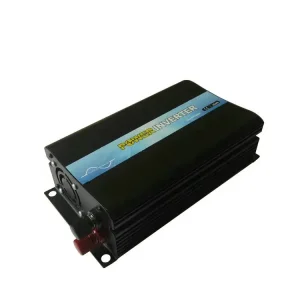
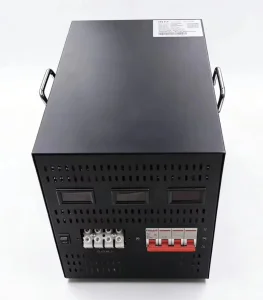
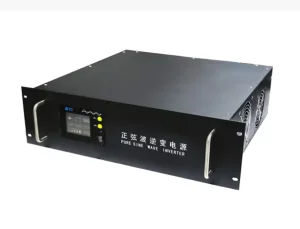
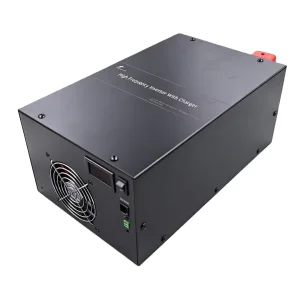
Complete your power grid system design with our direct-sale high-frequency inverters, rack-mounted power units, and intelligent multi-stage chargers.