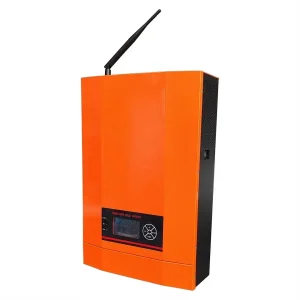
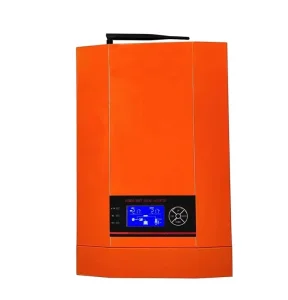
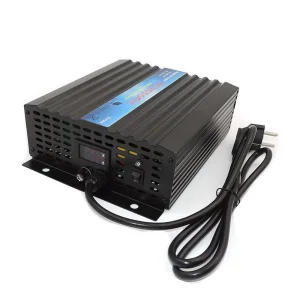
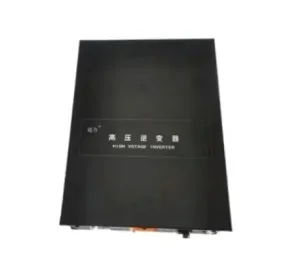
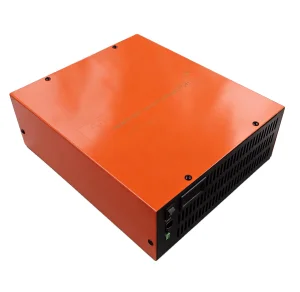
Explore our export-certified 12V intelligent chargers, off-grid pure sine wave converters, and hybrid solar power units engineered for automotive, marine, and commercial applications.
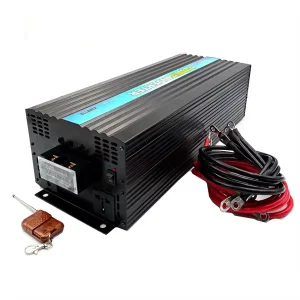
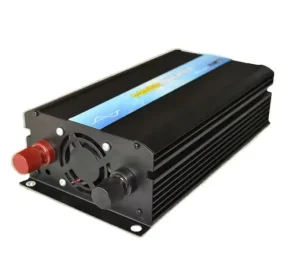
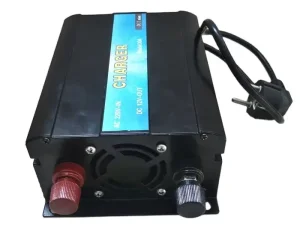
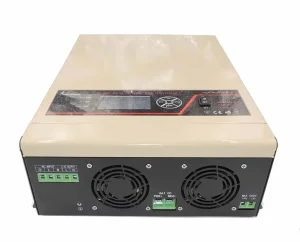
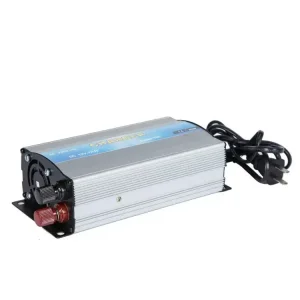
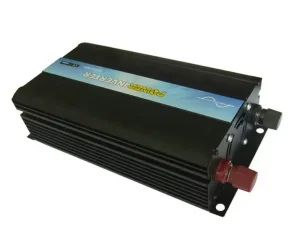
The global automotive aftermarket and power electronics landscape is experiencing a fundamental shift. As vehicle electrical architectures transition from legacy Flooded Lead-Acid (FLA) to Absorbent Glass Mat (AGM), Enhanced Flooded Batteries (EFB), and advanced Lithium Iron Phosphate (LiFePO4) chemistries, the demand for high-quality 12V car battery chargers from qualified OEM/ODM factories has reached unprecedented levels.
Modern 12V battery chargers are no longer rudimentary step-down transformers with linear rectifiers. Today's commercial and industrial Grade chargers are micro-processor controlled, high-frequency switch-mode power supplies (SMPS) capable of dynamic voltage regulation, pulse-width desulfation, active power factor correction (PFC), and seamless thermal compensation. As a premier China-based factory and global exporter, our facility leverages ISO 9001:2015 automated manufacturing lines to deliver high-reliability charging topologies engineered for distributors across North America, Europe, Australia, and emerging industrial hubs.
Evaluating an export partner requires assessing true engineering depth: look for certified high-pot (dielectric withstand) testing, automated thermal runaway shutdowns, and compliance with IEC/EN 60335-2-29 standards for safety in industrial battery charging systems.
A granular breakdown of circuit topologies, semiconductor selection, and digital microcontroller (MCU) algorithmic charging logic in commercial 12V chargers.
Traditional legacy chargers suffer from thermal dissipation and bulky iron cores. Next-generation 12V industrial chargers utilize high-frequency Pulse-Width Modulation (PWM) combined with Silicon Carbide (SiC) or Gallium Nitride (GaN) MOSFET switches operating above 100 kHz.
Modern vehicle fleets mix different cell chemistries. Intelligent 12V 10A–40A chargers incorporate embedded 32-bit ARM microcontrollers to deliver tailored charge curves based on real-time voltage feedback and impedance monitoring.
Commercial vehicle chargers operate under extreme stress: vehicle engine bays, outdoor repair depots, and marine environments. OEM design requirements demand robust multi-layered safety mechanisms.
How precise voltage and current regulation extends 12V battery operational lifespan by up to 300%.
Analyzes connected battery voltage, initial impedance, and polarity integrity prior to energizing output relays.
Applies controlled high-frequency voltage spikes to dissolve lead-sulfate build-up on heavily discharged plates.
Gradually introduces current to deeply depleted batteries, protecting internal cell structures from thermal shock.
Delivers maximum rated constant current (CC) until the battery reaches approximately 80% capacity.
Switches to constant voltage (CV) while current tapers off naturally as internal resistance increases.
Briefly elevates voltage to equalize cell capacity and redistribute electrolyte density in flooded chemistries.
Monitors voltage drop over a timed interval to verify if the battery holds charge or has defective cells.
Maintains battery at constant low voltage (13.5V–13.8V) for extended storage without gas evolution or water loss.
A side-by-side engineering evaluation for wholesale buyers, OEM automotive brands, and fleet equipment managers.
| Performance / Feature Metric | Standard Consumer 12V Charger | Commercial Grade 12V SMPS Charger | Industrial OEM 12V Heavy-Duty Charger |
|---|---|---|---|
| Target Battery Chemistries | Standard SLA / WET Lead-Acid | AGM, GEL, EFB, Calcium, SLA | Universal: AGM, GEL, EFB, LiFePO4, Li-Ion |
| Rated Output Current (12V) | 2A – 6A Peak | 10A – 25A Continuous | 30A – 50A+ Continuous Duty |
| Power Factor Correction (PFC) | Passive / Non-PFC (PF ~0.65) | Active PFC (PF > 0.95) | High-Tier Active PFC (PF > 0.99) |
| Ingress Protection Rating | IP20 (Indoor Plastic Housing) | IP65 (Splash & Dust Proof) | IP67 / IP68 Waterproof Die-Cast Enclosure |
| Operating Temperature Range | -10°C to +40°C | -20°C to +50°C | -40°C to +65°C (Full Industrial Grade) |
| Communication / Data Interfaces | Basic LED Indicators | LCD Display / Status LEDs | CAN-Bus / Bluetooth / RS485 Telematics |
| Safety Certifications | Basic CE / Low Voltage Directive | CE, RoHS, FCC Class B, REACH | UL 1236, IEC 60335-2-29, CE, SGS Approved |
Adapting 12V battery charger hardware and firmware to climate demands, local grid requirements, and specialized vehicle operations globally.
In sub-zero northern regions (US, Canada, Nordic Europe), lead-acid battery internal resistance spikes dramatically while chemical activity drops by up to 50%. Standard chargers fail to charge batteries fully in extreme cold.
Factory Solution: Integrated NTC thermal sensors dynamically boost output charging voltage (up to 15.2V on 12V systems) to overcome cold-weather resistance. Engineered engine-start assist modes deliver rapid current bursts for commercial trucks and snow removal equipment.
European markets enforce strict ErP eco-design directives, zero standby consumption targets, and rigorous CE EMC/LVD compliance for all imported automotive maintenance equipment.
Factory Solution: High-efficiency switch-mode power designs achieving <0.5W standby power draw, low harmonic emissions compliant with EN 61000-3-2 standards, and customizable Type C / Type G AC line cord sets.
Middle Eastern, Southeast Asian, and Latin American industrial operations face extreme ambient heat (>50°C inside engine bays) combined with fine sand or tropical moisture ingress.
Factory Solution: Conformal PCB coatings, fully sealed die-cast aluminum chassis (IP65/IP67 rated), and automatic thermal throttling to prevent semiconductor thermal runaway during prolonged high-current bulk charging.
Partnering with our Suzhou manufacturing facility grants global importers and brand owners direct access to complete custom engineering workflows.
We provide full-stack ODM development for specialized B2B charging requirements. Whether your brand requires custom charging algorithms for specialized lithium cell packs or integrated auxiliary outputs, our R&D team provides rapid prototyping within 20 business days.
Transforming engineered hardware into market-ready retail or commercial product lines tailored for your specific brand identity.
Expert insights into selecting, certifying, and importing high-quality 12V car battery chargers from factory suppliers.
Traditional linear chargers rely on heavy iron-core step-down transformers and simple diode rectifiers, resulting in poor energy efficiency (~60%), high heat dissipation, heavy weight, and uncontrolled voltage output that can boil battery electrolyte. Modern Switch-Mode Power Supply (SMPS) chargers use high-frequency semiconductor switching (100kHz+) and microprocessor feedback. They deliver over 90% efficiency, precise multi-stage charging algorithms, compact lightweight housing, and complete safety protections against overcharging and short circuits.
Only if the charger features a dedicated LiFePO4 charging profile or micro-processor algorithm. Standard lead-acid chargers often include equalization stages (elevating voltage above 15.5V) or automatic desulfation pulse modes, which can damage a Lithium battery's internal Battery Management System (BMS) or cause cell imbalance. Our multi-chemistry 12V chargers include a specific LiFePO4 mode that caps charge voltage at 14.6V, eliminates desulfation pulses, and includes a BMS low-voltage wake-up function.
A general engineering rule of thumb is to select a charger output current equal to 10% to 20% of the battery's total amp-hour (Ah) capacity. For example, a standard 70Ah automotive starter battery is ideally charged with a 7A to 14A charger (such as our 10A or 15A model). For large 200Ah commercial vehicle or RV auxiliary battery banks, a 20A to 40A heavy-duty 12V charger is recommended to ensure recharge times under 6–8 hours without thermal stress.
Global buyers should ensure the manufacturer operates under an ISO 9001:2015 certified quality management system. Key mandatory product compliance standards include CE (Low Voltage Directive 2014/35/EU and EMC Directive 2014/30/EU), RoHS compliance for environmental safety, and IEC/EN 60335-2-29 specifically governing battery chargers. For North American markets, UL 1236 or CSA C22.2 certification is vital. Every production unit should undergo 100% automated full-load burn-in testing and high-voltage dielectric insulation verification prior to shipment.
Active PFC is an electronic circuit that shapes the input AC current waveform to match the mains supply voltage waveform, maximizing real power drawn from the grid while reducing reactive power harmonics. A charger with Active PFC achieves a power factor of 0.98–0.99, enabling higher power output from standard wall outlets, reducing energy bills for commercial fleets, and ensuring compliance with global utility grid regulations.
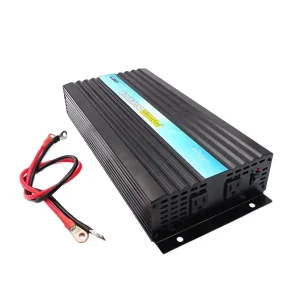
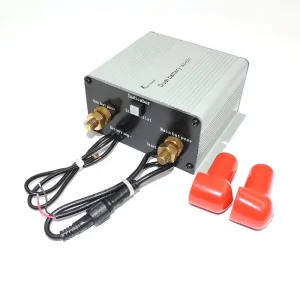
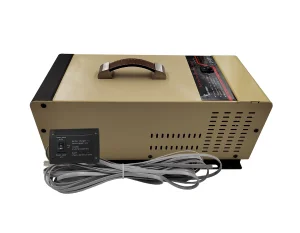
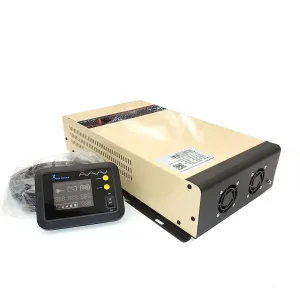
Explore our complete range of high-frequency power inverters, portable battery chargers, dual-battery isolators, and high-voltage DC conversion systems.
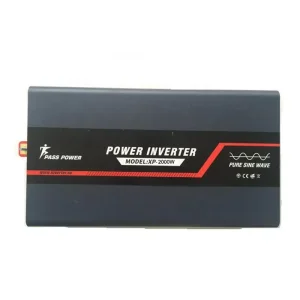
Our Suzhou facility integrates rigorous quality management across all stages of production, ensuring global compliance and reliable field operation.
Surface Mount Technology (SMT) lines populate charger PCBs with Japanese electrolytic capacitors, solid-state switches, and original microcontroller ICs. Optical inspection (AOI) guarantees solder integrity on high-amperage traces.
Every 12V charger undergoing export packing is subjected to a continuous 4-hour burn-in cycle inside high-temperature test chambers under maximum continuous current output to isolate potential infant mortality failures.
We provide complete container shipping, palletization, custom OEM packaging, drop-testing compliance, and export documentation including CE, RoHS, SGS test reports, and MSDS safety certificates for integrated units.
Contact our engineering sales team to request full product catalogs, technical schematics, sample evaluation kits, and volume wholesale pricing schedules.