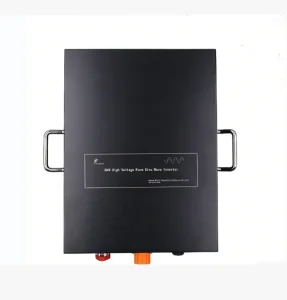
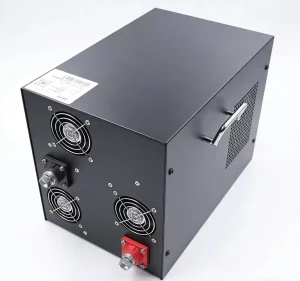
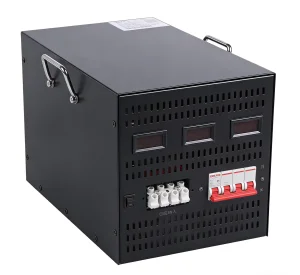
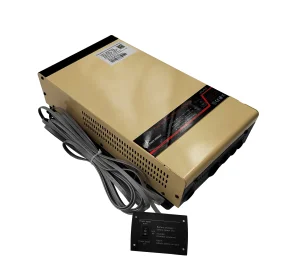
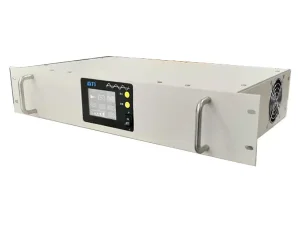
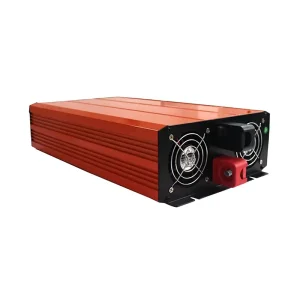
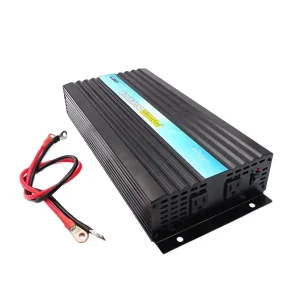
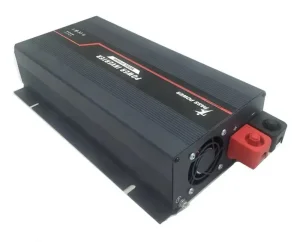
Factory-Direct Heavy-Duty Inverters, Smart Chargers & Off-Grid Energy Systems
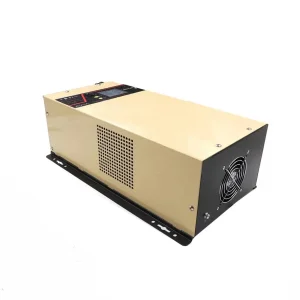
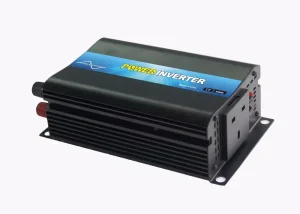
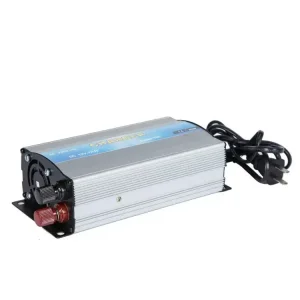
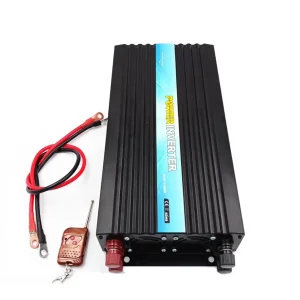
The global shift toward decentralized energy generation, commercial vehicle electrification, off-grid telecom infrastructure, and residential solar storage has escalated the technical demand for high-reliability AC/DC power conversion hardware. As enterprise buyers, OEMs, and distributors evaluate manufacturing partners, certification compliance serves as the fundamental baseline for legal market access and risk mitigation. Sourcing certified power inverters and intelligent multi-stage battery chargers bearing CE, RoHS, CB Scheme, and SAA/RCM approvals is no longer merely a regulatory requirement—it is a strategic engineering indicator of product durability, grid safety, and electro-magnetic compatibility (EMC).
Modern electrical grids and off-grid microgrids require power conversion units engineered to handle severe voltage fluctuations, extreme surge demands from inductive motorized loads (such as HVAC systems, air compressors, and heavy power tools), and continuous duty cycles. Manufacturing facilities operating certified assembly lines utilize advanced automated testing rigs, precision toroidal transformer winding machines, dynamic thermal burn-in chambers, and automated optical inspection (AOI) to eliminate structural, thermal, and electrical points of failure.
Under Low Voltage Directive (LVD 2014/35/EU) and Electromagnetic Compatibility Directive (EMC 2014/30/EU), certified inverters guarantee galvanic isolation, low harmonic distortion (THD < 3%), and radio frequency interference suppression. RoHS directive 2011/65/EU (and amendment 2015/863) strictly restricts hazardous substances including Lead, Mercury, Cadmium, and PBBs/PBDEs.
Issued under the IECEE System for Mutual Recognition of Test Certificates, CB Certification against IEC 62109-1 (Safety of Power Converters for Solar Systems) and IEC 62368-1 simplifies fast-track local certification across over 50 member countries without redundant laboratory testing.
Compliance with AS/NZS 3100 (General Requirements for Electrical Equipment) and AS/NZS 4777.2 for grid interconnections enforces rigorous safety margins against dust ingress, thermal runaway, insulation breakdown, and voltage spike propagation across Australia and New Zealand.
Selecting the optimal power converter topology depends directly on the inductive characteristics of the connected load, weight sensitivity of the installation site, thermal dissipation parameters, and economic target parameters.
Low-frequency inverters operate by first converting DC to low-voltage AC via a high-current MOSFET array, then passing the signal through a massive copper toroidal transformer to step up the voltage to 110V/220V AC. This architecture delivers massive surge current capability—up to 300% to 500% of continuous rated output power for several seconds.
High-frequency inverters utilize Pulse Width Modulation (PWM) and high-speed MOSFET/IGBT transistors switching at 20kHz to 100kHz to elevate DC voltage to a high DC bus before converting it back to smooth pure sine wave AC via an H-bridge output stage.
| Engineering Metric | Low Frequency (Toroidal Core) | High Frequency (PWM Switching) | Hybrid Solar MPPT Inverter |
|---|---|---|---|
| Surge Capacity (Peak Power) | 300% - 500% (Up to 10-20 seconds) | 150% - 200% (Up to 2 seconds) | 200% (Controlled peak handling) |
| Galvanic Isolation | True Magnetic Copper Transformer Isolation | Optocoupler & High-Frequency Transformer Isolation | Isolated DC-DC & Battery Bus Protection |
| Waveform Quality (THD) | < 3% Total Harmonic Distortion | < 3% Total Harmonic Distortion | < 2% Ultra-Clean Pure Sine Wave |
| Power Conversion Efficiency | 85% - 89% Peak Efficiency | 92% - 96% Peak Efficiency | 94% - 98% (MPPT Tracking Efficiency 99.5%) |
| Typical Lifespan Target | 10 - 15 Years (Industrial Grade) | 5 - 8 Years (Commercial Grade) | 8 - 12 Years (Utility Grade) |
| Applicable Compliance Standards | CE, RoHS, CB (IEC 62109-1), SAA | CE, RoHS, CB (IEC 62368-1), SAA | CE, RoHS, CB (IEC 62109-1/-2), SAA, AS/NZS 4777.2 |
Verified Regulatory Pathways for Sourcing Off-Grid & Storage Equipment Across Tier-1 Markets
Mandatory safety screening for high and low voltage electrical safety across the European Economic Area.
Guarantees electro-magnetic non-interference with wireless networks and neighboring industrial equipment.
Enables rapid cross-border regulatory certification transfer throughout Asia, South America, and the Middle East.
Rigorous compliance testing mandatory for retail distribution and grid connectivity in Australia and New Zealand.
As an ISO 9001:2015 certified manufacturing facility, our engineering teams support complete end-to-end custom development for global B2B clients, vehicle manufacturers (RVs, commercial fleets, emergency response trucks), solar system integrators, and private-label distributors.
Engineered DC input options supporting 12V, 24V, 48V, 72V, 96V, and high-voltage DC up to 540V DC for advanced EV and utility storage. AC outputs configurable for 110V, 120V, 220V, 230V, 240V, 120/240V split-phase, or 380V 3-phase systems at 50Hz/60Hz.
3-Stage and 4-Stage automatic battery charging algorithms (Bulk, Absorption, Float, Equalization) programmatically customizable for Sealed Lead-Acid (SLA), GEL, AGM, flooded wet cells, and modern Lithium Iron Phosphate (LiFePO4) chemistry with active BMS handshakes.
Full digital telemetry integration via RS485, RS232, CANbus, and Modbus protocols for real-time monitoring via IoT cloud platforms, mobile apps, or centralized vehicle dashboard LCD panels. Custom branding, shell colors, and terminal blocks available.
Deployment Scenarios Where Certified Heavy-Duty Inverters & Smart Battery Chargers Deliver Critical Power Continuity
Integrating high-efficiency MPPT solar charge controllers with low-frequency or hybrid inverters allows rural homes, remote cabins, and off-grid agricultural operations to harvest maximum PV energy while maintaining steady, clean 110V/220V household electricity without grid dependence.
Utility service vehicles, motorhomes, overland caravans, and emergency response units rely on compact wall-mounted or rack-mounted pure sine wave inverters equipped with ultra-fast transfer switches (< 10ms UPS grade switching) to transition seamlessly between shore AC power and battery reserves.
Boats, yachts, and mobile service rigs equipped with dual battery banks (starter battery + house battery) utilize intelligent dual battery isolators and multi-stage smart chargers to protect starting batteries from drain while dynamically routing alternator power to auxiliary lithium energy storage.
To comply with stringent CE, RoHS, CB, and SAA audit standards, our manufacturing facility operates dedicated testing facilities executing a 7-stage quality control protocol on 100% of manufactured power units:
100% incoming inspection of power MOSFETs, IGBT modules, toroidal copper windings, and electrolytic capacitors via automated parameter testers prior to SMT assembly.
Hi-Pot voltage withstand testing up to 1500VAC/3000VAC between primary and secondary circuits to guarantee zero electrical leakage risks and ensure safety isolation.
Every unit undergoes continuous 100% full-load aging tests inside elevated thermal chambers (45°C - 50°C) for a minimum of 4 to 12 hours to eliminate infant mortality failures.
Oscilloscope verification of AC waveform total harmonic distortion (THD < 3%), instantaneous surge load response, over-voltage/under-voltage protection cutoffs, and short-circuit protection auto-recovery.
As power electronics transition toward higher power densities and intelligent edge control, next-generation manufacturing platforms focus on three critical architectural advancements:
Transitioning from silicon-based MOSFETs to Wide-Bandgap Silicon Carbide (SiC) and Gallium Nitride (GaN) field-effect transistors allows inverters to operate at switching speeds beyond 200kHz. This dramatically shrinks inductor and filter sizes, boosting continuous inverter efficiency to over 98.5% while slashing heat generation by 40%.
Integrating micro-edge AI algorithms inside digital signal processors (DSPs) enables real-time dynamic curve tracing for solar panels under complex partial shade. AI predictive algorithms simultaneously monitor battery internal resistance and thermal degradation vectors to optimize charge curves continuously.
Future-proof hybrid split-phase and 3-phase inverters incorporate bi-directional vehicle-to-home (V2H) and vehicle-to-grid (V2G) power flow mechanisms compliant with updated AS/NZS 4777.2 grid standards, turning stationary and mobile battery packs into active grid stability assets.
Essential Regulatory & Engineering Answers for Enterprise Buyers and Distributors
Industrial Off-Grid Tie Inverters, High-Voltage Inverters & Specialty Power Converters