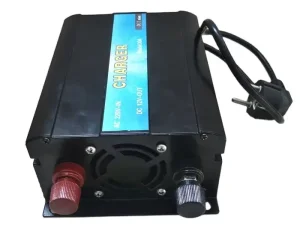
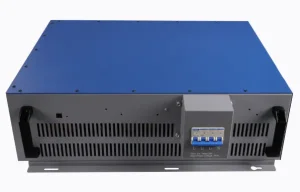
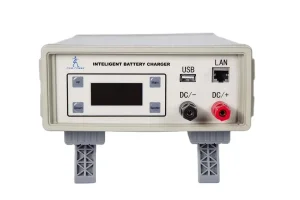
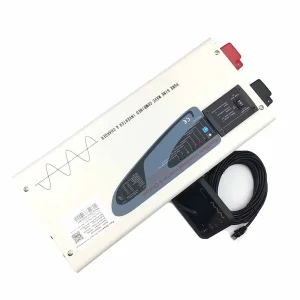
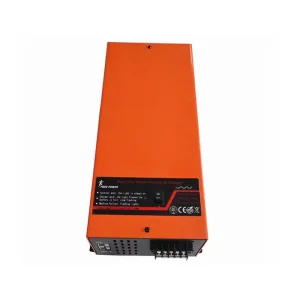
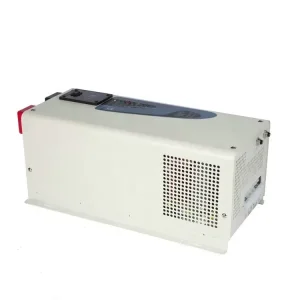
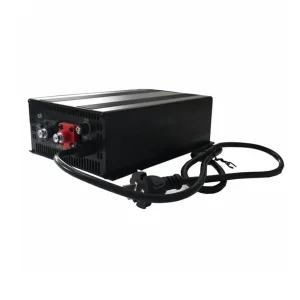
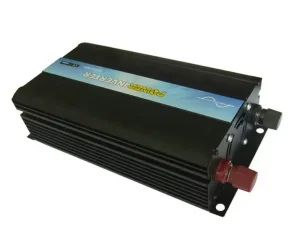
Explore our Tier-1 export line featuring full CE Directive compliance, hazardous substance restriction compliance (RoHS 3), and proven field durability across demanding global environments.
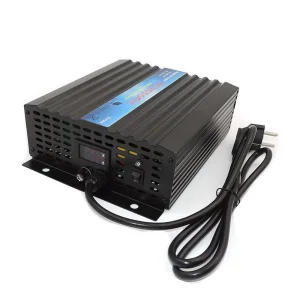
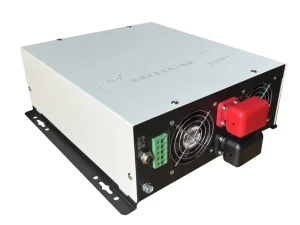
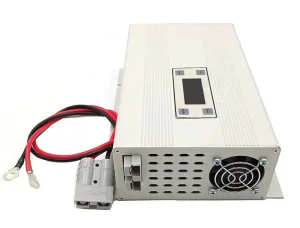
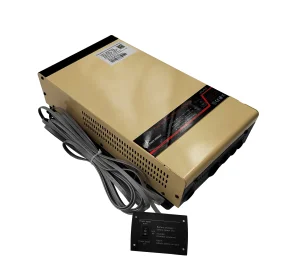
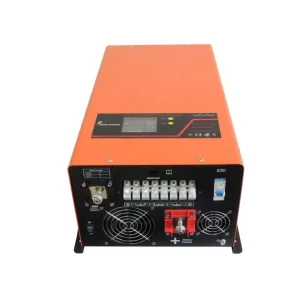
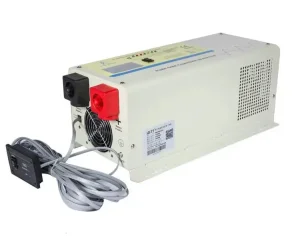
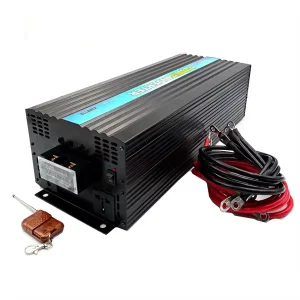
In the contemporary power electronics ecosystem, compliance is no longer a simple regulatory hurdle; it represents the foundational pillar of market access, operational safety, and corporate risk mitigation. As global energy grids transition toward decentralized renewable topologies and electric vehicles demand increasingly sophisticated off-grid power conversion, European regulatory frameworks—specifically the CE Marking (Conformité Européenne) and RoHS Directive (Restriction of Hazardous Substances)—have evolved into global benchmark standards adopted across Oceania, Latin America, and Asia-Pacific markets.
The technical scope of CE certification for AC/DC chargers and DC/AC pure sine wave inverters spans multiple stringent directives: the Low Voltage Directive (LVD 2014/35/EU), which mandates dielectric withstand capabilities, creepage distance safety, and insulation barriers; and the Electromagnetic Compatibility Directive (EMC 2014/30/EU), enforcing rigorous boundaries for conducted emission (EN 55032) and immunity against industrial transients (EN 61000-4 series). Uncertified power conversion units present catastrophic risks—including high total harmonic distortion (THD), severe thermal runaway, radio frequency interference with critical telecommunications, and catastrophic failure under inductive surge loads.
Strict enforcement of physical separation between high-voltage DC bus lines and user-accessible AC outputs, ensuring galvanic isolation exceeding 3,000V AC test limits for zero shock hazard.
Integrated EMI input filtering networks and active Power Factor Correction (PFC) circuitry prevent parasitic harmonic feedback from corrupting upstream microgrids or sensitive medical equipment.
Complete elimination of 10 restricted substances—including lead (Pb), mercury (Hg), cadmium (Cd), hexavalent chromium (Cr6+), and phthalates (DEHP, BBP, DBP, DIBP)—guaranteeing eco-conscious disposal and workforce safety.
Modern B2B procurement directors, system integrators, and commercial vehicle original equipment manufacturers (OEMs) operate in an environment where downtime carries immense financial liabilities. Sourcing power conversion equipment requires moving beyond surface-level component costs to evaluate Total Cost of Ownership (TCO), thermal management topologies, surge overload dynamics, and manufacturer auditing standards.
When enterprise buyers search for "High-Quality CE ROHS Factories & Products", their intent centers on four critical operational pillars: Component Reliability (reducing field failure rates below 0.2%), Surge Handling Capacity (enabling heavy inductive loads like air conditioners and water pumps to start reliably), Customization Flexibility (tailoring input voltages, charging profiles, and communication protocols), and Supply Chain Compliance (verifiable laboratory test documentation from SGS or TUV).
As the global manufacturing ecosystem recalibrates around agility and quality control, Suzhou Maili Electrical Appliance Co., Ltd. (operating under the global brand Pass Power) stands as an authoritative model of Chinese Industry 4.0 integration. Situated in the precision manufacturing hub of Suzhou, Jiangsu, our facility combines automated SMT surface-mount technology, robotic transformer winding, and computerized full-load burn-in testing chambers within an ISO 9001:2015 certified environment.
Unlike assembly-only vendors who outsource core sub-assemblies, Suzhou Maili maintains vertical integration over key technical domains: toroidal transformer coiling, PCB trace layout optimization, heavy-gauge copper heat dissipation design, and firmware code development. This end-to-end control yields unmatched supply chain resilience, shielding global partners from lead-time volatility while guaranteeing that every pure sine wave inverter and smart battery charger exiting our facility complies strictly with CE and RoHS directives.
High-speed surface-mount technology ensures exact component placement, eliminating human assembly errors and guaranteeing uniform thermal dissipation across high-power MOSFET switching arrays.
Every single manufactured unit undergoes mandatory 100% full-power thermal stress testing and cycling inside climate-controlled burn-in rooms before packaging, driving DOA rates to zero.
Direct access to our senior engineering staff allows rapid prototyping for non-standard DC input voltages (e.g., 96V DC), custom RS485/CANbus communication, and private-label packaging.
Selecting the optimal power inverter requires understanding the core electrical differences between Low-Frequency (LF) Toroidal Transformer Topologies and High-Frequency (HF) PWM Switching Architecture. Neither design is universally superior; rather, each excels within specific industrial duty cycles and load characteristics.
Low-frequency inverters leverage heavy, solid iron-core toroidal transformers. This physical inductance provides immense physical buffering, enabling the inverter to deliver peak surge outputs reaching 300% of nominal rating for 15–30 seconds. This makes LF models the undisputed standard for driving heavy motor loads—such as compressors, air conditioners, power tools, and deep-well pumps. Conversely, High-Frequency inverters utilize compact electronic switching circuits to convert DC to AC, yielding lightweight, ultra-compact enclosures with high idle power efficiency ideal for electronic equipment, telecommunications, and weight-sensitive installations.
| Engineering Parameter | Low-Frequency Toroidal (LF Series) | High-Frequency PWM (HF Series) |
|---|---|---|
| Primary Internal Topology | Heavy-Duty Line-Frequency Toroidal Transformer | High-Density Switch-Mode Electronics (MOSFET/IGBT) |
| Surge Capacity Overload | Up to 300% nominal output for 20 seconds | Typically 150% to 200% nominal for 1-2 seconds |
| Target Industrial Loads | Compressors, RV AC units, pumps, industrial motors | Laptops, LED lighting, servers, resistive heating |
| Enclosure Weight & Form Factor | Heavier, highly durable industrial-grade chassis | Ultra-compact, lightweight portable enclosures |
| Waveform Quality & THD | Pure Sine Wave (THD < 3%), ultra-clean output | Pure Sine Wave (THD < 3%), high switching frequency |
| Regulatory Standards | CE (LVD/EMC), RoHS 3, ISO 9001:2015, IP30 | CE (LVD/EMC), RoHS 3, ISO 9001:2015, CE-LVD |
Off-grid living and mobile commercial vehicles demand uninterruptible AC power for rooftop air conditioners and induction cooktops. Our LF inverter chargers feature automated AC transfer switching, seamlessly transitioning between battery and shore power in <10 milliseconds.
Ambulances require pristine electric waveforms to power life-support equipment and diagnostic systems without electromagnetic noise. Combined with Pass Power intelligent dual battery isolators, vehicle starter batteries remain shielded while auxiliary banks charge safely.
In regions facing fragile utility infrastructure, our MPPT hybrid solar inverters harvest solar power while managing battery charging via intelligent 3-stage algorithms (Bulk, Absorption, Float)—maximizing Lithium (LiFePO4) and Lead-Acid battery life cycles.
Complete your catalog with our specialized vehicle battery chargers, high-voltage converters, 3-phase high-frequency inverters, and intelligent isolation hardware.