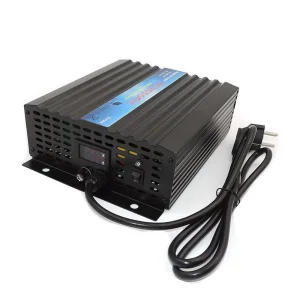
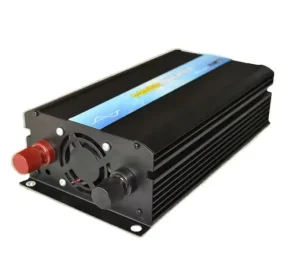
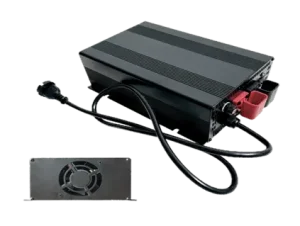
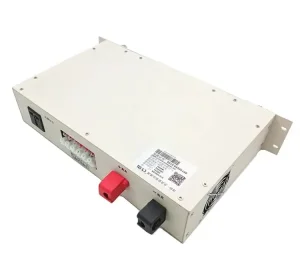
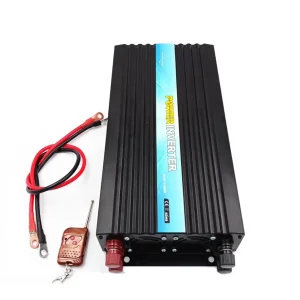
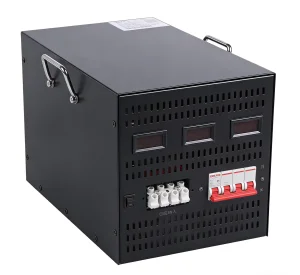
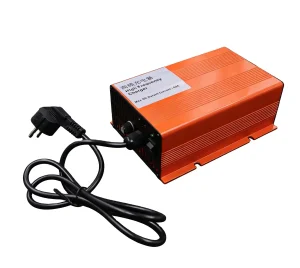
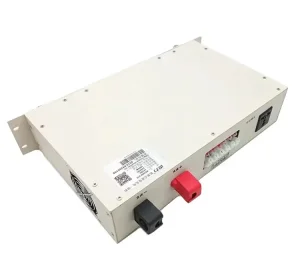
Explore our high-performance DC to AC pure sine wave inverters, smart battery chargers, and MPPT controllers designed for demanding global applications.
An authoritative technical overview of off-grid electrification trends, battery bank optimal sizing, and total cost of ownership (TCO) metrics.
In the rapidly evolving landscape of global power conversion, the demand for reliable dc to ac 3kw 24v 220v inverters has reached an all-time high. Driven by the expansion of residential off-grid energy storage systems (ESS), commercial utility vehicles, marine electrification, and telecommunication backup stations, the 3000W continuous output range represents the sweet spot between physical portability and substantial power delivery.
Historically, legacy off-grid deployments relied heavily on 12VDC architecture. However, physics imposes severe constraints on 12V system efficiency when delivering 3000 watts continuous power. At 3kW output, a 12V system draws over 280 Amperes of DC current (accounting for inversion losses), leading to extreme thermal dissipation ($I^2R$ wire losses), requiring prohibitively thick 2/0 AWG copper cabling, and accelerating battery terminal degradation. By transitioning to a 24V DC input voltage, the operational current is halved to approximately 130–140 Amperes. This structural reduction in current yields a 75% decrease in resistive heat losses across conductors, drastically enhances system reliability, and reduces overall installation and cabling costs.
Aging utility infrastructure in North America and Western Europe, coupled with frequent extreme weather events, has forced industrial and residential consumers to adopt localized 220V/230V pure sine wave back-up power hubs capable of seamlessly supporting continuous 3kW loads.
The global shift from Flooded Lead-Acid to LiFePO4 (Lithium Iron Phosphate) battery banks fits perfectly with 24V nominal configurations (8S LiFePO4 cell configurations: 25.6V nominal), offering higher C-rate discharge tolerances and tight voltage stability under heavy 3kW loads.
Modern inductive and capacitive loads—including inverter-driven air conditioners, variable speed pumps, precision medical gear, and server power supplies—demand pure sine wave quality with THD under 3% to prevent motor overheating and electronic circuit hum.
Inside the engineering architecture of Maili's 3kW 24V to 220V Pure Sine Wave Power Inverters.
A premier dc to ac 3kw 24v 220v inverter must execute two fundamental power transformation stages with minimal energy dispersion: a high-frequency DC-to-DC step-up voltage conversion stage, followed by a pulse-width modulated (PWM) DC-to-AC inversion stage operating with closed-loop feedback monitoring.
The 24V DC input provided by the battery bank is directed through a bank of parallel low-RDS(on) power MOSFETs (such as advanced trench-gate power MOSFETs rated for 100V / 200A). Operating at switching frequencies between 40kHz and 100kHz, these MOSFETs chop the low-voltage DC into high-frequency AC. This high-frequency AC is fed into a compact ferrite-core transformer, stepping up the voltage to a stable high-voltage DC bus (typically 380V DC to 400V DC).
The high-voltage DC bus is subsequently inverted into a 220V AC RMS 50Hz/60Hz pure sine wave utilizing a full-bridge (H-Bridge) topology driven by Insulated Gate Bipolar Transistors (IGBTs) or ultra-fast silicon carbide (SiC) switches. Using Sinusoidal Pulse Width Modulation (SPWM), the microcontroller adjusts the switching pulse widths dynamically according to an internal microsecond-level reference sine table.
The stepped output passes through an optimized LC low-pass filter (high-grade magnetic inductor combined with metallized polypropylene film capacitors) to smooth out high-frequency ripple components. The result is a smooth 220V AC waveform with Total Harmonic Distortion (THD) strictly controlled under 2.5%, matching or exceeding utility grid power standards.
| Technical Parameter | High-Frequency 3kW 24V Model | Low-Frequency (Toroidal Transformer) Model | Modified Sine Wave (Legacy) |
|---|---|---|---|
| Conversion Topology | SMPS + H-Bridge IGBT Stage | Toroidal Line-Frequency Transformer | Simple Single-Stage Square/Step Wave |
| Peak Surge Capacity | 200% (6000W for 100ms) | 300% (9000W for 10 seconds) | 150% (Unstable Peak) |
| Waveform Quality (THD) | < 2.5% Pure Sine Wave | < 3.0% Pure Sine Wave | THD > 35% (Step Wave) |
| Weight & Form Factor | Ultra-Light (approx. 5.5 kg - 7.2 kg) | Heavy Duty (approx. 18.0 kg - 24.0 kg) | Lightweight (approx. 3.5 kg) |
| Optimal Load Compatibility | Electronics, CPAP, Laptops, Solar Systems | Air Conditioners, Compressors, Heavy Motors | Resistive Heating, Incandescent Lights Only |
| No-Load Idle Power Consumption | < 0.6A @ 24VDC (< 14.4W) | 1.2A - 1.8A @ 24VDC (28W - 43W) | < 0.4A @ 24VDC (< 9.6W) |
Starting inductive loads such as a 1.5 HP air conditioner or heavy power tools introduces transient inrush currents up to five times the motor's rated running power. Maili's proprietary Soft-Start Technology gradually ramps up the output AC voltage over 1.5 to 2.5 seconds, avoiding destructive current spikes on the DC busbar and protecting connected equipment.
Furthermore, thermal dissipation is managed via dual intelligent PWM cooling fans that adjust speed based on internal temperature sensors located directly on the MOSFET heat sinks and secondary transformers. The fans remain inactive during low-load conditions (< 300W output or < 45°C internal ambient temperature), eliminating acoustic noise and conserving critical battery power.
Turnkey power deployment strategies tailored for fleet OEMs, telecom providers, remote facilities, and off-grid microgrids.
For mobile work crews, emergency response vehicles, and commercial service vans requiring 220V power tools (drills, angle grinders, welding equipment) off the vehicle's secondary 24V alternator auxiliary battery.
5G tower base stations and remote microwave relay stations utilize 24V or 48V DC battery banks. The 3kW 24V to 220V inverter supplies continuous AC power to monitoring cameras, environmental control units, and network switches.
Designed for remote cabins, agricultural water pumping, and off-grid residential homes paired with 24V MPPT solar charge controllers and LiFePO4 storage packs.
Engineered to comply with region-specific electrical standards, voltage tolerances, and grid compatibility parameters.
European markets strictly require EN 62109-1 / EN 62109-2 safety testing and EN 61000-6-1/3 Electromagnetic Compatibility (EMC). Output voltage is regulated precisely to 230VAC ± 2% at 50Hz, compatible with Type F (Schuko) or Type G (UK 3-pin) sockets, supporting CE and UKCA certifications.
For installations in North America, Colombia, and regions requiring dual 120V/240V split-phase outputs or standardized 60Hz frequency output. Engineered with GFCI (Ground Fault Circuit Interrupter) protection and UL 1741 design compliance for safe chassis grounding.
Oceania demands heavy thermal endurance due to high ambient temperatures. Our 3kW 24V inverters deployed in AS/NZS 3000 compliant installations incorporate oversized aluminum heatsinks, conformal PCB sealing against salt-mist and dust, and AS/NZS 4777 regulatory alignment.
As a specialized power electronics manufacturer with over a decade of dedicated production experience, Suzhou Maili Electrical Appliance Co., Ltd. operates under strict ISO 9001:2015 certified quality control protocols. Every single 3kW 24V to 220V inverter unit undergoes a rigorous 5-stage quality validation framework prior to packaging:
Next-generation advances in power density, Wide-Bandgap semiconductors, and AI-driven grid interaction.
By transitioning from legacy Silicon MOSFETs to Silicon Carbide (SiC) and Gallium Nitride (GaN) power switches, switching frequencies will surpass 200kHz. This engineering leap will reduce internal transformer size by 40% while pushing total peak inverter efficiency beyond 97.5%.
Next-generation 3kW inverters will incorporate localized edge AI microcontrollers that learn usage patterns, dynamically adjusting fan curves, predicting peak battery draw, and balancing charge/discharge cycles in real time to extend LiFePO4 battery lifespan.
Integrated Wi-Fi 6, Bluetooth 5.2, and Matter-protocol IoT modules will allow seamless cloud synchronization, enabling remote firmware updates (OTA), real-time efficiency analytics, and instant fault alerts directly to smartphone applications and central monitoring desks.
Select from our high-voltage DC, multi-phase, and portable intelligent power electronics lineup.
In-depth responses from Maili’s Senior Power Electronics Engineering Team regarding 3kW 24V inverter selection, cabling, and installation.