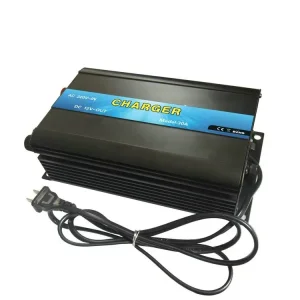
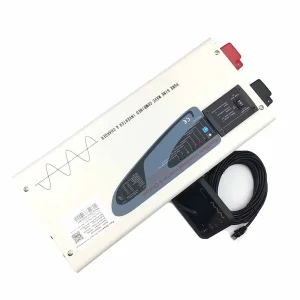
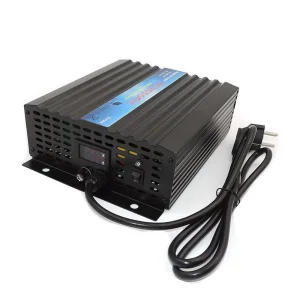
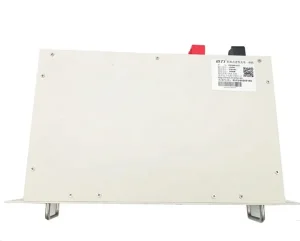
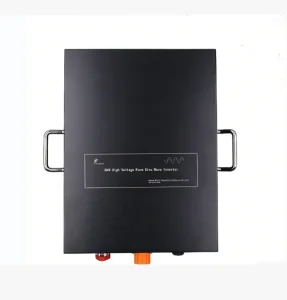
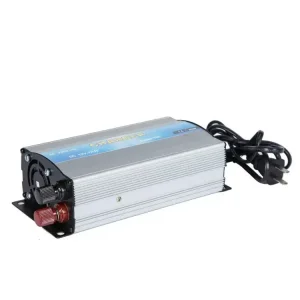
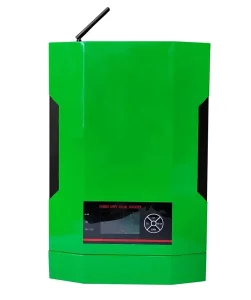
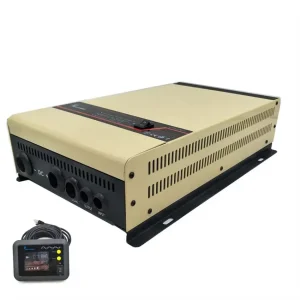
Direct from our ISO 9001:2015 certified manufacturing facility. Engineered for heavy industrial surge tolerance, solar microgrids, and mobile power systems.
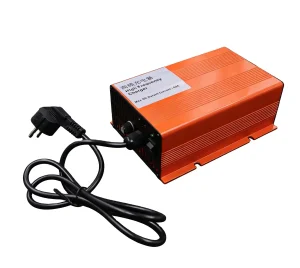
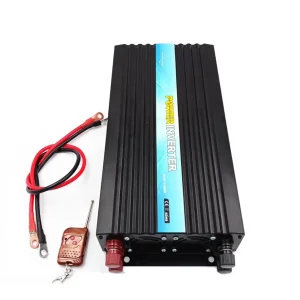
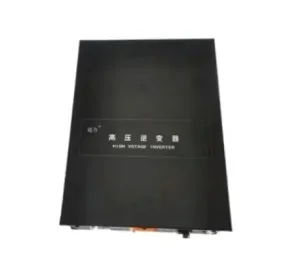
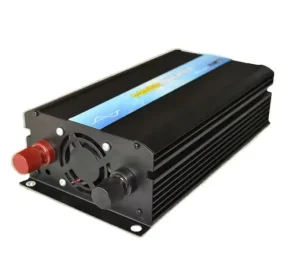
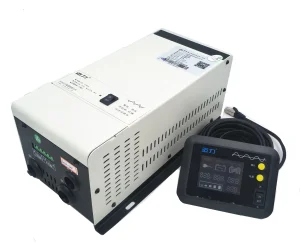
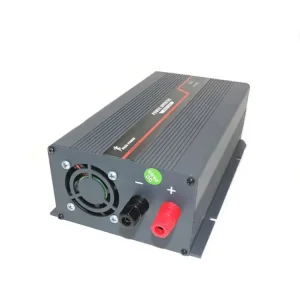
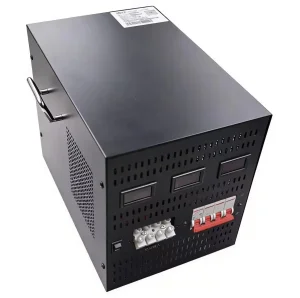
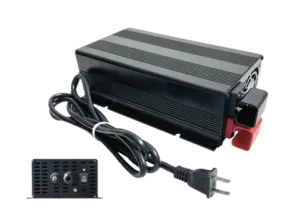
Analyzing how advanced inverter efficiency metrics directly correlate with reduced Thermal Dissipation, Levelized Cost of Energy (LCOE), and operational resilience across commercial and industrial (C&I) deployments.
In the rapidly evolving landscape of global clean energy transitions, power electronics manufacturing has shifted from simple voltage transformation to high-density, multi-stage thermodynamic energy optimization. Modern grid operators, commercial fleet managers, and off-grid facility engineers no longer evaluate power inverters based solely on nominal peak wattage. Instead, purchasing decisions are strictly governed by weighted efficiency curves—specifically European Efficiency (weighted across medium load profiles) and California Energy Commission (CEC) Efficiency standards.
A modern high-quality inverter efficiency factory operates at the intersection of material science, magnetic engineering, and real-time digital signal processing (DSP). When an inverter system achieves a benchmark 95% to 98.5% conversion efficiency, the remaining lost power is converted directly into heat. Mitigating this waste thermal energy is critical: every 10°C increase in internal component temperature cuts semiconductor operating lifespans in half (governed by the Arrhenius Law).
“At the factory level, optimizing inverter conversion efficiency by just 1.5% reduces overall internal thermal dissipation by over 30%. This dramatic reduction in thermal stress translates directly to extended MTBF (Mean Time Between Failures) and lowers operational expenditure for utility-scale and off-grid deployments.”
Our Suzhou manufacturing campus integrates automated surface-mount technology (SMT) with rigorous full-load burn-in testing chambers to ensure that every pure sine wave inverter, hybrid solar MPPT unit, and intelligent battery charger meets stringent international standards (CE, RoHS, CB, SAA, UL guidelines).
Deconstructing the core circuit topologies, magnetic materials, and active switching mechanisms engineered within high-efficiency OEM/ODM inverter factories.
By replacing legacy Silicon MOSFETs with Silicon Carbide (SiC) and Gallium Nitride (GaN) switches, our factory-engineered inverters drastically reduce turn-on and turn-off switching losses. SiC switches operate efficiently at frequencies above 100 kHz with minimal RDS(on) resistance.
Low-frequency inverters utilize custom-wound toroidal transformers that offer exceptional surge resistance (300% peak capacity for inductive motor starting) while maintaining low no-load quiescent current losses. High-frequency platforms leverage planar transformers for ultra-compact, high-density power conversion.
Advanced Digital Signal Processors execute zero-voltage switching (ZVS) and zero-current switching (ZCS) algorithms in real-time. By dynamically tuning pulse-width modulation (PWM) relative to load fluctuations, total harmonic distortion (THD) is kept strictly under 3%.
| Efficiency Architectural Metric | Legacy Power Inverters | High-Efficiency Factory Standards (Maili) | Industrial Operational Advantage |
|---|---|---|---|
| Peak Conversion Efficiency | 82% – 88% | 94% – 98.5% | Up to 15% reduction in primary energy waste. |
| Quiescent (No-Load) Power | 35W – 60W Continuous | < 8W – 15W Eco-Mode | Prevents deep battery discharge during standby cycles. |
| Total Harmonic Distortion (THD) | 5% – 10% (Modified Wave) | < 2.5% Pure Sine Wave | Protects sensitive medical, lab, and telecom equipment. |
| Surge Capacity Multiplier | 1.5x Rated Output | 3.0x Rated Output (Toroidal) | Effortlessly starts air conditioners, pumps, and compressors. |
| Thermal Operating Window | -10°C to +40°C | -25°C to +65°C Auto-Derating | Stable operation in desert heat or arctic conditions. |
Deploying certified inverter technologies across key global verticals: from residential storage integration to commercial fleet electrification and telecommunications infrastructure.
In distributed solar energy storage systems (ESS), the inverter serves as the intelligent gateway between DC photovoltaic arrays, battery banks (LiFePO4, AGM, GEL), and AC loads. High efficiency during bidirectional charging and discharging cycles ensures optimal energy ROI. Our hybrid MPPT inverters achieve a tracking efficiency of 99.9%, maximizing power extraction even during partial shading conditions.
Emergency service vehicles (ambulances, fire command trucks), commercial service vans, and recreational vehicles (RVs) require ruggedized, vibration-resistant inverters. Low-frequency pure sine wave units equipped with heavy-duty toroidal transformers handle severe electrical surges from power tools and medical compressors without tripping onboard circuit protection.
As commercial EV platforms transition from legacy 12V/24V architectures to high-voltage DC buses (such as 380V or 540V DC), custom OEM manufacturing becomes mandatory. Our factory designs specialized 8KW and 10KW single-phase and 3-phase high-voltage DC inverters capable of delivering 94%+ efficiency for onboard EV charging and power takeoff (PTO) systems.
Remote telecommunications infrastructure demands 24/7/365 uptime in harsh environments. Integrated rack-mounted inverter-charger combinations deliver seamless transfer times (< 10ms), keeping critical communication nodes online during power outages without dropping signals.
Navigating international electrical safety mandates and local grid interconnection standards with fully certified, customizable power hardware.
Our factory engineering team customizes output AC voltages (100V, 110V, 120V, 220V, 230V, 240V, 380V) and frequencies (50Hz / 60Hz) to match regional standards across North America, Europe, Australia, and Asia. All platforms carry valid CE, RoHS, CB, and SAA certifications.
We support extensive customization across 8 key areas: input DC voltage ranges, charging currents, output socket types (Universal, EU, US, UK, AU), communication protocols (RS485, CAN-bus, Wi-Fi, Modbus), enclosure colors, and custom LCD user interfaces.
Quality assurance begins with strict incoming component inspection (IQC) for semiconductors and capacitors, followed by automated In-Circuit Testing (ICT) and 100% full-load aging burn-in for 4 to 12 hours prior to final packaging.
Pioneering the future of power electronics: artificial intelligence predictive switching, bidirectional V2G (Vehicle-to-Grid), and solid-state battery compatibility.
Next-generation factory platforms will integrate micro-embedded AI microcontrollers capable of analyzing non-linear load signatures in microseconds. By dynamically predicting current spikes from inductive motors, switching pulse widths are adjusted pre-emptively, eliminating electrical stress and boosting partial-load efficiency by up to 3.2%.
As mobile energy storage expands, inverters must seamlessly transition between DC battery charging and high-efficiency AC grid-feeding. Our engineering roadmap includes high-voltage bidirectional topology modules tailored for EV integration, supporting smart home backup during grid failures.
Solid-state battery chemistries require extremely tight voltage regulation during multi-stage charging. Our multi-stage smart charger factory lines are evolving with firmware architectures that allow precise custom charge curves, preventing lithium plating and maximizing cell cycle life.
“Our ongoing R&D investments focus on hybrid GaN-SiC topologies to push inverter power density beyond 3.5 Watts per cubic inch while keeping conversion efficiency consistently above 98% across all operating loads.”
Authoritative answers to critical engineering, manufacturing, and operational questions regarding inverter efficiency and OEM capabilities.
Low-frequency inverters utilize a heavy line-frequency iron/toroidal transformer to increase voltage, resulting in exceptional surge capacity (300% rated peak) and high electrical durability. However, the iron core introduces idle magnetizing losses. High-frequency inverters use electronic switching stages and compact ferrite transformers, yielding higher peak energy efficiency (often 95%+) and a lighter footprint, making them ideal for resistive electronic loads and space-constrained setups.
Inverter efficiency is non-linear. At very light loads (< 10%), efficiency drops significantly because fixed internal control power and quiescent operating current consume a larger proportion of input energy. Peak efficiency typically occurs between 40% and 70% rated load. At 100% full load, I²R resistive copper losses in windings and semiconductor conduction losses slightly decrease overall efficiency. Choosing an inverter sized for 50-70% nominal operation maximizes system efficiency.
Pure Sine Wave inverters deliver smooth, harmonic-free AC power identical to (or cleaner than) utility grid power. Modified sine wave inverters produce stepped square waves with high Total Harmonic Distortion (THD). When driving inductive loads (motors, refrigerators, compressors), modified sine waves cause harmonic heating, audible noise, and energy waste, reducing overall appliance motor efficiency by up to 20% and shortening equipment lifespan.
Our factory integrates intelligent variable-speed cooling fans that activate only when internal temperatures exceed 45°C or load power exceeds 30%. Furthermore, internal MOSFETs and IGBTs are mounted directly onto extruded aluminum heat sinks with high thermal conductivity silicone interface materials, ensuring effective heat dissipation without wasting fan power under light loads.
Intelligent 3-stage chargers operate through Bulk (Constant Current), Absorption (Constant Voltage), and Float stages. By switching dynamically between high-current fast charging and controlled voltage topping, energy transfer efficiency exceeds 90% while preventing overcharging, electrolyte gassing, and thermal runaway in Lead-Acid, GEL, AGM, and Lithium LiFePO4 batteries.
Yes. While 12V, 24V, and 48V DC are standard low-voltage platforms, our R&D engineering department regularly manufactures high-voltage DC inverters (e.g., 96V, 380V, 540V DC) tailored for commercial electric vehicles, telecommunication power rooms, and large off-grid solar farms. High-voltage DC buses dramatically reduce current amperage, allowing thinner copper cabling and reducing cable heat losses.
Expand your procurement options with our intelligent chargers, hybrid MPPT solar inverters, and high-voltage DC conversion platforms.