


Direct factory-engineered power conversion units, intelligent chargers, and heavy-duty inverters for global B2B procurement.
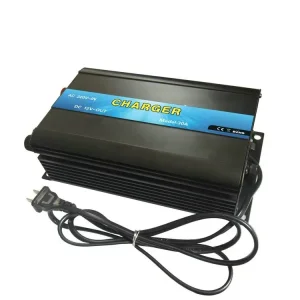
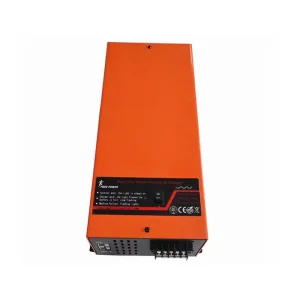
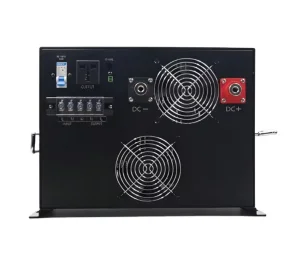
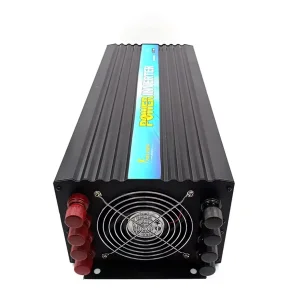
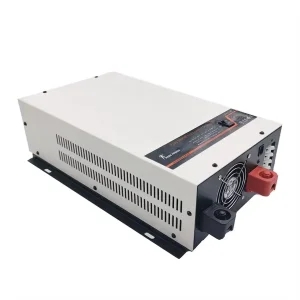
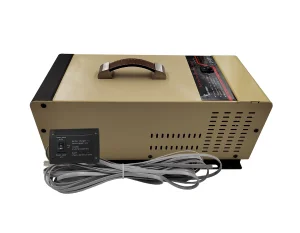
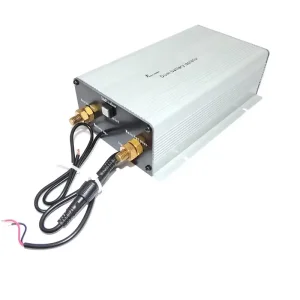
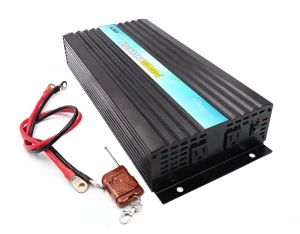
Navigating the shift toward high-power density, wide-voltage compatibility, and thermal longevity in commercial electronics sourcing.
Standard consumer-grade charging bricks fail under continuous high-duty enterprise workloads. Factory-direct procurement requires a granular understanding of semiconductor topologies, total harmonic distortion (THD), ripple voltage dynamics, active power factor correction (PFC), and thermal dissipation efficiency. Evaluating a multi device charger manufacturer hinges on its capability to deliver sustained high-wattage power without thermal throttling or port-level handshake drops.
An inside look at how high-density multi-device charging stations achieve maximum thermal stability and power throughput.
By integrating Gallium Nitride (GaN) power transistors onto high-frequency planar transformers, our multi-device chargers reduce parasitic capacitance and switching losses by up to 60%. This allows power densities exceeding 1.8W/cm³ while operating at elevated switching frequencies (200kHz–500kHz), drastically shrinking enclosure dimensions.
Traditional multi-port chargers reset power handshakes on remaining ports whenever a new load is attached. Our proprietary microcontroller unit (MCU) utilizes a zero-latency Dynamic Load Balancing algorithm that negotiates Power Delivery (USB-PD 3.1 Extended Power Range) without dropping active connection handshakes or causing laptop screen flicker.
Thermal degradation is the primary root cause of field failures. Our multi-port power stations employ potting compound encapsulated aluminum heatsinks coupled with graphite thermal spreaders and phase-change material (PCM). Under 100% full-load burn-in conditions at 45°C ambient, internal junction temperatures remain safely below 85°C.
| Architectural Parameter | Consumer Charging Bricks | Commercial Multi-Port Chargers | Enterprise Factory-Grade Stations |
|---|---|---|---|
| Primary Semiconductor | Silicon MOSFETs (Legacy) | GaN II Hybrid | GaN IV Integrated ICs |
| Power Factor Correction (PFC) | Passive or None (<0.75) | Active PFC (0.90–0.94) | Interleaved Active PFC (>0.98) |
| MTBF (Mean Time Between Failures) | < 15,000 Hours | ~ 35,000 Hours | > 100,000 Hours (MIL-HDBK-217F) |
| Protocols Supported | PD 2.0 / QC 3.0 | PD 3.0 / PPS / QC 4+ | USB-PD 3.1 EPR (240W) / QC 5.0 / Custom BMS |
| Enclosure Thermal Rating | V-2 Rated ABS Plastic | V-0 Flame Retardant PC | Anodized Aircraft Aluminum + Encapsulated Potting |
Deployment strategies for mission-critical operations, mobile workforces, off-grid energy systems, and transport fleets.
Commercial delivery vans, long-haul trucks, and emergency service vehicles require integrated multi-device DC-to-DC chargers and inverter-charger combinations. Units must tolerate wide DC input swings (9V–36V), vibration stress (SAE J1455), and dirty alternator power while maintaining stable multi-port outputs for driver tablets, scanners, and communication gear.
Modern co-working spaces, corporate IT departments, and educational institutions demand high-bay charging hubs capable of powering dozens of high-wattage laptops simultaneously. Factory-customized desktop and rack-mount multi-device chargers streamline cable management, eliminate bulky AC adapters, and optimize building power utilization.
In remote off-grid cabins, marine vessels, and recreational vehicles (RVs), multi-device charging infrastructure directly interacts with auxiliary battery banks (LiFePO4 / Lead-Acid). Combining high-efficiency multi-port DC chargers with Pure Sine Wave low-frequency inverters prevents battery depletion and extends battery cycle life via intelligent 3-stage charge profiles.
Healthcare and mobile EMS personnel rely on portable diagnostic equipment, defibrillators, and handheld terminals. Chargers deployed in these environments must satisfy stringent medical EMC guidelines (IEC 60601-1-2), offering low leakage current, high galvanic isolation, and zero electromagnetic noise interference with sensitive telemetry.
How evolving USB standards, artificial intelligence, and microgrid architectures are reshaping multi-device charging infrastructure.
The transition from Standard Power Range (100W max) to Extended Power Range (EPR up to 240W via 48V/5A) allows multi-device charging hubs to power power-hungry gaming rigs, medical laptops, and power tool battery bays directly through USB-C. Factory R&D focuses on managing high-voltage arc prevention and specialized cable handshakes.
Next-generation chargers incorporate micro-embedded sensors and edge AI firmware. By monitoring real-time ambient degradation, power draw curves, and thermal rise rates, the internal algorithm dynamically adjusts switching frequency and active fan curves, preventing hardware degradation and predicting component wear before field failures occur.
Eliminating intermediate AC-to-DC and DC-to-AC conversion stages yields up to an 8% boost in overall system efficiency. Future multi-device chargers will wire directly into 48V DC busbars powered by local solar microgrids and Battery Energy Storage Systems (BESS), serving as native DC fast-charging nodes in sustainable smart buildings.
Tailoring hardware, housing design, communication protocols, and protective circuitry to exact buyer specifications.
Choose from CNC-milled aluminum alloy enclosures, V-0 flame-retardant polycarbonate, or IP65-rated weatherproof chassis. Full private label laser etching, custom anodized colors, customized silk-screen logos, and bespoke retail or industrial packaging are supported at scalable MOQ thresholds.
Engineer your exact mix of USB-C (PD 3.1 / PPS), USB-A (QC 4+), DC barrel jacks, AC pass-through outlets, and terminal block inputs. Firmware can be pre-configured with custom power distribution profiles tailored for fleet tablets, drones, or industrial batteries.
In corporate or industrial IoT installations, real-time power monitoring is essential. Our ODM engineering team integrates CAN-bus, RS485, Modbus, or Wi-Fi/Bluetooth telemetry modules, allowing facility managers to remotely audit energy draw, port usage, and thermal health.
Every multi-device charger and power inverter unit manufactured in our facility undergoes a stringent 5-stage quality audit:
Overcoming international trade barriers, grid voltage differences, and regulatory certification hurdles.
Products destined for the US and Canada are certified or engineered to comply with UL 62368-1 (Audio/video, information and communication technology equipment safety), FCC Part 15 Class B (EMC emissions), and DOE Level VI / CEC energy efficiency standards.
Full compliance with CE (LVD/EMC), UKCA, RoHS Directive 2011/65/EU, and REACH. Units incorporate wide AC input capabilities (100V–240V, 50/60Hz) with interchangeable EU, UK, and AU AC power cords or regional pin adapters.
We offer flexible Incoterms including EXW, FOB, CIF, and DDP (Delivered Duty Paid). Our export documentation team assists buyers with HS Code classification optimization, Certificate of Origin (Form E, Form F, CO) issuance, and tariff mitigation strategies.
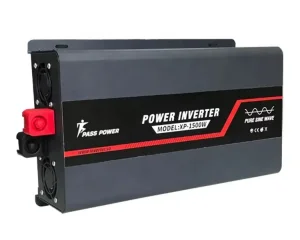
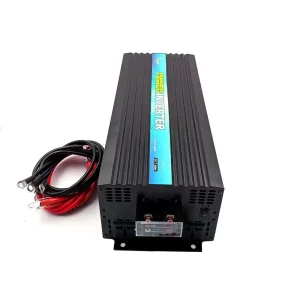
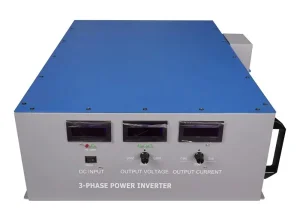
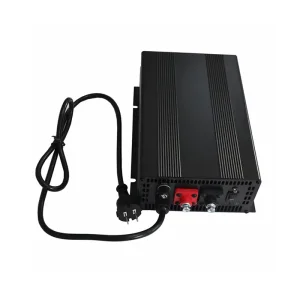
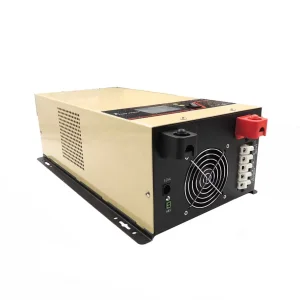
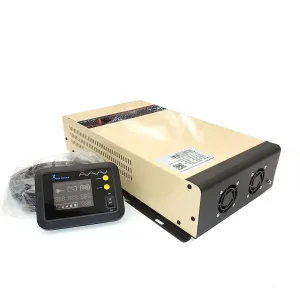
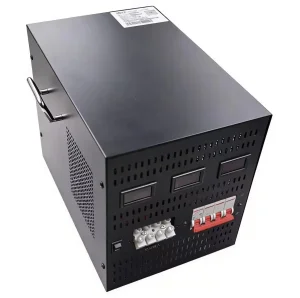
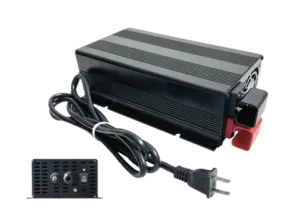
Complete your power eco-system with factory-direct high-wattage pure sine wave inverters and multi-stage smart battery chargers.
In-depth engineering answers addressing thermal design, protocol handshakes, warranty terms, and direct factory procurement.
Accelerate your product launch with direct engineering consultation, custom firmware development, and ISO 9001:2015 certified manufacturing scale.
