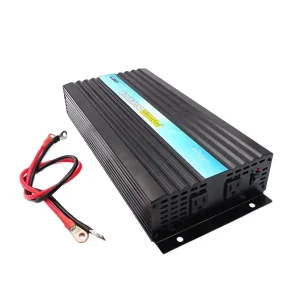
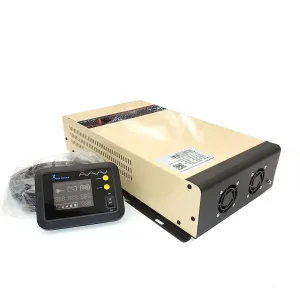
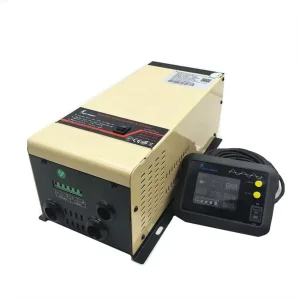
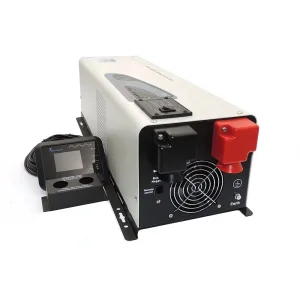
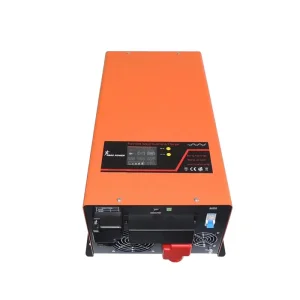
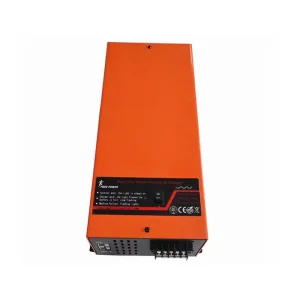
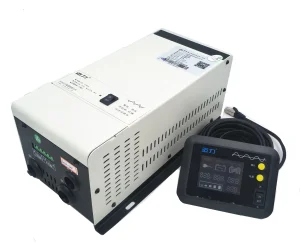
Explore our premier engineering collection of high-frequency conversion units, intelligent MPPT charge controllers, and portable battery powerpacks designed for harsh operational environments.
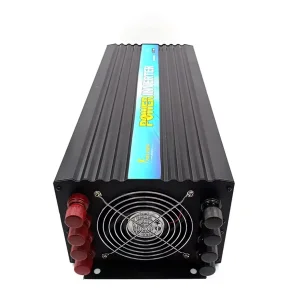
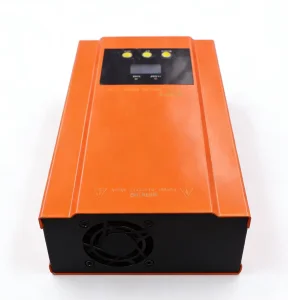
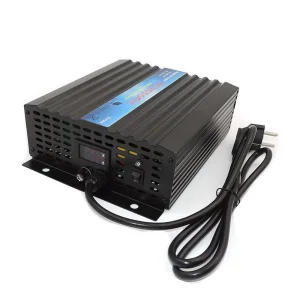
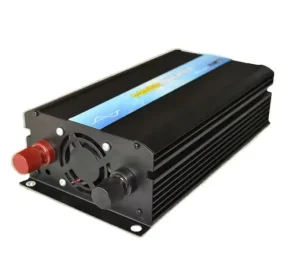
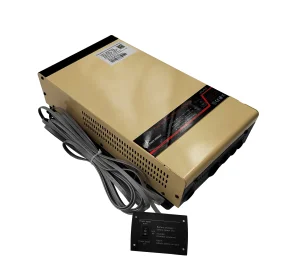
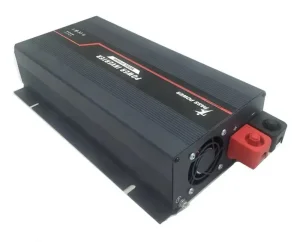
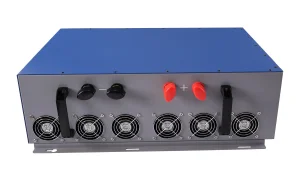
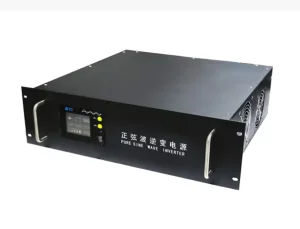
The global energy transition has driven an unprecedented paradigm shift across commercial transportation, remote telecommunications, industrial automation, and decentralized renewable power systems. Central to this transition is the evolution of the Powerpack Charger—a multi-functional electrical system combining high-efficiency AC-to-DC conversion, bi-directional energy transfer, advanced battery management system (BMS) handshakes, and pure sine wave inversion capabilities.
As off-grid energy storage systems (ESS) move toward high-density lithium-ion (LiFePO4 and NMC) chemistries, standard legacy charging topologies are no longer sufficient. Modern industrial operations demand adaptive powerpack chargers capable of delivering rapid multi-stage charging algorithms, tight output voltage regulation (THD < 3%), high dynamic surge capacity for inductive loads, and continuous operation under extreme thermal and electromagnetic conditions.
A critical factor in powerpack charger procurement is selecting the optimal switching topology. High-frequency (HF) powerpack chargers utilize zero-voltage switching (ZVS) pulse-width modulation (PWM) and planar transformers to achieve exceptional power density, lightweight footprints, and peak thermal efficiency—ideal for commercial vehicles, portable power packs, and tight rack installations.
Conversely, Low-Frequency (LF) powerpack chargers incorporate heavy-duty toroidal copper transformers. LF designs deliver unmatched galvanically isolated robust reliability and can handle extreme instantaneous surge currents (up to 3x rated nominal capacity for 10-20 seconds), making them the preferred choice for heavy industrial water pumps, compressors, and harsh off-grid home setups.
State-of-the-art powerpack chargers exported globally are no longer simple power conversion boxes; they are intelligent edge nodes within industrial IoT networks. Modern units utilize high-speed 32-bit digital signal processors (DSPs) to continuously monitor internal component temperatures, voltage fluctuation rails, dynamic load demands, and battery health telemetry.
Through integrated CANbus, RS485, and Modbus RTU communication protocols, powerpack chargers seamlessly exchange real-time state-of-charge (SoC), target voltage limits, and error diagnostics directly with lithium battery management systems (BMS), ensuring maximum battery life and zero thermal runaway risks.
Detailed engineering breakdown of conversion mechanisms, load compatibility, efficiency thresholds, and structural trade-offs for commercial B2B buyers.
| Performance Parameter | High-Frequency (HF) Powerpack Charger | Low-Frequency (LF) Toroidal Powerpack Charger | Hybrid Solar MPPT Inverter Charger |
|---|---|---|---|
| Primary Converter Architecture | MOSFET / SiC Switching + Compact High-Freq Transformer | Heavy Toroidal Copper Line-Frequency Transformer | Bi-Directional High-Voltage DC-DC + MPPT Stage |
| Conversion Efficiency Peak | 94% – 96.5% | 88% – 92% | 95% – 97.8% (Solar to Load) |
| Surge Capacity Ratio | 1.5x Nominal Rating (< 2 seconds) | 3.0x Nominal Rating (10 – 20 seconds) | 2.0x Nominal Rating (< 5 seconds) |
| Waveform Quality & THD | Pure Sine Wave (THD < 2.5%) | Pure Sine Wave (THD < 3.0%) | Pure Sine Wave (THD < 2.0%) |
| Best-Suited Load Profiles | Electronics, IT Servers, Mobile Power Units, RV Appliances | Air Conditioners, Motors, Water Pumps, Compressors, Tools | Off-Grid Whole Home, Commercial Solar ESS, Remote Towers |
| Galvanic Isolation | Standard High-Frequency Isolation | Full Complete Physical Galvanic Isolation | Integrated Optocoupler & Transformer Isolation |
| Enclosure Weight & Density | Ultra-Compact & Lightweight (High Power Density) | Heavy-Duty, Robust Mechanical Mass | Modular Wall-Mounted / Rack-Mounted Chassis |
How specialized powerpack chargers, battery isolators, and pure sine wave inverters solve mission-critical power challenges across global industries.
Commercial vehicles and emergency medical service (EMS) trucks require dual battery isolation and reliable AC power on the move. Installing intelligent high-frequency powerpack chargers paired with dual battery isolators allows secondary lithium auxiliary banks to be rapidly charged directly from the alternator without compromising the starter battery.
When connected to shore power, the unit seamlessly switches to an automated multi-stage charger, sustaining critical medical monitors, tools, and climate control units.
In remote regions across North America, Europe, Africa, and Australia, grid access is either non-existent or unreliable. Wall-mounted low-frequency inverter chargers and MPPT hybrid solar powerpack units serve as the primary power hub for off-grid homes and microgrids.
By dynamic solar energy harvesting during daylight hours and balancing battery storage bank discharge during peak night hours, these systems ensure uninterrupted power supply with automatic diesel generator start-up backup hooks.
Heavy agricultural irrigation motors, submersible water pumps, and automated farm aeration systems present demanding inductive start-up torque requirements. Standard off-the-shelf electronic chargers often trip or fail under heavy inductive back-EMF.
Our heavy-duty 8000W to 12000W high/low frequency powerpack chargers feature soft-start digital circuits and high transient current thresholds to start heavy pump motors smoothly without voltage collapse.
As a verified global powerpack charger exporter, all production processes strictly follow the ISO 9001:2015 Quality Management System. Every single unit leaving our facility undergoes rigorous multi-tier testing, including automated PCB optical inspection (AOI), full-load thermal burn-in chamber testing, hi-pot dielectric withstand tests, and dynamic surge stress verification.
To streamline import clearances for global distributors and original equipment manufacturers (OEMs), our product portfolio maintains comprehensive international compliance certifications, including CE, RoHS, CB, SAA, and IP30 enclosure protection standards.
Anticipating energy demands for 2025-2030 through wide-bandgap semiconductors, bi-directional vehicle-to-load integration, and AI-driven predictive power management.
Replacing traditional silicon MOSFETs with Silicon Carbide (SiC) and Gallium Nitride (GaN) power switches drastically reduces switching losses, allowing powerpack chargers to operate at significantly higher switching frequencies while boosting overall efficiency past 98% with smaller heat sinks.
Future powerpack chargers will feature full bi-directional power flow capabilities, enabling commercial fleets and vehicles to act as distributed mobile energy storage units that feed power back into site microgrids (V2X / V2L) during peak tariff hours or grid outages.
Embedded edge-AI analytics inside smart powerpack chargers will continuously analyze battery impedance profiles, capacitor degradation curves, and ripple currents to predict potential system failures days before they occur, minimizing costly industrial downtime.
Expert answers to common engineering, procurement, and deployment questions regarding industrial powerpack chargers and inverter systems.
Browse our heavy-duty low-frequency toroidal units, ultra-thin wall-mounted commercial converters, rack-mount systems, and high-efficiency smart chargers.