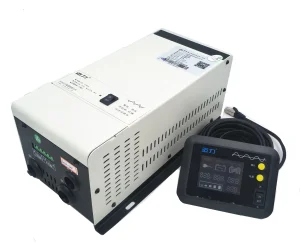
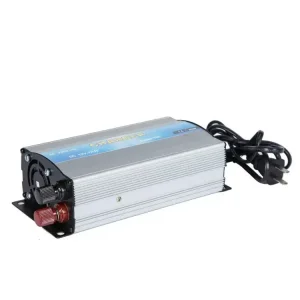
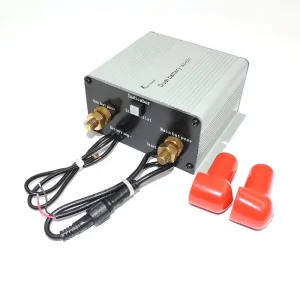
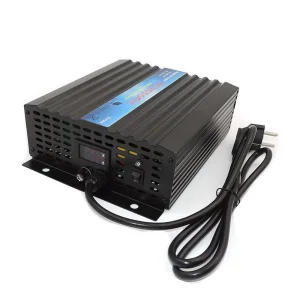
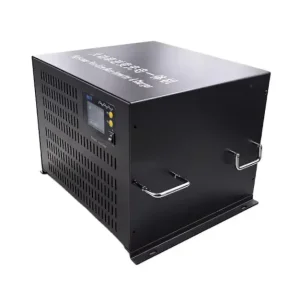
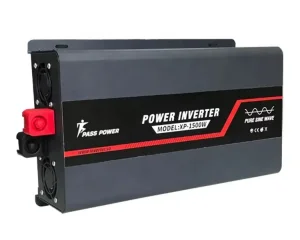
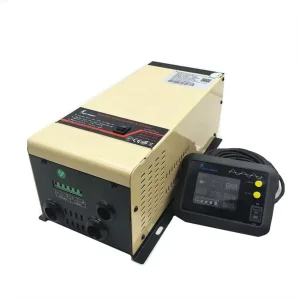
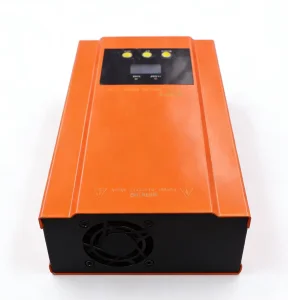
Explore our engineering portfolio of pure sine wave power inverters, chargers, and MPPT systems featuring dedicated user custom mode architecture.
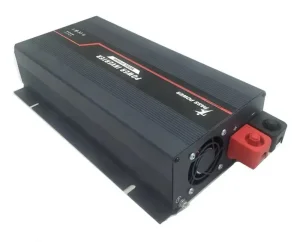
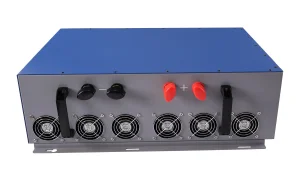
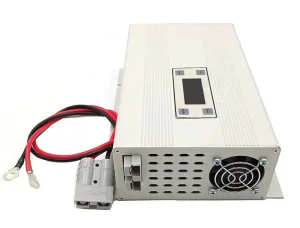
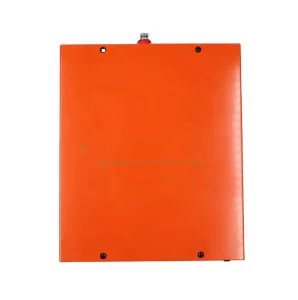
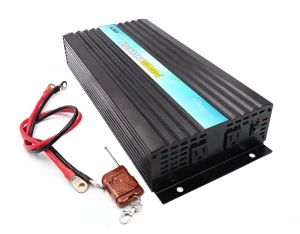
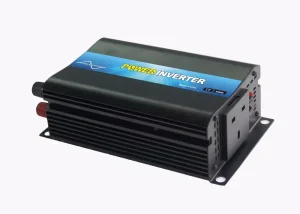
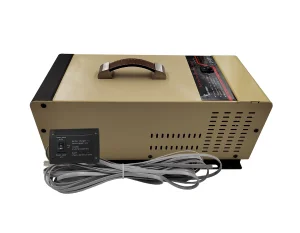
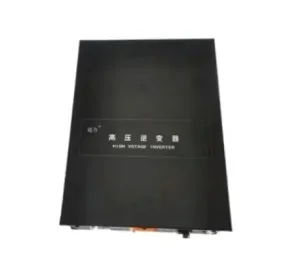
Quantifiable performance matrices achieved across Suzhou Maili's ISO 9001:2015 manufacturing facility.
In modern industrial and commercial off-grid energy storage systems (ESS), rigid off-the-shelf inverter parameters no longer meet complex field requirements. As global markets transition toward specialized energy storage chemistries—including Lithium Iron Phosphate (LiFePO4), Lithium Titanate Oxide (LTO), Nickel Manganese Cobalt (NMC), and specialized AGM/GEL lead-acid configurations—power conversion equipment must provide high-level parameter adaptability. The designation "Support User Custom Mode" represents a fundamental engineering paradigm shift from fixed factory-preset hardware to dynamic, software-configurable power electronics platforms.
A true "Support User Custom Mode" manufacturer integrates High-Speed Digital Signal Processors (DSPs), multi-bus communication protocols (RS485, CANbus, Modbus RTU), and open firmware registers. This enables system integrators, OEM partners, and field engineers to fine-tune critical electrical operating parameters in real-time. These settings include custom bulk/float/equalization voltages, low-voltage disconnect (LVD) thresholds, charge current limits, priority source logic (PV vs. Grid vs. Battery), and ambient temperature compensation coefficients.
Unlike standard off-the-shelf inverters that enforce fixed cut-off voltages—frequently triggering premature thermal tripping or cell imbalance in custom battery packs—Suzhou Maili's custom-mode inverters grant full register-level manipulation of high-voltage recovery, charge curve duration, and soft-start ramps. This extends battery cycle life by up to 35% and eliminates nuisance tripping under heavy inductive surge loads.
Achieving absolute parameter customization requires robust hardware-firmware co-design. Standard low-cost inverters rely on analog feedback loops with trimpots, which suffer from thermal drift and component aging. In contrast, Maili Electric's custom-mode power platforms leverage 32-bit ARM Cortex and Microchip DSP architectures to govern the power stage digitally.
Direct manipulation of SPWM pulse widths allows real-time adjustment of output AC frequencies (50Hz/60Hz), output voltage regulation (100V to 240V ±1%), and soft-start duration from 0.5s to 10s.
Engineers can define 3-stage or 4-stage charging parameters, including custom Constant Current (CC) amps, Constant Voltage (CV) thresholds, Float cut-offs, and automatic cell balancing trigger points.
Native hardware support for CAN 2.0B and RS485 enables custom handshaking routines with leading lithium BMS suppliers (Pylontech, Victron, Seplos, JBD), ensuring dynamic current throttling during thermal anomalies.
Furthermore, hardware safety overrides remain active regardless of user custom settings. Even if an operator inputs aggressive voltage parameters via the LCD digital screen or software interface, internal hardware comparators maintain absolute protection boundaries against over-voltage, reverse polarity, short circuit, over-temperature, and DC bus isolation faults.
The versatility of user custom mode inverters allows global system integrators to deploy identical core inverter hardware across vast, geographically distinct energy environments while adapting locally via firmware:
Travel trailer air conditioners, induction cooktops, and high-draw appliances demand high surge currents from compact 12V/24V battery banks. Maili’s low-frequency pure sine wave inverters with toroidal transformers allow RV owners to program specific low-voltage cut-offs aligned with high-discharge LiFePO4 batteries, eliminating system shutdown when high-torque compressor motors start up.
Remote telecom infrastructure relies on hybrid diesel-PV-battery microgrids. User custom mode allows remote operators to set automatic generator starting signals based on precise state-of-charge (SOC) thresholds, optimizing fuel consumption while preserving hybrid battery longevity under high ambient operational temperatures.
Ambulances and mobile command centers require zero-glitch transition times. Utilizing Maili Electric's ultra-thin wall-mounted and heavy-duty combined inverter-chargers, system builders can configure fast automatic transfer switch (ATS) speeds (< 8ms) alongside customized shore-power charge current limiting to prevent tripping utility breakers at field dispatch stations.
The competitiveness of Suzhou Maili Electrical Appliance Co., Ltd. is rooted in its location within Suzhou’s high-tech industrial manufacturing ecosystem. Operating an ISO 9001:2015 certified 2,770 m² facility, Maili maintains complete vertical integration over key manufacturing phases:
Custom core winding facilities allow precision control over transformer copper weight, turns ratio, and magnetic flux density, ensuring 300% surge capacity for low-frequency models.
Surface-mount technology (SMT) guarantees high component density and vibration resistance, vital for marine and commercial vehicle installations.
100% of manufactured units undergo 4-hour full-load thermal aging and dynamic load stress testing prior to packaging, driving field failure rates below 0.2%.
This localized supply-chain density minimizes component lead-times for customized requests. Whether an importer requires non-standard DC voltage inputs (e.g., 96V DC for special EV platforms) or private-label firmware branding, Maili’s engineering team transitions projects from CAD validation to prototype testing in under two weeks.
As power electronics advance, user custom mode capabilities are evolving beyond manual parameter input toward intelligent, predictive power orchestration. Maili Electric’s R&D roadmap focuses on four primary engineering frontiers:
1. Silicon Carbide (SiC) & GaN Integration: Transitioning high-frequency inverter stages to SiC MOSFETs to increase power density by 40% while achieving 98%+ efficiency.
2. Cloud-IoT Parameter Synchronization: Enabling field technicians to push custom charge profiles and update firmware remotely via Bluetooth/Wi-Fi mesh networks.
3. V2X (Vehicle-to-Everything) Compatibility: Engineering high-voltage DC inverters (e.g., 540V DC inputs) capable of bidirectional power exchange between commercial EV batteries and grid/home systems.
4. AI-Driven Battery Diagnostics: Embedded algorithms that analyze internal impedance changes and automatically adjust custom float/bulk voltages over time to slow battery degradation.
Exporting custom-mode power electronics requires rigorous adherence to international regulatory landscapes. Custom parameters must operating within strict electromagnetic compatibility (EMC) and electrical safety boundaries:
Maili Electric products undergo strict compliance testing verified by third-party laboratories including SGS. Our hardware maintains compliance with CE (EN 62109-1, EN 62109-2) for solar inverter safety, EN 61000-6-1/3 for EMC emission standards, and RoHS Directive 2011/65/EU. For marine and off-road applications, enclosure protection options up to IP30 and IP65 are available upon request.
To support global partners, Maili offers complete OEM localization packages: customized language firmware for LCD displays, country-specific AC output sockets (US NEMA, Universal, UK, Schuko, Australian), customizable silkscreen branding, and specialized packaging designed for drop-shipping and Amazon/FBA distribution.
In-depth responses to common engineering, procurement, and parameter customization inquiries.
Complete product offerings engineered for global export, industrial integration, and vehicle power conversion.