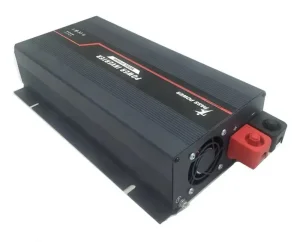
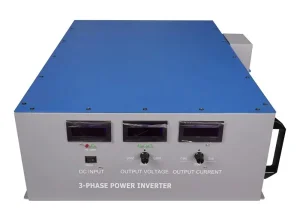
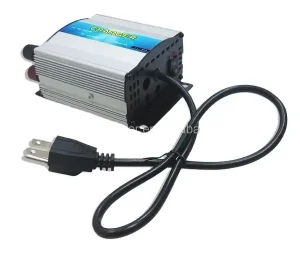
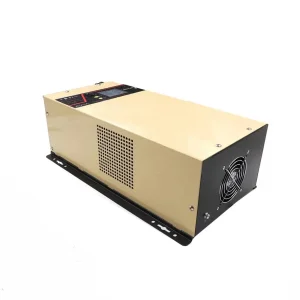
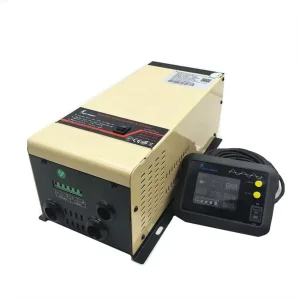
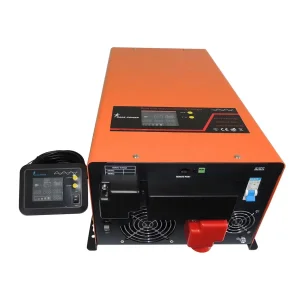
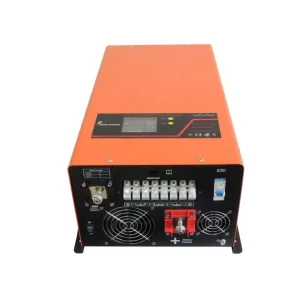
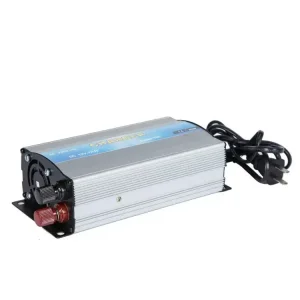
Factory-direct OEM/ODM power solutions optimized for commercial vehicles, marine transport, heavy equipment, and off-grid power storage.
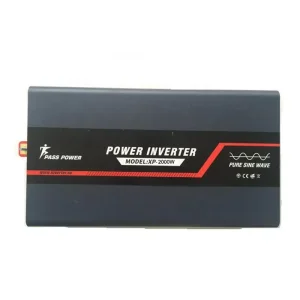
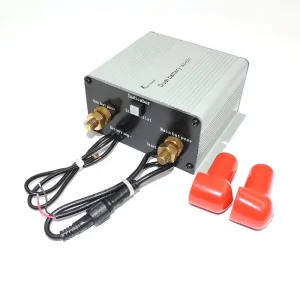
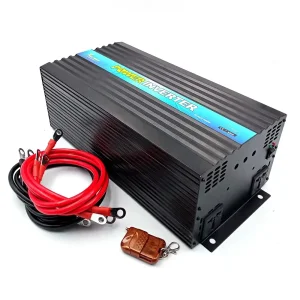
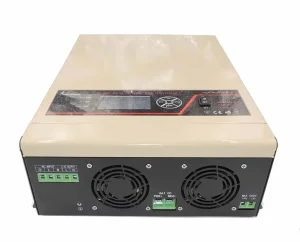
An authoritative analysis of fleet electrification, wide-bandgap semiconductor adoption, and global procurement dynamics driving modern power conversion systems.
Strategic Industry Insight: The global commercial and industrial vehicle charger market is projected to expand at a CAGR of 18.4% through 2030. The transition from legacy silicon topologies to Silicon Carbide (SiC) and Gallium Nitride (GaN) power electronics is enabling ultra-compact 98%+ efficiency designs, revolutionizing automotive and off-grid power infrastructure.
Modern vehicle battery chargers utilize Zero-Voltage Switching (ZVS) resonant LLC converters paired with high-frequency PWM switching. This architecture reduces active transformer footprint by over 60% while drastically lowering switching thermal losses, enabling lightweight, vibration-resistant aluminum die-cast housings ideal for automotive environments.
Advanced vehicle chargers incorporate intelligent microcontroller-driven multi-stage algorithms (Bulk, Absorption, Float, Equalization, Soft-Start). These units auto-detect and adapt dynamic voltage thresholds for Lithium LiFePO4, AGM, Gel, and flooded lead-acid battery banks, optimizing cycle life and preventing thermal runaway risks.
Industrial vehicle charging infrastructure demands seamless integration with onboard Battery Management Systems (BMS). Through customized CAN 2.0B protocol stacks, J1939 compliance, and RS485 interfaces, OEM chargers continuously report real-time state-of-charge (SOC), battery cell temperature, voltage status, and diagnostic fault codes.
Key technical criteria and compliance frameworks evaluated by North American, European, and Asia-Pacific B2B buyers when sourcing industrial battery charging hardware.
Global commercial logistics fleets, last-mile delivery vans, municipal utility trucks, and electric buses require heavy-duty on-board and off-board chargers capable of continuous high-amp output under harsh vibration, wide temperature swings (-40°C to +65°C), and fluctuating AC grid inputs (85V–265V AC).
Automated Guided Vehicles (AGVs) and electric forklifts in Industry 4.0 automated warehouses require opportunity charging systems. Procurement directors demand rapid fast-charging capabilities (0.5C to 1C charge rates), zero downtime, integrated relay interlocks, and low electromagnetic interference (EMC Class B compliance).
Recreational vehicles, marine yachts, overland expedition rigs, and emergency response ambulances rely on dual-battery isolation systems and combined inverter-chargers. These systems must provide seamless AC grid/shore power switching, pure sine wave AC output, and galvanic isolation to eliminate marine electrolysis or chassis ground loops.
Why leading global vehicle manufacturers partner with advanced Chinese manufacturing hubs for OEM/ODM battery charger production.
Situated in China's premier power electronics manufacturing clusters (such as Suzhou and the Pearl River Delta), our production lines benefit from immediate component availability—from automotive-grade MOSFETs and Magnetic Inductors to specialized CNC aluminum extrusions—reducing lead times for custom projects by up to 50%.
Our ISO 9001:2015 and IATF 16949 certified manufacturing facilities leverage high-speed Yamaha High-Precision SMT lines, automated optical inspection (AOI), 3D X-ray solder joint verification, and robotic conformal coating sprayers to guarantee flawless moisture-proof, dust-proof, and corrosion-resistant circuit boards.
Every single charger unit undergoes 100% full-load dynamic burn-in testing, high-voltage dielectric withstand checks, thermal imaging hot-spot analysis, vibration resistance testing on 3-axis shakers, and environmental chamber cycling to guarantee zero-defect shipment for critical automotive applications.
Versatile, field-tested battery charging solutions tailored to specific commercial, industrial, and off-grid operational requirements.
Deployment Scenario: Urban delivery vehicles equipped with 48V or 72V LiFePO4 battery packs requiring overnight plug-in charging and onboard auxiliary power conversion.
Engineered Advantage: Compact aluminum housing with active PFC (Power Factor Correction > 0.99), wide AC input ranges, and automated over-voltage/under-voltage disconnect features.
Deployment Scenario: Specialized EMS ambulances needing continuous trickle charging for primary chassis starter batteries and auxiliary secondary medical equipment power banks.
Engineered Advantage: Dual-output smart charging with automatic voltage sensing relays (VSR), zero-drop isolator kits, and emergency engine-start bypass interlocks.
Deployment Scenario: Marine vessels exposed to saltwater corrosion, salt spray, and continuous engine vibration requiring sealed charging hardware.
Engineered Advantage: Fully encapsulated IP67 epoxy-potted electronics, stainless steel hardware, anti-galvanic isolation, and CE/RoHS certified safety protection.
Standard manufacturing parameters across key product categories for industrial buyers, OEM system integrators, and distributors.
| Charger / Inverter Series | Input Voltage Range | Nominal Output Voltage | Peak Efficiency | Battery Compatibility | Certifications |
|---|---|---|---|---|---|
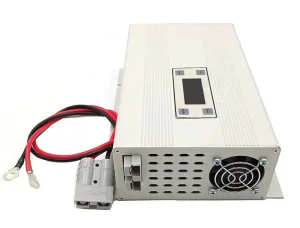
| Intelligent Portable Fast Charger | 100V – 240V AC (50/60Hz) | 12V / 24V DC (5A – 30A) | > 92% | LiFePO4, AGM, GEL, WET | CE, RoHS, FCC, PSE |
| High-Power EV Charging Inverter | 110V / 220V AC Single Phase | 12V / 24V / 48V DC (Up to 100A) | > 95% | Lithium-ion, LiFePO4, Lead-Acid | CE, CB, RoHS, SGS |
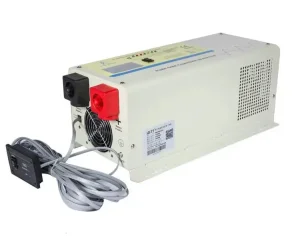
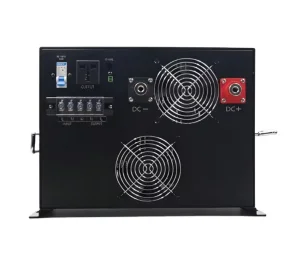
| Low Frequency Inverter Charger | 12V / 24V / 48V DC Input | 110V / 120V / 230V AC Pure Sine Wave | > 88% (300% Surge) | All Heavy Industrial Chemistries | CE, RoHS, ISO9001 |
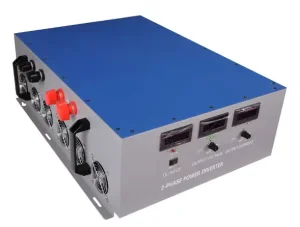
| 3-Phase Industrial Power System | 190V – 380V AC 3-Phase | 24V / 48V / 96V / 380V High Voltage DC | > 96.5% | High Voltage Lithium Battery Banks | CE, CB, IEC Standard |
| Dual Battery Voltage Sensitive Isolator | 12V / 24V DC Auto-Sensing | 140A / 200A Continuous Cut-In | 99.9% (Low Switch Resistance) | Dual Bank Starter + House Battery | CE, E-Mark Compliant |
Detailed technical, OEM/ODM customization, certification, and procurement answers directly from our senior engineering team.
Low frequency chargers and inverters utilize robust iron-core toroidal transformers that excel in high surge capacity (handling 300% peak loads for power tools, air conditioners, and heavy motors) with exceptional electrical isolation. High frequency chargers utilize compact electronic switching circuits, making them significantly lighter, smaller, and highly cost-effective for space-constrained electronics and light commercial applications.
Yes. Our chargers support custom CAN-Bus (CAN 2.0B / J1939) and RS485 communication protocols, allowing real-time parameter exchange between the charger and the BMS. The BMS can dynamically request target charging current, cut-off voltage, and temperature throttling to guarantee maximum battery longevity and operating safety.
We offer full structural and electronic customization: custom DC input voltages (12V, 24V, 36V, 48V, 72V, 96V, up to 380V DC), custom AC output plug formats (US, EU, UK, AU, Universal), private-label silk-screening and extruded aluminum color finishes, custom LCD digital displays, waterproof IP67 potting, and specialized charging profile firmware.
Our factories strictly adhere to ISO 9001:2015 quality management systems. Our product lines hold international safety and compliance credentials including CE, CB, RoHS, SGS test reports, IP30/IP67 ingress ratings, and compliance with major IEC / EN electromagnetic compatibility standards required across Europe, North America, and Australia.
Our 3-stage/4-stage charging technology applies constant current (Bulk stage) to swiftly restore 80% capacity, transitions to constant voltage (Absorption stage) to safely saturate battery cells, and reduces to a controlled Float stage to maintain full charge without overcharging or electrolyte boiling. Desulfation equalizing pulses are periodically applied to lead-acid batteries to dissolve sulfate crystals.
A Voltage Sensitive Relay (VSR) dual battery isolator monitors the main alternator charging voltage. Once the engine starts and the primary starter battery reaches 13.3V (or 26.6V), the isolator engages to charge both the starter and auxiliary house batteries simultaneously. When the engine shuts off and system voltage drops below 12.8V, the isolator automatically decouples the banks to protect the starter battery from discharge.
Standard catalog models carry flexible low MOQ requirements (10–50 units for trial orders). Custom OEM/ODM orders featuring specialized housing dies or tailored firmware typically require 15 to 25 business days for mass production after sample sign-off, backed by expedited air or sea freight logistics.
Through localized supply chain vertical integration in power electronics, automated surface-mount assembly (SMT), high-volume component purchasing power, and automated end-of-line burn-in testing, Chinese factories minimize labor variance, eliminate component sourcing delays, and pass cost efficiencies directly to international OEM partners.
Explore our full hardware line of pure sine wave power inverters, off-grid hybrid MPPT systems, fast chargers, and wall-mounted commercial power supplies.