


Explore our high-performance power electronic units engineered for global OEM/ODM deployment across diverse electrical infrastructure systems.
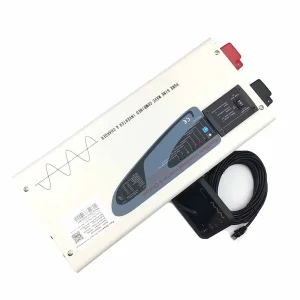
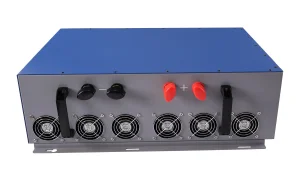
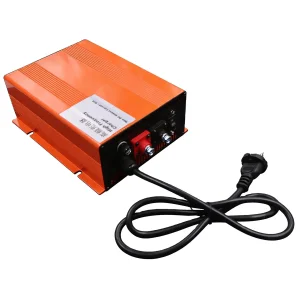
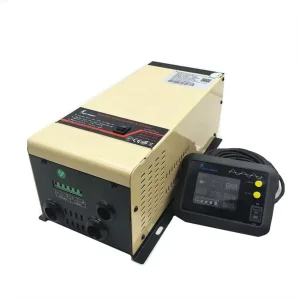
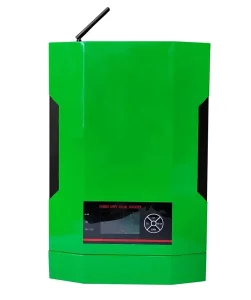
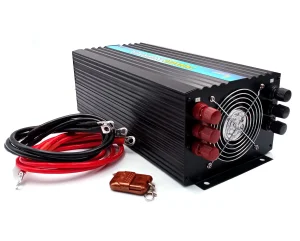
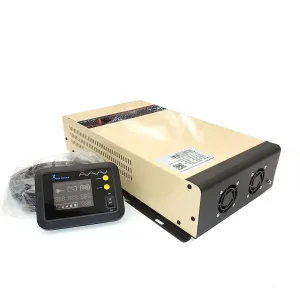
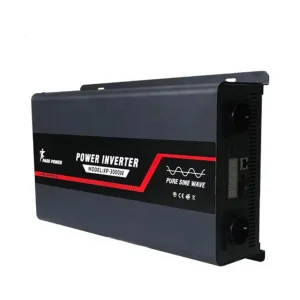
Deconstructing the technological shift, demand drivers, and grid integration strategies for 20kW energy conversion systems worldwide.
The global transition toward decentralized clean energy infrastructure has repositioned the 20kW inverter from a niche commercial unit into a foundational building block for modern Commercial & Industrial (C&I) microgrids, agricultural solar platforms, distributed energy storage systems (BESS), and EV charging support networks. As grid operators enforce strict power quality rules and dynamic frequency response mandates, corporate energy procurement managers require 20kW inverter architectures that offer multi-MPPT optimization, ultra-low Total Harmonic Distortion (THD < 2%), and seamless transition times between grid-tied and off-grid modes.
Modern 20kW power conversion systems must act as dual-directional energy hubs. They handle variable direct current (DC) from solar photovoltaic arrays or high-voltage lithium iron phosphate (LiFePO4) battery banks, converting it into high-purity three-phase alternating current (AC). Selecting an OEM/ODM partner capable of delivering customized topology engineering—such as wide MPPT voltage tracking ranges, galvanic isolation, advanced thermal dissipation, and native Modbus/CAN bus communication—has become a core operational priority for engineering procurement construction (EPC) companies and global hardware brands.
Integrated energy management algorithms support peak shaving, self-consumption optimization, dynamic export limitation, and uninterrupted backup power during utility outages.
Next-generation SiC MOSFET power switches drastically reduce switching losses, shrink internal magnetic components, and lower operating heat emissions under continuous load.
Equipped with Type II DC/AC surge protection (SPD), smart Arc Fault Circuit Interrupter (AFCI 2.0), reverse polarity isolation, and rapid shutdown capabilities adhering to UL1741 and IEC62109 safety benchmarks.
How specialized manufacturing clusters in Jiangsu and Guangdong drive cost efficiency, structural innovation, and accelerated time-to-market for custom 20kW inverters.
The manufacturing efficiency of Chinese power electronics factories stems from localized component supply chains, automated SMT lines, and dedicated testing infrastructure. In industrial hubs such as Suzhou, Guangdong, and Zhejiang, OEM/ODM inverter manufacturers operate near top-tier semiconductor distributors, toroidal transformer winders, aluminum heatsink extruders, and PCB assembly centers. This proximity reduces prototyping cycles from months to days, allowing engineering teams to implement client-requested design modifications—such as custom enclosure dimensions, specialized DC voltage windows (e.g., 200V–1000V DC), or customized human-machine interfaces (HMI)—at lower capital expense.
Furthermore, Chinese ODM facilities utilize automated high-temperature full-load burn-in chambers, automated optical inspection (AOI), and computer-controlled power analyzer stations. This rigorous quality control ensures that every 20kW inverter leaving the assembly line maintains high reliability (MTBF > 100,000 hours) under harsh operational environments, ranging from high-humidity coastal installations to high-altitude cold zones.
| Performance & Sourcing Metrics | Standard OEM Manufacturing | High-Gain ODM Customization (Suzhou Ecosystem) |
|---|---|---|
| Prototyping Lead Time | 8 to 12 Weeks | 2 to 3 Weeks (Direct component integration) |
| Power Semiconductor Architecture | Standard IGBT Modules | Silicon Carbide (SiC) Hybrid / Full SiC MOSFETs |
| MPPT Voltage Tracking Range | 400V - 800V DC | 180V - 1000V Ultra-Wide Tracking Window |
| Thermal Dissipation Efficiency | Standard Forced Air Fan Cooling | Anodized Heat Pipe / Smart Variable-Speed Dual-Ball Fan |
| Communication & BMS Protocols | Fixed RS485 / Modbus RTU | Multi-Protocol CAN 2.0B, Modbus TCP, WiFi, 4G, Matter |
| Enclosure Protection Level | IP54 or IP65 | NEMA 4X / IP66 Corrosion-Resistant Powder Coating |
From commercial rooftops to off-grid telecom stations, discover how customized 20kW inverter units address specific operational demands worldwide.
Ideal for small-to-medium enterprise facilities, logistics warehouses, and commercial plazas. Multi-MPPT designs maximize power harvest even on fragmented roof structures suffering from partial shading.
Low-frequency 20kW inverter variants handle high surge starting currents (3x rated power) required by heavy inductive loads like refrigeration compressors, water pumps, and grain drying machinery.
Acting as an intelligent energy buffer between the utility grid, stationary battery banks, and DC fast chargers to prevent transformer overloading during peak EV charging hours.
Delivers continuous power in isolated regions. Dual AC input capabilities allow automated generator auto-start signaling when battery power drops below defined state-of-charge thresholds.
Analyzing key technological innovations set to define the next generation of commercial power electronics.
Machine learning models integrated into DSP microcontrollers dynamically predict cloud cover patterns and run real-time I-V curve scans to optimize power output and pinpoint faulty PV strings.
Next-gen 20kW architectures are transitioning toward higher DC bus voltages (up to 800V DC), allowing direct bidirectional power transfer with commercial EV fleets and modern LiFePO4 rack batteries.
Equipped with standardized IEEE 1547-2018 and SunSpec Modbus protocols, allowing 20kW inverter clusters to participate in utility VPP programs for localized frequency regulation and reactive power support.
A step-by-step engineering roadmap for procurement managers, brand owners, and system integrators sourcing custom 20kW inverters.
Sourcing a custom 20kW inverter via an ODM model requires balancing technical parameters with target market regulatory requirements. Procurement teams must define operating conditions before submitting RFQs to OEM manufacturers. Key factors include input voltage range, ambient temperature ranges, grid utility interconnect standards (e.g., UL 1741 SB for North America, CEI 0-21 for Italy, VDE-AR-N 4105 for Germany), and battery compatibility.
Define core requirements including DC input voltage boundaries, nominal AC output voltage (e.g., 208V, 380V, 400V, 480V 3-Phase), surge factors, efficiency targets, and mechanical form factors.
Collaborate with ODM software engineers to integrate custom CAN bus or RS485 communication protocols, ensuring compatibility with your chosen lithium battery management systems (BMS).
Subject prototype units to environmental stress testing (HALT/HASS), EMC/EMI verification, thermal imaging under 110% continuous load, and international safety certification auditing.
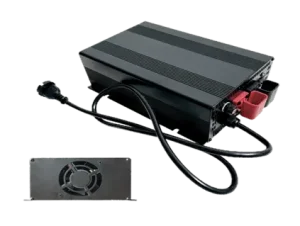
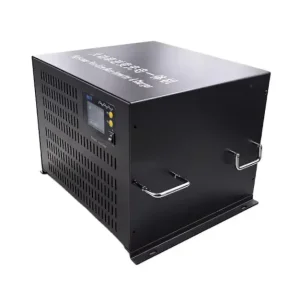
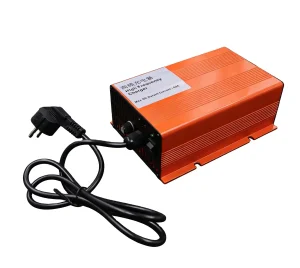
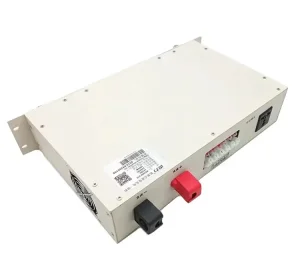
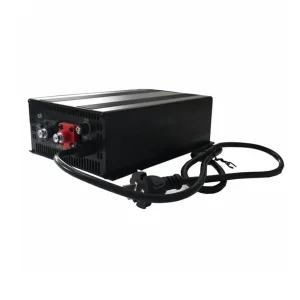
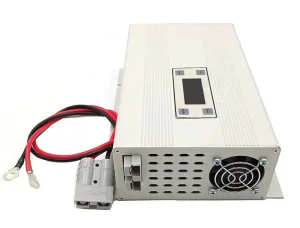
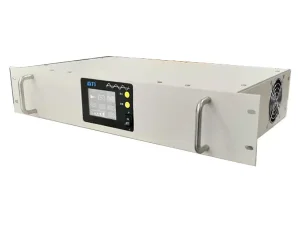
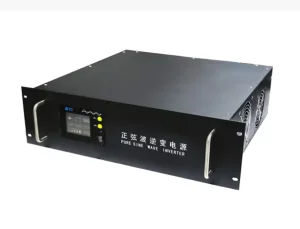
Explore our complete product ecosystem, including industrial battery chargers, low-frequency inverter modules, and rack-mounted pure sine wave systems.
Expert answers addressing the primary design, operational, and ODM procurement questions surrounding 20kW inverter systems.
Low-frequency 20kW inverters utilize heavy line-frequency copper or toroidal transformers to isolate the DC input from the AC output. This design provides high galvanic isolation and strong surge capacity (often up to 300% of nominal rating for short duration), making them ideal for heavy industrial motors, compressors, and pump systems. Conversely, high-frequency 20kW inverters rely on high-speed semiconductor switching (MOSFETs/IGBTs) and compact ferrite transformers, resulting in a lighter form factor, higher conversion efficiency (up to 98.8%), and lower component cost, making them preferred for commercial solar installations and steady electronics loads.
During the ODM engineering phase, hardware designers adjust the internal DC-DC converter stage, capacitor banks, and switching device voltage ratings. For example, standard battery-connected hybrid 20kW inverters operate within a 200V–800V DC window, while off-grid low-voltage systems may require specialized high-current 48V or 96V DC buses. Solar-only string inverters are customized to handle open-circuit voltages up to 1000V or 1500V DC to reduce string cabling losses.
To prevent thermal derating at temperatures exceeding 45°C, high-grade ODM 20kW inverters employ smart variable-speed dual-ball bearing fans coupled with oversized anodized aluminum heatsinks and embedded copper heat pipes. Advanced units feature isolated thermal chambers, keeping sensitive control electronics separated from heat-generating power components to maintain full-load operation up to 50°C ambient temperatures without efficiency loss.
Yes. OEM/ODM 20kW hybrid inverters are frequently built with native parallel control logic. By interconnecting control units via CAN bus signals, up to 10 or 16 units can operate in synchrony, expanding total system capacity to 200kW–320kW. This modular approach provides system redundancy and simplifies future power expansion for growing commercial facilities.
For European markets, units must carry CE certification, complying with the Low Voltage Directive (LVD IEC/EN 62109-1/-2) and Electromagnetic Compatibility (EMC IEC/EN 61000 standards), alongside relevant local grid connection codes such as VDE-AR-N 4105. For North America, compliance with UL 1741 SB, IEEE 1547-2018, and FCC Part 15 Class A is required, often supplemented by CSA certification for Canadian deployments.
Advanced dual or quad-MPPT algorithms continuously adjust the DC operating point to ensure maximum solar power extraction under changing irradiance conditions. With MPPT efficiency ratings exceeding 99.5%, a multi-MPPT 20kW inverter can harvest up to 12% more energy annually on complex or partially shaded commercial rooftops compared to single-MPPT designs.
