


Precision-engineered inverters, smart chargers, and industrial converters built under ISO 9001:2015 certified processes.
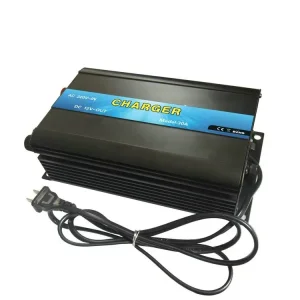
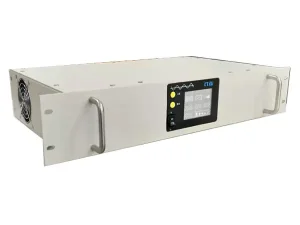
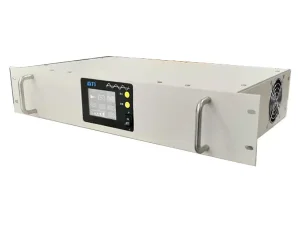
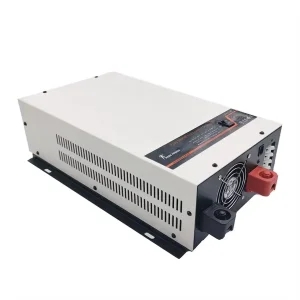
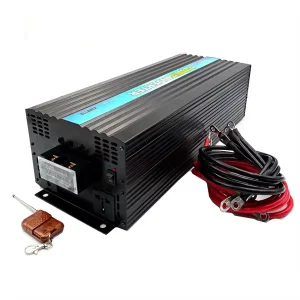
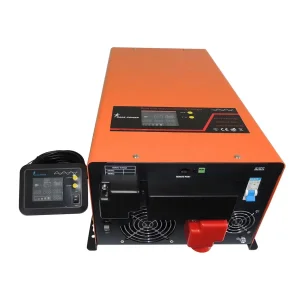
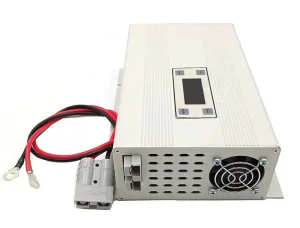
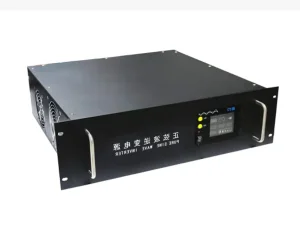
Analyzing the architectural shift toward 24V DC bus voltage across mobile, marine, solar, and industrial power distribution networks.
In mid-to-high capacity off-grid installations (ranging from 1.5kW to 6kW continuous output), legacy 12V DC systems suffer extreme resistive losses ($P = I^2R$) and require impractically thick copper cabling ($4/0$ AWG or dual runs). Transitioning to a nominal 24V DC topology cuts system current strictly in half for the equivalent wattage load. This dramatically reduces cable gauge requirements, minimizes voltage drop across long runs, lowers thermal stress on internal MOSFET switching arrays, and ensures superior continuous operational stability under heavy ambient temperatures.
Modern industrial energy storage projects are overwhelmingly adopting Lithium Iron Phosphate ($\text{LiFePO}_4$) battery banks due to their 3,000 to 6,000 cycle lifespan and high energy density. A 24V system matches the standard 8S (8 series cell) configuration perfectly ($25.6\text{V}$ nominal). ODM 24V power inverters engineered with intelligent multi-stage charging algorithms feature precision voltage cutoff settings, custom absorption times, and temperature-compensated float stages explicitly optimized to prevent premature Battery Management System (BMS) trip-outs caused by cell voltage imbalance.
Heavy commercial vehicles, overland expedition trucks, emergency service units (EMS), utility work vehicles, and commercial marine vessels operate native 24V DC alternators and chassis systems. Utilizing a native 24V pure sine wave power inverter eliminates the need for inefficient 24V-to-12V step-down converters or complex split-battery banks. By drawing directly from the 24V auxiliary energy storage system, commercial vehicle upfitters achieve seamless integration, higher system reliability, and lower total bill-of-materials (BOM) cost.
When operating a 3000-Watt AC continuous load, a 12V inverter draws approximately 300 Amperes of DC current (accounting for conversion inefficiencies), whereas a 24V inverter draws only 150 Amperes. According to Joule's First Law, heating power generated in a conductor is proportional to the square of current ($P \propto I^2$). Consequently, a 24V inverter architecture reduces internal copper trace heating and terminal contact thermal dissipation by 75%, directly extending the MTBF (Mean Time Between Failures) of electrolytic capacitors and semiconductor switches by more than 30,000 operational hours.
Technological imperatives shaping the next generation of industrial DC-to-AC conversion solutions for B2B procurement networks.
The power inverter industry is transitioning from legacy Silicon MOSFETs to Silicon Carbide (SiC) and Gallium Nitride (GaN) field-effect transistors. High-frequency 24V ODM topologies incorporating SiC/GaN switches operate at switching frequencies exceeding 100 kHz (compared to 20-40 kHz for traditional silicon). This drastically shrinks the footprint of passive inductive components and transformers while pushing operational conversion efficiencies past 96% under full resistive load.
Industrial importers and OEM vehicle integrators now mandate real-time telemetry. Next-generation 24V inverters feature embedded microcontrollers capable of communicating via RS485, Modbus RTU, and CAN-bus 2.0B protocols. This allows centralized vehicle fleet controllers or off-grid energy management systems (EMS) to monitor instantaneous AC load output, battery State of Charge (SoC), internal heatsink temperatures, and active error codes dynamically.
Regulatory bodies in North America (FCC Part 15 Class B), Europe (CE EMC Directive 2014/30/EU), and Australia are enforcing stringent limits on electromagnetic interference and Total Harmonic Distortion. Premium 24V ODM pure sine wave inverters implement multi-stage LC output filtering and heavy-gauge aluminium alloy enclosure shielding to deliver clean AC sine wave signals with THD < 2%, safeguarding sensitive medical tools, telecommunications hardware, and Variable Frequency Drives (VFDs).
Custom ODM solutions tailored for harsh environment deployment, specialized industrial setups, and off-grid autonomy.
High-power 24V inverters equipped with integrated AC transfer switches (relay transfer speed < 10ms) allow seamless transition between shore power and 24V onboard battery power. Designed to start 15,000 BTU roof-mounted RV air conditioners, power tools, and induction cooktops during remote field operation.
24V hybrid solar inverters integrating built-in Maximum Power Point Tracking (MPPT) charge controllers allow direct PV array connection (up to 150V-500V VOC). Perfect for off-grid cabins, agricultural water pumping, and remote monitoring stations requiring 24/7 continuous AC electricity supply.
Ambulances and mobile command posts mandate uninterrupted, zero-noise power for life-support ventilators, defibrillators, and radio communication rigs. Low-frequency 24V inverters with heavy toroidal transformers provide 300% surge capacity for inductive medical pumps.
Harsh saltwater marine environments demand specialized conformal coating on PCBA substrates, stainless steel hardware, and IP30/IP54 powder-coated enclosures. Custom 24V marine inverters prevent galvanic corrosion and endure constant vibration on commercial fishing vessels.
Comprehensive modular customizability for brand distributors, system integrators, and industrial original equipment manufacturers.
| Engineering Specification | Standard Manufacturing Baseline | ODM / OEM Custom Options |
|---|---|---|
| Nominal DC Input Voltage | 24V DC (20.0V – 30.0V DC Window) | Custom wide-input windows (18V–32V DC), High-Voltage DC (380V/540V DC) for EV testing platforms. |
| AC Output Voltage & Frequency | 110V/120V AC (60Hz) or 220V/230V/240V AC (50Hz) | Split-Phase (120V/240V AC), 3-Phase 380V AC output, software-adjustable frequency (45Hz – 65Hz). |
| Inverter Circuit Topology | High-Frequency Pulse Width Modulation (PWM) | Low-Frequency Toroidal Isolation Transformer (300% Peak Surge capacity for inductive loads). |
| Waveform Output Quality | True Pure Sine Wave (THD < 3%) | Ultra-Clean Signal (THD < 1.5%) for sensitive laboratory instruments and telecom nodes. |
| Integrated Battery Charger | 3-Stage Automatic Lead-Acid Charger (Bulk/Abs/Float) | Custom LiFePO4 multi-stage profiles, adjustable AC charging current (0A to 100A), CAN/RS485 BMS link. |
| Enclosure & Cooling Mechanics | Extruded Aluminium Heatsink + Thermostatically Controlled Fan | NEMA 4X / IP65 sealed enclosure, conformal PCBA coating, custom metal sheet colors & private branding. |
| User Interface & Diagnostics | Digital LED / Standard Monochrome LCD Display | Custom branded multi-color LCD, touchscreen interface, remote Bluetooth/Wi-Fi monitoring app integration. |
| International Compliance | CE, RoHS, IP30 standard compliance | UL 458 (Mobile Power), UL 1741 (Off-Grid Solar), IEC 62109, E-Mark (Automotive certification). |
Our ODM facility manufactures both Low-Frequency (Toroidal Transformer) and High-Frequency (Switch-Mode) 24V inverters. Low-frequency units utilize copper toroidal cores, offering immense instantaneous surge currents (up to 3x nominal power for 20 seconds) capable of powering heavy motor loads like compressors, well pumps, and power tools without collapsing the output voltage envelope. High-frequency models feature lightweight, high-density power profiles optimized for weight-conscious vehicle applications and steady electronic loads.
Safety engineering mandates complete physical isolation between high-voltage DC primary circuits and AC secondary circuits. Our 24V power inverters incorporate high-frequency optocouplers and heavy isolation transformers, shielding downstream appliances and personnel from dangerous DC bus leakage, overvoltage spikes, and lightning transients. Built-in protection includes reverse polarity protection, short-circuit shutdown, over-temperature protection, and low-voltage disconnect (LVD).
For large-scale original equipment manufacturers, off-the-shelf inverter firmware is insufficient. Our in-house software R&D team writes custom microcode to support custom communication packets, custom battery charging profiles, automated generator auto-start contacts (dry contact relay triggering), and custom fault auto-restart retry loops, ensuring seamless plug-and-play alignment with your proprietary equipment architecture.
13+ years of power electronics manufacturing excellence in Suzhou, China—delivering bulletproof reliability for global distributors.
Our 2,770m² manufacturing plant operates under rigorous ISO 9001:2015 quality control protocols. Every incoming raw component—from high-grade MOSFETs to copper wire windings—undergoes 100% IQC inspection before entering SMT assembly.
Zero failure tolerance. Every completed 24V power inverter must undergo a continuous 4 to 8-hour full thermal load burn-in test inside elevated temperature environmental chambers to trigger early-life semiconductor infant mortality prior to packaging.
Products are tested and audited by third-party testing laboratories (SGS, TUV) to guarantee strict adherence to European Low Voltage Directive (LVD), Electromagnetic Compatibility (EMC), and RoHS environmental standards.
We back global importers with full schematic documentation, field replacement spare parts kits (mainboard modules, driver boards), and dedicated engineering consultation for seamless regional certification compliance.
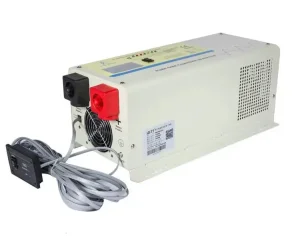
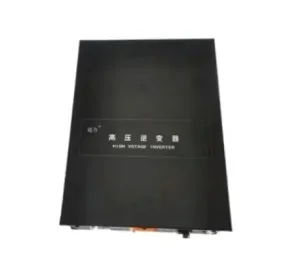
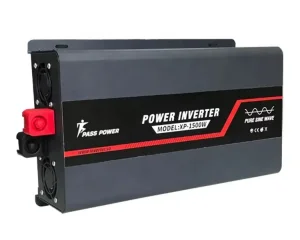
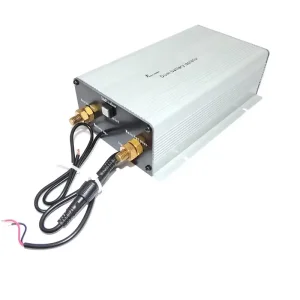
High-voltage DC, split-phase, low-frequency, and dual battery management solutions ready for OEM branding.
Addressing critical engineering questions for technical buyers, OEM importers, and commercial system integrators.
Choosing a 24V DC bus voltage reduces system operating current by exactly 50% compared to a 12V system delivering the same output wattage. Lower amperage directly reduces thermal power dissipation ($P = I^2R$) in wiring harnesses and busbars by 75%. This allows installers to use smaller cable diameters, lowers copper material costs, reduces voltage drop across longer distances, and provides significantly higher system conversion efficiency for continuous loads exceeding 2,000 Watts.
Low-frequency inverters feature heavy iron-core toroidal transformers operating at grid frequencies (50Hz/60Hz). They provide extreme physical isolation, robust fault tolerance, and massive instantaneous surge capacities (up to 300% of rated continuous power for 20 seconds), making them ideal for high-inrush inductive loads like electric motors, air conditioners, and power tools. High-frequency inverters utilize fast electronic switching transistors (MOSFETs/IGBTs) operating at 20kHz–100kHz, resulting in a much lighter weight, compact chassis, and superior idling efficiency suitable for electronic loads and space-constrained vehicles.
Yes. As an original design manufacturer (ODM), our 24V inverter charger units feature adjustable battery charging profiles. We offer microchip firmware pre-set for 8-cell Lithium Iron Phosphate ($\text{LiFePO}_4$) series strings ($25.6\text{V}$ nominal). Bulk charge voltage, absorption voltage, low-voltage disconnect (LVD), and auto-recovery thresholds can be customized in factory settings or adjusted via user display interfaces to seamlessly integrate with your BMS protocol.
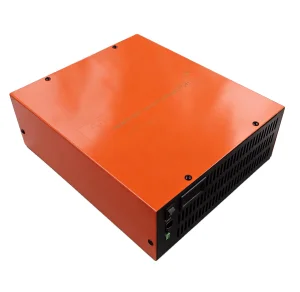
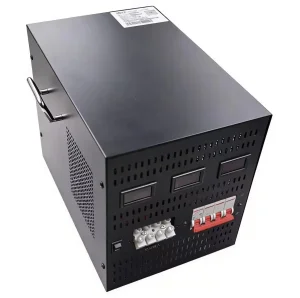
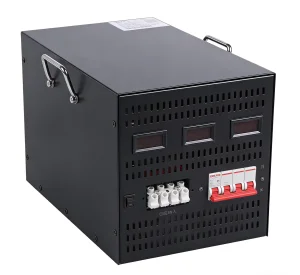
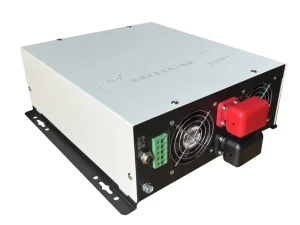
We provide end-to-end ODM/OEM customization. This includes custom extruded aluminium enclosure colors, silkscreen brand logo printing, customized LCD/LED status panels, non-standard DC input terminals, custom communication protocols (CAN-bus, RS485, Modbus), and regional AC output socket configurations including Universal, North American NEMA 5-15/5-20R, European Schuko, UK BS1363, Australian AS/NZS 3112, and industrial IEC hardwire terminal blocks.
An integrated ATS continuously monitors incoming grid or shore power AC voltage. When grid power is stable, the internal relay bypasses grid power directly to connected AC loads while simultaneously routing a portion of AC power to the internal multi-stage charger to keep the 24V battery bank topped up. If shore power fails or drops below safe thresholds, the ATS automatically switches the AC output load to the 24V inverter within 10 milliseconds, preventing data loss or operational interruptions in critical connected devices.
