


Direct OEM/ODM industrial-grade pure sine wave inverters, isolated chargers, and multi-bank energy conversion units manufactured under ISO 9001:2015 precision standards.
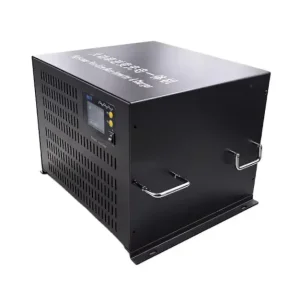
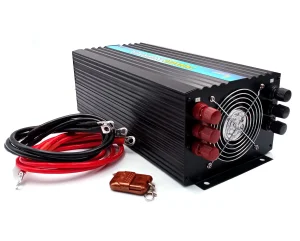
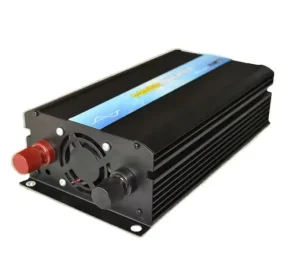
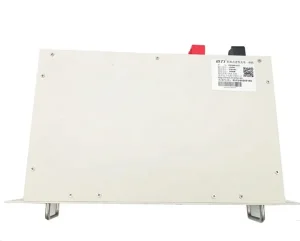
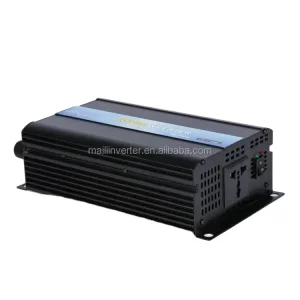
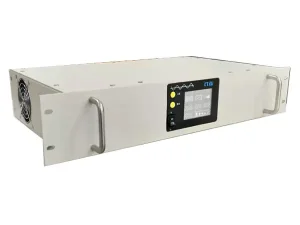
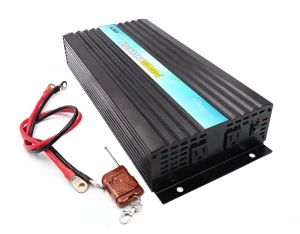
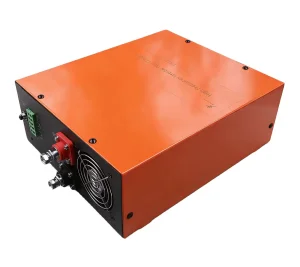
Analyzing the engineering shift from legacy analog dioded-isolator chargers to digital, high-frequency isolated 3-bank charging architectures.
In modern marine, emergency transport, and remote industrial power ecosystems, energy management is no longer a matter of simply transferring bulk DC current into a single battery reservoir. Contemporary commercial vessels, specialized utility fleets, and off-grid telecommunications hubs deploy complex multi-chemistry, multi-voltage battery banks designed for heterogeneous load profiles—ranging from high-cranking engine starter batteries (Flooded/AGM) to high-cycle-life deep-discharge house banks (Lithium Iron Phosphate - LiFePO4). Consequently, the global procurement market for an ODM 3 Bank Battery Charger Supplier & Exporter has shifted dramatically toward smart, high-frequency, galvanically isolated charging platforms.
As global original equipment manufacturers (OEMs) and brand exporters re-evaluate their supply chains, the imperative for customized Original Design Manufacturing (ODM) partners in China has intensified. Sourcing directors require partners capable of integrating active power factor correction (PFC > 0.99), wide AC input voltage range (90V–264V AC for worldwide operation), dynamic thermal throttling, and multi-protocol digital communication (CANbus, NMEA 2000, Modbus RTU) into ultra-compact, IP67-rated extruded aluminum enclosures.
Key drivers behind the accelerating adoption of high-efficiency 3-bank battery chargers in marine, RV, mobile medical, and telecommunications sectors.
Naval architects and commercial shipbuilders demand 3-bank marine chargers featuring complete AC-to-DC galvanic isolation to prevent galvanic corrosion on hull fittings. Adherence to American Boat and Yacht Council (ABYC) A-31 standards and UL 1236 marine ignition protection is paramount for North American export markets.
Specialty vehicle upfitters (ambulances, mobile command centers, fire engines) utilize 3-bank chargers to maintain engine starting batteries, emergency lighting LiFePO4 packs, and onboard medical equipment batteries independently from shore power chargers.
Industrial solar integrators rely on multi-bank smart chargers as auxiliary AC-DC conversion units within hybrid power setups. Integrating solar MPPT inputs alongside 3-bank AC chargers maximizes energy capture efficiency across dispersed battery racks.
Global procurement teams must navigate complex regional compliance frameworks when sourcing 3-bank chargers from export manufacturers:
| Target Market | Primary Regulatory Standards | Critical Technical Requirements | Preferred Customization (ODM) |
|---|---|---|---|
| North America (USA/Canada) | UL 1236, ABYC A-31, FCC Part 15 Class B, CEC Title 20 | Ignition protection, 120V 60Hz input, marine drip-proof housing | NMEA 2000 interface, custom color anodized extrusion, branded LCD displays |
| European Union (EU) | CE, EN 60335-2-29, EN 55014-1/2, RoHS, REACH | PFC > 0.98, 230V 50Hz input, low standby power (<0.5W), IP67 sealing | CANbus protocol integration, custom LiFePO4 wake-up algorithms |
| Australia / Oceania | AS/NZS 60335.2.29, RCM, IP68 Vibration Proof | High thermal threshold (50°C derating), dust/salt-mist resistance | Heavy-duty potting, integrated battery temperature sensors |
How advanced manufacturing clusters in Suzhou and the Yangtze River Delta deliver unmatched cost performance, speed-to-market, and component-level quality control.
The manufacturing of industrial-grade 3-bank battery chargers requires a seamless convergence of magnetic component engineering, power semiconductor assembly, and automated software validation. Located in Suzhou, China's premiere high-tech power electronics hub, our production infrastructure epitomizes Industry 4.0 operational standards, offering global importers a decisive competitive advantage.
High-speed Yamaha and Fuji SMT lines place multi-layer PCB components with micro-meter accuracy. 3D Automated Optical Inspection (AOI) and X-ray solder joint inspection ensure zero thermal bridge defects on high-current FET switches.
Every ODM 3-bank charger unit undergoes 4 to 8 hours of continuous full-power thermal burn-in under dynamic ambient temperature cycling (up to 55°C) to eliminate infant mortality rates before packaging.
By controlling custom planar transformer winding, aluminum heat sink extrusion tooling, and wire harness fabrication within a 50km radius, engineering prototype lead times are reduced from months to under 14 days.
To ensure long-term field stability in marine environments, component selection is executed under rigorous failure mode and effects analysis (FMEA):
A granular look at the circuit architecture, multi-stage charging algorithms, and thermal management strategies in ODM 3-bank power systems.
Unlike legacy pulse-width modulated (PWM) hard-switching topologies, our modern high-power 3-bank chargers utilize a zero-voltage switching (ZVS) LLC resonant converter. By maintaining soft-switching across the full operational load range, electromagnetic interference (EMI) is dramatically reduced while conversion efficiency reaches 94.5%.
Our programmable ODM firmware allows brand partners to select pre-set or custom charge curves for AGM, Gel, Flooded Lead-Acid, and Lithium (LiFePO4/NMC) chemistries:
| Stage | Phase Name | Voltage & Current Strategy | Circuit Function & Purpose |
|---|---|---|---|
| Stage 1 | Desulfation / Soft Start | Pulsed current at 10% rated capacity | Gently revives deeply discharged batteries <10V; breaks down lead sulfate crystals. |
| Stage 2 | Bulk Charge | Constant Current (CC) at maximum rating | Delivers 80% of total energy back into the battery bank rapidly. |
| Stage 3 | Absorption | Constant Voltage (CV) with declining current | Tapers current as cell resistance rises, bringing battery safely to 100% SOC. |
| Stage 4 | Analysis / SOC Check | Zero-current open-circuit monitoring | Evaluates voltage decay rate to detect defective cells or internal short circuits. |
| Stage 5 | Equalization / BMS Balancing | Controlled high-voltage pulse / BMS trigger | Equalizes cell voltages in lead-acid packs or activates passive/active BMS balancing in LiFePO4. |
| Stage 6 | Float Charge | Reduced Constant Voltage (13.5V–13.8V) | Maintains full charge indefinitely without water loss or thermal runaway. |
| Stage 7 | Maintenance Pulse | Intermittent refresh pulses every 7 days | Prevents self-discharge and battery stratification during long-term winter storage. |
Real-world integration blueprints showcasing how ODM 3-bank chargers perform across specialized commercial environments.
Configuration: 12V 50A 3-Bank Waterproof Marine Charger (IP67).
Application: Simultaneous charging of Engine Port Starter (AGM), Engine Starboard Starter (AGM), and Trolling Motor / House Bank (LiFePO4). Includes zero-leakage AC ground wire isolator preventing shore-power electrolytic hull damage.
Configuration: 24V/12V Dual-Voltage Output 3-Bank Charger with Auto-Eject AC Plug.
Application: Powers 24V chassis starting batteries alongside two independent 12V auxiliary tool/communication banks. Built-in heavy-duty vibration isolators handle continuous 3G chassis shocks.
Configuration: 48V 30A 3-Bank Industrial Rack-Mount Charger with CANbus 2.0B.
Application: Charges modular telecom energy storage units with individual bank telemetry reported directly to a central SCADA network via SNMP/Modbus protocols.
Direct responses to critical inquiries from B2B importers, OEM product managers, and technical compliance directors.
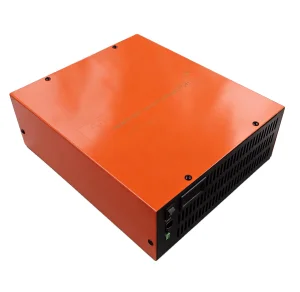
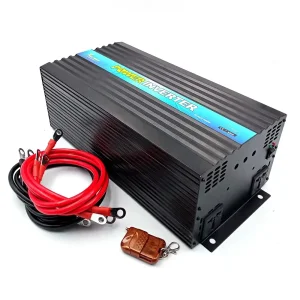
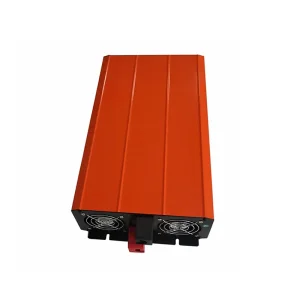
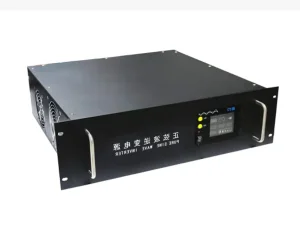
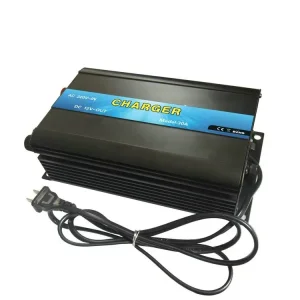
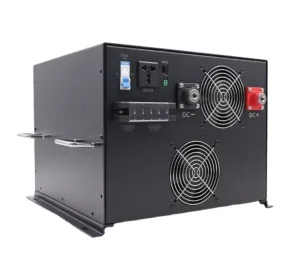
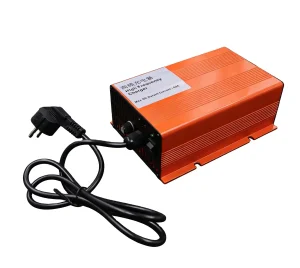
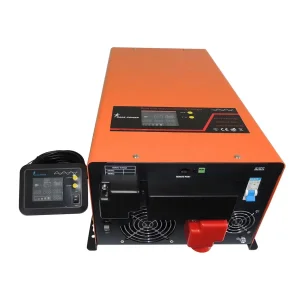
Complete your off-grid energy ecosystem with our proven industrial-grade pure sine wave inverter chargers and smart battery management products.
Inquire directly with our Senior Engineering Director to request customized sample units, electrical schematics, or factory audit documentation.
