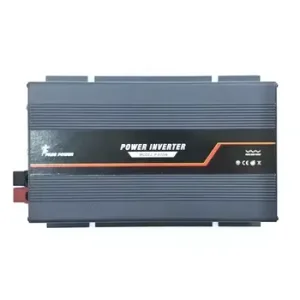
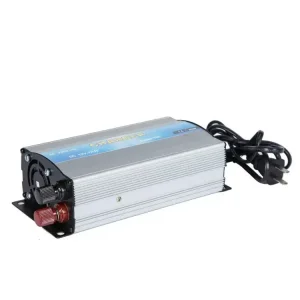
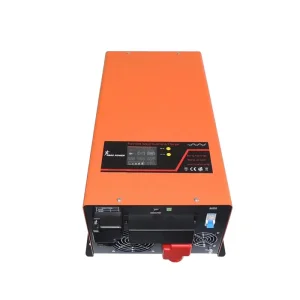
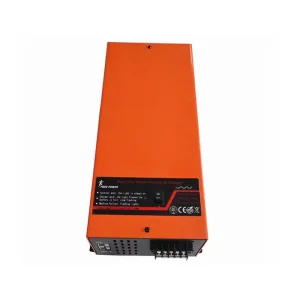
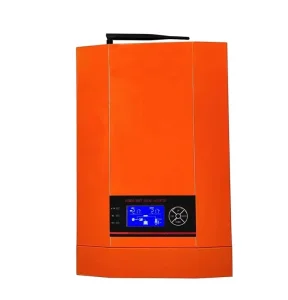
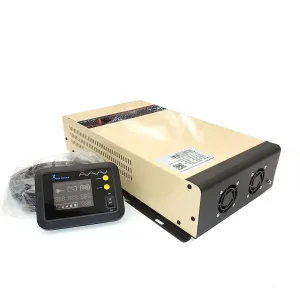
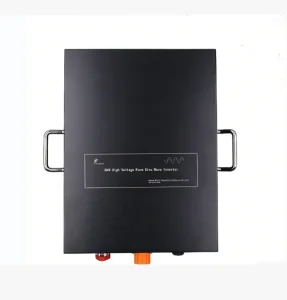
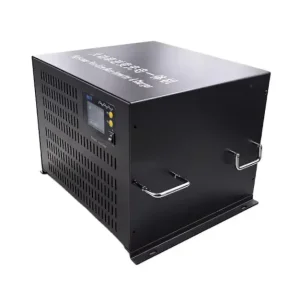
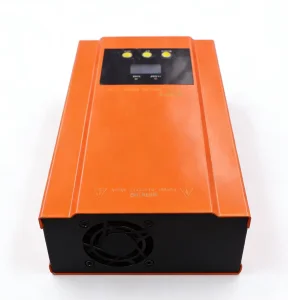
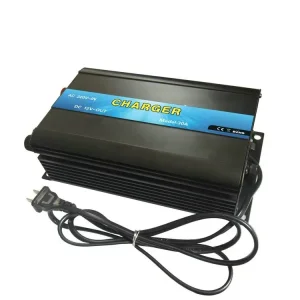
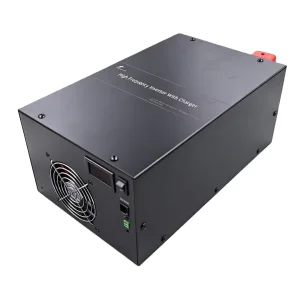
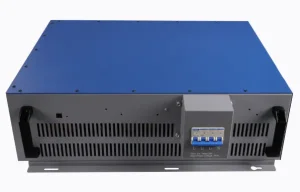
Explore our top-tier export-ready power conversion units, manufactured under strict ISO 9001:2015 frameworks in China for global residential, commercial, and mobile applications.
In the rapidly evolving landscape of global renewable energy storage, AC Coupled Inverters have emerged as the paramount architectural solution for retrofitting existing photovoltaic (PV) arrays and scaling commercial microgrids. Unlike traditional DC-coupled topologies—which require direct interception of solar array strings prior to inversion—AC coupling integrates energy storage directly onto the system’s Alternating Current (AC) bus. This enables seamless power flow optimization across existing grid-tied solar setups without altering legacy PV wiring or inverter configurations.
Advanced ODM AC-coupled inverters feature high-frequency bi-directionality, capable of charging battery banks via excess AC grid power or solar power during peak production windows, and instantly back-inverting stored DC energy to AC loads within milliseconds.
When operating off-grid (islanded mode), our inverters employ dynamic Frequency-Watt Droop Control. By modulating the microgrid frequency, the AC-coupled inverter precisely throttles grid-tied PV inverters to prevent overcharging battery energy storage systems (BESS).
Incorporating robust heavy-duty toroidal low-frequency transformers, our commercial-grade units ensure complete electrical isolation between DC battery terminals and municipal grid lines, shielding delicate electronics from power surges.
China's power electronics ecosystem—headquartered in manufacturing clusters across Jiangsu (Suzhou) and Guangdong—delivers unprecedented supply chain integration, engineering velocity, and manufacturing scale. Global EPCs, distributors, and brand importers gain massive competitive leverage by partnering directly with seasoned China ODM AC Coupled Inverter factories.
From raw copper toroidal core winding to high-voltage MOSFET/IGBT module sourcing, localized supply chains reduce component lead times by up to 65% compared to Western assembly plants, facilitating rapid prototyping and scale-up.
Tier-1 ODM operations utilize Automated Optical Inspection (AOI), high-temperature full-load burn-in chambers, and automated grid-simulation load banks to guarantee 100% compliance with international safety standards before dispatch.
Optimized manufacturing automation combined with lean manufacturing principles lowers unit production costs, enabling OEM clients to maintain gross margins exceeding 35% while pricing aggressively in regional markets.
The transition toward decentralized energy networks, combined with aggressive carbon-neutrality mandates, is fundamentally driving global demand for AC-coupled storage retrofits. Below are key operational metrics achieved by our factory network:
ODM AC Coupled Inverters provide robust, adaptable power electronics across diverse industrial, commercial, and residential environments:
Homeowners with legacy string inverters can add high-capacity LiFePO4 or lead-acid storage without replacing their operational solar equipment. The AC-coupled inverter charges the battery during excess solar generation and powers critical loads during night cycles or utility grid outages.
For enterprise facilities facing steep peak-demand tariffs, three-phase AC-coupled systems (e.g., ML-15KW-3P models) discharge stored power during maximum operational demand windows, dramatically flattening demand curves and reducing operational expenditure.
In specialized transport, medical units, and overland RVs, low-frequency inverter-chargers provide high surge capacity to start heavy inductive motor loads (such as air conditioners and power compressors) while maintaining isolation from auxiliary engine alternators.
Navigating global power markets requires precise adaptation to regional grid specs, environmental stress factors, and regulatory compliance. Our factory offers full ODM customization engineered to your market requirements:
Custom manufacturing options covering 110V/120V AC (North America, Taiwan) and 220V/230V/240V AC (Europe, Oceania, Asia), switchable 50Hz/60Hz frequencies, and non-standard high-voltage DC inputs (DC 380V-540V).
Custom firmware integration offering CANbus, RS485 (Modbus RTU), and Wi-Fi/GPRS modules compatible with major lithium battery BMS platforms (Pylontech, Victron, BYD) and IoT monitoring portals.
Complete branding control: customized sheet metal enclosure colors, silk-screen logos, branded digital LCD displays, tailored terminal connection blocks, and ruggedized IP30/IP65 ratings for outdoor enclosures.
Technical clarification for procurement teams, system integrators, and distributors evaluating AC coupled inverter hardware:
In a DC coupled system, solar panels charge the battery bank directly through a solar charge controller before power is converted to AC. In an AC coupled system, grid-tied PV inverters convert solar DC to AC power first. The AC coupled inverter then takes excess AC power from the local home/facility bus and converts it back to DC to charge the battery bank. AC coupling is significantly easier and cheaper to install on existing solar installations because it does not require rewire or replacement of original solar string inverters.
Yes. Our AC coupled inverters feature built-in ultra-fast automatic transfer switches (ATS) capable of disconnecting from the utility grid in under 10 milliseconds during an outage. The inverter then establishes a local stable AC microgrid. By utilizing Frequency Shift Power Control (Frequency Droop), the inverter forces grid-tied solar inverters to continue generating energy or scale down generation dynamically based on battery capacity.
Low-frequency inverters utilizing massive copper toroidal transformers offer exceptional surge capacities—typically up to 300% of their rated output for several seconds. This makes them indispensable for starting high-inductive loads like air conditioners, industrial water pumps, motors, and heavy machinery without causing voltage sag or trigger thermal shutdown, whereas high-frequency units excel in compact, lighter weight, resistive load applications.
Absolutely. Our 3-stage smart charging algorithms and customizable firmware allow user setting of absorption, float, and cut-off voltages. Additionally, our ODM team integrates custom CANbus and RS485 communication protocols to directly interface with your battery pack's Battery Management System (BMS) for real-time safety balancing and temperature regulation.
Our manufacturing facility operates under ISO 9001:2015 quality oversight. Product ranges carry international compliance certifications including CE (LVD/EMC), RoHS, SGS test reports, CB scheme certifications, SAA compliance for Australia, and IP30 enclosure testing. Specific custom certification processes can be undertaken for high-volume ODM accounts.
Complete your power electronics ecosystem with our full range of auxiliary solar MPPT controllers, multi-phase inverters, and heavy-duty smart battery chargers.