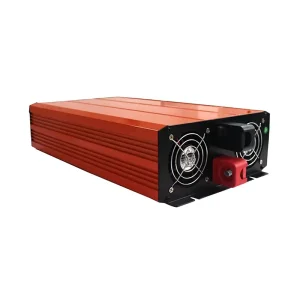
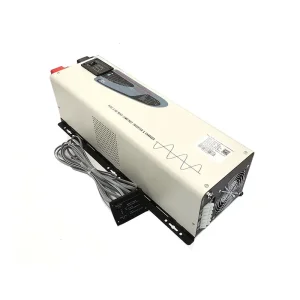
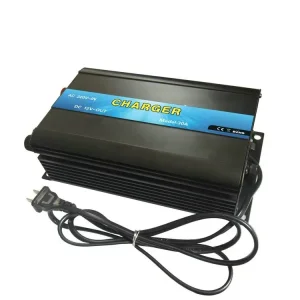
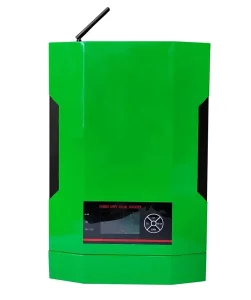
Factory-direct industrial power conversion solutions engineered for high reliability across global commercial and off-grid deployments.
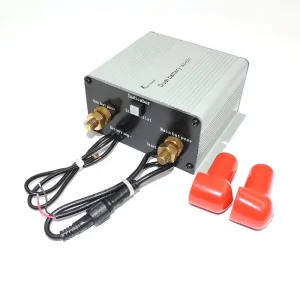
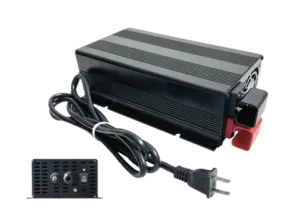
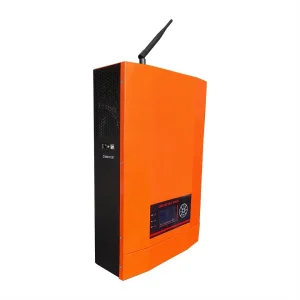
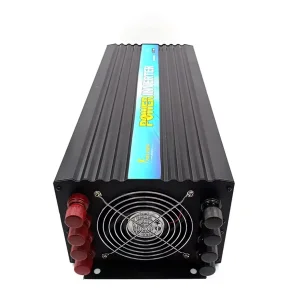
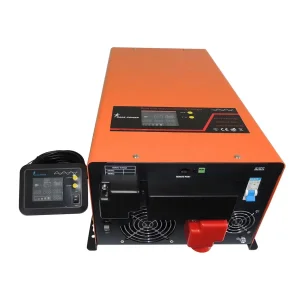
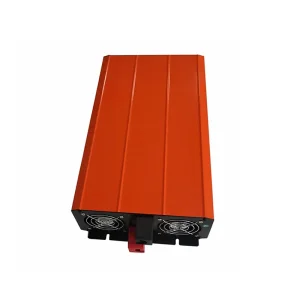
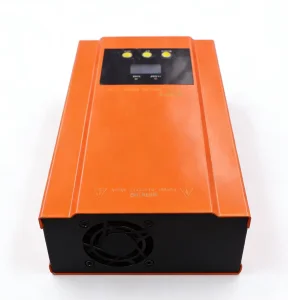
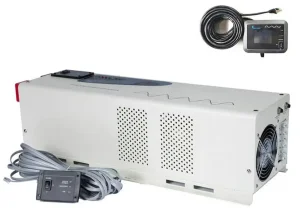
In the evolving landscape of global power conversion electronics, the demand for high-reliability Original Design Manufacturer (ODM) AC Inverters has shifted from generic off-the-shelf conversion units to highly customized, domain-specific power systems. Direct Current (DC) to Alternating Current (AC) inverters are the vital bridge between decentralized energy storage (lithium-ion, LiFePO4, lead-acid battery banks) or renewable generators (photovoltaic solar, wind turbines) and AC-driven commercial or residential loads.
An ODM AC Inverter Manufacturer must balance thermal management, Total Harmonic Distortion (THD), electromagnetic compatibility (EMC), and peak surge capability. Modern industrial applications require pure sine wave outputs that mimic—and frequently surpass—the power stability provided by public utility grids.
A core engineering decision when procuring ODM AC inverters revolves around choosing between Low-Frequency (Transformer-based) and High-Frequency (Switching-based) topologies:
Strategic geographic clustering in Yangtze River Delta electronics manufacturing hubs enables unmatched BOM optimization and rapid prototyping.
Direct sourcing from top-tier MOSFET, IGBT, core magnetic, and capacitor manufacturers reduces procurement lead times and guarantees Component-Level Traceability across all PCB assemblies.
State-of-the-art Surface Mount Technology (SMT) lines combined with automated optical inspection (AOI) and robotic wave soldering ensure consistent circuit density and zero structural solder defects.
Every manufactured inverter undergoes 100% full-load thermal burn-in aging chambers, high-voltage isolation breakdown tests, and simulated environmental strain testing prior to global packaging.
Enterprise buyers require tailored engineering matrices to match country-specific electrical grids, battery chemistries, and custom enclosure form factors.
| Customization Dimension | Standard Commercial Options | Enterprise ODM Advanced Capabilities |
|---|---|---|
| DC Input Voltages | 12VDC, 24VDC, 48VDC | High-Voltage DC platforms (96VDC, 110VDC, 380VDC industrial buses) |
| AC Output Specifications | 110V/120VAC or 220V/230VAC (50Hz / 60Hz) | Split-Phase (120V/240V), 3-Phase Industrial (208V/380V/415V), Pure Sine Wave THD < 2.5% |
| Battery Compatibility Profiles | Standard Sealed Lead-Acid, AGM, GEL | Custom LiFePO4 / Lithium-Ion charging curves, BMS integration via RS485/CAN-Bus Protocols |
| Solar Controller Integration | PWM Solar Charge Controllers | High-Efficiency MPPT Controllers (up to 100A, VOC range 150V–500V DC input) |
| Industrial Protection & Rating | IP20 / IP30 Standard Indoor Housings | Conformal Coating, IP65 Marine Grade, Harsh Environment Anti-Corrosion Tooling |
| Branding & Smart UI | Standard LED Status Panel & Neutral Housing | Custom Graphic LCD, Mobile App Bluetooth/Wi-Fi Telemetry, OEM Packaging & Metallic Shells |
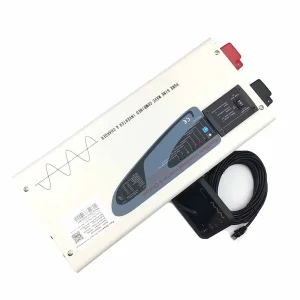
Off-grid mobility demands ruggedized low-frequency pure sine wave inverters capable of running roof-mounted air conditioners, microwave ovens, and induction cooktops while seamlessly switching to shore power via automated transfer relays.
Hybrid MPPT solar inverters manage photovoltaic inputs, house battery banks, and backup AC generators to supply uninterrupted household energy in remote rural areas or regions with unstable electrical grid coverage.
Mission-critical medical and rescue equipment relies on specialized DC-DC chargers, dual battery isolators, and clean pure sine wave inverters to ensure starter batteries remain protected while onboard life-support gear runs continuously.
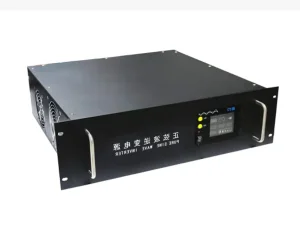
Rack-mounted 230V AC inverters provide clean, uninterrupted emergency backup power for remote 5G cellular towers, monitoring stations, water pumping stations, and industrial automation control loops.
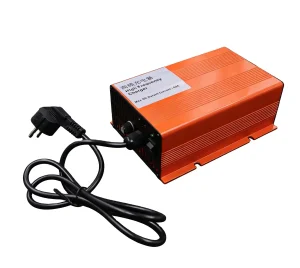
Workplace utility trucks use high-frequency battery chargers and powerful pure sine inverters to charge lithium tool batteries, run heavy-duty grinders, and power diagnostic computers directly on job sites.
Global distribution requires adherence to strict safety directives, electromagnetic compatibility, and localized grid connection certifications.
Our complete AC inverter product portfolio adheres to Low Voltage Directive (LVD 2014/35/EU) and Electromagnetic Compatibility (EMC 2014/30/EU). Units carry full RoHS compliance to ensure heavy metals and hazardous substances are excluded from solder joints and components.
Engineering choices account for UL 1741 and CSA C22.2 standards for off-grid power systems, alongside FCC Class A/B electromagnetic interference testing. Oceanic exports are engineered to meet SAA and AS/NZS electrical safety standards for Australian and New Zealand installations.
The adoption of Gallium Nitride (GaN) and Silicon Carbide (SiC) MOSFETs drastically reduces switching energy losses, allowing next-generation AC inverters to operate at higher thermal thresholds with significantly reduced heat-sink footprints.
Inverters are evolving into intelligent microgrid controllers. Embedded Wi-Fi, 4G cellular, and Bluetooth connectivity paired with cloud analytics enable remote battery health diagnostics and predictive solar charging algorithms.
As commercial battery energy storage systems (BESS) migrate toward higher voltage architectures to minimize current-induced cable losses, ODM manufacturing focuses heavily on 380V DC to 3-Phase AC industrial conversion platforms.
Technical guidance and sourcing information for global brand owners, importers, and system integrators.
Low-frequency inverters utilize heavy line-frequency copper or toroidal transformers to convert voltage. This provides immense physical inertia against sudden electrical surges, enabling them to start heavy inductive loads (300% peak surge capability for 10+ seconds) such as air conditioners, motor pumps, and power tools. High-frequency inverters use electronic pulse-width modulation (PWM) with small ferrite transformers, delivering a compact, lightweight unit with higher steady-state efficiency for resistive loads and light electronics, but with lower peak surge endurance.
A pure sine wave inverter produces an AC voltage waveform with total harmonic distortion (THD) below 3%, matching or exceeding standard utility grid quality. Modified sine wave inverters produce blocky, square step waves that cause severe electrical noise, overheating in induction motors, failure in sensitive medical equipment, and hum in audio systems. For commercial ODM procurement, pure sine wave architecture ensures universal device compatibility and long-term load safety.
As an experienced ODM manufacturer, we offer comprehensive visual and mechanical customization. This includes custom metallic enclosure powder-coating colors, private label screen printing, custom silk-screened IO panels, bespoke LCD screen startup interfaces, custom exterior carton packaging, and engineered mounting brackets for vehicle or rack-mount configurations.
Maximum Power Point Tracking (MPPT) hybrid inverters continuously monitor the current-voltage curve of connected solar panels to extract maximum photovoltaic energy under changing sunlight conditions. Integrated smart logic prioritizes solar power utilization to run loads and charge batteries, automatically blending utility grid or generator power only when battery voltage drops below set thresholds.
Yes. Our multi-stage intelligent chargers and inverter-charger units feature custom programmable charge parameters for Lithium Iron Phosphate (LiFePO4) and Lithium-Ion battery banks. Parameters such as Constant Current (CC), Constant Voltage (CV), Float Voltage, and Low-Voltage Cutoff can be pre-configured at the factory or adjusted via display interfaces and CAN-Bus/RS485 communication protocols.
Our factory operates under an ISO 9001:2015 certified quality management system. Quality control follows strict IQC (Incoming Quality Control for components), IPQC (In-Process Quality Control during SMT and soldering assembly), 100% full-load thermal burn-in aging in controlled chambers, high-potential breakdown voltage testing, and FQC (Final Quality Control) prior to shipping.
Explore additional high-performance power conversion devices available for factory-direct wholesale, bulk supply, and ODM private labeling.