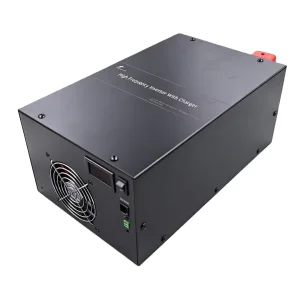
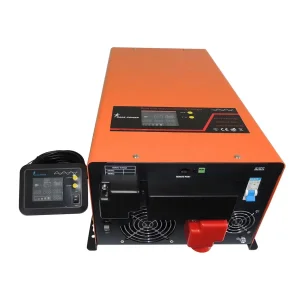
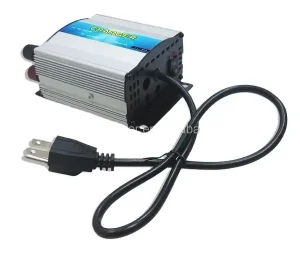
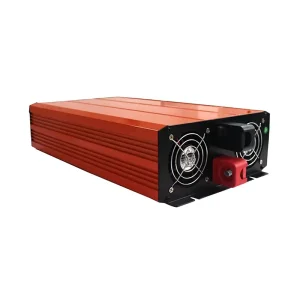
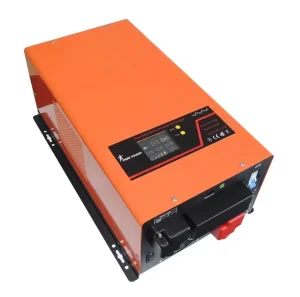
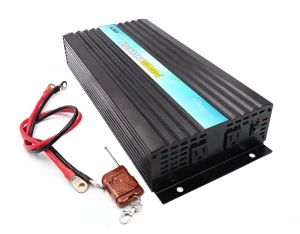
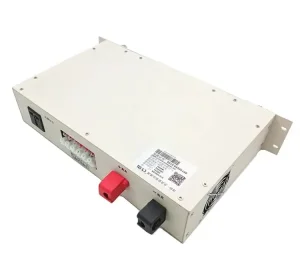
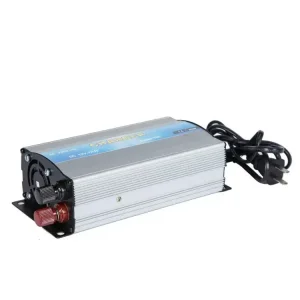
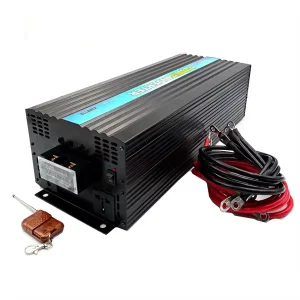
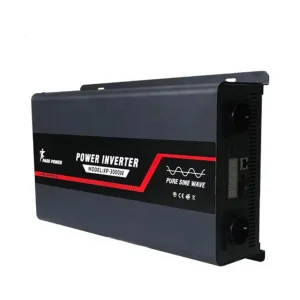
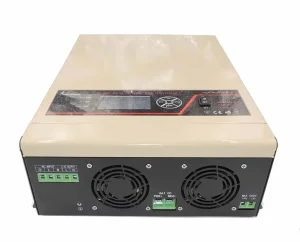
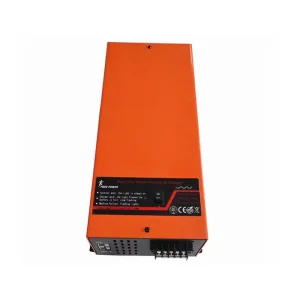
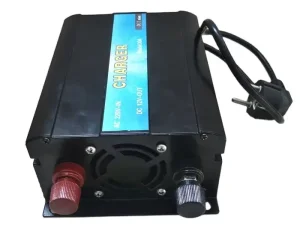
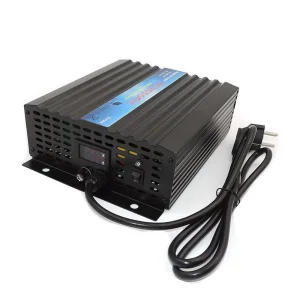
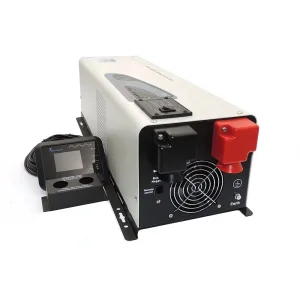
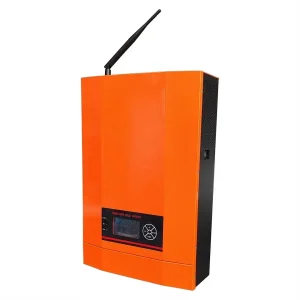
Engineered for high-surge capacity, extreme thermal endurance, and seamless battery integration. Explore our primary series below.
Maximum Power Point Tracking (MPPT) represents the cornerstone of modern off-grid, hybrid, and grid-interactive renewable power conversion systems. At its core, an MPPT solar charge controller or integrated hybrid inverter operates as an ultra-high-efficiency DC-DC converter that dynamically aligns the electrical operating point of photovoltaic (PV) arrays with the instantaneous maximum power output available under variable irradiance, temperature, and shading conditions.
High-speed 32-bit DSP microcontrollers execute real-time perturb-and-observe (P&O) combined with incremental conductance algorithms, sweeping the IV curve in milliseconds during sudden cloud transients.
Engineered to handle high-voltage PV arrays up to 500VDC, enabling longer series strings, reducing line current loss, and minimizing system wiring copper overhead.
Advanced algorithmic sweeps prevent controllers from locking onto localized false power peaks caused by partial array obstruction or complex roof geometry.
Traditional Pulse Width Modulation (PWM) controllers directly clamp the solar array voltage to the battery bank terminal voltage, sacrificing up to 30-40% of potential energy harvesting. Advanced MPPT technology decouples the array operating voltage ($V_{pv}$) from the battery system voltage ($V_{bat}$), enforcing the condition:
P_{max} = V_{mpp} \times I_{mpp} \quad \text{where} \quad \frac{dP}{dV} = 0
By continuously solving the differential equation of power relative to voltage, our ODM factory-designed MPPT controllers continuously shift the duty cycle of the internal synchronous buck-boost converter circuit. This guarantees zero energy wasted across operating ambient temperatures ranging from -30°C up to +60°C.
| Technical Dimension | Standard Commercial MPPT | Maili ODM Advanced MPPT Platform |
|---|---|---|
| Processor Architecture | 8-bit / 16-bit Microcontroller | 32-bit High-Speed Digital Signal Processor (DSP) |
| MPPT Tracking Efficiency | 95.0% - 97.5% | > 99.9% Static & Dynamic Tracking |
| Peak DC-DC Conversion | 92.0% - 94.0% | 98.5% Efficiency (Silicon Carbide / Low-Rds MOSFETs) |
| PV Array Input Span | 60VDC - 150VDC | 120VDC - 500VDC High PV Input Spectrum |
| Thermal Dissipation Topology | Standard Aluminum Heat Sink | Extruded Heavy-Duty Sink + Intelligent Dual Ball Fan Matrix |
| Battery Profile Interoperability | Fixed Lead-Acid Preset | Fully Programmable AGM, GEL, LiFePO4, Custom BMS CAN/RS485 |
The global dominance of Chinese power electronics manufacturing—centered around industrial innovation zones such as Suzhou and the Yangtze River Delta—is driven by deeply integrated supply chain clusters, advanced Surface Mount Technology (SMT) automation, and unrivaled electromagnetic component engineering capabilities.
Unlike simple assemblers who source turnkey mainboards from third parties, Suzhou Maili Electrical Appliance Co., Ltd. exercises end-to-end control over critical power stages. Our facility designs and winds heavy-duty toroidal transformers, builds custom inductor coils, and performs robotic SMT component placement under strict ESD controls.
Low-frequency inverters leverage heavy grain-oriented silicon steel cores. Toroidal transformers offer lower standby no-load loss, superior thermal stability, and 3x peak surge rating for running inductive water pumps and compressors.
High-density PCBA layouts feature high-voltage MOSFETs and SiC diodes. Automated Optical Inspection (AOI) guarantees solder joint integrity, eliminating vibration failure risks in mobile RV or marine environments.
Every batch undergoes High-Accelerated Life Testing (HALT) and continuous full-load aging tests at elevated ambient temperatures to ensure long MTBF (Mean Time Between Failures) prior to export shipment.
The global transition toward decentralized clean energy, coupled with grid instability and the surging adoption of off-grid recreational vehicles (RVs), overland transport, marine craft, and remote industrial infrastructure, has reshaped the requirements of global energy equipment buyers.
Distributors in North America, Europe, and Oceania are rapidly phasing out low-efficiency legacy PWM controllers. Buyers are prioritizing high-voltage MPPT hybrid inverters that combine PV harvesting, shore power AC charging, and instant uninterruptible power supply (UPS) automatic transfer switching in a single unified enclosure.
With Lithium Iron Phosphate (LiFePO4) becoming the gold standard for off-grid energy storage due to cycle life and energy density, MPPT systems must provide customizable charge stages (Bulk, Absorption, Float) and hardware signals to communicate with modern Battery Management Systems (BMS) via Modbus, RS485, or CAN-bus protocols.
Standard off-the-shelf catalog products frequently fail to satisfy specialized commercial projects. Overseas importers frequently require engineered custom voltages—such as 36V, 72V, 96V DC inputs or split-phase 120V/240V AC outputs—to interface directly with unique mobile battery banks, wind turbines, or solar water pumping stations.
Our ODM Advanced MPPT technology and inverter architectures are deployed globally across four critical macro sectors:
Providing uninterrupted clean sine wave energy to residential appliances, refrigeration, lighting, and HVAC units during grid blackouts or in remote locations without utility access.
Driving high-power 5kW+ heavy induction motors for agricultural irrigation and village water delivery, featuring high starting torque surge handling and MPPT efficiency optimization.
Vibration-resistant inverters and battery isolators designed specifically for luxury RVs, overland camping vehicles, ambulances, fire trucks, and marine utility craft.
As a specialized original design manufacturer (ODM), we offer overseas brand owners, distributors, and system integrators complete control over hardware, firmware, and aesthetics.
Custom DC Inputs: 12V, 24V, 48V, 96V, 380V. AC Output Voltages: 100V, 110V, 120V, 220V, 230V, 240V at 50Hz or 60Hz. Single-phase, split-phase, or 3-phase delivery.
Custom metal housing design, powder coat color schemes, silkscreen brand logo placement, personalized carton packaging, and customized LCD interface screens.
Selectable output sockets (US, EU, UK, AU, Universal), custom heavy-duty terminal blocks, RS485 / CAN-bus communication protocols, and dry contact generator start signals.
Technical and procurement guidance for energy storage importers and procurement directors.
An MPPT (Maximum Power Point Tracking) controller operates by constantly adjusting the DC-DC voltage ratio to find the exact peak energy harvesting point ($V_{mpp} \times I_{mpp}$) of the solar array. Under real-world environmental conditions (cold weather, morning sunlight, low light, or partial shading), an MPPT controller yields between 20% and 30% more total kilowatt-hours into the battery bank compared to a traditional Pulse Width Modulation (PWM) controller, which mechanically pulls array voltage down to battery voltage.
Low-frequency inverters utilize a heavy-duty toroidal copper transformer to handle the DC-to-AC conversion. This provides immense physical magnetic inertia, allowing them to withstand peak motor-starting surge loads up to 300% of rated capacity for several seconds (essential for air conditioners, submersible water pumps, and heavy tools). High-frequency inverters use fast silicon switching with small ferrite transformers; they are far lighter and more compact, making them ideal for resistive electronic loads and space-constrained portable setups.
Yes. All current generation Maili MPPT controllers and inverter chargers feature programmable charging parameters specifically engineered for Lithium Iron Phosphate (LiFePO4) and ternary lithium chemistries. Users can precisely calibrate bulk charge voltage, absorption voltage, float voltage, low-voltage disconnect (LVD), and low-voltage reconnect (LVR). Furthermore, custom RS485 or CAN-bus protocols can be configured to interface directly with leading battery BMS software.
Our factory operates under an ISO 9001:2015 certified quality management system. Our product lines hold standard CE, RoHS, IP30, and SGS test reports. For high-volume ODM client contracts, we assist in engineering compliance for specific regional directives including UL 1741, FCC, and European E-mark automotive standards.
Standard catalog product evaluation samples are typically dispatched within 3 to 7 business days. For customized ODM engineering projects involving private branding, customized LCD firmware, or modified DC input voltages (e.g., 96V DC), lead times for prototypes range from 15 to 25 days depending on component sourcing complexity. MOQ for custom color enclosures and branded cartons generally starts at 100 units per model.
Discover specialized models tailored for industrial rack installations, high-voltage applications, and vehicle battery isolation.