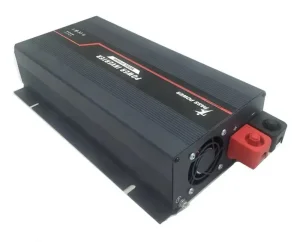
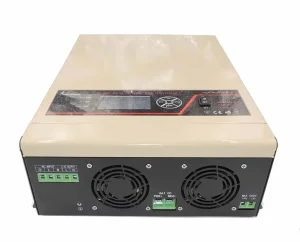
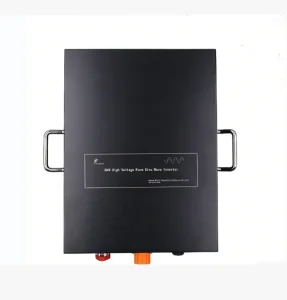
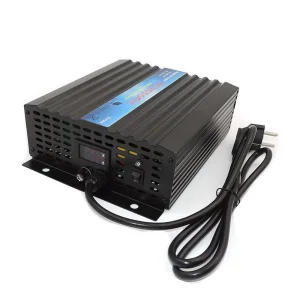
Explore our factory-direct ODM/OEM inventory engineered for automotive, marine, and off-grid mobile deployments.
Analysis of power density evolution, wide-bandgap semiconductors, and shifting automotive power conversion requirements.
The transition from legacy Silicon MOSFETs to Gallium Nitride (GaN) and Silicon Carbide (SiC) switches has fundamentally altered vehicle mobile charger engineering. High-frequency switching (>500 kHz) allows for smaller magnetic components, achieving energy densities exceeding 2.5W/cm³ while maintaining thermal conversion efficiencies above 94%.
Modern automotive mobile power systems are moving beyond legacy 12V cigarette lighter limitations. Enterprise mobility platforms demand Extended Power Range (EPR) USB Power Delivery (PD 3.1) capable of delivering up to 240W (48V/5A) per port. This enables fast charging of industrial rugged laptops, drones, and diagnostic tools directly from vehicle power networks.
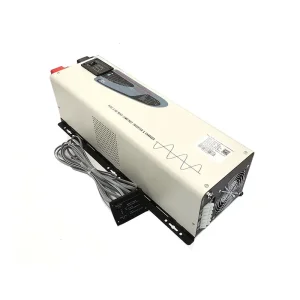
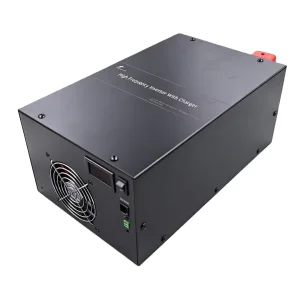
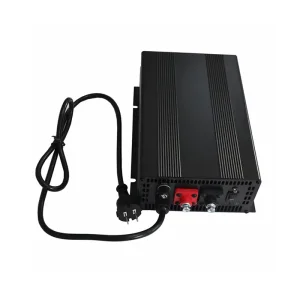
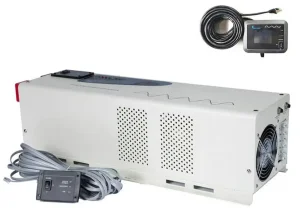
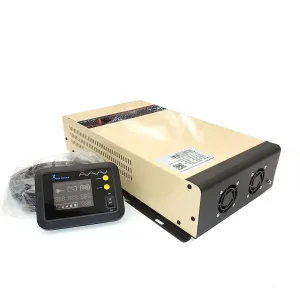
With the rise of Electric Vehicles (EVs) and overland expedition vehicles, car mobile charging is no longer isolated to small accessory outlets. Inverters with integrated 3-stage smart battery chargers and smart isolators automatically switch between alternator power, auxiliary lithium/AGM banks, and photovoltaic arrays.
Key technical criteria, quality metrics, and risk mitigation strategies used by Tier-1 distributors, OEM fleet builders, and brands.
Global procurement teams prioritize bill-of-materials (BOM) transparency. Standard commercial chargers utilize 85°C rated capacitors and uncertified inductors that fail under continuous thermal stress. Enterprise-grade ODM factories specify AEC-Q200 qualified inductors, 105°C/10,000-hour solid Japanese capacitors, and heavy-copper PCBs (2oz–4oz) to ensure survival in sealed automotive cabin compartments.
B2B buyers operating in global markets require adaptive protocol handshakes. An ODM charger exported across North America, Europe, and Asia-Pacific must auto-negotiate dynamically across varying device profiles without causing thermal runaway or voltage drop.
Tailored electrical topologies for commercial fleets, overland recreation, emergency services, and off-grid remote operations.
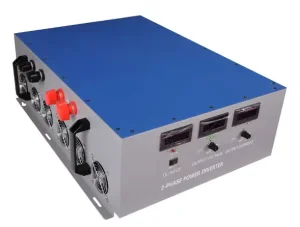
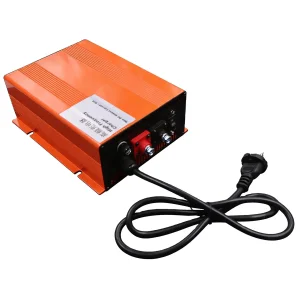
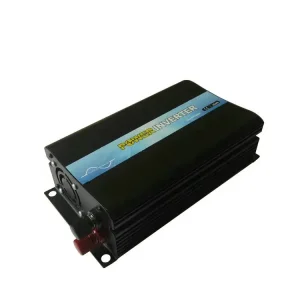
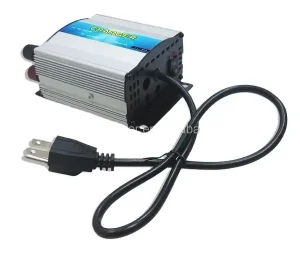
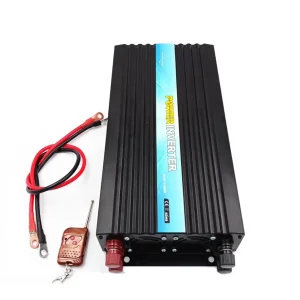
For last-mile delivery vans and logistics vehicles, continuous device uptime is vital. Integrated high-efficiency DC-DC conversion units and high-frequency inverters supply regulated DC power to handheld scanners, thermal printers, and vehicle tracking systems while protecting the engine starter battery via programmable low-voltage disconnects (LVD).
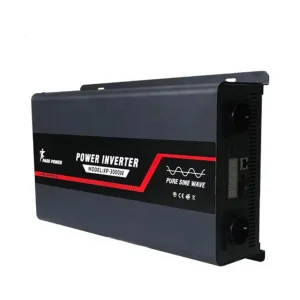
Ambulances and fire command trucks demand zero-fail power supply systems. Dual-battery isolators paired with pure sine wave inverter chargers ensure emergency medical devices, portable suction units, and radio relays remain powered whether connected to shore power at the station or relying on high-output alternators on scene.
Recreational and expedition vehicles require multi-source power management. Low-frequency toroidal inverters handle high surge startup loads (air conditioners, induction cooktops, power tools) up to 300% rated capacity, coupled with smart MPPT controllers for seamless solar integration.
Evaluating topology shifts and performance benchmarks across mobile power generation platforms.
| Engineering Metric | Legacy Mobile Chargers (2018-2021) | Current High-Density ODM Standard | Next-Gen SiC/GaN Integrated Hubs (2025+) |
|---|---|---|---|
| Primary Switching Topology | Hard-switched Silicon MOSFETs | High-Frequency Soft-Switching GaN | Monolithic SiC + GaN Hybrid Bridge |
| Peak Efficiency Range | 82% – 88% | 92% – 95% | 96.5% – 98.2% |
| Thermal Dissipation Profile | Passive heatsink (heavy, bulky) | Active smart-fan + Aluminum extrusion | Graphene vapor-chamber + Micro-channel liquid phase |
| Total Harmonic Distortion (AC) | Modified Sine (THD > 15%) | Pure Sine Wave (THD < 3%) | Ultra-Clean Pure Sine (THD < 1.5%) |
| Protection Protocols | Fuses / Basic OVP / OCP | MCU Digital Protection (OVP, OCP, OTP, SCP) | AI predictive fault detection & CAN-bus diagnostics |
Ensuring seamless market entry through global certification frameworks and rigorous ODM testing.
Exporting mobile power devices demands adherence to regional electrical safety and electromagnetic compatibility directives. Our ODM manufacturing pathways provide pre-certified reference designs that streamline certification timelines for target export markets:
As a specialized factory exporter, we offer complete private-label engineering tailored to client specifications:
Expert technical answers addressing common procurement, manufacturing, and operational questions.
Heavy-duty power conversion, high-voltage inverters, and multi-stage mobile charger solutions.