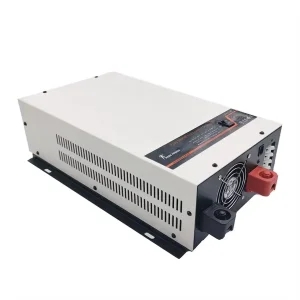
Industrial-Grade Inverters, MPPT Solar Controllers & Battery Isolation Ecosystems
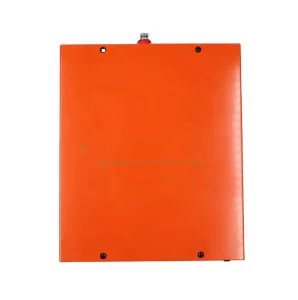
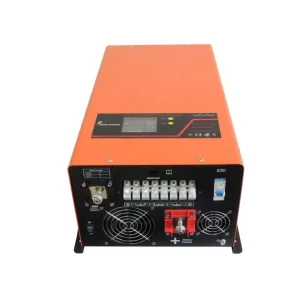
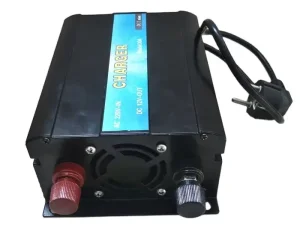
The Technological Convergence of Residential Photovoltaics and Mobile Automotive Power Electronics
Global power grids face unprecedented stability challenges. The integration of ODM Home Solar Systems enables residential decentralization, transitioning homes from passive consumers to active prosumers capable of dynamic load balancing and islanded backup operations.
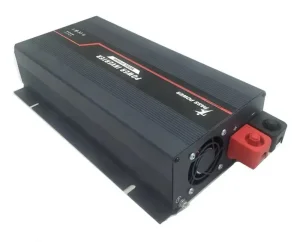
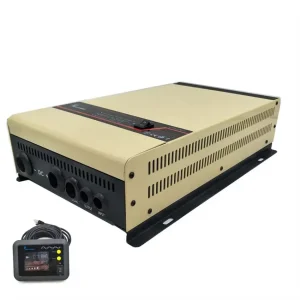
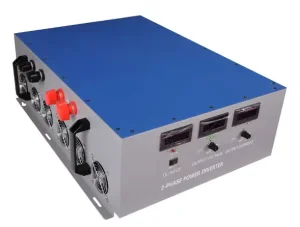
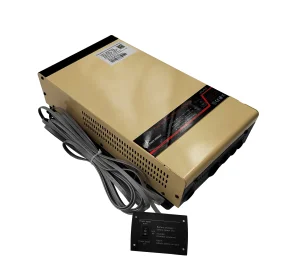
Vehicles are evolving into mobile energy storage assets. Advanced OEMs are mandating high-frequency, high-efficiency Vehicle Use Inverters and DC-DC converters capable of harvesting energy on-the-move while supplying clean pure sine wave power to heavy industrial or medical loads.
The boundary between stationary home batteries and EV batteries has dissolved. Modern Original Design Manufacturers (ODM) prioritize V2H (Vehicle-to-Home) bidirectional conversion, allowing vehicle batteries to supplement home power during peak tariff periods or grid blackouts.
Analyzing Key Technical Criteria for Tier-1 Distributors, System Integrators, and Automotive OEMs
Enterprise buyers sourcing from solar and power electronics factories require significantly more than off-the-shelf hardware. Modern B2B procurement demands tailored ODM platform engineering, strict electromagnetic compatibility (EMC), multi-scenario firmware adaptabilities, and localized compliance guarantees. Our engineering research highlights four fundamental pillars that drive Tier-1 procurement decisions:
Suppliers must offer scalable DC input ranges (from low-voltage 12V/24V/48V platforms for marine and RV applications to high-voltage 380V/540V DC platforms for commercial EV powertrains). Modular designs significantly reduce NPI (New Product Introduction) cycles for regional OEM brands.
Off-highway vehicles, emergency medical response trucks, and remote off-grid solar cabins operate under extreme ambient conditions. Heavy-duty die-cast aluminum enclosures, IP65/IP30 ratings, conformal coating on PCBAs, and intelligent variable-speed cooling fans ensure thermal stability from -30°C to +60°C.
| Evaluation Parameter | Standard OEM Hardware | Enterprise ODM Custom Platform |
|---|---|---|
| DC Voltage Flexibility | Fixed 12V or 24V Input | Wide-Input Dynamic Range (12V to 540V High-Voltage DC Options) |
| Inverter Transformer Topology | High-Frequency Soft Switching Only | Dual-Platform: Low-Frequency Toroidal (Inductive Surge) / HF SiC MOSFET |
| Battery Chemistry Support | Standard Sealed Lead-Acid (SLA) Profiles | Custom BMS CANbus/RS485 Protocol Matching (LiFePO4, LTO, Solid-State) |
| AC Transfer Switching | Relay Switch (>15ms delay) | Zero-Cross Ultra-Fast UPS Transfer Switch (< 3ms to 5ms) |
| Grid Connection Compliance | Basic CE Mark | Region-Specific Grid-Tie / Off-Grid Rules (UL 1741 SA, IEEE 1547, VDE-AR-N 4105) |
End-to-End System Topologies for Residential Resiliency and Special Vehicle Mobility
Our ODM Home Solar System framework centers on hybrid energy management. Photovoltaic strings feed high-efficiency MPPT charge controllers, routing power simultaneously to lithium-iron-phosphate (LiFePO4) storage banks and the residential AC main lines.
For RV motorhomes, emergency ambulances, mobile medical clinics, and utility trucks, power electronics must resist physical shock and severe vibration while maintaining precise output voltage stability.
Ensuring Seamless International Market Entry through Rigorous QA Engineering
Navigating regional safety mandates is paramount. ODM factories maintain compliance across major global markets including CE, RoHS, CB, IEC 62109-1/-2 for Europe, and UL 1741 / FCC Class B for North America, alongside IP30/IP65 ingress ratings.
Every manufacturing step undergoes automated optical inspection (AOI), in-circuit testing (ICT), and 100% full-load burn-in aging inside elevated temperature chambers (+45°C) for a minimum of 4 hours to eliminate infant mortality rates on power semiconductors.
To support global supply chains, our factory offers multi-national AC socket regionalization (Universal, Schuko, UK, US NEMA, Australian standard) alongside regional AC voltage firmware profiling (100V, 110V, 120V, 220V, 230V, 240V at 50Hz/60Hz).
Pioneering Silicon Carbide (SiC), AI-Driven EMS, and Bidirectional Vehicle-to-Grid Integration
Transitioning from traditional Silicon IGBTs to Silicon Carbide (SiC) MOSFETs drastically reduces switching losses, allowing higher operating frequencies, shrinking transformer sizes by 40%, and elevating overall system efficiency beyond 97%.
Future ODM platforms integrate low-power IoT microcontrollers running machine learning models locally. The inverter dynamically predicts household consumption patterns and weather forecasts to optimize solar power harvesting and battery degradation curves.
Next-gen vehicle inverters will feature universal protocols compatible with solid-state batteries and emerging sodium-ion chemistries, establishing seamless V2L (Vehicle-to-Load), V2H (Vehicle-to-Home), and V2G (Vehicle-to-Grid) bi-directional power flows.
Addressing Common Engineering, Manufacturing & OEM Partnership Inquiries
Explore Extended Inverter Chargers, Battery Chargers & Integrated Converters