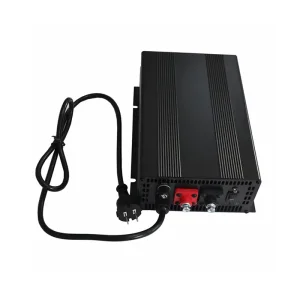
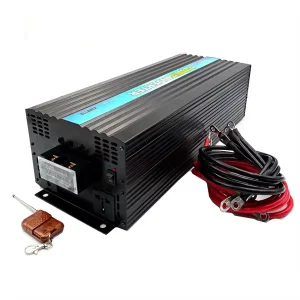
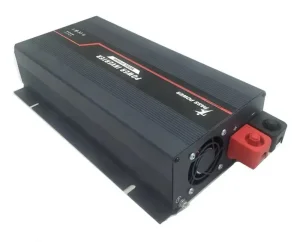
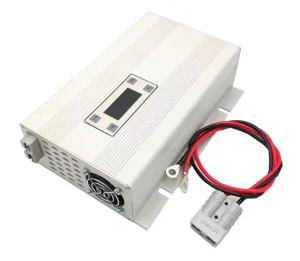
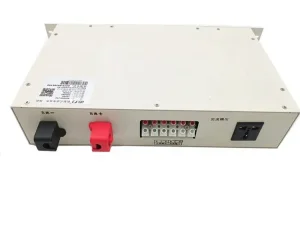
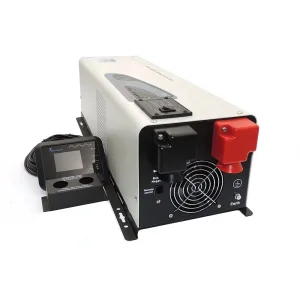
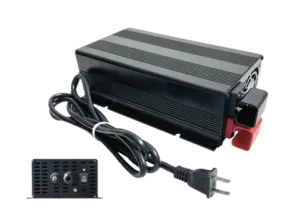
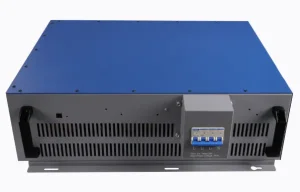
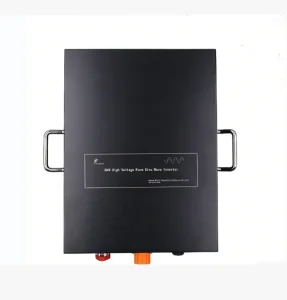
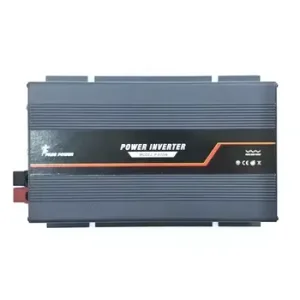
Explore our high-performance ODM/OEM power electronics, smart multi-stage battery chargers, and low-frequency pure sine wave inverters engineered for harsh grid and off-grid operational environments.
An authoritative analysis on deep-cycle energy storage solutions, spine-grid pressure casting metallurgy, and global procurement strategies for mission-critical off-grid energy infrastructure.
In the contemporary landscape of global energy transition, backup power resilience and off-grid renewable integration have transitioned from auxiliary requirements to primary infrastructure priorities. As power grids in developing regions experience strain from rapid urbanization and extreme climatic anomalies, enterprise buyers, telecommunications operators, and government power authorities are prioritizing energy storage media characterized by extreme thermal resilience, structural durability, and extended deep-cycling capability. Among lead-acid battery chemistries, the Tall Tubular Battery remains the undisputed benchmark for high-reliability, heavy-duty cyclic applications.
Unlike conventional flat-plate flooded or standard VRLA (Valve Regulated Lead Acid) AGM batteries, Tall Tubular batteries are specifically engineered to combat active material shedding, electrolyte stratification, and positive grid corrosion—the primary failure modes in high-temperature, frequent-outage environments. The original design ethos stems from demanding traction and stationary energy applications where partial state of charge (PSOC) operation is routine. Modern original design manufacturers (ODMs) have refined this technology through advanced material science, automated pressure die-casting, and optimized antimony-lead metallurgy to maximize service life while minimizing total cost of ownership (TCO).
The core structural differentiator of a Tall Tubular cell lies in its positive electrode architecture. Rather than pasting active lead oxide onto a flat stamped grid, Tall Tubular manufacturing utilizes high-pressure (up to 100 bar) cast spine grids encased within woven microporous gauntlets. This gauntlet retains the active material (PbO₂) under constant mechanical pressure, completely preventing physical sloughing even after thousands of deep charge-discharge cycles at 80% Depth of Discharge (DOD).
The demand for industrial Tall Tubular batteries is expanding across multiple geographic vectors. In South Asia, sub-Saharan Africa, Latin America, and parts of Southeast Asia, chronic grid instability makes home inverter systems and rural microgrids indispensable. Furthermore, the global expansion of 4G/5G telecom tower infrastructure in remote off-grid locations demands storage units that can endure ambient temperatures exceeding 45°C without experiencing catastrophic thermal runaway—a vulnerability frequently associated with standard lithium chemistries in non-climate-controlled enclosures.
Consequently, global EPC (Engineering, Procurement, and Construction) contractors and OEM distributors are shifting away from low-tier standard battery suppliers toward fully certified ODM partners capable of customizing battery housing design, terminal chemistry, electrolyte reserve volume, and charge acceptance characteristics to suit specific operational profiles.
| Performance Metric | ODM Tall Tubular (Low-Antimony) | Standard Flat Plate Flooded | VRLA AGM Battery | LiFePO4 Energy Module |
|---|---|---|---|---|
| Cycle Life (80% DOD) | 1,200 – 1,800 Cycles | 400 – 600 Cycles | 500 – 700 Cycles | 3,000 – 5,000 Cycles |
| Thermal Range Limit | -20°C to +55°C (Excellent) | -10°C to +40°C (Fair) | -15°C to +45°C (Moderate) | 0°C to +45°C (Requires BMS) |
| PSOC Endurance | Very High (Resists Stratification) | Low (Rapid Sulphation) | Moderate (Prone to Grid Decay) | Exceptional |
| CAPEX vs. TCO Index | Low CAPEX / Very Low TCO | Lowest CAPEX / High TCO | Medium CAPEX / Moderate TCO | High CAPEX / Low Long-term TCO |
| Thermal Runaway Risk | Zero (Inherent Aqueous Safety) | Zero | Low to Moderate | Requires Active Thermal Management |
| Recyclability & Circularity | > 99% Established Global Chain | > 99% Established Chain | > 98% Established Chain | Developing Regional Supply Chains |
A rigorous inspection of our factory floor processes, from high-pressure dielectric casting to computerized formation charging algorithms, delivering unmatched batch-to-batch consistency.
Our factory employs automated 100-bar high-pressure die-casting machinery to forge the positive spine grids. Utilizing a proprietary low-antimony (< 2.5%) lead alloy enriched with selenium, arsenic, and tin, the grid structure exhibits an ultra-fine grain density. This eliminates intergranular corrosion, minimizes water loss through gas evolution, and ensures high tensile mechanical strength during deep cycle stress.
The positive active material (highly purified lead dioxide, PbO₂) is pressure-filled into high-tenacity, multi-tubular woven polyester gauntlets. These gauntlets possess high ionic permeability while acting as an impenetrable physical barrier against active mass expansion and shedding. The result is structural integrity maintained over thousands of charge-discharge cycles.
To eliminate electrolyte stratification and internal resistance variance, our ODM production lines utilize automated vacuum acid filling stations. Dilute high-purity sulfuric acid (H₂SO₄) with precise specific gravity control (1.240 - 1.280 g/cm³) is injected. Subsequently, computerized tank formation charging schedules regulate current and temperature, optimizing phase transformation of lead paste into active material.
Every batch of pure lead ingots (99.994% purity) undergoes optical emission spectrometry to verify strict element thresholds, ensuring trace impurities like iron, copper, and nickel remain under 0.001% to prevent self-discharge.
Spine grids are inserted into woven gauntlets and filled with red lead powder under vacuum conditions. The plates undergo extended hydro-thermal curing in automated chambers at controlled 55°C/95% RH to develop optimal basic lead sulphate (3LO·PbSO₄·H₂O) crystal bridges.
Plates are assembled with heavy-duty microporous leaf separators that feature high acid displacement volume. Polypropylene co-polymer outer containers are heat-sealed under robotic temperature monitoring to guarantee leak-free operation.
Completed battery units undergo 100% helium mass-spectrometer leak testing for terminal post seals and container welds, followed by automated capacity verification to ensure 100% rated C10/C20 capacity delivery before dispatch.
Custom ODM solutions tailored for diverse industrial power environments, from high-capacity telecom tower banks to heavy residential inverter applications and rural microgrids.
Cellular base transceiver stations (BTS) situated in remote tropical or desert regions demand continuous energy reserves where grid power is absent. Our ODM Tall Tubular batteries are integrated into 48V telecom outdoor cabinets paired with hybrid solar-diesel controllers. Their high thermal tolerance eliminates the need for energy-intensive air conditioning units, reducing site OPEX by up to 35%.
Rural electrification programs rely on robust energy storage that can handle unpredictable solar radiation profiles. Featuring high electrolyte reserve volumes and low antimony grids, our Tall Tubular batteries require minimal topping-up maintenance (interval extended up to 12-18 months), making them ideal for isolated mini-grids managed by local technical operators.
In regions plagued by daily 4 to 8-hour rolling blackouts, residential and commercial inverters experience severe cyclic duty. Tall Tubular batteries maintain rapid charge acceptance under high-current charging regimens, restoring 80% capacity within a tight 4-hour power availability window.
Providing OEM/ODM brand partners with international certification coverage, specialized packaging engineering, and complete regulatory alignment across global import markets.
Navigating cross-border energy hardware procurement demands strict adherence to safety, environmental, and hazardous transport regulations. As a premier ODM factory, our manufacturing framework is fully compliant with ISO 9001 (Quality Management), ISO 14001 (Environmental Management), and ISO 45001 (Occupational Health & Safety) standards. Every product series is tested and certified to international electrotechnical norms including IEC 60896-11 for stationary lead-acid batteries and CE / RoHS compliance guidelines.
We provide full customization of battery container colors, top-cover vent plug styles (e.g., ceramic auto-seal water level indicator plugs), silkscreen branding, outer carton packaging, and personalized terminal layout configurations to match your regional brand identity.
Equipped with official UN 2800 non-spillable / wet battery international transport documentation, our export logistics team manages sea-freight hazardous goods compliance (Class 8). Reinforced wooden palletizing, acid-resistant shrink wrap, and corner protection guarantee shockproof transit across international ocean routes.
We back our ODM partner networks with technical documentation, regional warranty handling protocols, spare parts support (ceramic vent plugs, acid level floats, interconnecting copper busbars), and direct engineer-to-engineer consultation for large EPC tender bids.
Bridging conventional tubular designs with advanced nanotechnology to define the next decade of heavy-duty electrochemical energy storage.
Our R&D facility in collaboration with electrochemistry institutes continues to push the performance boundary of tubular battery technology. The short-to-medium-term engineering roadmap focuses on three primary technological advancements:
Direct expert insights addressing critical technical parameters, minimum order quantities (MOQ), OEM customization, and warranty terms for B2B buyers.
A: Tall Tubular batteries feature positive plates made of high-pressure dielectric cast low-antimony spine grids enclosed within woven microporous gauntlets holding active lead oxide powder. Standard flat-plate batteries use pasted flat grids. The tubular structure prevents active material shedding, resists electrolyte stratification through increased height and acid volume above the plates, and provides 2 to 3 times longer cycle life under heavy cyclic depth of discharge (80% DOD).
A: A 3-stage constant current / constant voltage (CC/CV) IUoU charging profile is recommended. Stage 1 (Bulk): Charge at 10% to 15% of the C10 rated capacity (e.g., 15A–22.5A for a 150Ah battery) until terminal voltage reaches 14.4V–14.7V (for a 12V unit at 25°C). Stage 2 (Absorption): Hold absorption voltage at 14.4V–14.7V for 2 to 3 hours. Stage 3 (Float): Maintain float voltage at 13.5V–13.8V. Equalization charging at 15.0V–15.3V should be performed every 30 to 60 days to prevent sulfation.
A: Tall Tubular batteries excel in high-temperature environments compared to VRLA AGM cells. However, for every 10°C rise in continuous operating temperature above 25°C, chemical reaction rates double, which modestly accelerates water consumption and grid corrosion. Thanks to our low-antimony (< 2.5%) alloy formulation and expanded top-deck acid reservoir, water loss is minimized, extending deionized water topping-up intervals up to 12–18 months even in 40°C tropical climates.
A: Our factory offers comprehensive OEM/ODM customization including: (1) Custom container shell colors and top lid molding; (2) Private label brand printing and serial number laser etching; (3) Terminal post chemistry (brass insert threaded posts or heavy lead lugs); (4) Vent plug style selection (standard ceramic plugs or auto-seal water level indicator floats); (5) Tailored C10/C20 plate height ratios; and (6) Specialized export packaging engineered for regional transportation conditions.
A: Standard OEM private label orders typically require a minimum order quantity (MOQ) of 100 to 300 units per model size (equivalent to one 20-foot full container load to optimize sea freight cost). Standard factory lead time for custom production runs is 25 to 35 days following engineering drawing sign-off and deposit receipt. Sample evaluation units can be dispatched within 10 to 15 days.
A: Quality control follows strict ISO 9001 protocols. Every positive spine grid undergo high-voltage insulation tests before gauntlet loading. Assembled cell blocks pass automated high-potential (Hi-Pot) short-circuit detection prior to acid filling. Post-formation, 100% of units are subjected to computerized internal resistance (IR) measurement and dynamic C10 discharge testing to ensure impedance parameters fall within a tight ±2% tolerance band across the entire shipment lot.
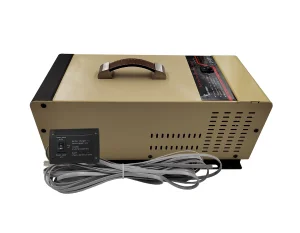
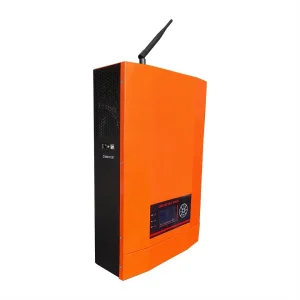
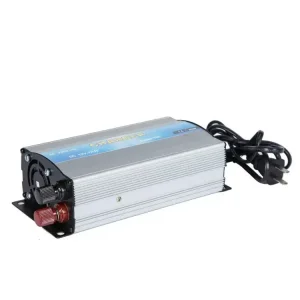
Complete your energy storage ecosystem with our heavy-duty off-grid single-phase and three-phase high-frequency / low-frequency hybrid solar power conversion systems.