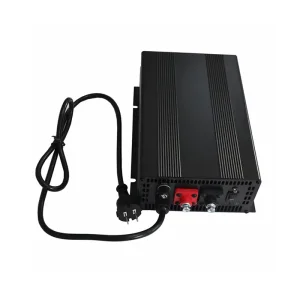
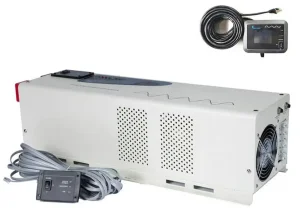
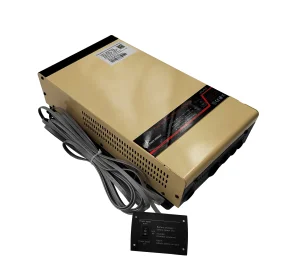
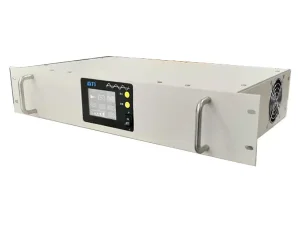
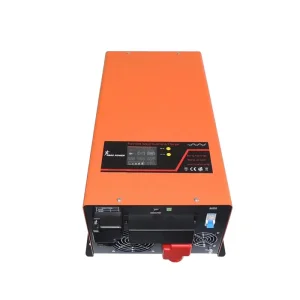
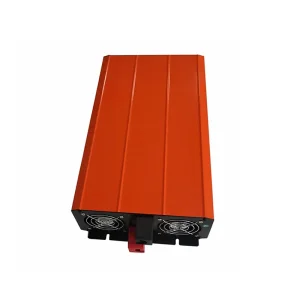
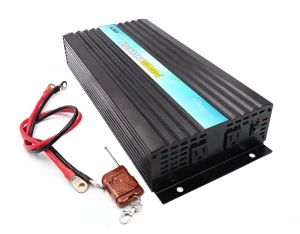
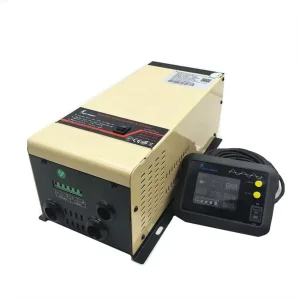
Engineered for heavy inductive loads, off-grid solar arrays, commercial fleets, and industrial backup systems with ISO 9001:2015 quality assurance.
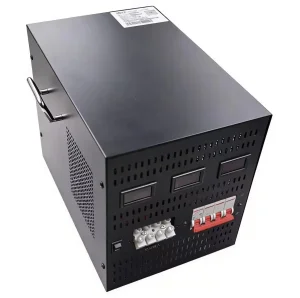
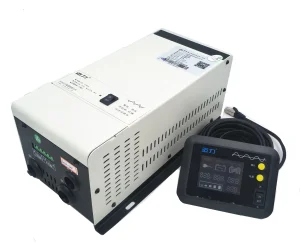
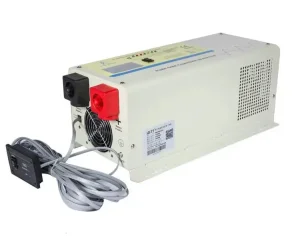
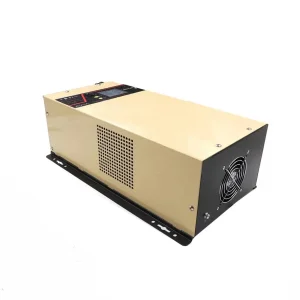
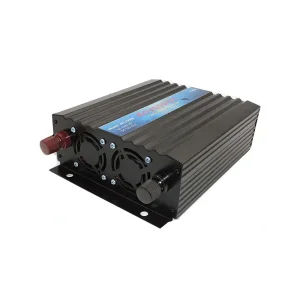
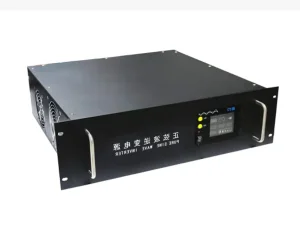
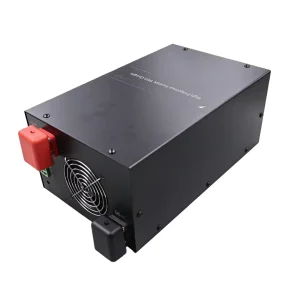
Analyzing global market growth, supply chain dynamics, and B2B procurement demands for 2000W pure sine wave energy conversion systems across automotive, solar, and industrial sectors.
The global shift toward decentralized energy generation, electrification of mobile platforms (RVs, overland vehicles, marine vessels), and critical infrastructure resiliency has expanded the demand for 2000 Watt pure sine wave inverters. Positioned precisely at the sweet spot of power output, a 2000W continuous rating satisfies high-draw inductive loads—such as 15,000 BTU RV air conditioners, heavy-duty power tools, and medical equipment—without imposing excessive weight or battery capacity penalties.
For international buyers, sourcing from accredited OEM 2000 Watt inverter factories in specialized manufacturing clusters (such as Suzhou and Jiangsu, China) yields substantial margin advantages and engineering flexibility. Leading export factories offer full white-label customized PCBA engineering, private-label branding, customized DC input parameters (12V, 24V, 48V, up to 96V DC), and specific regional AC outlet configurations (Type A, B, C, E, F, G, and Universal).
Commercial procurement directors are rapidly replacing legacy modified sine wave units with intelligent pure sine wave topologies. Microprocessor-controlled zero-crossing detection, isolated transformer circuits, and real-time CAN bus telemetry ensure seamless integration with modern Lithium Iron Phosphate (LiFePO4) energy storage systems, minimizing harmonic heating and extending battery cycle life.
Understanding the core hardware differences, thermal management design, power semiconductor selection, and signal purity parameters required for industrial B2B procurement.
Low-frequency 2000W inverters utilize heavy, iron-core toroidal transformers operating at 50Hz or 60Hz. The physical mass of the toroidal core provides exceptional galvanic isolation and immense inductive dampening. This enables a 300% peak surge capacity (up to 6000W for 20ms), making low-frequency models the definitive choice for starting heavy motor loads like air compressors, refrigerators, and power tools.
High-frequency 2000W inverters use multi-stage DC-to-DC conversion with high-speed pulse-width modulation (PWM) driven by power MOSFETs or IGBTs operating above 20kHz. The elevated frequency allows the use of compact ferrite transformers, yielding a unit that is 60% lighter and 40% smaller with lower no-load idle consumption, perfect for space-constrained telecommunication and light vehicle systems.
Quality OEM factories engineer output filters with multi-stage LC networks to ensure total harmonic distortion (THD) remains strictly under 3% (and under 1.5% for precision laboratory applications). Pure sine wave output replicates clean utility power, eliminating electronic noise in sensitive AV gear, preventing micro-stuttering in digital controllers, and reducing heat generation in AC induction motors.
A critical engineering failure point in cheap 2000W inverters is thermal degradation. Professional OEM exporters employ extruded anodized aluminum heat sinks, dual intelligent variable-speed brushless cooling fans, and multi-point thermistor sensors on the primary MOSFET bridge and secondary transformer. Continuous operation at 100% rated load in 45°C ambient temperatures requires strict thermal headroom design.
Direct engineering comparison matrix to assist wholesale buyers, OEM clients, and system integrators in specifying the optimal inverter platform.
| Architecture Metric | High-Frequency 2000W | Low-Frequency 2000W | Hybrid MPPT 2000W |
|---|---|---|---|
| Primary Transformer | High-Frequency Ferrite Core | Heavy Toroidal Copper/Iron Core | Combined HF Core + Integrated MPPT |
| Peak Surge Rating | 200% (4000W for <50ms) | 300% (6000W for 20s) | 200% - 250% (5000W for 100ms) |
| Physical Weight | Lightweight (4.5kg - 6.5kg) | Heavy Duty (16kg - 22kg) | Moderate (7.5kg - 11kg) |
| Idle Consumption (No-Load) | < 0.8A @ 12V DC | 1.2A - 2.1A @ 12V DC | < 1.0A (with Sleep Mode) |
| Target Load Types | Electronics, TV, Laptops, LED Lighting | Compressors, Pumps, Power Tools, Air Conditioners | Off-Grid Residential Solar, Battery Storage Systems |
| Integrated Battery Charger | Optional 30A - 90A Smart Charger | Integrated 35A - 70A Multi-stage Charger | Integrated 60A - 80A MPPT Solar Charger |
| Cost Profile (Factory FOB) | Cost-Effective / Mass Volume | Premium Heavy Duty | Integrated Value / Solar Standard |
Tailoring OEM 2000W inverter configurations to meet climate, grid voltage, regulatory, and operational environments across major export markets.
In the United States and Canada, 2000W inverters are standard equipment in Class B/C motorhomes and commercial utility service trucks. Demand focuses on 12V DC to 120V AC 60Hz pure sine wave units with built-in transfer switches (ATS) and GFCI duplex outlets. Integration with dual-battery isolators and LiFePO4 batteries allows seamless switching from grid shore power to off-grid battery inverter power in under 10 milliseconds.
European and Oceanian importers specify 230V AC 50Hz output with strict CE (LVD/EMC) and RoHS certifications. Common applications include marine yachts, off-grid cabins, and mobile food trailers. These configurations often demand IP30/IP54 dust-resistant enclosures, heavy-duty DC studs for 250A peak currents, and custom CAN/RS485 communication protocols for Victron or Mastervolt display integration.
In regions facing frequent grid shedding across Southeast Asia, Africa, and South America, 2000W low-frequency inverter/chargers serve as home and office emergency UPS systems. Capable of surviving wide AC input voltage swings (170V–280V AC) without dropping the battery charge mode, these robust units protect computers, refrigeration, and lighting grids during unexpected blackouts.
Exploring how Wide Bandgap (WBG) semiconductors, AI-driven power management, and bi-directional charging are shaping the future of OEM inverter manufacturing.
Leading-edge OEM factories are transitioning from traditional Silicon MOSFETs to Gallium Nitride (GaN) and Silicon Carbide (SiC) power switches. Operating at significantly higher switching frequencies with lower thermal losses, GaN-based 2000W inverters reduce passive component sizing by up to 30%, pushing full-load efficiency beyond 97% while eliminating internal fan noise at partial loads.
Modern commercial buyers demand real-time system visibility. Next-generation 2000W inverters embed Bluetooth 5.0, Wi-Fi, and RS485 Modbus interfaces. Custom Android/iOS apps and cloud dashboards allow end-users and fleet managers to monitor live power draw, battery state of charge (SOC), internal temperatures, and fault history remotely, enabling predictive maintenance before field failures occur.
As electric vehicles (EVs) become dominant power reservoirs, OEM inverter designs are integrating bi-directional AC/DC conversion topologies. A 2000W bi-directional inverter allows Vehicle-to-Load (V2L) extraction, turning EV batteries into emergency mobile power plants or feeding grid-tied micro-inverters during peak dynamic pricing hours.
A step-by-step technical framework for importers, distributors, and brand owners auditing Chinese inverter manufacturing facilities.
High-reliability factories implement strict vendor qualification for critical active and passive components. Verify that the factory utilizes original international semiconductor brands (such as Infineon, STMicroelectronics, IXYS) for MOSFETs/IGBTs and Japanese 105°C long-life electrolytic capacitors (Nichicon, Rubycon) to prevent premature dielectric breakdown.
A true industrial OEM facility subjects 100% of manufactured 2000W units to automated thermal chamber burn-in testing. Quality control procedures require a minimum of 4 to 8 hours of full 2000W continuous resistive/inductive load testing, followed by 300% peak surge verification, short-circuit protection tripping, and high-voltage dielectric withstand isolation testing.
Importers must ensure factory compliance with target market regulations. Ensure valid test reports for CE (LVD EN 62109-1/-2, EMC EN 61000-6-1/-3), RoHS Directive 2011/65/EU, FCC Part 15 Class B, and optional UL 1741 / CSA C22.2 standards. ISO 9001:2015 certification guarantees systematic assembly line process control.
Direct answers from power electronics engineers regarding 2000 Watt inverter selection, customization, and factory logistics.
Discover our full suite of low frequency home inverters, wind power converters, intelligent battery chargers, and high-frequency hybrid systems.