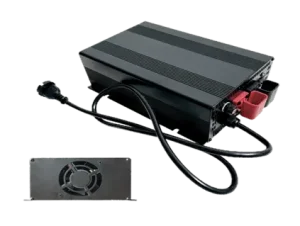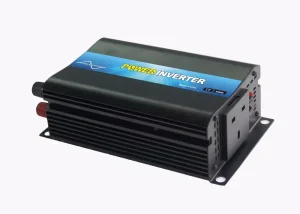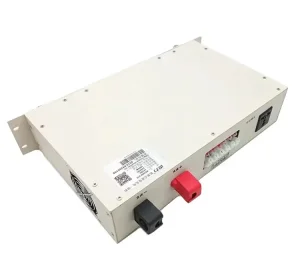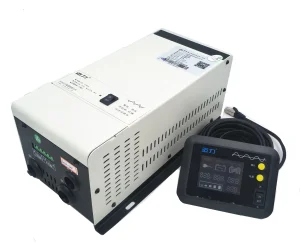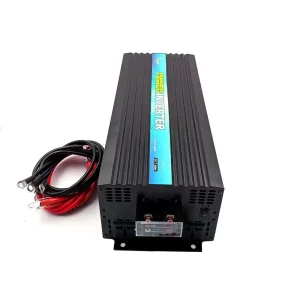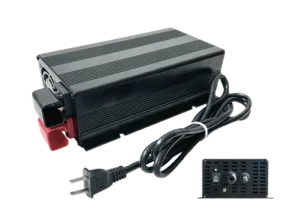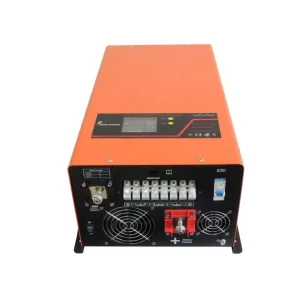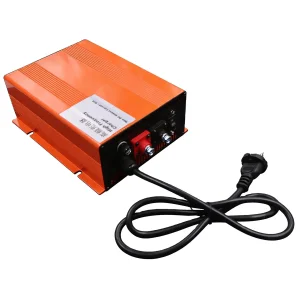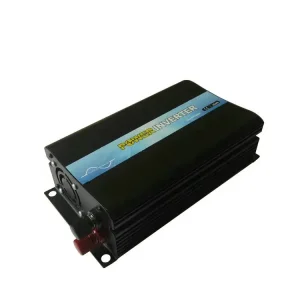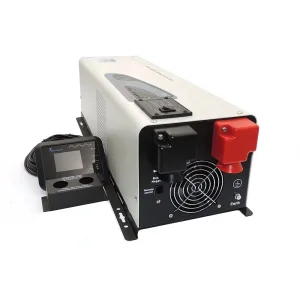
The global power conversion landscape is undergoing a monumental paradigm shift. As industries acceleration toward electrification, decentralized power grids, and mobile energy resilience, the demand for OEM 3000W inverters has reached an unprecedented peak. Acting as the critical sweet spot between portable energy capacity and heavy-duty industrial load handling, 3000-watt pure sine wave power inverters serve as the cornerstone for off-grid energy storage systems (ESS), recreational vehicles (RVs), commercial fleet utility, telecommunications backup, and remote agricultural applications.
Historically dominated by standardized regional units, the modern B2B market strongly favors custom OEM/ODM exporting partners capable of providing bespoke electrical engineering solutions. Industrial buyers no longer seek mere off-the-shelf equipment; they demand highly adapted DC-to-AC conversion units engineered for extreme ambient temperatures, wide input voltage fluctuations, specific lithium battery communication protocols (CANbus, RS485, Modbus), and rigorous international compliance standards (CE, RoHS, SAA, CB, ISO 9001:2015).
Engineering evolution in the 3000W power conversion sector is driven by five core technological megatrends. OEM exporters must integrate these technical benchmarks into their product development lifecycles to maintain market dominance:
Transitioning from legacy Silicon MOSFETs to Silicon Carbide (SiC) and Gallium Nitride (GaN) switching components allows 3000W inverters to operate at higher switching frequencies, drastically reducing toroidal transformer weight and increasing overall thermal efficiency.
Modern off-grid installations demand unified hardware. Next-generation 3kw units combine high-efficiency Maximum Power Point Tracking (MPPT) solar charge controllers (up to 100A) with bi-directional AC chargers within a single compact chassis.
Universal lead-acid charging is obsolete. Custom 3000W inverters feature active handshaking with LiFePO4 Battery Management Systems (BMS) via CAN 2.0B protocols to adjust voltage dynamic curves, preventing safety shutdowns and optimizing cell longevity.
| Parameter / Feature | Low-Frequency Toroidal Transformer Topology | High-Frequency Switch-Mode Topology |
|---|---|---|
| Surge Capacity Capability | 300% Peak Surge (9000W for 20 seconds) | 200% Peak Surge (6000W for < 1 second) |
| Inductive Load Compatibility | Exceptional (Compressors, AC units, Power Tools, Pumps) | Moderate (Resistive loads, Electronics, Small Motors) |
| Weight & Physical Footprint | Heavier (~18kg - 25kg), robust mechanical design | Ultra-lightweight (~5kg - 8kg), compact chassis |
| Galvanic Isolation | Full copper transformer isolation (High EMI Immunity) | Electronic Isolation (Requires secondary filtering) |
| No-Load Idle Power Consumption | Slightly Higher (25W - 45W depending on eco-mode) | Ultra-Low (10W - 20W) |
| Primary B2B Application | Heavy RVs, Ambulances, Off-Grid Storage, Marine | Consumer Caravans, Mobile Solar Kits, Light Commercial |
Electrical requirements vary drastically across international territories. OEM 3000W inverter exporters must possess dynamic engineering flexibilities to cater to localized grid configurations, climate stresses, and application profiles.
In North America, 3000W inverters are heavily deployed in Fifth-Wheel RVs, Overland Vehicles, and Emergency Response Fleet units. Essential OEM specifications include 120V single-phase or 120V/240V split-phase configurations, UL458 compliance standards, integrated GFCI outlets, and seamless Shore-Power-to-Battery transfer switching under 10 milliseconds.
European and ANZ off-grid sectors prioritize extreme energy efficiency, strict CE/EMC directives, and SAA certifications. Deployments center on residential microgrids, marine vessels, and remote telecom towers. High-frequency 3000W hybrid architectures featuring wide MPPT input ranges (120VDC - 450VDC) dominate these regions.
In Southeast Asia, Africa, and Latin America, 3000W inverters serve critical agricultural solar pumping applications and off-grid home backup. Engineering must focus on anti-corrosion PCB conformal coating, dust-proof IP30/IP54 casing options, and robust surge protection to withstand unstable grid spikes.
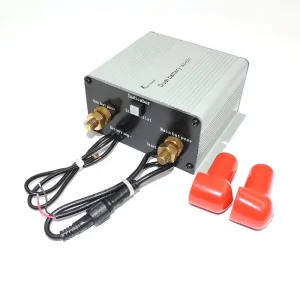
Specialty fleet vehicles (Ambulances, Mobile Command Units, Service Trucks) require 3000W pure sine wave inverters paired with Dual Battery Isolators (12V/24V 200A-400A). This guarantees that auxiliary equipment draws power without risking starter battery depletion.
Partnering with an established exporter requires an end-to-end custom engineering pipeline. Our ISO 9001:2015 certified manufacturing facility provides comprehensive OEM/ODM customization across eight critical domains:
DC Input: 12V, 24V, 48V, or High-Voltage 96V/380V DC platforms. AC Output: 100V, 110V, 120V, 220V, 230V, 240V.
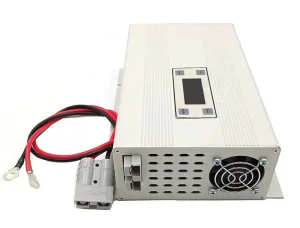
Programmable 3-stage smart charging currents (up to 100A), customizable for AGM, GEL, Lead-Acid, and LiFePO4 chemistry.
Universal AC sockets, NEMA, Schuko, UK, Australian standard pins, heavy-duty DC copper studs, and Anderson connectors.
Integration of RS485, CANbus, Wi-Fi, Bluetooth telemetry dongles, and customizable mobile monitoring apps.
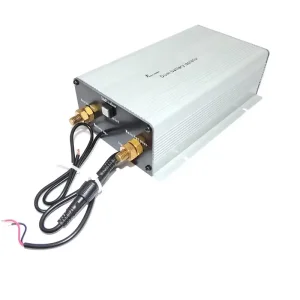
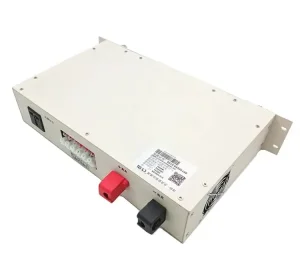
Extruded aluminum heat-dissipation chassis, ultra-thin rack-mounted configurations, wall-mount brackets, and custom paint/branding.
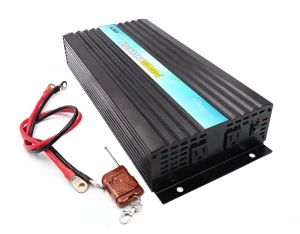
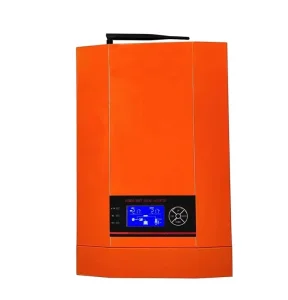
Customizable LCD display panels, digital LED indicators, multi-function remote control switches, and error log diagnostics.
Soft-start circuit design, reverse polarity protection, over/under voltage shutdown, short circuit, and thermal overload cut-off.
Private label drop-stitch packaging, drop-tested shipping cartons, customized instruction manuals, and CE/RoHS test reports.
Looking forward to 2030, the technical definition of a 3000W inverter is expanding from a simple standalone power converter to an intelligent energy node. Engineering research focuses heavily on Bi-Directional V2X (Vehicle-to-Everything) Topologies, enabling power inverters installed in electric fleets to feed energy back into home microgrids during peak tariff hours.
Furthermore, the incorporation of edge-AI thermal management algorithms allows modern 3000W inverters to dynamically predict component stress based on environmental humidity, historical load spikes, and ambient heat—extending capacitor and MOSFET operational lifespans by up to 40%.