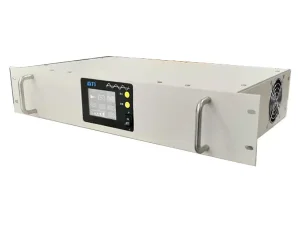
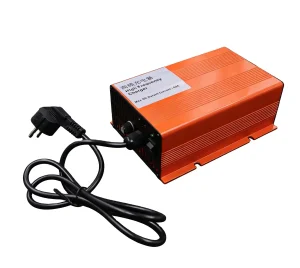
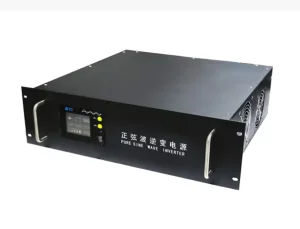
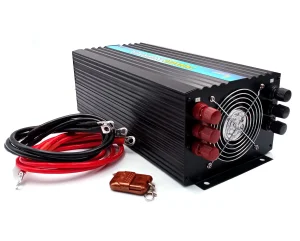
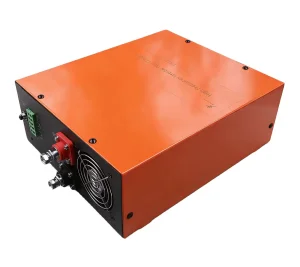
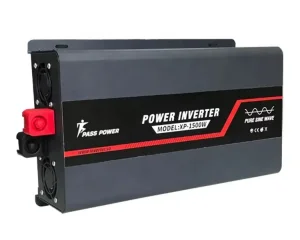
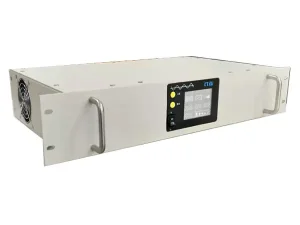
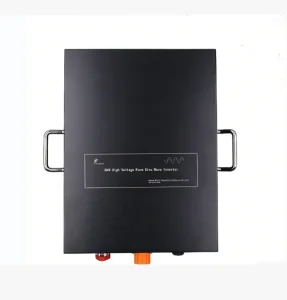
Explore our industrial-grade, OEM-ready power conversion units optimized for off-grid, hybrid, automotive, and commercial deployment.
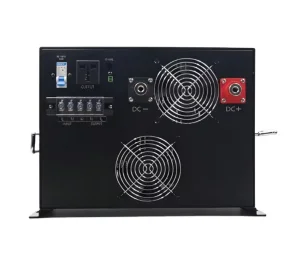
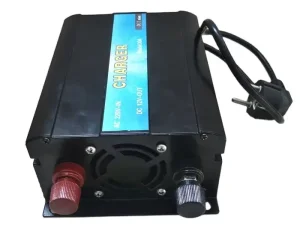
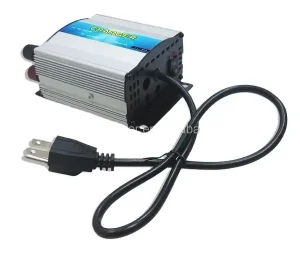
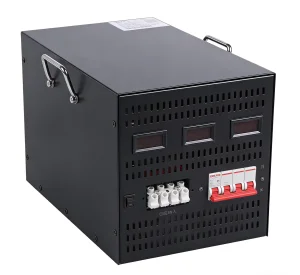
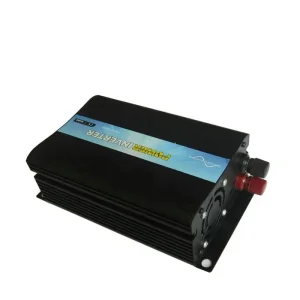
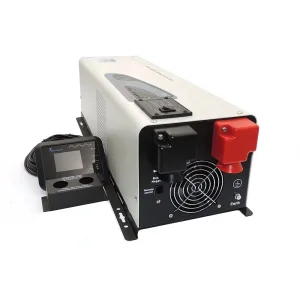
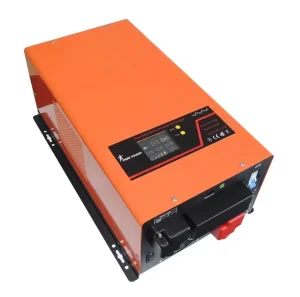
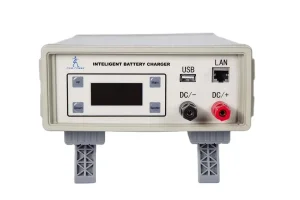
In the global energy transition ecosystem, the 4000W (4kW) solar inverter platform represents the critical sweet spot between residential power sufficiency and commercial heavy-duty utility. Designed to handle continuous loads while managing high inductive motor startup surges, 4000W inverters serve as the core power engine for off-grid microgrids, heavy-duty recreational vehicles (RVs), emergency response units, and remote telecom hubs.
Modern OEM 4000w solar inverters engineered by top-tier suppliers feature isolated pure sine wave power stages capable of delivering 4000W continuously at 40°C ambient temperatures, supported by peak surge ratings reaching up to 12,000W for 15-20 milliseconds.
Global procurement teams can choose between low-frequency toroidal transformer topologies (heavy-duty motor drives, compressor starts) and high-frequency switched-mode topologies (space-constrained, highly portable, high efficiency).
Equipped with integrated MPPT (Maximum Power Point Tracking) solar charge controllers operating at up to 98% tracking efficiency, seamless AC transfer switches (<10ms transfer time), and native lithium-battery (LiFePO4) BMS communication via CAN/RS485.
Selecting the optimal 4000w solar inverter for OEM brand lines requires an engineering understanding of internal power stage electronics. The choice of topology dictates physical weight, thermal management requirements, transient power tolerance, and overall bill of materials (BOM) cost.
Utilizes heavy-duty copper-wound toroidal transformers operating at grid line frequencies (50Hz/60Hz). The massive magnetic core acts as an inductive buffer against reverse electromotive force (EMF).
Employs high-speed Pulse Width Modulation (PWM) switching at frequencies above 20kHz, stepping up DC through compact ferrite transformers before DC-to-AC sine wave conversion.
| Performance Specification | 4000W Low-Frequency (Toroidal) | 4000W High-Frequency (SMPS) |
|---|---|---|
| Peak Surge Rating (Instantaneous) | 12,000W (300% / 20ms) | 8,000W (200% / 100ms) |
| Galvanic Isolation | Full Transformer Isolation | Electronic / High-Freq Isolation |
| Typical Weight (Bare Unit) | 28.5 kg - 35.0 kg | 9.5 kg - 13.0 kg |
| Idle Self-Consumption | 35W - 55W | 15W - 25W |
| Total Harmonic Distortion (THD) | < 2.5% (Pure Sine Wave) | < 3.0% (Pure Sine Wave) |
| AC Transfer Switch Speed | 8ms - 10ms (Integrated) | 10ms - 20ms (Integrated) |
Partnering with premier Chinese OEM 4000w solar inverter manufacturers unlocks unparalleled cost efficiencies, rapid R&D scaling, and sophisticated manufacturing quality controls.
State-of-the-art Yamaha and Fuji SMT lines place multi-layer PCB components with micrometer precision, ensuring defect-free soldering of high-power MOSFET drivers and DSP microcontrollers.
Every single manufactured 4000w unit undergoes a mandatory 4 to 8-hour full-load thermal chamber burn-in cycle at 50°C ambient temperatures to eliminate infant mortality failures before packaging.
Flexible tooling allows comprehensive customization: private-label chassis design, custom powder coating, tailored LCD firmware display parameters, bespoke communication protocols, and custom AC/DC terminal blocks.
The versatility of 4000w solar inverters satisfies critical operational requirements across diverse commercial, residential, and industrial environments worldwide.
In regions lacking utility infrastructure, a 4000W hybrid inverter serves as the master central energy router. Coupled with a 10kWh to 20kWh LiFePO4 battery array and a 5kWp PV field, it continuously powers full household loads including inverter refrigerators, well pumps, lighting, entertainment, and split-system HVAC units without grid dependence.
Commercial RV manufacturers integrate 4000W low-frequency inverter/chargers into premium motorhomes and overland rigs. The high surge capacity easily starts dual 15,000 BTU roof-top air conditioners simultaneously while maintaining clean power for sensitive onboard electronics, microwave ovens, and induction cooktops.
Mobile healthcare clinics, disaster relief vehicles, and fire department command centers rely on pure sine wave 4000w units. Zero electrical noise interference ensures stable operation for sensitive medical diagnostic gear, field surgical lighting, and satellite communication arrays.
Telecom towers in remote geographies utilize 48VDC 4000W rack-mounted inverter systems. Built-in SNMP network interface cards enable central network operations centers (NOC) to remotely monitor voltage telemetry, temperature metrics, and battery health in real time.
As power electronics evolve, forward-looking OEM manufacturers are implementing next-generation semiconductor switching technologies and AI-driven firmware optimizations.
Transitioning from traditional Silicon IGBTs to Wide-Bandgap (WBG) Silicon Carbide (SiC) MOSFETs drastically reduces switching losses, allowing thermal heat sinks to shrink by 40% while raising overall system efficiency beyond 99%.
Traditional Perturb and Observe (P&O) algorithms are being replaced by adaptive neural network algorithms capable of tracking maximum power points in complex partial shading conditions within milliseconds, recovering up to 15% lost solar energy.
Future-ready 4000w solar inverters feature Vehicle-to-Home (V2H) and Vehicle-to-Grid (V2G) bi-directional capability, enabling electric vehicle batteries to automatically feed back into home circuits during peak tariff hours or power outages.
Commercial buyers and brand distributors must look beyond initial factory unit pricing (FOB) and evaluate total lifecycle cost, operational reliability, warranty liability, and compliance overhead.
A well-engineered 4000w inverter reduces total ownership costs by maximizing conversion efficiency and preventing downstream equipment degradation:
High-efficiency low-THD pure sine wave output prevents overheating in inductive motors, extending the lifespan of connected refrigerators, pumps, and tools by up to 35% compared to modified sine wave units.
Exporting power electronics globally requires strict adherence to international electrical safety regulations, electromagnetic compatibility (EMC) standards, and regional grid connection codes.
Compliance with UL 1741 (2nd Edition), UL 458 (Mobile/RV applications), CSA C22.2, and FCC Part 15 Class B electromagnetic interference standards.
CE marking covering Low Voltage Directive (LVD 2014/35/EU), EMC Directive (2014/30/EU), RoHS compliance, and EN 62109-1/-2 safety benchmarks.
AS/NZS 4777.2 grid connection compliance, AS/NZS 3000 electrical installation wiring safety, and RCM regulatory compliance mark registration.
Complete MSDS, UN38.3, and sea/air freight transportation safety certificates for units integrated with internal lithium battery chemistry.
Direct technical answers addressing the most common questions raised by B2B importers, electrical engineers, and solar integrators.
While 4000W inverters exist in 24VDC configurations, a 48VDC input is strongly recommended for industrial and residential installations. At 4000W continuous output, a 24V system draws approximately 166 Amps continuous (excluding inverter inefficiency losses), requiring extremely thick copper cabling (e.g., 2/0 AWG) and generating substantial resistive heat. A 48V system cuts continuous current draw in half (~83 Amps), reducing cable thickness requirements, minimizing thermal stress, and improving overall system efficiency.
Pure sine wave 4000w inverters deliver smooth, harmonic-free AC output matching or exceeding utility grid quality (THD < 3%). Low-frequency pure sine wave units can sustain peak surges up to 300% (12,000W) for motor starting. Modified sine wave units produce blocky square-wave step voltages that cause motor inductive hum, high operating temperatures, and frequent thermal shutdowns when starting motorized loads like air compressors or pumps.
Yes. A standard 15,000 BTU RV air conditioner requires approximately 1,500W to 1,800W continuous running power (with a short startup surge of ~3,500W). A commercial microwave draws around 1,200W to 1,500W. Combined running power is ~3,300W, well within the 4000W continuous operating threshold. A low-frequency 4000w unit effortlessly absorbs the initial compressor startup spike without dropping AC output voltage.
Factory-standard 4000w hybrid inverters typically feature an integrated 80A to 100A MPPT solar charge controller accepting maximum PV array open-circuit voltages (Voc) up to 500VDC. This allows solar installers to string up to 4,500W–5,000W of PV panels in series, achieving high-voltage low-current DC transmission from roof to inverter.
Factory OEM support includes custom chassis silk-screening, custom anodized aluminum colors, private-label LCD/LED screens displaying brand logo on boot-up, customized battery charging parameters (LiFePO4, AGM, GEL, custom user-defined stages), RS485/CAN bus protocol mapping for proprietary BMS integration, and bespoke packaging design.
Our 4000w inverter chargers feature an internal ultra-fast electromagnetic relay switch. When grid power or generator AC input fails, the system automatically switches to battery power within 8 to 10 milliseconds. This UPS-grade transfer speed prevents desktop computers, servers, and sensitive control systems from resetting or shutting down during grid power loss.
Explore our extended catalog of high-frequency power units, rack-mounted integrated chargers, and high-voltage DC-to-AC conversion solutions.