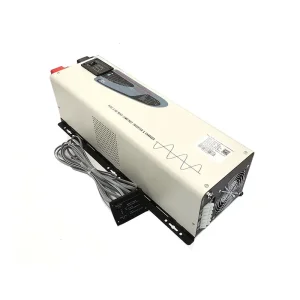
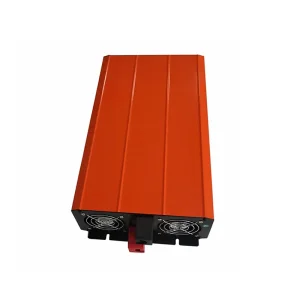
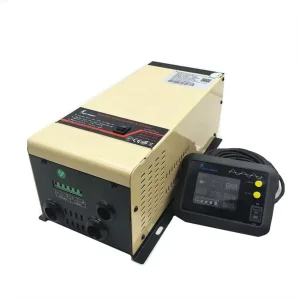
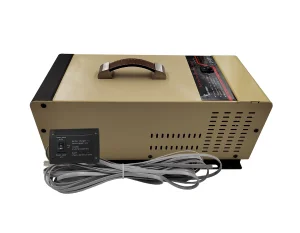
High-efficiency OEM/ODM power solutions engineered for commercial, industrial, and off-grid applications worldwide.
Analysis of power density, grid independence, and market acceleration across global markets.
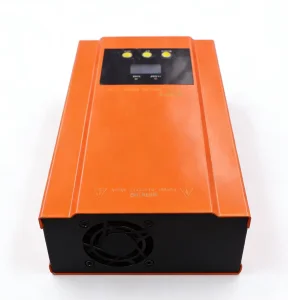
The global energy landscape is undergoing a structural transition toward decentralized, off-grid, and hybrid solar storage architectures. Within this ecosystem, the 60A Maximum Power Point Tracking (MPPT) Solar Charge Controller serves as a crucial power management component. Functioning as the high-efficiency bridge between high-voltage photovoltaic (PV) arrays and chemical energy storage systems (Lithium-ion, LiFePO4, AGM, GEL), the 60A rated controller represents the sweet spot for medium-to-heavy commercial, industrial, telecom, and off-grid residential installations.
Key Market Insight: The shift from legacy Pulse Width Modulation (PWM) to advanced MPPT technology yields an average 30% increase in energy harvest under real-world irradiance conditions. A 60A MPPT controller operating on a 48V battery bank natively manages up to 3,200 Watts of solar input, making it the most cost-effective power building block for mid-scale solar systems globally.
As commercial buyers, EPC contractors, and brand owners evaluate OEM 60a MPPT controller suppliers and factory partners, the demand extends beyond basic charge regulation. B2B procurement decisions are driven by dynamic conversion efficiency, transient surge suppression, thermal derating thresholds, multi-protocol communication (RS485, CAN bus, Modbus RTU), and long-term component reliability under extreme environmental stress.
Accommodating wide PV Voc ranges (up to 150V DC or 200V DC) enables long series string configurations, reducing wire gauge requirements, line losses, and balance-of-system (BOS) installation costs.
Fully programmable charge parameters for LiFePO4 (Lithium Iron Phosphate), Ternary Lithium, Lead-Acid, AGM, and GEL batteries, equipped with custom active BMS handshake protocols.
Die-cast extruded aluminum heat sinks paired with intelligent forced-air PWM cooling fans ensure 100% full-load continuous output up to 45°C ambient operating temperatures without thermal derating.
Understanding the engineering principles that distinguish tier-1 factory designs from low-cost market alternatives.
At the core of an enterprise-grade 60A MPPT controller lies its digital signal processing (DSP) architecture. Leading factories utilize dual-core 32-bit ARM microcontrollers executing hybrid tracking algorithms:
Converting high-voltage PV output (e.g., 100V) to low-voltage battery charging (e.g., 24V or 48V) requires a high-frequency DC-DC Buck converter topology designed with premium components:
Why leading power electronics brands choose Suzhou and Yangtze River Delta manufacturing hubs for custom MPPT engineering.
Proximity to component manufacturers—from SMD passive components to die-cast heat sinks and transformers—drastically reduces procurement lead times, prototyping cycles, and bill-of-materials (BOM) overhead.
State-of-the-art Surface Mount Technology (SMT) lines equipped with 3D Automated Optical Inspection (AOI), Solder Paste Inspection (SPI), and automated flying-probe in-circuit testing (ICT) ensure zero-defect PCB manufacturing.
Every manufactured 60A MPPT unit undergoes environmental stress screening (ESS), including 4-8 hours of continuous full-load burn-in at 50°C thermal chambers prior to final packaging and export shipment.
In addition to scale and cost efficiency, Chinese OEM factories like Suzhou Maili Electrical offer unmatched customization agility (ODM/OEM). Global brand owners can specify customized DC input voltage thresholds, non-standard communication protocols, custom firmware curves for proprietary lithium battery packs, co-branded LCD displays, and bespoke extruded chassis designs.
How 60A MPPT controllers deliver uninterrupted power across harsh global environments.
In remote telecommunications deployments (48V nominal systems), continuous uptime is paramount. A 60A MPPT controller connected to a 3.2kW solar array provides clean power to remote radio heads (RRH) and backhaul equipment, drastically reducing diesel generator fuel consumption and maintenance cycles in rural electrification regions.
Agricultural irrigation systems across arid regions rely on 60A charge controllers to buffer solar variation through deep-cycle battery banks or direct DC pump control. The high current output ensures uninterrupted operation during early morning and late afternoon low-irradiance windows.
Mobile applications demand heavy-duty mechanical vibration resistance (conformal coated PCBs) and dual battery charging capability. The 60A controller safely regulates power from rooftop solar panels to charge house LiFePO4 batteries while preventing alternator back-feed.
For village microgrids, island power stations, and commercial backup systems, multiple 60A MPPT units can be operated in parallel synchronization. Master-slave RS485 bus logic harmonizes charging states across massive battery banks exceeding 100kWh capacity.
The future of solar charge regulation: Silicon Carbide, Edge IoT, and Smart BMS Integration.
As power electronics evolve, 60A MPPT controllers are incorporating cutting-edge semiconductor materials and software-defined energy management features:
Replacing traditional Silicon MOSFETs with wide bandgap Gallium Nitride (GaN) or Silicon Carbide (SiC) switches enables higher switching frequencies with up to 50% reduced thermal dissipation, resulting in significantly smaller product footprints.
Modern OEM controllers feature integrated Bluetooth 5.0, Wi-Fi, or 4G LTE modules. Sourcing managers can deploy remote diagnostic dashboards, over-the-air (OTA) firmware updates, and predictive maintenance alerts via cloud APIs.
Moving beyond simple voltage-based charging, next-gen controllers communicate directly via CAN bus / RS485 with the battery’s Smart BMS, dynamically throttling charge current based on real-time cell temperatures and state-of-charge (SoC).
Essential verification parameters for enterprise procurement officers and distributor brand managers.
When selecting a manufacturing partner for wholesale 60A MPPT charge controllers, enterprise buyers must audit the supplier against strict engineering and regulatory metrics:
Technical and commercial clarity for OEM buyers, engineering contractors, and solar distributors.
Explore our full line of high-frequency, low-frequency, and hybrid MPPT inverter power solutions.