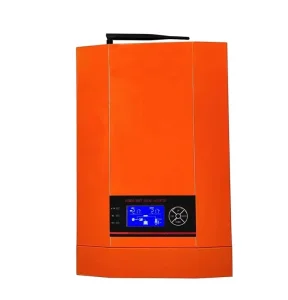
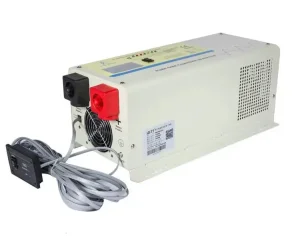
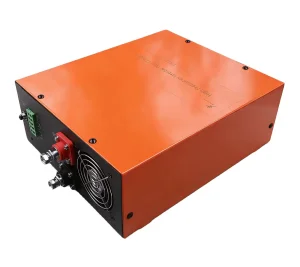
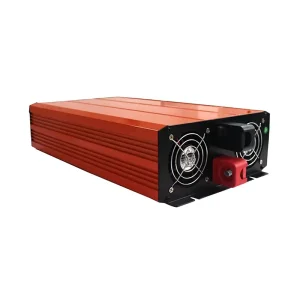
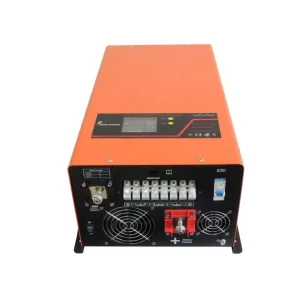
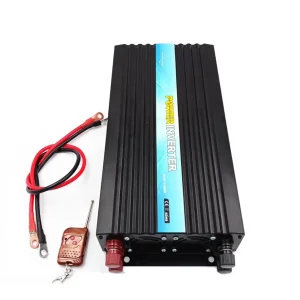
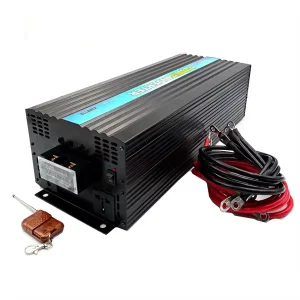
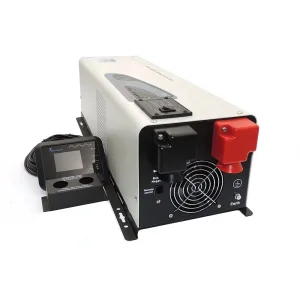
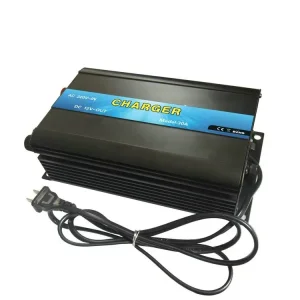
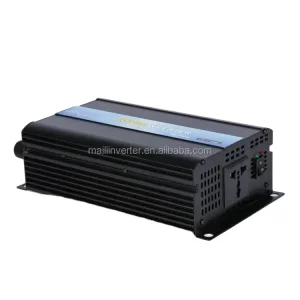
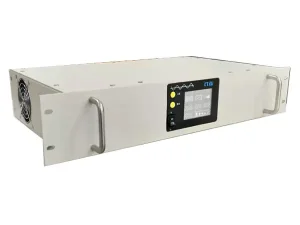
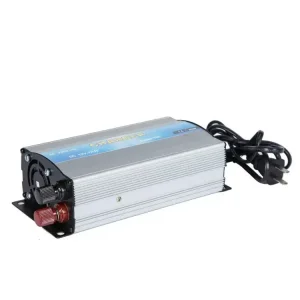
High-efficiency, intelligent battery chargers and pure sine wave inverters manufactured for global enterprise fleets.
The global electrification landscape is experiencing a structural migration from legacy 24V, 36V, and 48V battery architectures toward high-density 72 Volt nominal systems. Driven by the imperative for higher power throughput without incurring quadratic ($I^2R$) resistive thermal losses, industrial OEMs, fleet operators, and commercial vehicle manufacturers are standardizing on 72V platforms. Operating at 72 volts permits system designers to deliver up to 50% more power through thinner copper wiring harnesses, reducing vehicle payload mass, lowering system thermal stress, and improving total powertrain energy conversion efficiency by 8% to 14%.
To maximize operational uptime, commercial fleets demand sophisticated, highly durable charging solutions. Sourcing an OEM 72 Volt Battery Charger Supplier is no longer merely a procurement task; it is a core engineering decision that dictates battery cycle life, operational thermal envelopes, regulatory compliance, and total cost of ownership (TCO). Modern 72V batteries—spanning Lithium Iron Phosphate ($\text{LiFePO}_4$), Nickel Manganese Cobalt ($\text{NMC}$), and advanced Lead-Acid variants (AGM, Gel, Carbon-Lead)—require smart chargers capable of high peak conversion efficiency ($>95\%$), dynamic temperature-compensated charging, and real-time CAN-bus data synchronization with the vehicle’s Battery Management System (BMS).
State-of-the-art 72V OEM chargers feature an active Interleaved Power Factor Correction (PFC) stage coupled with an LLC resonant DC-DC converter. This architecture achieves Zero Voltage Switching (ZVS) across primary MOSFETs and Zero Current Switching (ZCS) on secondary rectifier diodes, maintaining Power Factor (PF) $\ge 0.99$ and Total Harmonic Distortion (THD) $< 5\%$.
By integrating Wide Bandgap (WBG) GaN power semiconductors, switching frequencies are elevated from legacy 65kHz limits to over 250kHz-500kHz. This frequency scaling dramatically shrinks passive magnetic components (transformers and inductors), yielding power densities exceeding $1.8 \text{ W/cm}^3$ for space-constrained onboard mounting.
Equipped with isolated CAN 2.0B / SAE J1939 communication buses, 72V chargers dynamically modify output current and voltage profiles based on real-time cell-level diagnostics. Protection suites include Over-Voltage Protection (OVP), Reverse Polarity Interlocks, Spark Suppression, and Thermal Derating loops.
| Specification Parameter | Standard On-Board 72V Charger | Industrial High-Power Heavy Duty | Ultra-Compact Portable Smart Charger |
|---|---|---|---|
| Nominal Output Voltage | 72.0 VDC | 72.0 VDC (Adjustable 60V-88.2V) | 72.0 VDC |
| Maximum Charging Voltage | 84.0V (Lead Acid) / 87.6V (LiFePO4) | 87.6V (LiFePO4 24S) / 88.2V (NMC 21S) | 84.0V - 87.6V Automatic Sensing |
| Rated Power Range | 1.5 kW – 3.3 kW | 4.0 kW – 12.0 kW (Modular/Parallel) | 600 W – 1.2 kW |
| Conversion Efficiency | $\ge 94.5\%$ | $\ge 96.2\%$ | $\ge 92.0\%$ |
| Ingress Protection | IP66 / IP67 Fully Sealed Die-Cast | IP65 Enclosure with Forced Air Flow | IP30 / IP54 Aluminum Extrusion |
| Communication Interface | CAN 2.0B / RS485 / Analog Enable | Dual CAN 2.0B / Ethernet / J1939 | Stand-alone Automatic Multi-Stage Profile |
When global enterprise buyers evaluate an OEM 72 Volt Battery Charger Supplier, technical compliance and operational reliability supersede baseline pricing. Industrial fleets operating across North America, the European Union, Southeast Asia, and Latin America face fragmented electrical grid standards. Consequently, top-tier OEM suppliers must engineer universal AC input ranges spanning 85 VAC to 265 VAC (45Hz – 65Hz) with automatic line voltage sensing and active power factor compensation.
Enterprise sourcing requires full regulatory compliance. Key certifications include UL 1564 (Industrial Battery Chargers), UL 2202 (EV Charging Systems), CE (EN 60335-1 / EN 60335-2-29), and electromagnetic compatibility compliance under FCC Part 15 Class A/B and EN 55011. chargers must withstand harsh surges (IEC 61000-4-5 Level 4).
A single rigid charge profile increases battery degradation rates. Reliable OEM partners offer flash-programmable microcontrollers allowing custom CC/CV/Float profiles, constant power charging modes, automated balancing stages for Lithium cells, and desulfation pulse cycles for flooded lead-acid batteries.
For on-board vehicle installations (golf carts, mining scoops, utility task vehicles), chargers are subjected to continuous vibration (MIL-STD-810G standards) and moisture ingress. Die-cast aluminum alloy housings with silicone potting ensure shock resistance up to 20G and thermal conductivity across $-40^\circ\text{C}$ to $+65^\circ\text{C}$ ambient.
The global leadership of Chinese manufacturing in power electronics stems from a dense ecosystem of raw material suppliers, semiconductor packaging centers, transformer winders, and automated assembly plants. Located in high-tech industrial hubs such as Suzhou and Shenzhen, specialized factories leverage Industry 4.0 Smart Manufacturing Execution Systems (MES) to achieve total component traceability and strict quality control.
Surface Mount Technology (SMT) lines equipped with 3D Automated Optical Inspection (AOI) and X-ray inspection for BGA packaging ensure zero-defect PCB assembly. Every control motherboard undergoes automated In-Circuit Testing (ICT) and Functional Testing (FCT) before final encapsulation.
Reliability is non-negotiable. Leading OEM facilities run 100% of manufactured 72V chargers through dynamic burn-in chambers under full load conditions at $50^\circ\text{C}$ ambient for 4 to 12 hours. This thermal stress process eliminates infant mortality failures prior to global dispatch.
Integrated R&D teams provide rapid engineering turnarounds—transitioning from initial customer specification and 3D enclosure modeling to functional prototype validation within 15 to 25 working days, vastly shortening time-to-market for equipment OEMs.
In smart fulfillment warehouses, 72V autonomous mobile robots require high-current opportunity charging. On-board and off-board 72V chargers interface via magnetic inductive pads or automatic docking plates, supplying 50A to 100A charging currents to rapid-charge LiFePO4 packs during 15-minute shift breaks.
Commercial resorts, municipal parks, and gated communities are upgrading fleet golf carts from 48V to 72V for enhanced hill-climbing torque and extended range. OEM IP67 sealed onboard chargers withstand routine power-washing and rain exposure while providing automatic maintenance charging over extended winter storage.
Baggage tractors, belt loaders, and passenger steps operated on tarmac ramps demand rugged heavy-duty 72V chargers. These units feature wide temperature range operation ($-30^\circ\text{C}$ to $+55^\circ\text{C}$), high surge tolerance, and heavy-duty RFI filters to avoid interference with aircraft communications.
Off-grid telecommunication towers and remote agricultural pump stations utilize 72V battery banks tied to solar MPPT charge controllers and AC-DC backup chargers. When solar irradiance drops, the 72V charger acts as a fast-replenishment source powered by auxiliary diesel generators or AC microgrids.
Explore our broader ecosystem of high-power inverters, off-grid solar converters, and smart battery chargers.