Exploring the technological convergence of multi-bank power conversion, adaptive chemistry profiles, and enterprise supply chain optimization in modern power electronics.
The global power electronics landscape is undergoing a systemic transition. Driven by the rapid electrification of commercial fleets, recreational vehicles (RVs), marine vessels, off-grid telecom installations, and industrial energy storage systems (ESS), the demand for high-efficiency, multi-bank battery charging solutions has reached unprecedented levels. Modern energy infrastructures no longer rely on singular battery banks; instead, modern applications deploy multi-chemistry, multi-voltage battery networks—often pairing high-capacity Lithium Iron Phosphate (LiFePO4) service banks with traditional Absorbed Glass Mat (AGM) or GEL engine-start batteries.
As an established OEM Multi Battery Charger Manufacturer, navigating this technological convergence requires deep expertise in high-frequency switching power supplies, low-frequency toroidal transformer topologies, microprocessor-controlled multi-stage charging algorithms, and intelligent battery isolation. Enterprise buyers and tier-1 procurement managers must select manufacturing partners capable of delivering exceptional efficiency, rigorous international compliance, and modular OEM/ODM customization options.
How advanced power conversion topologies solve thermal management, phase balancing, and multi-chemistry synchronization.
Galvanically isolated secondary windings ensure independent charging channels without current leakage or ground loop interference across different battery chemistry banks.
Microprocessor-driven profiles execute Bulk, Absorption, Float, Equalization, and Refresh phases tailored specifically to LiFePO4, Lead-Acid, AGM, and GEL discharge curves.
Integrated CAN bus, Modbus RS485, and SMBus protocols allow direct handshake with external Battery Management Systems (BMS) for real-time dynamic thermal & current regulation.
| Engineering Specification | High-Frequency Switch-Mode (SMPS) | Low-Frequency Toroidal Transformer |
|---|---|---|
| Power Density & Weight | Ultra-Compact / Lightweight (< 5 kg) | Heavy Duty / Transformer Base (15 - 35 kg) |
| Peak Surge Capability | 150% Nominal (10ms - 100ms) | 300% Nominal Peak Surge (up to 20s) |
| Peak Efficiency | 93% - 96% Efficiency | 88% - 92% Efficiency |
| Primary Application Profile | Commercial Vehicles, Fleet, Portable Industrial Chargers | Heavy Inductive Marine, RV Air Conditioners, Off-Grid Solar |
| Acoustic & EMI Signature | Low Acoustic / Active EMI Filtering Required | Ultra-Quiet Electromagnetic Signature |
Unlocking cost efficiency, rapid prototyping, and component-level quality control through localized Suzhou power manufacturing hubs.
Global enterprise buyers face persistent pressure to balance unit manufacturing costs with uncompromised operational reliability. Sourcing from a mature China OEM Multi Battery Charger Manufacturer based in industrial power hubs like Suzhou delivers a strategic advantage across the entire product lifecycle.
Direct proximity to tier-1 semiconductor suppliers, copper magnetic core winding facilities, and SMT precision line operations reduces raw material lead-times by up to 40%.
Every multi battery charger undergoes automated optical inspection (AOI), high-voltage dielectric isolation testing, full-load thermal imaging, and 100% burn-in chamber aging.
From custom metal enclosure stamping to firmware adjustments for unique charge profiles, experienced R&D teams transform initial CAD specs into production-ready samples in weeks.
Systematic engineering modularity designed to match your localized regional standards, branding requirements, and technical specifications.
Enterprise procurement is rarely a one-size-fits-all process. International distributors require dedicated localized adjustments—ranging from wide input AC voltage range selection (110V/120V North American split-phase to 230V/240V European/Oceanian grids) to tailored DC output wiring harnesses, customizable digital LCD interfaces, and regional plug socket choices.
Custom input ranges (90V-264V AC wide voltage) paired with multi-channel DC voltage outputs (12V, 24V, 36V, 48V, or high-voltage 380V DC systems).
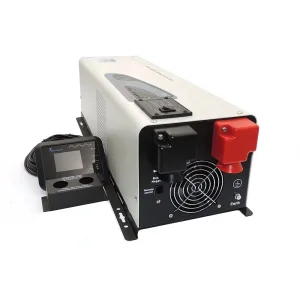
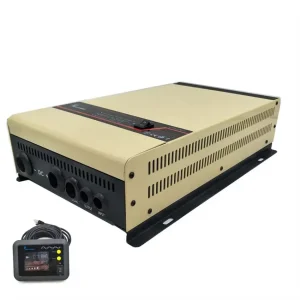
Custom LCD screens showing real-time voltage, charge current, state-of-charge (SOC), fault codes, temperature monitoring, and private-label branding graphics.
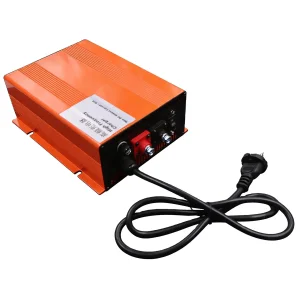
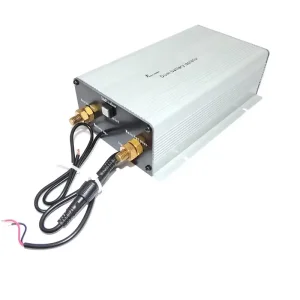
Rugged extruded aluminum housings, custom IP30 to IP67 ingress protection, powder-coated finishes, and smart variable-speed cooling fan logic.
Ensuring seamless market entry through complete international certification coverage and robust field performance across diverse operational environments.
Fully compliant with CE, RoHS, CB, SGS, and IEC 62109 safety frameworks, safeguarding importers against regulatory barriers and customs delays.
Simultaneously charge starter batteries and high-capacity LiFePO4 house banks from alternator power or shore grid connections without cross-discharge.
Corrosion-resistant conformal coating protects internal PCBs against salt fog, high humidity, and mechanical vibration in marine engine rooms.
Clear answers to critical questions asked by system integrators, electrical engineers, and enterprise buyers.