


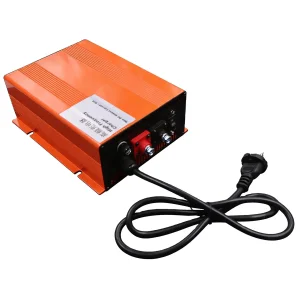
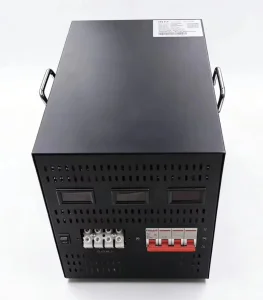
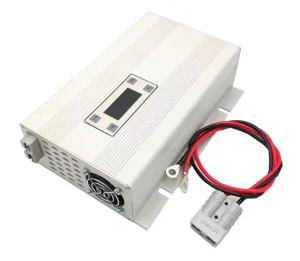
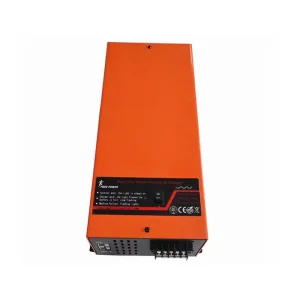
Explore our flagship range of intelligent multi-stage battery chargers, high-frequency converters, and pure sine wave inverted chargers designed for industrial, automotive, and off-grid power infrastructure.
An in-depth white-paper analysis of electro-chemical shifts, regulatory standards, and supply chain demands in modern energy storage infrastructure.
The global transition toward high-density energy storage systems—spanning Lithium Iron Phosphate (LiFePO4), Nickel Manganese Cobalt (NMC), and advanced Gel/AGM Lead-Acid chemistries—has fundamentally altered the engineering parameters required of industrial battery chargers. As commercial fleets, off-grid power stations, emergency service vehicles (EMS), marine transport, and telecommunications sites adopt high-capacity battery banks, traditional "dumb" linear power supplies are no longer compliant with modern safety protocols or total-cost-of-ownership (TCO) benchmarks.
In today's commercial ecosystem, battery degradation, thermal runaway risks, and grid power fluctuations pose major financial and operational hazards. Consequently, industrial buyers and OEM equipment builders actively demand OEM safe-design smart chargers integrated with Microcontroller Units (MCU), high-frequency Switch-Mode Power Supply (SMPS) topologies, and active Power Factor Correction (PFC). These technological advances ensure compliance with stringent international electrical safety standards while maximizing battery cycle lifespan.
Modern LiFePO4 chemistry requires sub-millivolt voltage cutoff precision to eliminate dendrite formation and overcharging risks, necessitating smart charging algorithms.
Global markets mandate CE, CB, UL, and RoHS compliance, requiring multi-stage hardware redundancies to prevent fire hazard liabilities.
Commercial users require continuous 24/7 duty cycles with zero downtime, driving the adoption of rack-mounted, modular high-frequency chargers.
Hardware-level breakdown of multi-stage MCU control, galvanic isolation, thermal management, and intelligent charging profiles.
True "Safe-Design" in battery charging goes far beyond adding a fuse to an AC circuit. It demands a holistic hardware-software architecture engineered around active risk mitigation, physical galvanic isolation, and digital closed-loop feedback control.
Our intelligent battery chargers utilize real-time MCU monitoring to execute 3-stage or 7-stage charging algorithms customized by battery type:
To prevent cataclysmic failures in harsh field operating environments, our high-frequency chargers incorporate six layers of hardware protection:
| Protection Mechanism | Technical Execution | Operational Safety Benefit |
|---|---|---|
| Reverse Polarity Protection | MOSFET / Relay solid-state automatic detection | Zero spark damage if positive/negative clamps are reversed. |
| Over-Voltage Protection (OVP) | Hardware comparator circuit with fast shutdown | Protects delicate connected DC loads & battery BMS from spikes. |
| Over-Current Protection (OCP) | Cycle-by-cycle current limit sensing via shunt resistor | Prevents power transformer saturation and thermal overload. |
| Over-Temperature Derating | NTC thermistors mounted on power MOSFET heatsinks | Automatically reduces charging current above 65°C; shuts down at 85°C. |
| Short Circuit Protection (SCP) | Latching pulse-width modulation (PWM) disabling | Instantaneous output cut-off within 5 microseconds of short circuit. |
| Galvanic Isolation | High-frequency isolation transformer (>3000V AC isolation) | Completely isolates high-voltage AC mains from human-touch DC outputs. |
Leveraging Suzhou's advanced power electronics supply chain to deliver high-quality, cost-optimized OEM/ODM manufacturing solutions.
As a specialized power electronics manufacturer based in Suzhou, Jiangsu—the epicenter of China's high-tech manufacturing corridor—our facility delivers an unmatchable blend of manufacturing agility, rigorous quality assurance, and scale economics for global distributors and original equipment manufacturers (OEMs).
High-speed Surface Mount Technology (SMT) lines ensure precision placement of microcontrollers, MOSFETs, and passive components with near-zero PPM defect rates.
Every single charger undergoes automated 4-hour full-load thermal burn-in testing inside environment-controlled chambers prior to final packaging and export.
From custom housing color and custom silk-screen branding to tailored charging voltage parameters (12V, 24V, 36V, 48V, 72V) and proprietary CANbus communication profiles.
Deploying safe smart chargers across specialized duty-cycle environments worldwide.
Integrated 110V/220V dual AC mains input high-frequency chargers provide rapid charging to house Lithium banks while onboard generators or shore power are connected.
Ambulances, fire command trucks, and utility service fleets require ruggedized, vibration-proof chargers with DC boost capability and dual-battery isolator support.
Pairs with hybrid MPPT inverter charger setups to provide seamless grid/generator AC auxiliary charging when solar input drops below critical thresholds.
Automated Guided Vehicles (AGVs) in smart warehouses demand fast-opportunity charging with zero maintenance downtime and robust CAN open protocol support.
Comprehensive checklist for international importers, brand distributors, and system integrators.
When sourcing industrial battery chargers and power converters from China, overseas procurement officers must balance regulatory compliance, landed costs, quality assurance protocols, and brand customization capabilities. Below is our standard manufacturing capability matrix tailored for global enterprise buyers:
| Procurement Parameter | Maili Factory Standard Capability | OEM / ODM Custom Options |
|---|---|---|
| Certifications | CE (EMC & LVD), RoHS, CB, ISO 9001:2015 System | UL / ETL listing support, customized regional test reports |
| DC Output Voltages | 12V DC, 24V DC, 36V DC, 48V DC, 96V DC | Custom non-standard voltages (up to DC 380V) |
| Current Amperage Range | 5A to 80A high-frequency current control | Multi-stage adjustable current dials / digital touch screens |
| Chassis & Housing | Extruded aluminum alloy, IP30 powder-coated steel | Custom color paint (RAL colors), custom logo silk-screening |
| AC Input Connection | Universal 110V/220V AC auto-sensing switches | NEMA (USA), Schuko (EU), UK 3-pin, AU plug configurations |
| Display & Interfaces | LED state indicators, LCD digital voltage/amperage displays | Custom digital UI, CANbus, RS485 Modbus telemetry output |
Key technological evolutions shaping the next decade of commercial power conversion systems.
Transitioning from silicon MOSFETs to GaN semiconductors enables higher switching frequencies (>500kHz), reducing power supply footprint by up to 40% while raising efficiency beyond 96%.
Integrating edge-AI microcontrollers into smart chargers allows active internal impedance profiling to predict battery cell degradation and prevent thermal runaway weeks before failure.
Bidirectional inverter-charger hardware allows commercial fleets to feed stored battery energy back into microgrids during peak demand pricing hours, turning power assets into revenue streams.
Direct engineering answers to common procurement, technical, and customization questions.
Browse the remainder of our high-efficiency off-grid inverters, single & 3-phase power converters, and multi-stage automatic battery chargers.
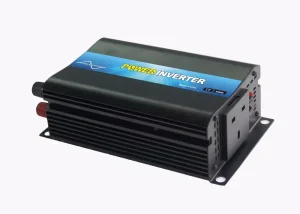
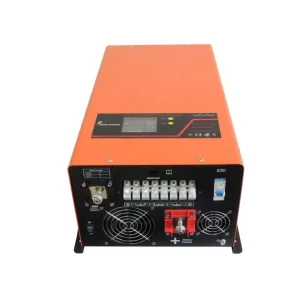
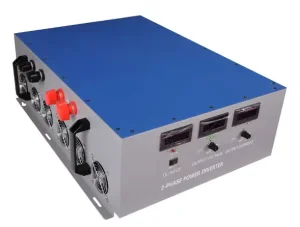
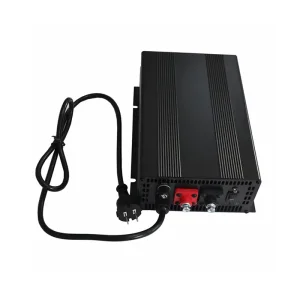
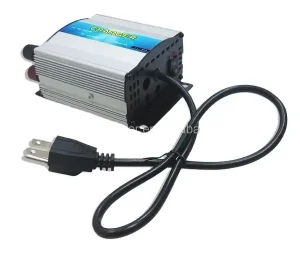
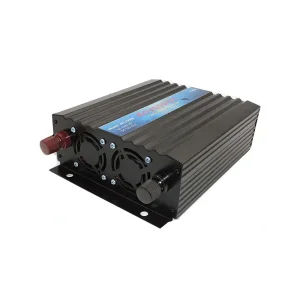
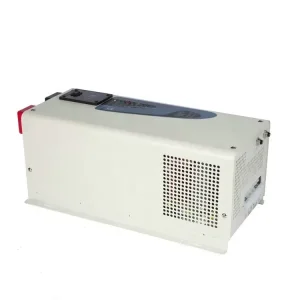
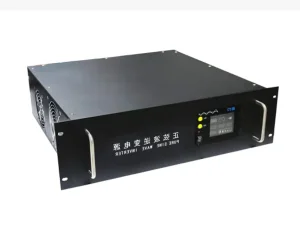
Whether you are expanding your commercial battery charger product line, sourcing high-efficiency chargers for EV/RV vehicle conversions, or requiring custom OEM high-frequency power converters, our engineering team in Suzhou is ready to deliver tailored solutions.
