Precision-engineered pure sine wave power converters, intelligent chargers, and isolators ready for OEM customization and international deployment.
Navigating the transition from legacy P-type PERC to N-type TOPCon/HJT photovoltaics and next-generation multi-MPPT high-frequency hybrid power conversion architectures.
The global renewable energy sector is witnessing an unprecedented paradigm shift. Original Equipment Manufacturers (OEMs) and turnkey Engineering, Procurement, and Construction (EPC) firms are rapidly phasing out legacy P-type PERC technology in favor of N-type Tunnel Oxide Passivated Contact (TOPCon) and Heterojunction (HJT) silicon wafers. TOPCon modules deliver a lower temperature coefficient (-0.30%/°C) and higher bifaciality factors (up to 80-85%), enabling commercial and utility-scale projects to maximize Levelized Cost of Energy (LCOE) reductions.
As solar cell efficiencies surpass the 25% threshold, OEM procurement teams require custom-engineered solar panels designed for high voltage tolerance, PID (Potential Induced Degradation) resistance, and mechanical load capabilities up to 5400 Pa. Aligning PV panel voltage curves with modern hybrid inverter MPPT windows is the single most critical factor in mitigating system clipping losses and optimizing daily energy harvest.
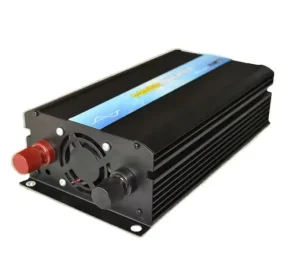
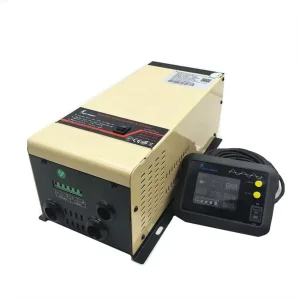
Simultaneously, power conversion hardware is bifurcating into two specialized engineering paths: High-Frequency (HF) lightweight topologies and Low-Frequency (LF) toroidal-transformer-isolated power systems. High-frequency inverters leverage advanced Silicon Carbide (SiC) MOSFETs to minimize internal switching losses, yielding power densities in excess of 95-98% in compact wall-mounted or rack-mounted form factors.
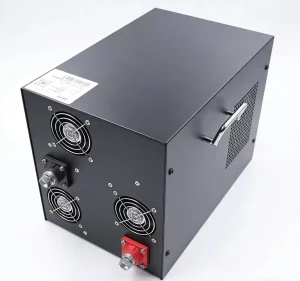
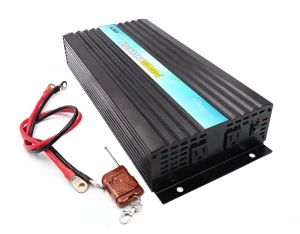
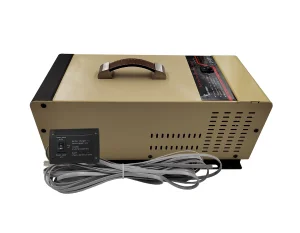
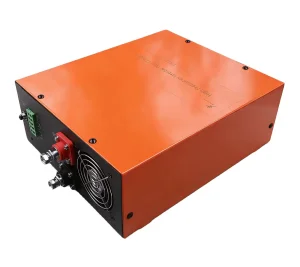
Conversely, industrial applications, off-grid microgrids, emergency rescue vehicles, and heavy-duty RV power systems continue to demand low-frequency pure sine wave inverters. Utilizing robust toroidal transformers, LF units provide up to 300% surge capacity for inductive motor loads (such as air conditioners, water pumps, and compressors), ensuring reliable galvanic isolation against utility grid transients and lightning-induced voltage surges.
| Engineering Specification | High-Frequency (HF) Pure Sine Wave | Low-Frequency (LF) Toroidal Isolated | Hybrid MPPT Off-Grid / Grid-Tie |
|---|---|---|---|
| Primary Application | Residential, Light Commercial, Telecom, EVs | Off-Grid C&I, Heavy Motors, RVs, Ambulances | Solar Microgrids, Energy Storage (ESS), Utility |
| Peak Conversion Efficiency | 95% – 98% | 88% – 93% | 96% – 98.5% |
| Surge Capacity Rating | 200% Nominal (for 100ms) | 300% Nominal (for 10 seconds) | 200% Nominal (for 5 seconds) |
| Galvanic Isolation | Electronic / Capacitive | Full Toroidal Transformer Isolation | Optional Internal Isolation |
| Weight to Power Ratio | Ultra-Lightweight (e.g., 3kW = ~6-8 kg) | Heavy-Duty (e.g., 3kW = ~18-24 kg) | Medium-Weight (e.g., 5kW = ~12-15 kg) |
| Battery Voltage Compatibility | 12V / 24V / 48V DC | 12V / 24V / 48V / 96V DC | 48V DC up to 380V High Voltage |
Empowering brand owners, distributors, and system integrators with bespoke technical modifications, customized enclosure tooling, and fully configurable firmware.
We provide complete tailored engineering for DC input lines and AC output stages. Tailor input channels across standard 12V, 24V, 48V DC or engineered high-voltage 96V, 190V, and 380V DC rails. AC single-phase, split-phase (120V/240V), or 3-phase (190V/380V/415V) outputs are customizable with selectable 50Hz or 60Hz pure sine wave frequency synthesis.
Modern energy storage systems rely on seamless handshake protocols between the solar inverter charger and lithium-ion battery management systems (BMS). Our hardware supports custom RS485, CANbus, RS232, and Modbus RTU interface layers, allowing plug-and-play integration with major LiFePO4, NMC, and traditional lead-acid chemistries.
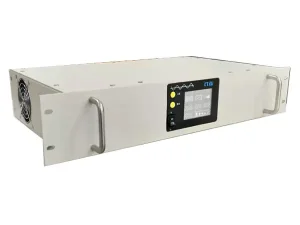
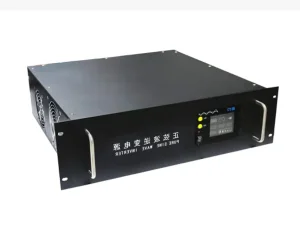
From ultra-thin wall-mounted commercial vehicle chassis to heavy-duty 19-inch rack-mount server cabinets, our industrial design team provides custom sheet metal fabrication, extruded aluminum heat sinks, customized powder-coating colors, and localized socket pin configurations (US, EU, UK, AU, Universal, Terminal Block).
Engineered power ecosystems delivering uninterrupted electricity across residential off-grid sites, industrial facilities, and mobile vehicle platforms.
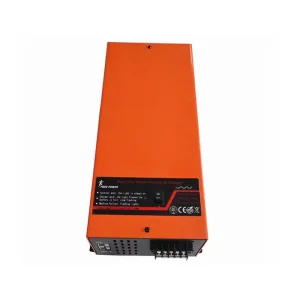
In regions plagued by unstable utility grids or remote geographic locations (such as island communities, mining camps, and agricultural pumps), combining high-output N-type solar panels with off-grid hybrid MPPT inverters creates a self-sustaining power island. High-voltage PV strings minimize DC cable losses, while built-in 3-stage adaptive charging algorithms preserve battery health across thousands of charge-discharge cycles.
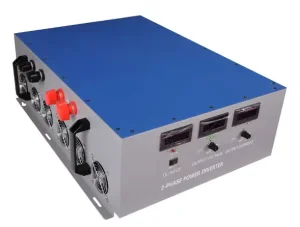
Our 20kVA 3-phase pure sine wave systems can run in parallel configuration, offering automatic generator start-stop dry contacts to ensure 100% power availability even during multi-day rainy periods.
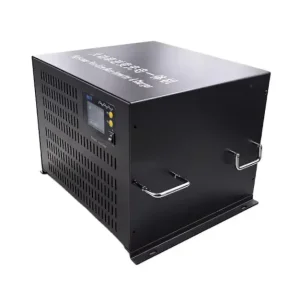
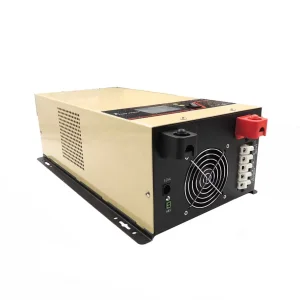
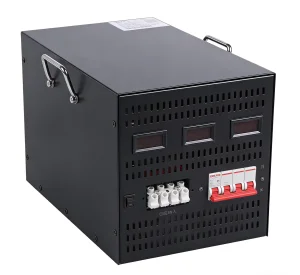
Mobile electrification presents severe physical challenges, including constant road vibration, ambient heat spikes, and space constraints. Our low-frequency wall-mounted and rack-mounted inverter charger series feature reinforced mechanical chassis and potted transformers.
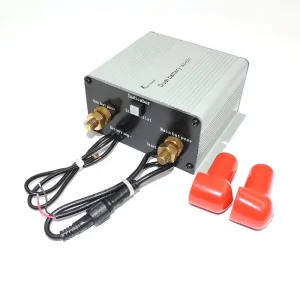
Paired with Intelligent Dual Battery Isolator kits (such as the BS-153 200A Voltage Sensitive Relay), these systems seamlessly manage dual-battery setups (starter battery vs. auxiliary house battery), preventing engine dead-start conditions while prioritizing solar power utilization when stationary.
Insualting global buyers from operational risk through strict ISO 9001:2015 manufacturing controls and comprehensive international certifications.
Our manufacturing facility maintains strict compliance with CE, CB, RoHS, and SGS standards. Inverters are compliant with IEC 62109-1 and IEC 62109-2 safety standards, while solar panels undergo IEC 61215 and IEC 61730 stress testing for salt mist corrosion, ammonia resistance, and wind load survival.
Every power inverter and solar module undergoes four rigorous quality gates: Incoming Quality Control (IQC) on raw components, In-Process Quality Control (IPQC) during SMT and manual assembly, 100% full-load thermal burn-in aging for 4-12 hours, and Final Quality Control (FQC) prior to export packaging.
We support regional EPCs and B2B distributors with direct factory engineering support, rapid spare parts fulfillment, schematic circuit diagrams, and remote firmware update capabilities to minimize site downtime and guarantee warranty confidence.
Pioneering the future of power density, AI-driven MPPT dynamic tracking, and wide-bandgap semiconductor adoption.
By transitioning from traditional Silicon IGBTs to Silicon Carbide (SiC) and Gallium Nitride (GaN) power transistors, next-generation inverters achieve switching frequencies exceeding 100 kHz. This dramatic frequency increase reduces the physical volume of internal magnetic inductors by up to 50%, while elevating peak DC-to-AC power conversion efficiency above 99%.
Artificial Intelligence algorithms embedded into inverter microcontrollers can now perform real-time IV curve sweeping in less than 0.5 seconds. This eliminates power loss caused by partial shading from clouds or trees. Furthermore, bidirectional Vehicle-to-Grid (V2G) and Vehicle-to-Home (V2H) capabilities allow electric vehicle batteries to function as peak-shaving energy assets for microgrids.
Clear engineering and sourcing answers to help B2B buyers evaluate solar module and inverter procurement.
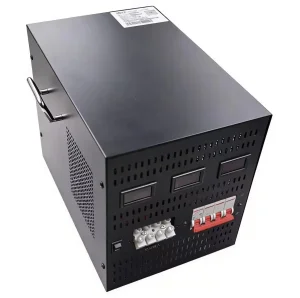
Industrial-grade 3-phase converters, rack-mounted power units, and intelligent dual battery isolators for demanding energy systems.