


Engineered to deliver exact AGM battery absorption and float voltage profiles. Factory-direct solutions with OEM/ODM customization options.
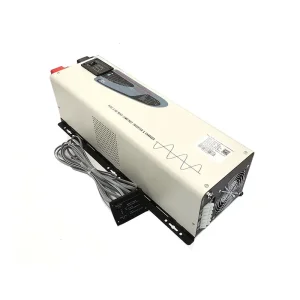
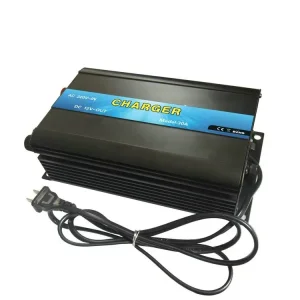
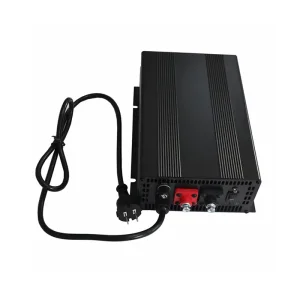
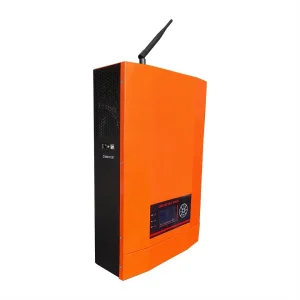
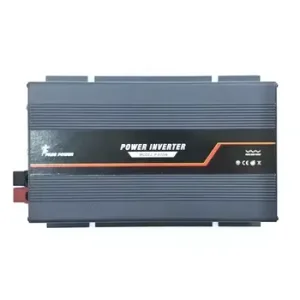
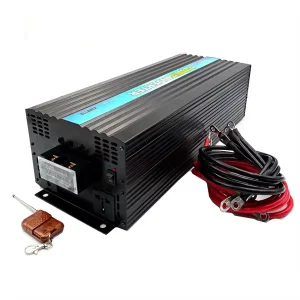
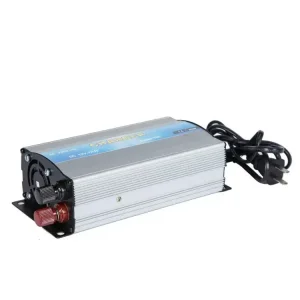
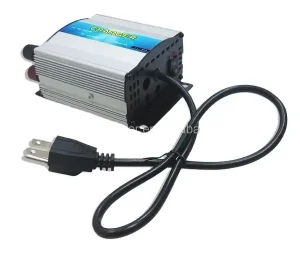
Absorbed Glass Mat (AGM) valve-regulated lead-acid (VRLA) batteries remain a backbone technology across telecommunications, renewable energy storage, recreational vehicles (RVs), marine vessels, and critical uninterruptible power supply (UPS) infrastructures. However, optimizing service life and energy delivery demands strict adherence to dynamic AGM battery charging voltage parameters.
Unlike flooded lead-acid batteries, AGM cells bind the electrolyte in fine fiberglass micro-fiber mats. This glass-fiber separator recombines oxygen and hydrogen gases generated during charge cycles with up to 99% internal efficiency. However, this sealed recombinant system makes AGM batteries exceptionally sensitive to incorrect charging voltage levels:
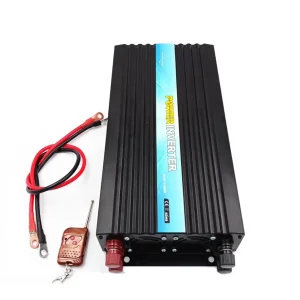
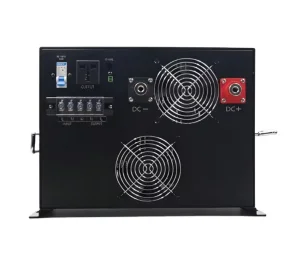
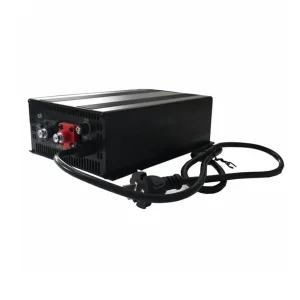
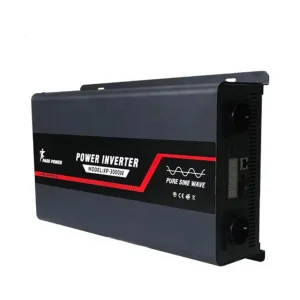
For international importers, commercial fleet upfitters, and system integrators, securing high-precision, multi-stage intelligent chargers and pure sine wave off-grid inverters with built-in battery chargers is crucial. Wholesale procurement requires equipment that features precise micro-processor charge controllers capable of dynamic IUoU multi-stage charging algorithms, temperature-compensated voltage curves, and custom programmable charging setpoints.
To maximize cycle count (500 to 1200 cycles at 50% Depth of Discharge) and avoid thermal degradation, industrial smart chargers must execute a rigorous four-phase charging protocol.
The charger delivers maximum rated continuous current ($I_{max}$) while system voltage increases steadily. During this phase, 80% of the battery’s capacity is restored. The ideal charging current for AGM batteries is typically $0.15C$ to $0.30C$ ($C = \text{Amp-hour rating}$). Overcurrent during Bulk creates excessive heat, while undercurrent prolongs charging window unnecessarily.
Once the battery voltage reaches the specified Absorption Voltage Setpoint (typically 14.4V – 14.8V for 12V systems at 25°C), the charger transitions to Constant Voltage mode. As internal resistance rises, current naturally tapers down. Held for 2–4 hours, this stage completes the remaining 20% charge and restores electrolyte balance without dry-out.
After absorption current drops below a predefined threshold (typically 1-2% of rated capacity), the charger lowers voltage to the Float Setpoint (13.5V – 13.8V for 12V nominal). This offsets self-discharge and grid corrosion during long standby periods without subjecting cells to continuous water electrolysis.
Standard equalization (flooded battery gassing at 15.5V+) will destroy an AGM battery! However, modern smart chargers utilize controlled pulse de-sulfation equalization algorithms capped tightly at 14.8V - 15.0V with low current spikes to break up lead sulfate crystals safely without venting recombination gas.
Electrochemistry dictates that cold batteries require higher voltage to drive chemical recombination, whereas hot batteries require lower voltage to prevent thermal runaway. Standard baseline coefficient is -3mV / °C / Cell (-30mV / °C for a 12V monobloc).
| Battery Temperature (°C / °F) | Absorption Voltage Setpoint (12V) | Float Voltage Setpoint (12V) | Max Current Limit (C-Rate) | Operational Risk Factor |
|---|---|---|---|---|
| -10°C / 14°F | 15.45 V – 15.65 V | 14.40 V – 14.60 V | 0.10 C MAX | Under-charging / Plate Sulfation Risk |
| 0°C / 32°F | 15.15 V – 15.35 V | 14.10 V – 14.30 V | 0.15 C MAX | Increased Internal Resistance |
| 25°C / 77°F (Standard Baseline) | 14.40 V – 14.70 V | 13.50 V – 13.80 V | 0.20 C – 0.30 C | Optimal Electrochemical Efficiency |
| 40°C / 104°F | 13.95 V – 14.25 V | 13.05 V – 13.35 V | 0.15 C MAX | Grid Corrosion & Moisture Loss Risk |
| 50°C / 122°F | 13.65 V – 13.95 V | 12.75 V – 13.05 V | 0.10 C MAX | High Risk of Thermal Runaway |
The market for wholesale AGM battery chargers, low-frequency inverter-chargers, and off-grid hybrid power systems is undergoing rapid technological evolution driven by four key macro factors.
Modern B2B buyers no longer want single-purpose equipment. Wholesale buyers prefer inverters and smart chargers featuring selectable dipping switches or programmable digital LCD screens that switch effortlessly between AGM, Gel, Flooded, and LiFePO4 (Lithium) charging curves.
For heavy inductive loads (air conditioners, water pumps, power tools, commercial refrigeration), low-frequency pure sine wave inverters equipped with heavy copper toroidal transformers offer unmatched 300% surge capacity for 20 seconds. This prevents voltage sag during high-current startup spikes.
Integration of CANbus, RS485, and Modbus RTU communication allows power inverters and battery chargers to communicate directly with battery management systems (BMS) and remote telemetry portals for real-time monitoring of voltage, current, state-of-charge (SoC), and temperature.
How dynamic AGM charging voltage equipment performs across real-world commercial environments worldwide.
In North America and Europe, motorhomes, ambulances, service trucks, and overland vehicles require robust DC-to-AC conversion combined with shore power charging. When connected to campground grid power or onboard generators, 3-stage smart inverter-chargers quickly restore AGM battery banks via dynamic 14.6V absorption charging, switching smoothly to 13.6V float charge to prevent overcharging during multi-week stationary periods.
Remote telecommunication base stations in Southeast Asia, Africa, and South America rely on dual AGM bank setups coupled with hybrid MPPT solar inverters. Precise voltage regulation ensures that solar power, diesel generators, and battery storage alternate smoothly without voltage spikes that could trip sensitive transmission hardware.
Saltwater environments demand moisture-resistant (IP30/IP65 rated), vibration-proof chargers. High-amp smart chargers ensure that deep-cycle marine AGM batteries charged via marine alternators or dock shore power undergo proper voltage regulation to withstand harsh marine deep-discharge cycles.
In manufacturing plants and hospital medical equipment centers, dedicated 3-phase and high-voltage DC (up to 380V DC) inverters keep AGM battery systems floating at precise voltage settings, guaranteeing instant millisecond transfer during main power grid blackouts.
An integrated approach to engineering high-efficiency off-grid and backup power solutions.
A complete commercial power system links AC grid inputs, solar PV arrays, DC battery banks, and sensitive AC loads. Choosing an integrated Inverter & Charger with Automatic Transfer Switch (ATS) delivers key operational advantages over separate standalone components:
Less than 10ms seamless transfer between AC grid and inverter power protects servers, medical instruments, and industrial PLC equipment from rebooting during power outages.
Total Harmonic Distortion (THD) under 3% eliminates line noise, reduces operating heat in electric motors, and extends appliance lifespan.
Supplements shore grid or generator supply when peak load demands exceed grid breaker limits, preventing nuisance trips.
Where battery charging technology and power inversion electronics are heading over the next decade.
Transitioning from silicon IGBTs to SiC power switches yields higher switching frequencies, up to 96% inverter efficiency, reduced heatsink size, and lighter total chassis weight for mobile applications.
Microcontrollers utilizing real-time impedance spectroscopy will automatically detect individual cell degradation, sulfation level, and internal short-circuit risks, dynamically modifying charging voltage profiles on the fly.
Single consolidated chassis designs natively integrating bi-directional EV charging (V2G/V2H), high-voltage solar MPPT inputs, battery energy storage systems (BESS), and split-phase microgrid controllers.
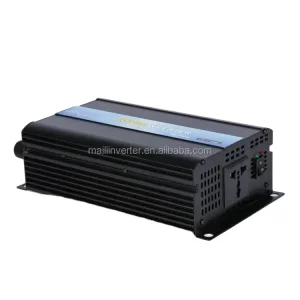
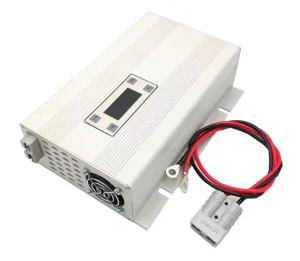
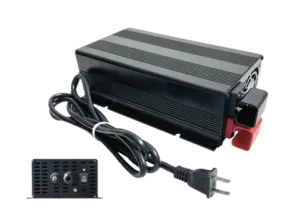
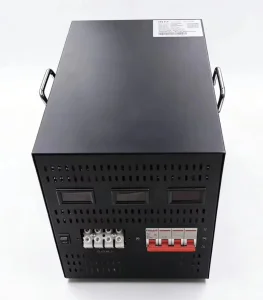
Explore our full line of factory-direct high-frequency, low-frequency, hybrid solar, and multi-stage intelligent chargers.
Expert answers to common engineering, procurement, and battery charging voltage inquiries from global distributors.
Connect directly with our engineering team to request factory pricing, bulk wholesale catalogs, or custom product prototyping for your regional market.
