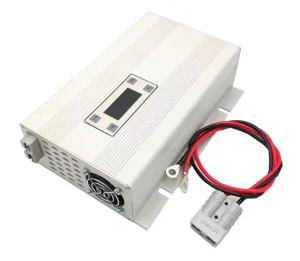
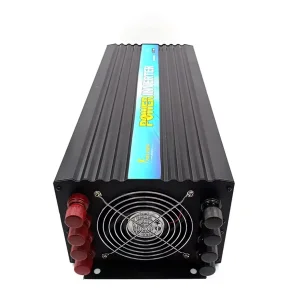
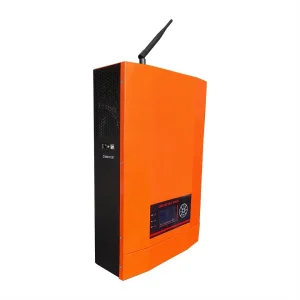
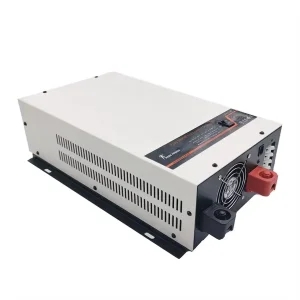
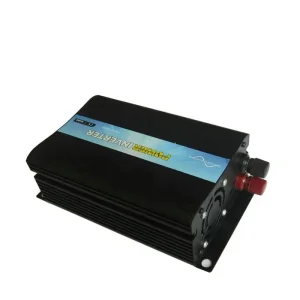
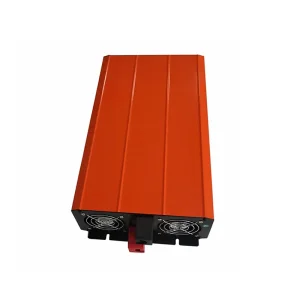
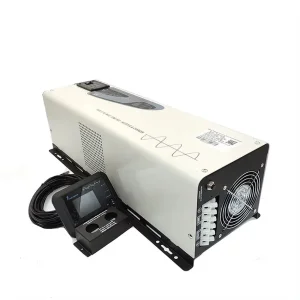
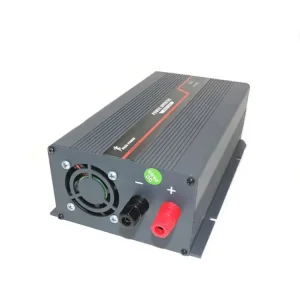
Explore our primary wholesale offerings featuring high-frequency switching, multi-phase output, and smart battery management for global commercial and industrial applications.
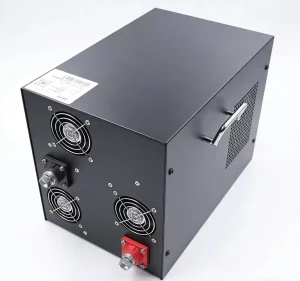
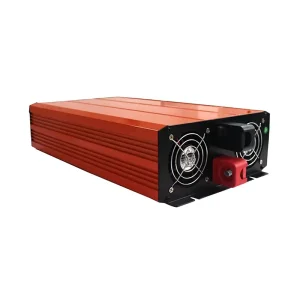

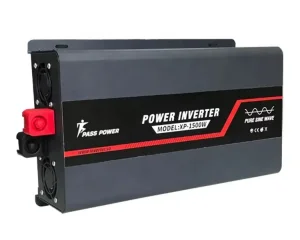
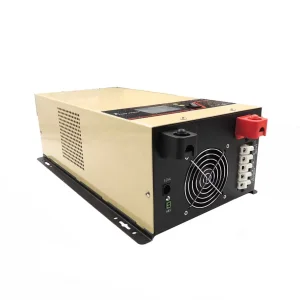
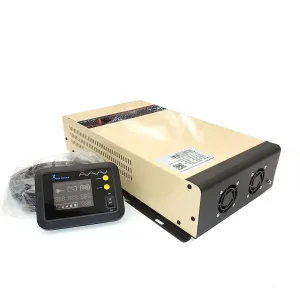
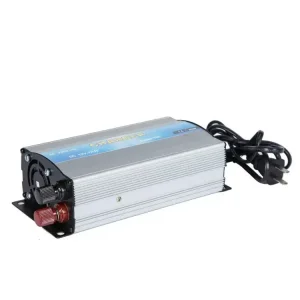
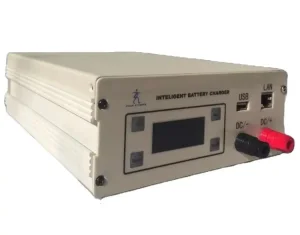
As global transportation electrification accelerates, selecting a qualified wholesale automotive battery charger supplier requires a granular understanding of power electronics topology, thermal management, switch-mode power supply (SMPS) design, and multi-stage adaptive charging algorithms. Modern commercial fleets, utility vehicles, and automotive service hubs no longer rely on primitive linear transformer chargers; instead, they mandate high-frequency, microcontroller-driven systems capable of supporting both legacy lead-acid chemistries and advanced Lithium Iron Phosphate (LiFePO4) energy storage systems.
In high-power automotive battery charging, two distinct engineering paradigms dictate thermal footprint, surge tolerance, and physical volume: High-Frequency (HF) LLC Resonant Converters and Low-Frequency (LF) Heavy-Duty Toroidal Transformer Systems.
Technical Insight for B2B Procurement: For benchtop automotive diagnostic support and rapid charging, high-frequency smart chargers offer maximum energy density and portable usability. For rugged off-grid service vehicles, expedition campers, and heavy commercial machinery, low-frequency combined inverter-chargers provide superior durability against continuous vibration, grid voltage sags, and severe inductive load spikes.
Modern battery failure mode mitigation depends directly on charge profile precision. Premium industrial automotive battery chargers employ 32-bit ARM Cortex microcontrollers to continuously execute multi-stage closed-loop feedback algorithms (voltage sensing, current sensing, and external NTC temperature feedback):
| Charging Stage | Operational Parameters | Electrochemical Objective | Safety & Protection Mechanism |
|---|---|---|---|
| Stage 1: Soft Start / Desulfation | 10% - 20% Nominal Current, High-Frequency Voltage Pulses | Break down lead-sulfate crystals on dormant plates; awaken sleeping LiFePO4 BMS protection circuits. | Low-voltage timeout protection prevents charging severely shorted internal cells. |
| Stage 2: Bulk (Constant Current - CC) | Maximum Rated Current (e.g., 10A, 25A, 50A) until 80-85% SOC | Inject maximum Coulombic capacity into the battery bank in minimum time without thermal runaway. | Continuous thermal derating via dynamic NTC monitoring; auto-throttling current if temp > 55°C. |
| Stage 3: Absorption (Constant Voltage - CV) | Regulated Peak Voltage (14.4V - 14.8V for Lead-Acid; 14.2V - 14.6V for LiFePO4) | Satuate electrochemical active materials; taper charging current to near zero as battery tops off. | Timer-based stage termination prevents overcharging and electrolyte gassing in AGM/GEL units. |
| Stage 4: Float & Equalization | Maintenance Voltage (13.5V - 13.8V Float; periodic high-voltage pulse for equalization) | Counteract self-discharge for long-term parked fleets; rebalance voltage across individual cell series strings. | Automatic standby switch; short-circuit pulse suppression and reverse polarity hardware lockout. |
Sourcing automotive battery chargers and inverter systems directly from OEM/ODM manufacturing hubs in Suzhou, Jiangsu Province, China provides global enterprise buyers with unprecedented economic, technical, and supply chain scalability benefits.
Suzhou sits at the epicenter of East China’s high-tech power electronic manufacturing corridor. Within a 50-kilometer radius, our facility sources automotive-grade MOSFETs, IGBTs, magnetic toroidal cores, custom aluminum extrusions, and multi-layer FR4 PCBs, drastically shortening R&D prototyping and mass production lead times.
Our production facilities maintain ISO 9001:2015 quality management compliance. Automated Surface Mount Technology (SMT) lines ensure high solder joint repeatability, while 100% of finished charger and inverter units undergo a mandatory 4-hour full-load thermal chamber burn-in test prior to final packing.
By leveraging massive production output and optimized Bill of Materials (BOM) sourcing, China factories offer tier-1 global distributors, automotive parts importers, and brand owners a competitive cost structure that maximizes gross margins while supporting low MOQs for custom OEM/ODM variants.
Deploying electrical products across international jurisdictions demands strict adherence to regional safety standard mandates, grid power variation tolerances, and electromagnetic compatibility (EMC) regulations.
Our complete wholesale automotive battery charger product lineup complies with globally recognized testing frameworks:
Commercial clients operating across diverse geographic regions require hardware that easily adapts to varying electrical infrastructure:
To eliminate operational downtime for enterprise fleet partners, our wholesale framework includes structured localized support:
B2B buyers, fleet procurement officers, automotive equipment distributors, and OEM system integrators evaluate power hardware through the lens of long-term Total Cost of Ownership (TCO), operational reliability, and brand expansion capabilities.
We provide full white-label and customized hardware design options to help distributors build brand equity:
High-efficiency chargers reduce energy utility costs and extend fleet battery service life, directly driving down operational expenditure:
Navigating global market volatility requires transparent procurement planning and contract manufacturing flexibility:
The automotive battery charging and off-grid power sector is undergoing a massive transformation driven by wide-bandgap semiconductors, digital telemetry, and green energy hybridization.
Next-generation automotive battery chargers are rapidly transitioning from legacy Silicon MOSFETs to wide-bandgap Silicon Carbide (SiC) and Gallium Nitride (GaN) power switches. SiC devices allow chargers to operate at significantly higher temperatures and voltages with reduced switching losses. This breakthrough reduces overall heatsink weight by 40% while pushing power conversion efficiencies beyond 96%, ushering in an era of ultra-lightweight, high-output 50A+ commercial chargers.
Industrial battery chargers are evolving into intelligent IoT edge nodes. Equipped with CAN-bus 2.0B, RS485 MODBUS, or integrated Wi-Fi/Bluetooth modules, smart chargers transmit real-time telemetry—including individual cell voltage curves, cumulative Ah throughput, internal temperature trends, and state-of-health (SOH) analytics—directly to central fleet management software for predictive maintenance scheduling.
The boundary between battery chargers and grid-tied inverters is blurring. Future automotive charging ecosystems incorporate bidirectional Vehicle-to-Grid (V2G) and Vehicle-to-Load (V2X) capabilities, enabling utility fleets and service vans to act as mobile emergency energy storage nodes. Furthermore, hybrid MPPT solar charger-inverters integrate rooftop solar panels with AC shore power to deliver clean, zero-emission charging curves.
Our wholesale battery chargers and pure sine wave inverter systems are engineered to perform reliably across a wide spectrum of demanding commercial, medical, marine, and industrial operational environments.
Heavy-duty 12V/24V multi-stage chargers maintain starter and auxiliary battery health across logistics truck fleets, preventing costly morning non-start delays and supporting liftgate power demands.
Ambulances and fire rescue vehicles utilize shore-power connected battery chargers paired with dual battery isolators to ensure onboard medical telemetry, defibrillators, and radio equipment remain fully charged 24/7.
Vibration-resistant, corrosion-treated charger-inverter combinations provide seamless automatic AC shore power transfer switching and multi-chemistry charging for marine vessels, overland campers, and luxury travel trailers.
High-current (30A–50A) continuous DC power supply chargers provide stable, ripple-free voltage during lengthy ECU flash programming, vehicle diagnostics, and showroom battery display maintenance.
Detailed technical, procurement, and warranty answers compiled by our senior power electronics engineering team in Suzhou.
Complete your power conversion portfolio with our specialized off-grid solar inverters, high-output portable smart chargers, and low-frequency UPS converter series.