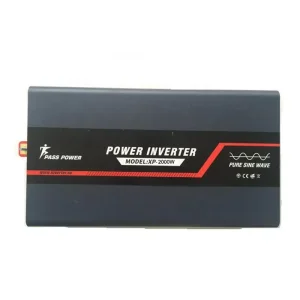
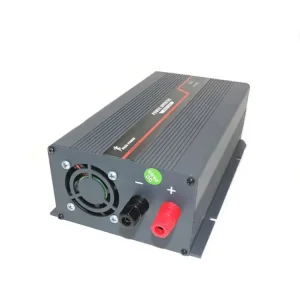
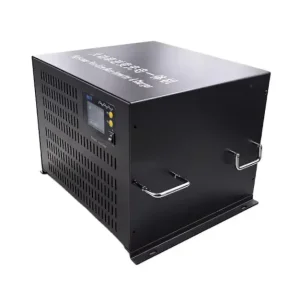
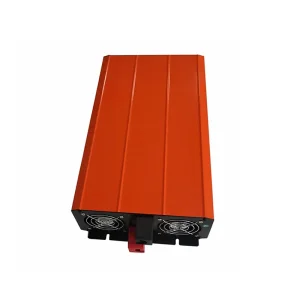
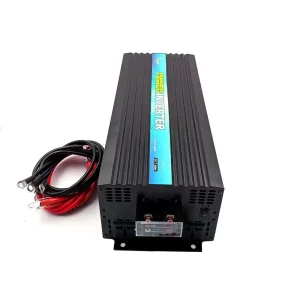
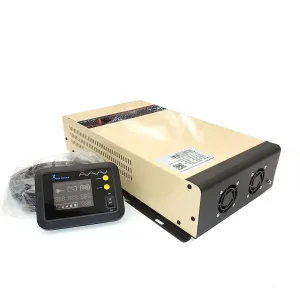
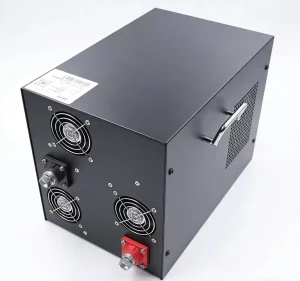
Explore our factory-direct, highly resilient pure sine wave power systems optimized for extreme surge demands, off-grid storage, and commercial fleets.
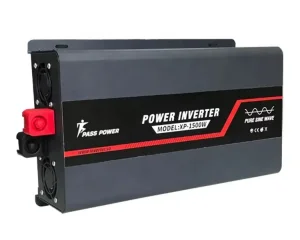
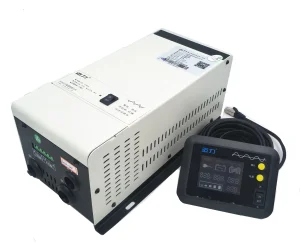
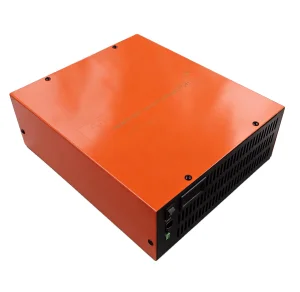
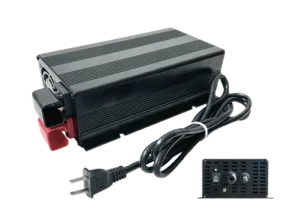
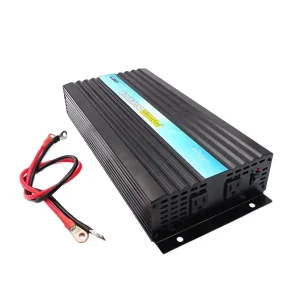
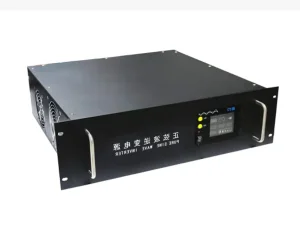
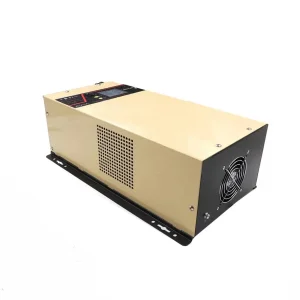
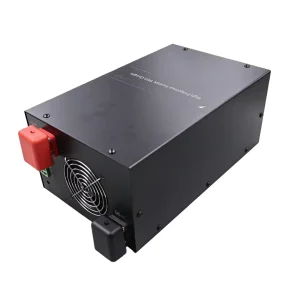
Understanding why heavy-duty toroidal transformer-based inverters remain the gold standard for high-surge industrial, marine, and off-grid power ecosystems.
Unlike high-frequency (HF) switching topologies that rely on fragile electronic step-up circuits, Low Frequency (LF) inverters utilize a heavy-duty copper toroidal transformer. This core acts as a mechanical and electrical thermal sink, absorbing huge current spikes without saturating the magnetic core or triggering instant thermal shutdown.
LF architecture establishes a robust physical separation between DC battery banks and sensitive AC load circuits. This galvanic barrier effectively blocks DC offset feedback, common-mode ground loops, grid voltage transients, and indirect lightning strikes, guaranteeing operational stability in mission-critical environments.
Compressors, HVAC units, well pumps, air tools, and industrial machinery require starting currents (locked rotor amps) 3x to 5x higher than continuous operating ratings. LF inverters deliver massive instantaneous current through magnetic flux reserves, avoiding voltage sags and system reboots.
| Technical Parameter | Low Frequency (LF) Inverter Topology | High Frequency (HF) Inverter Topology |
|---|---|---|
| Primary Transformer Core | Heavy Copper Toroidal Core (50Hz / 60Hz) | Compact Ferrite Core (High Switching Frequency) |
| Surge Capacity Ratio | 300% Rated Power (Up to 20 continuous seconds) | 150% - 200% Rated Power (Milliseconds only) |
| Galvanic Isolation | Full Physical Isolation (Transformer-based) | Electronic Isolation (Solid-state FET protection) |
| Motor & Inductive Load Handling | Exceptional (HVAC, Compressors, Pumps, Power Tools) | Moderate (Resistive loads, Laptops, TV, LED Lights) |
| Weight & Physical Footprint | Heavy, Rugged Chassis (High Thermal Inertia) | Ultra-Lightweight, Small Enclosure Footprint |
| Component Thermal Stress | Very Low (Heat distributed over large mass) | High (Dependent on aggressive high-speed fans) |
| Long-term Reliability (MTBF) | > 100,000 Hours (Industrial Grade) | Approx. 30,000 - 50,000 Hours |
Leveraging the Yangtze River Delta power electronics ecosystem (Suzhou Cluster) to deliver unmatched price-to-performance, component traceability, and mass custom manufacturing capabilities.
Our Suzhou facility directly sources high-permeability cold-rolled non-oriented (CRNGO) silicon steel laminations and 99.99% pure oxygen-free copper wire. Integrated supply chains reduce bill-of-materials (BOM) overhead by 30% while retaining structural copper weight necessary for extreme continuous thermal endurance.
Every inverter unit undergoes automated surface-mount technology (SMT) board assembly, dual conformal coating for moisture/salt-spray resistance, vacuum pressure varnish impregnation for the transformer, and mandatory 100% full-load burn-in testing under elevated thermal conditions (45°C) for 12 hours prior to shipment.
We provide comprehensive hardware and software customization: flexible DC input voltages (12V, 24V, 48V, 96V, up to 380V DC), custom AC output splits (110V/220V, 120V/240V Split-Phase, 3-Phase 380V), customizable LCD telemetry, multi-stage charge profiles (LiFePO4, AGM, GEL), and custom chassis colors or brand silk-screening.
Addressing intent-driven technical requirements for importers, EPC contractors, vehicle upfitters, and wholesale distributors in regional markets.
For distributors in the United States, Canada, and Mexico, low frequency inverters must fulfill mandatory 120V/240V Split-Phase AC output to support heavy household sub-panels and dual-leg industrial power tools. Units must comply with UL 1741 standards, exhibit seamless neutral-to-ground bonding logic, and interface with 60Hz utility grids via ultra-fast automatic transfer switches (<10ms).
Serving Europe, Oceania, South America, and Africa requires single-phase 230V AC (50Hz/60Hz) output with strict Low Voltage Directive (LVD) CE compliance, RoHS material environmental safety, and electromagnetic compatibility (EMC EN61000). Highly responsive smart cooling, low idle standby power drain (<15W in Eco Mode), and CAN/RS485 Modbus telemetry are key purchase drivers.
With global enterprise energy storage shifting toward Lithium Iron Phosphate (LiFePO4) chemistry, our wholesale low frequency chargers incorporate intelligent 3-stage adaptive charging algorithms. Engineers can configure bulk voltage, absorption voltage, float voltage, and low-voltage cut-off parameters to prevent BMS tripping while maximizing battery lifecycle longevity.
Where heavy-duty low frequency pure sine wave inverters deliver mission-critical, continuous operational security.
RVs, overland expedition trucks, mobile food units, and commercial vans rely on LF inverters to kickstart roof-top air conditioners (15,000 BTU), microwaves, and induction cooktops simultaneously without system lockup.
Ambulances, mobile medical command centers, and fire department rescue trucks deploy LF inverter-chargers paired with dual battery isolators to run high-precision life-support machinery and heavy hydraulic rescue tools.
Remote residential cabins, off-grid agricultural farms, deep-well water pumping stations, and telecom towers utilize hybrid solar LF inverters for robust 24/7/365 uninterrupted power generation.
Yachts, commercial fishing boats, and tugboats benefit from vacuum-impregnated anti-corrosion transformer windings, high surge capacity for electric winches, and complete galvanic isolation against electrolysis marine corrosion.
Key technological evolutions shaping the future of industrial power conversion over the next decade.
Future low frequency topologies are integrating smart grid-interactive firmware. Through bidirectional AC transfer mechanisms, inverters can shift seamlessly between peak shaving, self-consumption solar storage, and back-feeding excess power into microgrids under strict IEEE 1547-2026 guidelines.
By substituting traditional silicon MOSFETs with wide-bandgap Silicon Carbide (SiC) semiconductors in the primary inversion bridge, factory engineers are achieving high thermal resistance, reducing switching losses, and driving low-frequency transformer overall efficiency past 96.5%.
Next-generation B2B inverters integrate cloud-linked IoT chips, RS485 Modbus, and Bluetooth/Wi-Fi modules. Predictive maintenance algorithms monitor real-time transformer core temperatures, capacitor ESR degradation, and load power factors to prevent unpredicted commercial downtime.
Detailed technical answers engineered for electrical contractors, sourcing managers, and engineering teams.
Explore our full line of pure sine wave, high frequency, split-phase, 3-phase, smart charger, and battery isolation devices.