


High-efficiency pure sine wave conversion units, smart battery chargers, and high-voltage DC architectures engineered for demanding B2B deployments.
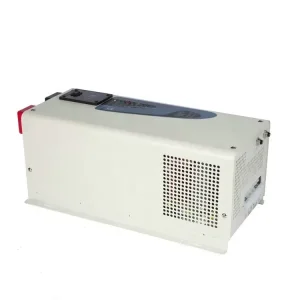
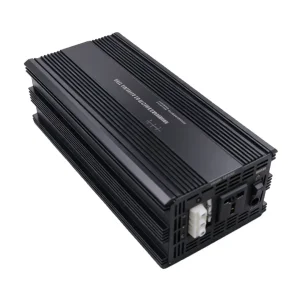
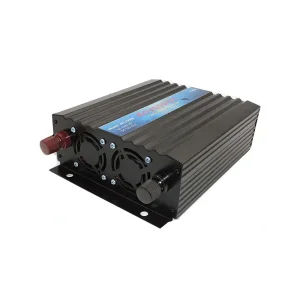
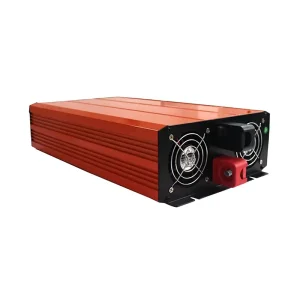
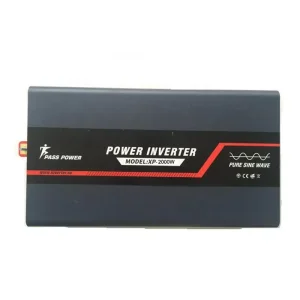
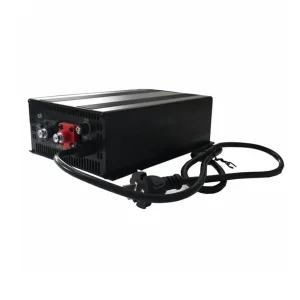
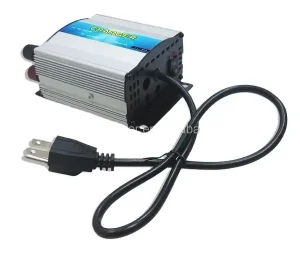
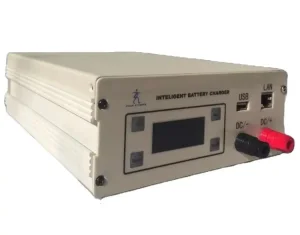
The global energy transition has placed unprecedented demand on commercial, residential, and mobile off-grid power systems. As solar PV installations shift from simple grid-tied power delivery to complex hybrid energy storage, the Solar AC Inverter stands as the critical brain of modern power electronics infrastructure. Sourcing solar AC inverters at wholesale scale requires an in-depth understanding of topological trade-offs, thermal management mechanisms, regulatory grid codes, and total cost of ownership (TCO).
For B2B procurement managers, EPC (Engineering, Procurement, and Construction) contractors, OEM brand owners, and system integrators, selecting the right wholesale manufacturer goes beyond basic unit pricing. It demands evaluation of manufacturing precision, transient surge capacities, component-level reliability (such as IGBT gate drivers and electrolytic capacitor lifespans), and long-term compliance with evolving international electrical standards.
When evaluating wholesale solar AC inverter products, procurement teams encounter two primary architectural paradigms: High-Frequency (HF) transformerless/switching designs and Low-Frequency (LF) toroidal transformer-isolated designs. Each topology addresses distinct commercial and operational requirements:
| Technical Parameter | High-Frequency (HF) Inverters | Low-Frequency (LF) Inverters |
|---|---|---|
| Primary Isolation | High-speed Electronic Switching / Compact Ferrite | Heavy-Duty Heavy Copper Toroidal Transformer |
| Surge Capacity (3-5 Seconds) | 1.5x to 2x Rated Power | 3x Rated Continuous Output Power |
| Power Density & Weight | Ultra-lightweight, High Power Density | Heavy, Robust Galvanic Isolation Construction |
| Inductive Load Handling | Moderate (Electronics, Standard Lighting, IT) | Exceptional (Compressors, Air Conditioners, Motors) |
| Idle Power Consumption | Ultra-low Eco-mode standby (<10W) | Slightly higher due to core losses (<25W) |
| Target Applications | Residential Storage, RVs, Telecommunications | Commercial Back-up, Heavy Marine, Emergency Vehicles |
Why sourcing solar AC inverters from Suzhou power electronics clusters yields unrivaled cost efficiency, technical agility, and quality assurance.
Our manufacturing plant leverages the Yangtze River Delta electronics ecosystem, integrating premium Infineon/STMicroelectronics IGBTs, Japanese Rubycon capacitors, and custom-wound high-permeability copper toroidal cores.
Automated Surface Mount Technology (SMT) and optical inspection (AOI) lines minimize soldering defects, while strict 100% full-load thermal burn-in testing ensures zero-defect delivery for mass wholesale shipments.
Custom direct current (DC) input voltage matching (12V, 24V, 48V, up to 380V/540V High Voltage DC), custom communication protocols (CANbus, RS485 Modbus), enclosure branding, and customized LCD interfaces.
Enterprise procurement of wholesale solar inverters demands strict adherence to destination market regulatory frameworks. Importers and brand owners face stringent grid-connection mandates, safety directives, and electromagnetic compatibility (EMC) regulations. Partnering with a manufacturer equipped with international certifications simplifies customs clearance and reduces operational legal risks.
Inverters targeting the US and Canadian markets must conform to UL 1741 SB (Standard for Inverters, Converters, Controllers and Interconnection System Equipment for Use With Distributed Energy Resources) and IEEE 1547-2018 grid interconnection protocols. Key requirements include advanced grid-support functions such as Active Power-Voltage (Volt-Watt), Reactive Power-Voltage (Volt-VAR), frequency watt controls, and rapid shutdown compliance (NEC 690.12).
European distribution requires CE marking backed by low-voltage directives (LVD 2014/35/EU) and EMC compliance (2014/30/EU). Safety is governed by EN 62109-1 and EN 62109-2 standards covering photovoltaic power converters. Furthermore, battery-integrated inverter chargers must adhere to strict RoHS restriction of hazardous substances and REACH environmental directives.
With the rapid transition toward Lithium Iron Phosphate (LiFePO4) chemistry in off-grid and hybrid storage, solar AC inverters must natively communicate with smart battery BMS units. Our wholesale inverters feature pre-programmed RS485 and CANbus handshake protocols compatible with top battery cell manufacturers (Pylontech, Seplos, CATL, BYD), protecting battery banks against over-voltage, cell imbalance, thermal runaway, and deep discharge.
From rugged mobile overland vehicles to enterprise grid-backup arrays, our solar AC inverters perform flawlessly under extreme operating environments.
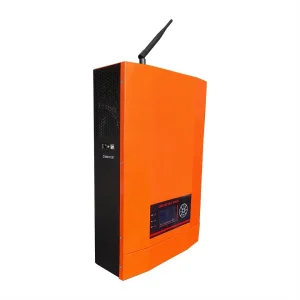
Hybrid MPPT inverters harvest photovoltaic energy during peak daylight, storing surplus energy in LiFePO4 banks while driving household inductive loads like refrigerators, water pumps, and air conditioning units uninterrupted.
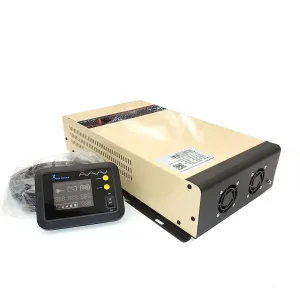
Compact low-frequency pure sine wave inverter chargers provide instant automatic transfer switching (ATS) between shore power and onboard battery supply, featuring high surge endurance for vehicle AC compressor start-up.
Dedicated high-reliability DC-AC inverters paired with 3-stage intelligent battery chargers power life-saving medical equipment, mobile workstations, and heavy power tools on ambulances, fire engines, and service trucks.
The solar power conversion market is undergoing rapid technical evolution driven by wide-bandgap (WBG) semiconductors, artificial intelligence monitoring, and high-voltage DC system architecture.
Next-generation high-frequency solar AC inverters are replacing traditional silicon MOSFETs and IGBTs with Silicon Carbide (SiC) switches. SiC technology enables ultra-fast switching frequencies, dramatically reduces heat dissipation, cuts passive component sizes by 40%, and pushes conversion efficiency beyond 98%.
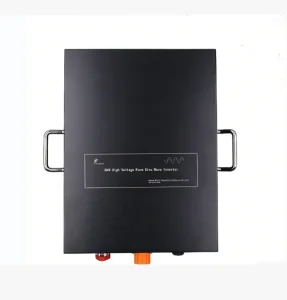
Commercial energy storage installations are rapidly migrating from 48V low-voltage battery banks to 380V / 540V / 800V DC high-voltage architectures. High-voltage DC inverters reduce copper cable cross-section requirements, minimize line resistive losses ($I^2R$), and lower overall system installation costs for multi-kilowatt arrays.
Smart inverters now integrate real-time sensor arrays and MCU algorithms to predict component degradation. Smart fan control algorithms adjust cooling based on internal temperature gradients and ambient humidity, while cloud-connected Modbus/Wi-Fi gateways deliver real-time diagnostic alerts to OEM fleet operators before failure occurs.
Technical clarity and procurement guidance for solar AC inverter buyers, distributors, and integrators.
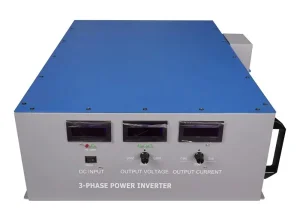
Explore our full engineering line of high-efficiency hybrid MPPT solar inverters, high-voltage pure sine wave systems, and smart chargers.
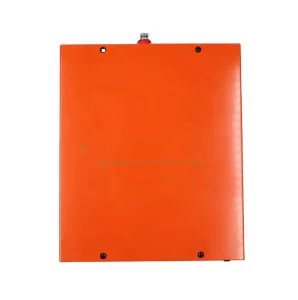
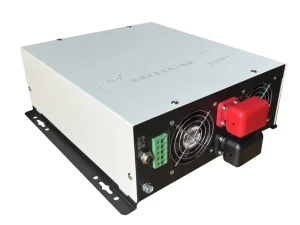
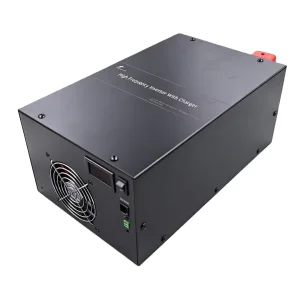
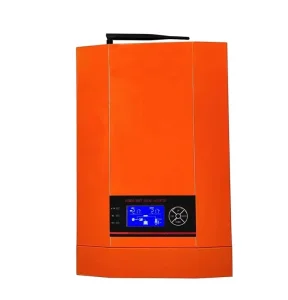
Looking for custom voltage parameters, private-label manufacturing, or enterprise wholesale pricing? Contact our Suzhou engineering team today to receive a complete product catalog and custom quotation within 24 hours.
