San Francisco Industrial Solar & Microgrid Procurement

3 Phase Inverter Supplier & Product for the San Francisco Market

Technical Whitepaper & B2B Procurement Architecture for Next-Generation Commercial Energy Storage, PG&E Grid Compliance, and Industrial Clean Power Systems

SF Market Recommended

Commercial-Grade 3-Phase & Solar Inverters

Engineered for San Francisco commercial facilities, tech hubs, and high-density off-grid solar microgrids requiring reliable, high-efficiency power conversion.
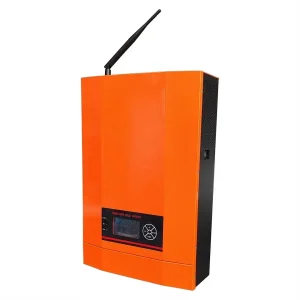
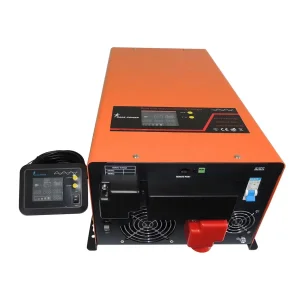
San Francisco Commercial 3-Phase Hybrid Solar Inverter 5.5KW-5500KW

San Francisco Heavy Industrial 5.5KW to 5500KW Off-Grid Hybrid Solar Inverter (Pure Sine Wave Output)

View Product Specs
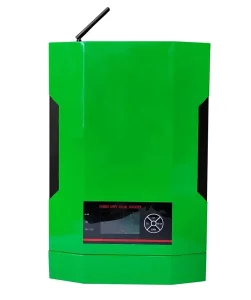
SF Bay Area Hybrid Solar Inverter 3.5KW 24VDC to 230VAC MPPT

SF Bay Area Enterprise Hybrid Solar Inverter 24VDC 230VAC 3.5KW Pure Sine Wave MPPT Controller

View Product Specs
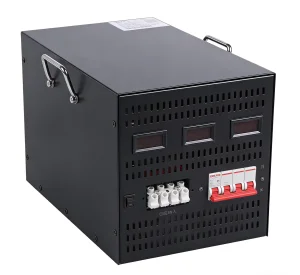
San Francisco PPS Series 3.5kW MPPT Off-Grid Inverter Converter

San Francisco PPS Series 3.5kW High-Efficiency MPPT Hybrid Solar Inverter & Converter

View Product Specs
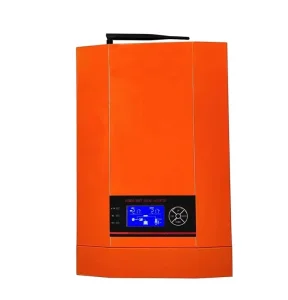
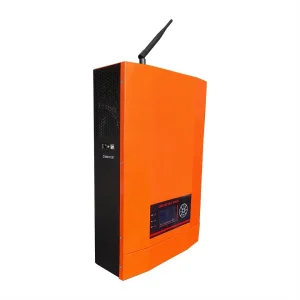
San Francisco Commercial 5.5KW 48V MPPT Solar Inverter WiFi

San Francisco Commercial 5.5KW 48V MPPT Solar Inverter with LCD Display, WiFi & 100A Output

View Product Specs
Regional Market Landscape

San Francisco Commercial Clean Energy & Microgrid Ecosystem

Analyzing grid resilience challenges, Title 24 mandates, and the shift toward high-capacity 3-phase solar inverters across the SF Bay Area.

NEM 3.0
Net Billing Tariff Mandating Solar + Storage Integration
208V / 480V
Standard 3-Phase Commercial Voltage Grid Configurations
99.2%
Peak Inverter Efficiency Benchmark for Bay Area Facilities
< 10ms
Seamless Transfer Time for Mission-Critical Tech Labs

San Francisco Commercial Solar Market Context & Industrial Demand

The San Francisco Bay Area stands as a global epicenter for technological innovation, decarbonization policies, and advanced microgrid deployments. However, operating within San Francisco’s commercial and industrial (C&I) sector presents unique energy challenges. High electricity rates managed by Pacific Gas and Electric (PG&E), combined with frequent Public Safety Power Shutoffs (PSPS) during high-risk wildfire seasons, have forced enterprise businesses, data hubs, and real estate developers to shift from passive solar installations to resilient, 3-phase hybrid microgrid architectures.

Furthermore, the implementation of California’s updated Building Energy Efficiency Standards (Title 24, Part 6) mandates solar photovoltaic (PV) systems paired with battery energy storage systems (BESS) for newly constructed commercial buildings. In urban centers like SOMA, Mission Bay, and the Financial District, power density and grid compatibility are non-negotiable. 3-phase solar inverters operating at 208V/480V AC are essential to maintain phase balancing, handle heavy inductive motor surges from HVAC and pump infrastructure, and eliminate harmonic distortion across complex enterprise loads.

Key Insight for SF System Integrators & Procurement Officers: Under California's Net Billing Tariff (NEM 3.0), exporting un-stored solar energy during midday yields dramatically lower compensation. Procuring advanced 3-phase hybrid inverters with intelligent load-shifting, fast battery charging, and Rule 21 smart grid functions is critical to achieving a rapid ROI on commercial solar projects.
Engineering Deep Dive

3-Phase Inverter Technical Roadmap & Semiconductor Innovation

From Silicon Carbide (SiC) topologies to IEEE 1547-2018 compliance, explore the power electronics shaping next-generation energy conversion.

Modern 3-phase solar and energy storage inverters have evolved beyond simple DC-to-AC conversion boxes. Today's commercial-grade inverters serve as the centralized brain of distributed energy resources (DERs). As grid operators in California demand greater flexibility, 3-phase inverter engineering is advancing rapidly across three core vectors: semiconductor material science, digital control algorithms, and grid-supportive firmware protocols.

1. Silicon Carbide (SiC) MOSFET Topology vs. Legacy IGBTs

Traditional 3-phase inverters historically relied on Silicon (Si) IGBT switches operating at lower switching frequencies (8kHz - 16kHz), which required bulky magnetic components and heavy transformers. Modern high-efficiency inverters manufactured for demanding markets leverage Silicon Carbide (SiC) MOSFETs. Operating at switching frequencies exceeding 50kHz to 100kHz, SiC semiconductors dramatically lower switching losses, achieve thermal efficiency exceeding 98.5%, and allow significant reduction in inductor size, creating high-power-density enclosures suited for tight San Francisco equipment rooms.

2. Toroidal Low-Frequency Isolation vs. High-Frequency Transformerless Platforms

Depending on the specific installation environment within San Francisco, system architects must select the optimal inverter topology based on load dynamics:

Technical Feature Low Frequency (Toroidal Transformer) High Frequency (Transformerless / SiC)
Surge Capacity 300% rated power for 20 seconds (Superior for heavy industrial motors/pumps) 150% - 200% rated power for short bursts (< 2 seconds)
Galvanic Isolation Full magnetic isolation between DC battery banks and AC load/grid Electronic isolation; requires external isolation transformer if specified
Power Density & Weight Heavier footprint, ultra-durable chassis built for harsh conditions Ultra-compact, lightweight, wall-mountable design ideal for commercial office spaces
Peak Efficiency 92% - 94% (High efficiency under continuous heavy load) 97.5% - 99.0% (Exceptional efficiency across standard light-to-medium loads)
Primary SF Market Applications Heavy manufacturing, maritime docks, high-surge EV chargers, emergency back-up Commercial office rooftops, tech campuses, retail solar microgrids, residential complexes

3. Smart Grid Firmware: California Rule 21 & IEEE 1547-2018 Standards

Interconnection with PG&E’s electrical distribution grid requires strict adherence to California Rule 21 Phase 1, 2, and 3 smart inverter mandates. Inverters deployed in San Francisco must incorporate advanced digital signal processors (DSPs) capable of executing dynamic grid-support functions:

  • Volt-VAR Control: Automatically adjusts reactive power injection or absorption to stabilize local feeder voltages without disconnecting.
  • Frequency-Watt Ride Through: Automatically throttles active power output during high-frequency grid events to maintain grid balance.
  • CSIP / IEEE 2030.5 Protocol: Out-of-the-box encrypted Wi-Fi/Ethernet communication for direct utility monitoring and demand-response signals.
  • Dynamic Anti-Islanding: Advanced passive and active impedance detection algorithms to safely isolate systems during main grid outages.
Macro Industry Solutions

Enterprise Application Scenarios Across the San Francisco Bay Area

Custom-engineered 3-phase inverter configurations designed for zero-downtime performance in high-stakes commercial sectors.

AI Compute & Data Centers (SOMA District)

High-density server racks demand steady 208V/480V 3-phase clean power with Total Harmonic Distortion (THD) under 2%. Hybrid inverters configured with ultra-fast static transfer switches (<4ms) deliver uninterrupted operation during localized utility dips.

EV Charging Infrastructure Hubs

Commercial DC Fast Chargers produce immense demand charges on PG&E lines. Integrated 3-phase solar + storage inverters balance instantaneous peak power demands, discharging battery energy directly into EV buffers during peak hours.

BioTech & Life Science Labs (Mission Bay)

Precision refrigeration, centrifugal equipment, and cleanroom HVAC units require zero phase drift. High-capacity 3-phase low-frequency inverters ensure robust galvanically isolated power with heavy motor startup surge tolerances.

Compliance & Permitting

San Francisco Localized Regulatory & Interconnection Standards

Ensuring full alignment with local building codes, fire safety directives, and PG&E grid interconnection protocols.

Deploying energy equipment within the jurisdiction of the City and County of San Francisco requires strict adherence to multiple overlapping regulatory regimes. Suppliers and EPC contractors must ensure equipment meets specific North American safety standards prior to site installation:

UL 1741 SB / SA Certification: The gold standard for inverter safety in California, governing grid-supportive utility interactive equipment, rapid shutdown, and smart inverter capabilities.
NEC 690.12 Rapid Shutdown Compliance: Inverters must seamlessly interface with module-level rapid shutdown (RSD) receivers to drop DC voltage to below 30V within 30 seconds of grid initiation.
SF DBI & SFFD Fire Code Integration: Equipment housing must comply with NEMA 3R / IP65 weatherproofing standards and satisfy strict battery energy storage clearance mandates set by the San Francisco Fire Department.
AFCI Type 1 Protection (UL 1699B): Integrated DC arc-fault circuit interruption prevents electrical fires caused by damaged wiring or loose solar panel connectors.
Industry 4.0 Manufacturing

Suzhou Maili Electrical: Supply Chain Resilience & Manufacturing Excellence

Combining state-of-the-art automated production, rigorous quality testing, and direct factory pricing for global B2B procurement partners.

As a specialized power electronics manufacturer established in 2012, Suzhou Maili Electrical Appliance Co., Ltd. (Pass Power) operates an ISO 9001:2015 certified 2,770 m² manufacturing facility dedicated to producing pure sine wave low-frequency inverters, high-frequency solar MPPT inverters, 3-phase industrial converters, and intelligent battery chargers.

Precision Assembly & Quality Control Pipeline

Every 3-phase and single-phase inverter built in our Suzhou facility undergoes a multi-stage Quality Assurance (QA) protocol before dispatching to North American distributors:

  • Automated SMT PCB Assembly: High-precision Surface Mount Technology ensures perfect component placement, minimizing thermal resistance and cold solder risks.
  • Vacuum Impregnated Toroidal Transformers: In-house transformer winding and resin impregnation ensure low acoustic noise and superior heat dissipation.
  • 100% Full-Load Burn-In Chamber Testing: Inverters undergo 100% continuous full-load aging tests at 45°C ambient temperatures to guarantee field longevity.
  • OEM / ODM Private Labeling: Engineering customization spanning DC input voltages (12V up to 380V DC), custom AC output sockets, communication protocols (CANbus, Modbus), and custom enclosure colors.
Procurement Blueprint

Engineering Checklist for 3-Phase Inverter Bulk Procurement

Essential technical parameters required when submitting Requests for Quotations (RFQs) for San Francisco commercial projects.

Evaluation Parameter Technical Benchmark / Target Specification Engineering Impact & Importance
Nominal Output Voltage 208V / 240V / 480V 3-Phase 4-Wire (Wye) or 3-Wire (Delta) Ensures direct connection to SF commercial distribution panels without step-up transformers.
Power Factor (PF) Range 0.8 leading to 0.8 lagging (Adjustable) Protects commercial facility against PG&E poor power factor penalty surcharges.
Overload Capability 110% continuous; 150% for 60 sec; 200% for 10 sec Prevents nuisance tripping when starting high-torque elevator motors or air compressors.
THDi (Total Harmonic Distortion) < 2% at linear rated load Prevents electromagnetic interference (EMI) with sensitive IT equipment and scientific tools.
Enclosure Protection Class NEMA 3R / IP65 Rated Guarantees long-term corrosion resistance in San Francisco's foggy coastal microclimate.
Full Product Range

Complete Commercial & Industrial Inverter Portfolio

Explore our complete factory-direct lineup of pure sine wave, low frequency, 3-phase, and hybrid MPPT inverter systems.
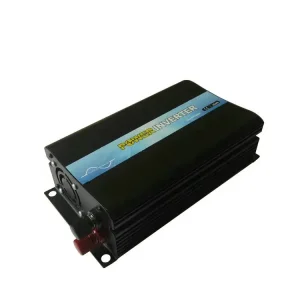
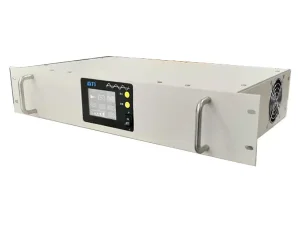
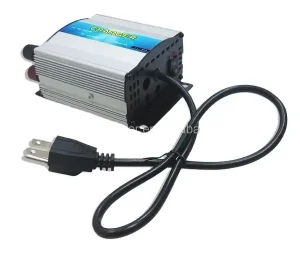
San Francisco Compact 600W Pure Sine Wave Power Inverter 24V DC to 120V AC

San Francisco Compact 600W Pure Sine Wave Power Inverter 24V DC to 120V AC Soft-Start

View Product Specs
SF Enterprise 1KW Rack-Mounted Pure Sine Wave Charging Inverter

SF Enterprise 1KW Rack-Mounted Pure Sine Wave Charging Inverter & Integrated Converter

View Product Specs
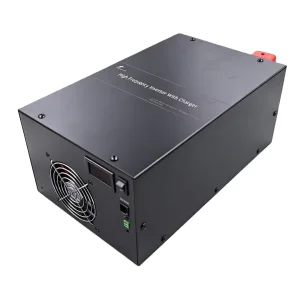
SF Industrial Low Frequency 5KW Hybrid Solar Pure Sine Wave Inverter Charger

SF Industrial Low Frequency 5KW Hybrid Solar Pure Sine Wave Inverter Charger 60A MPPT

View Product Specs
San Francisco High Frequency 3 Phase 3KW DC to 110V/220V/380V AC Inverter

San Francisco High Frequency 3 Phase 3KW DC to 110V/190V/220V/380V AC Off-Grid Inverter

View Product Specs
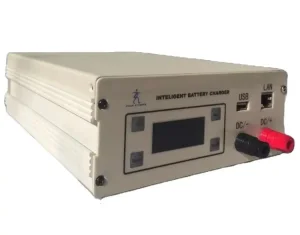
San Francisco Pure Sine Wave Inverter with AC110V to DC12V Battery Charger

San Francisco Pure Sine Wave Power Inverter with AC110V to DC12V 5A-20A Battery Charger

View Product Specs
SF Commercial PPS Series 3.5KW MPPT Off-Grid Inverter Converter

SF Commercial PPS Series 3.5KW MPPT Hybrid Solar Inverter Converter for Commercial Microgrids

View Product Specs
SF Bay Area 3000W High Frequency Pure Sine Wave Inverter 110A Charger

SF Bay Area 3000W High Frequency Pure Sine Wave Inverter with 110A Battery Charger (92% Efficiency)

View Product Specs
San Francisco OEM 12V 50A Electric Vehicle EV Battery Charger Adapter

San Francisco Commercial OEM 12V 50A Electric Vehicle (EV) Premium Battery Charger & Adapter

View Product Specs
Expert FAQ

Frequently Asked Questions on 3-Phase Inverters & SF Procurement

Addressing core technical questions from San Francisco EPC contractors, procurement engineers, and commercial installers.

Why is a 3-phase inverter configuration essential for San Francisco commercial properties?
San Francisco commercial properties primarily operate on 208V or 480V 3-phase electrical services. Utilizing a true 3-phase inverter ensures balanced voltage distribution across all three phase legs (L1, L2, L3), preventing phase imbalance trips, reducing neutral line current overheating, and providing clean power capable of starting heavy inductive motors in commercial HVAC systems, elevators, and industrial pumps.
How do Suzhou Maili 3-phase inverters comply with California Rule 21 and PG&E grid requirements?
Our 3-phase inverters incorporate advanced firmware engineered for California Rule 21 compliance. This includes active/reactive power controls (Volt-VAR, Volt-Watt, Frequency-Watt), dynamic anti-islanding algorithms, and support for IEEE 2030.5 / CSIP communication protocols, allowing seamless integration into PG&E's grid interconnection framework.
What is the difference between high-frequency and low-frequency 3-phase inverters for industrial use?
Low-frequency 3-phase inverters utilize heavy toroidal transformers, granting them massive peak surge capabilities (up to 300% for 20s) and full galvanic isolation, making them ideal for heavy industrial machinery and harsh marine environments. High-frequency inverters utilize fast electronic switching, resulting in a lightweight, ultra-compact design with efficiency up to 99%, perfectly suited for commercial office buildings, IT server rooms, and standard rooftop solar installations.
Can Maili 3-phase hybrid inverters be customized for specific OEM/ODM voltage specifications?
Yes. Suzhou Maili offers comprehensive OEM/ODM engineering customization. We can customize DC input ranges (from 12V DC up to 380V HVDC platforms), AC output configurations (110V/190V/208V/220V/380V/480V AC), communication interfaces (RS485, CANbus, Modbus TCP), enclosure ratings (NEMA 3R, IP65), and custom private-label branding.
How does purchasing direct from a factory like Maili optimize total cost of ownership (TCO) for SF distributors?
Procuring directly from our ISO 9001:2015 certified Suzhou manufacturing facility eliminates intermediate distributor markups, providing 30% to 40% cost savings. Furthermore, our direct engineering support, localized spare parts fulfillment, and rigorous 100% full-load burn-in testing significantly reduce long-term maintenance and field failure costs.

Partner with a Leading 3 Phase Inverter Manufacturer

Accelerate your San Francisco commercial solar and microgrid projects with factory-direct pricing, custom OEM solutions, and certified industrial quality.

Send Inquiry Now