


Featured power conversion units optimized for high altitude performance, grid fluctuations, and mobile field installations across Peru.
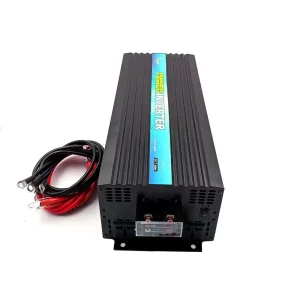
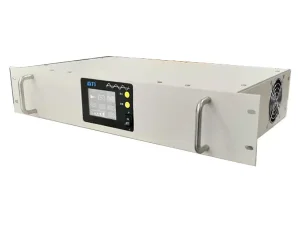
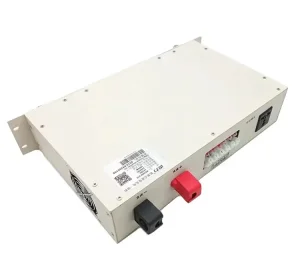
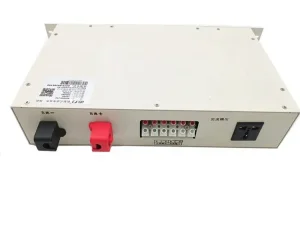
An in-depth analysis of geographic challenges, grid infrastructure gaps, and industrial power transformation from Lima to the High Andes.
Peru's mining belt—spanning Arequipa, Cajamarca, Moquegua, and Cerro de Pasco—operates at altitudes between 3,000 to 4,800 meters above sea level. Rarefied air decreases convective cooling efficiency and lowers dielectric breakdown voltage. Our high-frequency inverters feature oversized heatsinks, thermal derating management, and conformal coating to survive high-altitude mineral dust and extreme diurnal temperature swings.
Southern Peru, particularly the Atacama fringe and southern coastal plains, experiences some of the highest global solar irradiance (exceeding 6.5 kWh/m²/day). High-frequency pure sine wave inverters are critical components for BESS (Battery Energy Storage Systems) and off-grid microgrids, converting DC power generated from solar panels into stable 220V/230V AC power with conversion efficiencies surpassing 95%.
While metropolitan Lima and Callao benefit from stable grid power supplied by SEIN (Sistema Interconectado Nacional), rural provinces suffer from frequent blackouts, voltage sags, and harmonic noise. High-frequency inverters serve as vital UPS power protection, offering microsecond transfer speeds to safeguard sensitive industrial PLCs, agricultural cold chains, and telecom repeaters.
Understanding the internal silicon design, power density multipliers, and magnetic core engineering for modern procurement decisions.
When evaluating DC-to-AC power conversion for Peruvian commercial installations, industrial procurement engineering teams must carefully weigh the architectural tradeoffs between High-Frequency (HF) switching topologies and traditional heavy, transformer-based Low-Frequency (LF) inverters. High-frequency inverters leverage advanced high-speed semiconductor switches—such as Insulated Gate Bipolar Transistors (IGBTs) or Silicon Carbide (SiC) MOSFETs—operating at switching frequencies typically between 20 kHz and 100 kHz, compared to low-frequency systems that switch at the grid's native 50 Hz or 60 Hz line frequency.
| Performance Characteristic | High-Frequency (HF) Inverter Architecture | Traditional Low-Frequency (LF) Inverter |
|---|---|---|
| Power Density & Weight | High (3.5 – 5.0 W/cm³): Compact, lightweight ferrite cores eliminate bulky copper transformers. Ideal for vehicle installations and tight telecommunication racks. | Low (0.8 – 1.2 W/cm³): Heavy steel/laminated iron-core toroidal transformers. Bulky and costly to transport over complex mountain logistics. |
| Energy Conversion Efficiency | Up to 95% – 97%: Minimal core losses due to ultra-fast switching and high-grade planar magnetics. Reduced internal heat build-up. | 85% – 89%: Significant copper and hysteresis losses within the heavy line-frequency transformer. Higher parasitic power drain. |
| Dynamic Load Response | Microsecond Feedback Loop: High-speed DSP controllers dynamically adjust Pulse Width Modulation (PWM) duty cycles instantly during sudden load changes. | Slower Response: High magnetic lag and physical inductance restrict immediate output correction under step-load changes. |
| Harmonic Distortion (THD) | < 2.5% Pure Sine Wave: Clean, utility-grade or better power output suitable for medical equipment, computers, and delicate instrumentation. | 3.0% – 5.0% THD: Susceptible to core saturation distortions under non-linear loads. |
| Logistics & Freight Efficiency | Substantially Lower Freight Costs: Lower volumetric and gross weight significantly reduces ocean container shipping and regional transport costs to remote mining bases in Peru. | High Logistics Cost: Heavy weight increases freight fees and complicates remote handling without specialized crane equipment. |
In high-altitude mining applications (e.g., above 2,000 meters in regions like Puno, Cusco, and Pasco), air density decreases significantly, reducing forced-air cooling effectiveness. Maili's high-frequency inverters incorporate intelligent variable-speed cooling fans, oversized internal aluminum heat sinks, and thermal derating protection algorithms to ensure full nominal rated power output up to 3,000m altitude, with controlled linear derating beyond that threshold.
Addressing sector-specific operational challenges across mining, telecommunications, agriculture, and mobile commercial fleets.
In high-altitude open-pit and underground copper and gold mines (e.g., Antamina, Las Bambas, Cerro Verde), our high-frequency rack-mount and stand-alone inverters power critical control rooms, gas detection equipment, drill monitoring rigs, and remote worker accommodations, maintaining steady voltage under harsh vibration and wide ambient temperature bands.
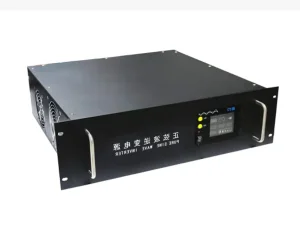
Peru's challenging geography—combining high coastal deserts, rugged mountains, and dense Amazonian rainforests (Loreto, Ucayali)—demands ultra-reliable telecom power. Maili’s 19-inch rack-mounted pure sine wave high-frequency inverters integrate seamlessly into standard telecom cabinets, supplying continuous 110V/220V AC from 24V or 48V DC battery banks to ensure uninterrupted mobile signal coverage.
Coastal agricultural hubs in Ica, Piura, and La Libertad rely on off-grid solar energy systems to drive irrigation pumps and temperature-controlled storage rooms for high-value export crops like asparagus, avocados, and blueberries. High-frequency inverters feature fast dynamic load adjustments and solar controller pairing for maximum power extraction.
Utility service trucks, mobile health clinics, and emergency response caravans traveling through remote Peruvian corridors require lightweight, high-capacity auxiliary AC power. Our 1500W to 6000W high-frequency units deliver pure sine wave AC to run diagnostic tools, medical appliances, and heavy power tools straight from vehicle battery systems.
Comprehensive manufacturing capabilities designed for Peruvian distributors, engineering contractors (EPCs), and private-label brand owners.
We engineering-customize DC input voltages (12V, 24V, 48V, up to 96V DC) and AC output configurations tailored to Peru’s local grid standards. Output AC voltage can be calibrated to 220V AC single-phase, 110V/220V split-phase, or 3-phase systems at 50Hz or 60Hz frequency toggles.
Integration with RS485, CAN bus, and Modbus RTU communication interfaces allows seamless connection with Lithium (LiFePO4) Battery Management Systems (BMS) and centralized SCADA monitoring suites widely used in commercial energy installations in Peru.
Offering custom aluminum extruded or cold-rolled steel enclosures in custom powder-coat finishes, featuring customer brand logo silk-screening, unique LCD interface graphics, custom front-panel AC socket types (Universal, NEMA, SCHUKO), and rugged mounting brackets.
Every Maili high-frequency inverter undergoes rigorous testing before shipment from our ISO 9001:2015 certified production plant. Testing includes 100% full-load burn-in aging tests, high-pot isolation testing, vibration resilience testing, thermal imaging inspections, and simulated grid distortion testing to guarantee zero-defect delivery into the Port of Callao, Peru.
Navigating OSINERGMIN safety guidelines, SUNAT customs requirements, and international IEC certification compliance.
Maili high-frequency inverters comply with international safety standards including IEC 62109-1 and IEC 62109-2 (safety of power converters in photovoltaic systems), CE low voltage directive (LVD 2014/35/EU), and electromagnetic compatibility directive (EMC 2014/30/EU), facilitating seamless customs clearance with SUNAT in Peru.
Commercial installations audited by Peru's energy regulatory body, OSINERGMIN (Organismo Supervisor de la Inversión en Energía y Minería), require verified ground isolation, short-circuit protection, reverse polarity safeguards, over-voltage shutoffs, and low harmonic emissions—all fully integrated into Maili’s digital control boards.
We work with leading ocean carriers providing direct freight connections to Callao, Paita, and Matarani ports. Standardized export packaging (custom reinforced wooden crates and heavy-duty corrugated cartons) protects equipment during maritime transit and rough overland trucking into interior provinces.
Pioneering silicon carbide technology, AI-driven microgrid energy optimization, and bidirectional vehicle-to-load conversion systems.
Our R&D roadmap focuses on integrating Wide Bandgap (WBG) semiconductors like Silicon Carbide and Gallium Nitride. These advanced switches push switching frequencies past 150kHz, cutting internal operating temperatures, expanding power density by 40%, and boosting overall peak efficiency to 98% in extreme Andean environments.
Future iterations of our high-frequency hybrid inverters will feature embedded AI algorithms capable of forecasting solar generation curves against historical load patterns. This enables automated peak-shaving, battery health tracking, and smart grid synchronization, reducing operating costs for Peruvian commercial enterprises.
Addressing the growth of electric transport in Lima and regional commercial fleets, our next-gen platforms support bi-directional charging (V2L / V2G), allowing commercial electric utility trucks to act as mobile power sources during regional grid outages.
Detailed technical answers to common queries regarding high-frequency inverter selection, altitude derating, custom orders, and local grid matching.
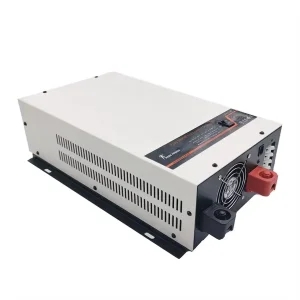
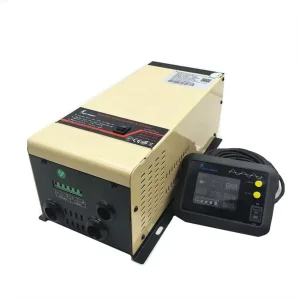
Factory-direct rack-mounted, wall-mounted, and portable pure sine wave power units available for wholesale and OEM distribution in Peru.
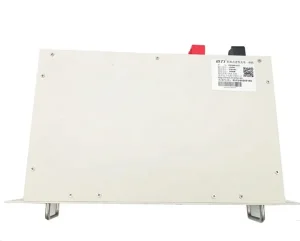
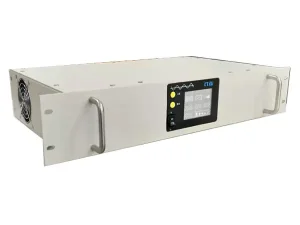
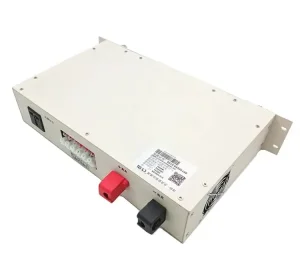
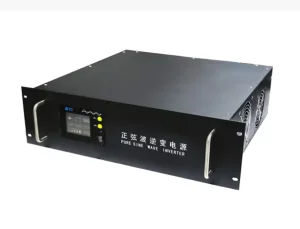
Looking to expand your power electronics distribution portfolio in Peru? Request a factory-direct quotation, engineering technical specs, or custom OEM samples today.
Send Inquiry Now