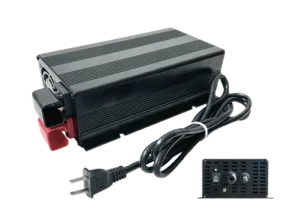
Engineered to deliver high performance, low total harmonic distortion, and robust thermal endurance across Western Australia, Queensland, and New South Wales commercial applications.
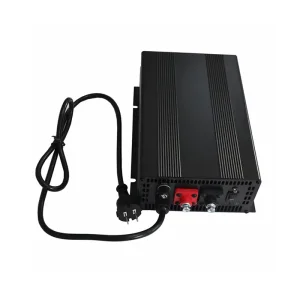
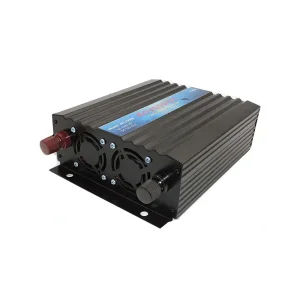
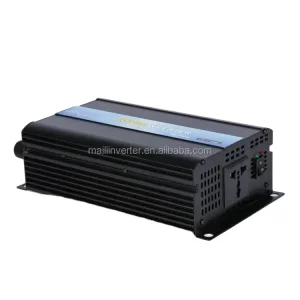
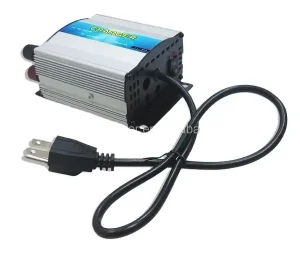
Australia stands at the forefront of the global renewable energy transition. Characterized by high solar irradiance levels exceeding 5.8 kWh/m²/day across vast swathes of the Outback, alongside a decentralised population, the demand for off-grid power infrastructure is expanding exponentially. From remote mining installations in the Pilbara to commercial fleets, 4WD overland expedition rigs, and off-grid residential homesteads, the necessity for efficient, ultra-reliable DC to AC conversion technology has never been more critical.
In this context, High-Frequency Pure Sine Wave Inverters and integrated DC-AC Battery Chargers have emerged as the primary topology of choice for commercial buyers, distributors, and system integrators. Unlike traditional, heavy line-frequency units that rely on bulky iron-core transformers, high-frequency inverters leverage advanced high-speed Pulse Width Modulation (PWM) and modern MOSFET/IGBT switching matrices operating at frequencies upwards of 50 kHz to 100 kHz. This yields lightweight, highly compact power conversion hardware with energy efficiency ratings peaking at 95% to 98%.
Strategic SEO & Technical Insight: In Australian off-grid environments, thermal stress and power density are dual bottlenecks. High-frequency inverters mitigate continuous structural weight penalties on overland vehicles while minimizing internal thermal dissipation through reduced switching losses.
Furthermore, the rapid market transition toward Lithium Iron Phosphate (LiFePO4) battery chemistry across Australian industrial sectors demands sophisticated multi-stage DC-AC charging solutions. Battery chargers must offer precise CC/CV (Constant Current / Constant Voltage) algorithms, thermal sensors, and low total harmonic distortion (THD < 2.5%) to safeguard lithium battery management systems (BMS) against voltage spikes, frequency drift, and overcharging under extreme ambient conditions reaching upwards of +50°C.
When specifying power electronics for the Australian market, industrial procurement teams must balance peak surge requirements against weight, size, cost, and steady-state efficiency. Below is an engineering evaluation contrasting High-Frequency PWM topology with traditional Low-Frequency Toroidal design platforms.
| Technical Parameter | High Frequency Inverter (HF Platform) | Low Frequency Inverter (LF Toroidal Platform) | Australian Application Impact |
|---|---|---|---|
| Switching Frequency | 20 kHz – 100 kHz (High-Speed MOSFET/IGBT) | 50 Hz – 60 Hz (Line Frequency Transformer) | HF reduces component footprint and magnetic weight by up to 70%. |
| Peak Energy Efficiency | 94% – 98% High Nominal Output Efficiency | 85% – 90% (Transformer Core Losses) | HF conserves valuable battery energy in off-grid solar storage. |
| Surge Capacity Ratio | 200% Surge Power (Up to 2 Seconds) | 300% – 500% Surge Power (Up to 20 Seconds) | HF ideal for sensitive electronics; LF suited for heavy inductive pumps. |
| Power Density (W/kg) | High (~250-400 W/kg) | Low (~60-100 W/kg) | HF enables compact mounting inside vehicle chassis and tight marine bays. |
| Total Harmonic Distortion (THD) | < 2.5% (Pure Sine Wave Output) | < 3% – 5% | Ensures clean grid-quality power for sensitive medical & industrial gear. |
| Thermal Management Requirement | Smart Variable-Speed Active Cooling Fans | Passive Heavy Aluminum Heat Sinks + Active Fans | Engineered active thermal regulation for Australian summer extremes. |
Our manufacturing plant integrates automated Surface Mount Technology (SMT) with multi-stage burn-in aging procedures to ensure that high-frequency switching circuits resist solder fatigue caused by long-distance road vibration—a common point of failure across Australia’s unpaved corrugated outback tracks.
Delivering OEM/ODM customization, rigorous quality control, and robust compliance guarantees tailored for Australian B2B buyers.
Our high-frequency inverters and intelligent DC-AC battery chargers are pre-engineered to comply with AS/NZS 4777.2, AS/NZS 3000 wiring standards, and Electrical Regulatory Authorities Council (ERAC) RCM/SAA safety mandates.
From customizing DC input voltage ranges (12V, 24V, 48V, up to high-voltage 380V DC) to custom LCD branding, terminal configurations, and CANbus/RS485 protocol integration for local Australian lithium batteries.
Specially coated conformal PCBA protection withstands ambient operational temperatures up to 50°C, high relative humidity, and salt-mist corrosion along coastal Western Australia and Queensland maritime zones.
As an established factory partner for Australian commercial clients, our high-frequency pure sine wave power inverters and multi-stage battery chargers are deployed across four critical macro industries:
Direct factory sourcing of power electronics offers significant Total Cost of Ownership (TCO) benefits for Australian B2B buyers compared to purchasing from local middle-man distributors. By partnering directly with our Suzhou ISO 9001:2015 manufacturing facility, Australian importers achieve:
Direct factory pricing eliminates intermediary markups. Importers gain up to 35% margin headroom, permitting competitive retail and wholesale pricing within the Australian market while preserving healthy operating margins.
Tailor battery charging curves specifically for Australian-brand LiFePO4 batteries (e.g., custom bulk, absorption, float voltage setpoints), or adapt AC output receptacles to Australian AS/NZS 3112 3-pin plugs.
Our global supply chain logistics system handles ocean freight direct to major Australian ports, including Fremantle (Perth), Port Jackson (Sydney), Port of Melbourne, and Port of Brisbane, ensuring seamless customs clearance and inventory continuity.
Speak directly with our senior power electronics engineering team. We support OEM/ODM projects, private label branding, and bulk factory orders.
Send Inquiry Now & Request Technical SpecsExplore our complete range of certified intelligent chargers, high-frequency pure sine wave inverters, and battery management components.
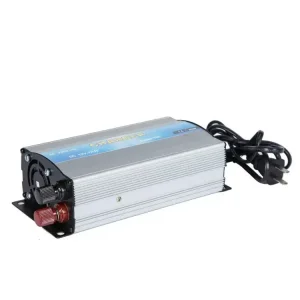
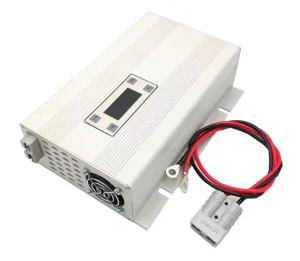
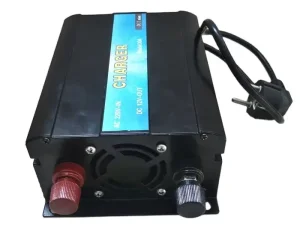
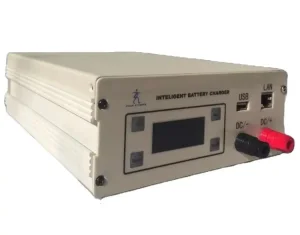
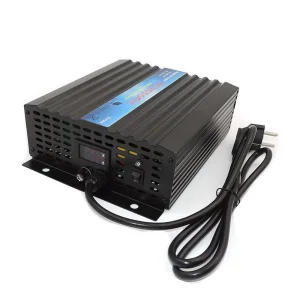
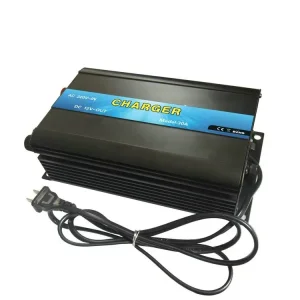
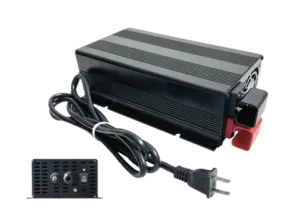
Importing power electronics into Australia requires adherence to strict electrical safety, electromagnetic compatibility (EMC), and grid connectivity regulations governed by state and federal authorities. Sourcing directly from an experienced factory ensures your shipments pass customs smoothly and avoid costly product recalls:
Electrical items sold in Australia must carry RCM marking confirming compliance with AS/NZS 62368.1 (Audio/video, information and communication technology equipment safety) or AS/NZS 60335 for battery chargers. Our manufacturing lines implement strict dielectric withstand, ground bonding, and insulation resistance testing.
For hybrid solar inverters operating in tandem with grid connections across Australian networks (Ergon, Energex, Endeavour, Ausgrid), equipment must satisfy demand response mode (DRM) requirements, volt-watt control response curves, and active anti-islanding protection.
Expert answers to common engineering, compliance, and ordering queries from Australian buyers.
Accelerate your business in the Australian market with certified high-frequency power inverters, smart DC-AC chargers, and hybrid energy solutions built directly to your specifications.