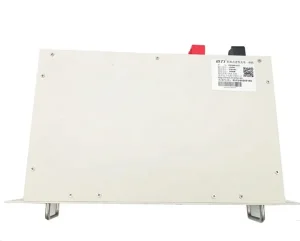
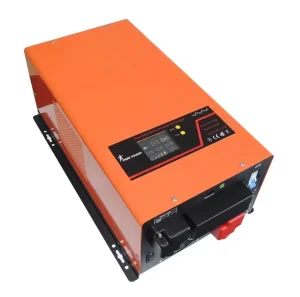
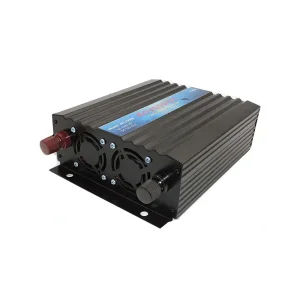
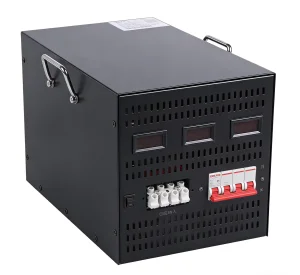
Field-tested across Dhaka, Chattogram, Gazipur, and Narayanganj for continuous industrial backup power.
Bangladesh’s rapid industrialization—driven by the Readymade Garments (RMG) sector, textile manufacturing, pharmaceutical processing, and expanding telecommunication networks—faces severe operational bottlenecks due to power quality anomalies. Industrial zones across Gazipur, Narayanganj, Savar, and Chattogram EPZ frequently suffer from multi-hour load shedding, voltage sag down to 140V AC, phase unbalance, and frequency excursions outside the standard 50 Hz bandwidth (fluctuating between 48.5 Hz and 51.5 Hz).
Standard High-Frequency (HF) switching inverters, while lightweight, rely on delicate high-speed MOSFET topologies and compact high-frequency transformers. When subjected to Bangladesh’s extreme grid transients and the high inrush currents of heavy industrial machinery (such as 3-phase electric motors, industrial compressors, automated cutting tables, and HVAC chillers), HF inverters routinely suffer component thermal runaway and premature MOSFET breakdown.
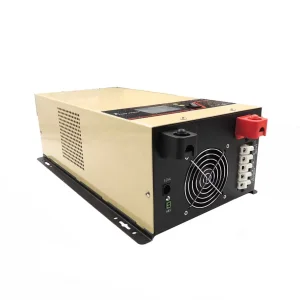
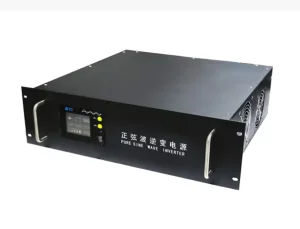
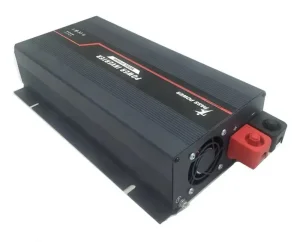
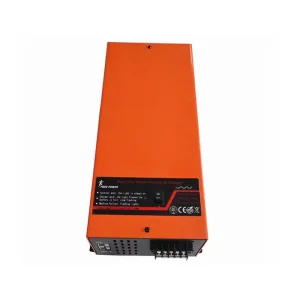
Engineering Gain: Heavy-duty Low-Frequency (LF) Inverters utilizing pure copper toroidal transformers provide localized isolation, massive thermal thermal-mass inertia, and 300% to 500% surge withstand capacity for up to 20 seconds. This makes 7kW, 8kW, 9kW, and 10kW low-frequency pure sine wave inverters the absolute benchmark for continuous power reliability in the Bangladeshi commercial and industrial market.
The fundamental difference between industrial low-frequency power conversion and residential high-frequency conversion lies in the magnetic core design and the primary-to-secondary isolation mechanism. A 7kW to 10kW low-frequency inverter processes energy directly at the grid frequency (50Hz/60Hz) using a massive iron-grain oriented steel toroidal transformer.
Unlike traditional E-I laminated transformers, toroidal transformers feature a continuous, joint-less magnetic strip core. This results in minimal magnetic flux leakage, lower standby (no-load) power consumption, zero audible hum, and an efficiency threshold reaching up to 95%. In Bangladeshi facilities where ambient temperatures often exceed 40°C during summer monsoons, the thermal dissipation capacity of toroidal copper windings prevents dielectric insulation breakdown under sustained full-load operation.
Handles up to 30kW peak surge for 20 seconds, allowing heavy inductive loads like air compressors, water pumps, and motor drives to start smoothly without triggering fault shutdowns.
Delivers clean AC power with Total Harmonic Distortion (THD) below 3%, protecting sensitive medical imaging systems, automated PLC boards, and telecom servers in Bangladesh.
Built-in physical isolation between DC battery banks and AC power lines shields connected equipment from destructive utility grid lightning strikes and high-voltage surges.
Industrial power resilience in Bangladesh depends heavily on battery health. Our 7kW-10kW low-frequency inverter-chargers feature an integrated 3-stage smart charging algorithm (Bulk, Absorption, Float) with programmable charging current controls (up to 120A).
The system provides customized charging curves for local high-capacity Tubular Lead-Acid batteries (e.g., Rahimafrooz, Hamko, Volvo), Sealed AGM/Gel batteries, as well as modern LiFePO4 (Lithium Iron Phosphate) energy storage packs equipped with active CAN/RS485 BMS communication protocols.
| Parameter / Specification | Maili 7kW-10kW Low Frequency (LF) | Standard High Frequency (HF) Inverters | Local Modified Sine Wave UPS |
|---|---|---|---|
| Internal Transformer Topology | Heavy Copper Toroidal Core (50Hz) | Ferrite Core Switching Transformer | Standard E-I Laminated Iron Core |
| Surge Capacity Handling | 300% - 500% (Up to 20 seconds) | 150% - 200% (Less than 1 second) | 110% - 120% (Instant trip) |
| Inductive Load Compatibility | Exceptional (Motors, CNC, Air Con) | Poor (Risk of FET thermal failure) | Very Poor (Causes motor heating) |
| Galvanic Electrical Isolation | Yes (Complete Physical Isolation) | No (Direct High-Voltage DC Link) | Partial / Low Isolation |
| Total Harmonic Distortion (THD) | < 3% (Pure Sine Wave) | < 5% (Pure Sine Wave) | 25% - 40% (Modified Square Wave) |
| Tropical Climate Resilience (50°C) | High (Heavy heatsink + Forced air) | Medium (High risk of PCB thermal stress) | Low (Prone to overheating) |
Deploying energy storage hardware in Bangladesh requires a deep understanding of regional operational realities. Maili’s CE-certified 7kW, 8kW, 9kW, and 10kW low-frequency inverter chargers are specifically designed to address local deployment scenarios:
Locations: Gazipur, Narayanganj, Savar
Protects automated computerized fabric cutting machines, industrial sewing lines, laser pattern cutters, and boiler control units against sudden voltage drops and grid outages.
Locations: Dhaka, Chittagong, Sylhet
Ensures zero-downtime backup power for server rooms, ATM networks, call centers, and off-grid cellular BTS base stations with seamless <10ms automatic AC transfer switching.
Locations: Rajshahi, Rangpur, Bogura
Drives high-torque refrigeration compressors, milk cooling tanks, poultry environmental controls, and rice mill processing units without tripping on start-up currents.
Importing electrical equipment into Bangladesh requires strict compliance with international safety protocols and local customs verification standards (such as BSTI registration and pre-shipment inspection clean report of findings). All Maili 7kW-10kW low frequency inverters undergo comprehensive testing to hold full CE marking credentials.
Our manufacturing plant operates under an ISO 9001:2015 certified quality control management system. Every unit delivered to the Bangladeshi market conforms to:
To ensure reliable operation in harsh grid environments, our inverters include a comprehensive suite of automatic hardware protections:
Automatically disconnects from unstable grid power when voltage drops below 140V or surges above 270V, transferring to battery power seamlessly.
Features intelligent electronic sensing alongside mechanical breaker isolation to prevent internal component damage during output short circuits.
Dual thermistor probes monitor transformer core and power MOSFET heatsink temperatures, activating high-CFM variable fans or initiating safety shutdowns.
As Bangladesh advances its renewable energy initiatives—such as net-metering schemes for industrial rooftop solar installations—power electronics must evolve beyond basic standby UPS functionality.
Maili’s next-generation 7kW-10kW low frequency inverter platform integrates advanced MPPT (Maximum Power Point Tracking) charge controller communication modules. This architecture enables industrial users to prioritize solar energy consumption, store excess generation in battery banks, and utilize grid AC power purely as a secondary backup source—significantly reducing commercial electricity tariffs.
Furthermore, optional IoT GPRS/Wi-Fi communication cards provide real-time cloud telemetry. System integrators and facility managers across Dhaka can monitor real-time battery state of charge (SoC), AC input/output voltage waveforms, temperature metrics, and fault logs directly via mobile apps or web portals.
Technical and commercial clarity for importers, distributors, and EPC contractors.
From rack-mounted UPS units to solar hybrid off-grid systems and intelligent multi-stage chargers.