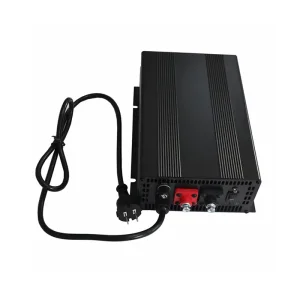
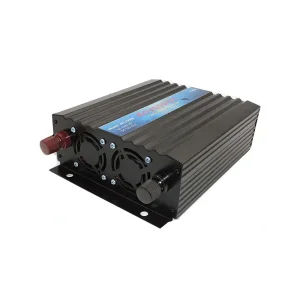
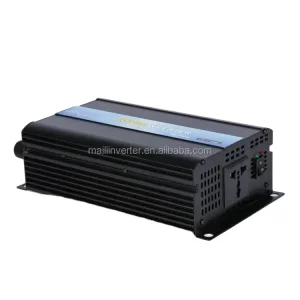
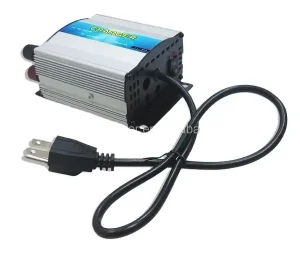
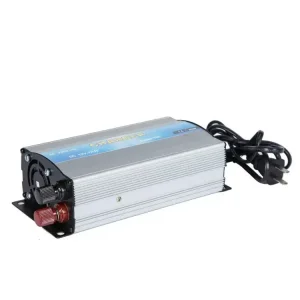
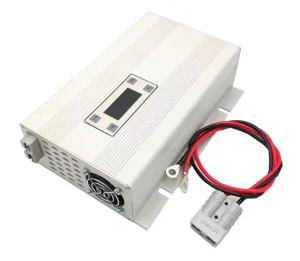
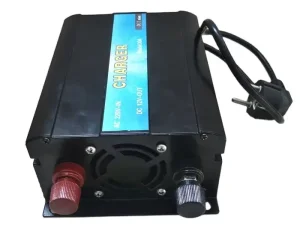
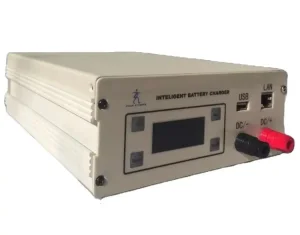
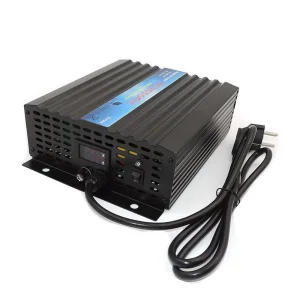
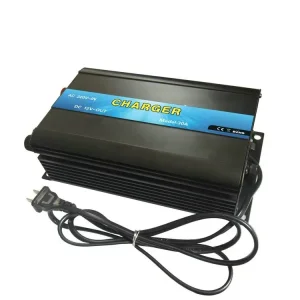
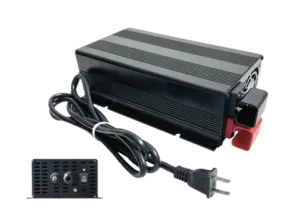
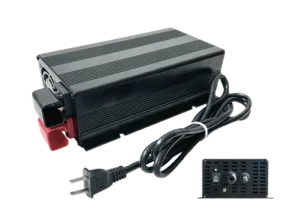
Explore our foundational range of 3-stage intelligent battery chargers and pure sine wave inverter chargers customized for Japan’s dual-frequency (50Hz/60Hz) 100V grid standards and rigorous safety parameters.
Japan represents one of the most technologically sophisticated yet demanding power electronics markets globally. As a nation driven by stringent quality standards, high-density manufacturing clusters, and an unwavering focus on grid stability, the demand for high-reliability DC AC battery chargers and bidirectional power conversion systems has accelerated rapidly over the past decade.
The manufacturing hubs of Aichi, Osaka, and Kanagawa are undergoing massive robotic transformation. Automated Guided Vehicles (AGVs) and Autonomous Mobile Robots (AMRs) in Japanese factories require compact, high-efficiency DC/AC chargers equipped with fast-charging curves and CAN bus communication protocols to ensure continuous 24/7 operation.
Japan’s Business Continuity Planning (BCP) regulations mandate robust off-grid backup systems across commercial buildings, telecommunications towers, and medical facilities. Inverter chargers capable of seamlessly switching between AC grid utility and DC battery storage within milliseconds are critical for seismic and typhoon resilience.
With Japan transitioning toward Next-Generation Mobility under METI (Ministry of Economy, Trade and Industry) directives, onboard and off-board DC/AC power conversion units are vital. High-frequency charger modules powering commercial fleets, service trucks, and electric buses must conform to JIS (Japanese Industrial Standards) and PSE safety standards.
Technical Insight for Japanese Procurement Engineers: Unlike Western power grids operating uniformly at 120V or 230V at 50Hz or 60Hz, Japan's public grid is unique—operating at 100V nominal voltage, divided into 50Hz (Eastern Japan, Tokyo/Tohoku) and 60Hz (Western Japan, Osaka/Nagoya). Custom DC AC battery chargers supplied to the Japanese market must feature wide AC input tolerances (85V–135V) and automatic dual-frequency sensing.
Globally, the market for power electronics is experiencing a fundamental shift from traditional analog linear power supplies to digitally controlled, high-frequency, wide-bandgap semiconductor-based conversion systems. The worldwide push for net-zero carbon emissions, combined with the rapid expansion of distributed renewable energy assets, has elevated the humble battery charger into a sophisticated energy management node.
Global commercial buyers are rapidly replacing legacy Flooded and AGM lead-acid batteries with Lithium Iron Phosphate (LiFePO4) and Nickel Manganese Cobalt (NMC) chemistries. This transition requires DC AC battery chargers to possess dynamic, programmable multi-stage charging algorithms (Bulk, Absorption, Float, Equalization) and direct digital communication with Battery Management Systems (BMS) to prevent thermal runaway and optimize cell longevity.
As space constraints tighten in industrial enclosures, mobile work vehicles, and telecom cabinets, engineering procurement teams prioritize chargers with elevated power density (W/in³). Achieving efficiencies above 95% reduces thermal dissipation losses, enabling fanless or IP65-sealed conduction-cooled chassis that thrive in harsh outdoor environments.
| Technology Generation | Efficiency Range | Thermal Output | Grid Adaptability | Primary Industrial Applications |
|---|---|---|---|---|
| Legacy Frequency Transformers | 75% – 82% | High (Requires heavy heat sinks) | Narrow (Fixed VAC/Hz) | Legacy UPS, Basic Maintenance Charging |
| High-Frequency Switch-Mode (Si) | 88% – 92% | Moderate (Active Fan Cooled) | Moderate (Wide Range VAC) | Automotive, Light AGVs, Off-Grid Solar |
| Next-Gen Silicon Carbide (SiC) / GaN | 95% – 97.8% | Minimal (Conduction / Passive) | Advanced (Smart Grid / Microgrid Ready) | Precision Japanese Robotics, Fast EV, Defense |
For Japanese importers, trading firms (Sogo Shosha), and original equipment manufacturers (OEMs), sourcing high-grade power electronics directly from certified Chinese manufacturing centers like Suzhou and the Greater Bay Area provides an unmatchable competitive edge. By combining world-class engineering talent with dense component supply chains, Chinese manufacturing delivers rapid innovation cycles and superior cost-to-performance ratios.
Our ISO 9001:2015 certified Suzhou facility operates within a 30-kilometer radius of tier-1 magnetic component suppliers, semiconductor packaging plants, and precision aluminum enclosure fabricators. This localized supply ecosystem reduces component procurement lead times by up to 60% compared to Western competitors.
Quality reliability is non-negotiable for the Japanese market. Our manufacturing lines integrate Surface Mount Technology (SMT), Automated Optical Inspection (AOI), ICT circuit testing, and 100% full-load thermal burn-in testing under elevated temperatures before final export packaging.
From modifying firmware algorithms for specialized Japanese lithium batteries to customizing aluminum extrusion housings with PSE-compliant terminal blocks, our engineering team executes custom prototype revisions in as few as 14 business days.
To successfully integrate power hardware into Japanese industrial infrastructure, chargers must be engineered to withstand specialized environmental and operational conditions. Our DC AC battery charger units are deployed across various high-value Japanese market sectors:
Japanese fire departments, emergency medical service (EMS) vehicles, and NHK mobile broadcasting units require robust 12V/24V pure sine wave inverter chargers with isolated DC outputs. These units charge secondary onboard battery banks while parked at AC grid station receptacles and seamlessly convert battery DC back into low-THD AC power while in transit.
NTT exchanges and JR (Japan Railways) trackside signaling cabinets demand highly reliable 48V DC power rectifiers and chargers. Designed with redundant cooling circuits and transient surge suppression, our units maintain battery bank readiness in mountainous areas subject to lightning strikes and snowstorms.
Operating in coastal ports such as Yaizu, Fukuoka, and Hokkaido, commercial fishing vessels require IP65-sealed, salt-spray resistant 12V/30A and 24V/40A smart battery chargers. Tropicalized conformal coating on all internal PCBAs prevents dielectric breakdown caused by high humidity and saline atmospheres.
Extreme climate weather monitoring stations, including those around Mount Fuji and Nagano, utilize our integrated solar charge controller and AC/DC charger hybrid platforms. These units automatically prioritize solar input during daylight hours while allowing generator AC backup charging when solar irradiance drops below operating thresholds.
As power electronics evolve, keeping pace with technological advances is essential for maintaining a competitive product portfolio in Japan and international export markets.
By replacing silicon MOSFETs with GaN devices, switching frequencies increase fivefold, enabling a 40% reduction in passive component size (transformers and inductors) while driving conversion efficiency beyond 96%.
Modern industrial systems demand real-time telemetry. Our smart chargers support RS485 Modbus-RTU and CAN 2.0B protocols, allowing remote monitoring of State of Charge (SoC), temperature, input voltage, and fault codes.
Vehicle-to-Home (V2H) and Vehicle-to-Grid (V2G) functionality allows charger units to act as both a fast DC charger and a grid-interactive AC inverter during power outages or peak load shifting intervals.
For procurement managers at Japanese engineering firms and global distributors, selecting a DC AC battery charger manufacturer involves balancing initial unit costs with long-term operational reliability and compliance assurances.
While low-cost low-grade chargers carry smaller initial price tags, their high thermal losses, poor power factor, and higher failure rates generate substantial long-term expense. Our high-efficiency DC AC chargers minimize TCO through:
Browse our extended matrix of commercial and industrial charger hardware, available for direct factory export with complete OEM branding options.
Elevate your B2B supply chain in Japan with engineering-grade DC AC battery chargers and pure sine wave inverter systems. Contact our engineering support team today for technical specifications, PSE compliance documentation, and factory-direct volume pricing.
Send Inquiry Now