


Direct OEM factory solutions featuring broad AC input voltage tolerance, multi-stage digital charging algorithms, and seamless integration with lead-acid and lithium battery storage systems.
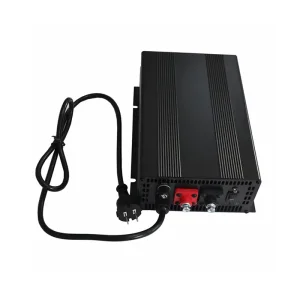
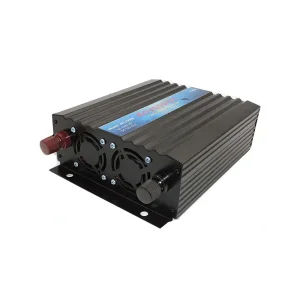
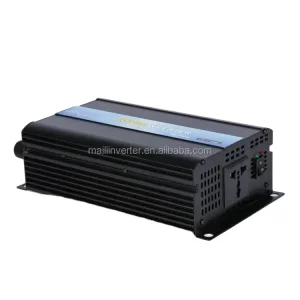
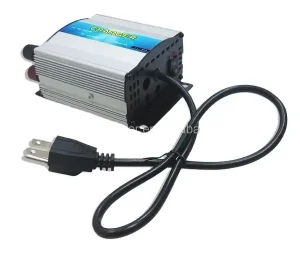
An in-depth analysis of power conversion dynamics, microgrid deployment, and B2B procurement standards across the Oriental Republic of Uruguay.
Uruguay stands out across Latin America as a global leader in energy decarbonization. Having transformed its national electricity matrix over the past decade, UTE (Administración Nacional de Usinas y Trasmisiones Eléctricas) routinely generates upwards of 98% of its electricity from renewable sources, predominantly combining wind power, hydroelectricity, and utility-scale solar photovoltaic (PV) arrays. However, this high penetration of intermittent variable renewable energy (VRE) introduces distinct electrical grid dynamics that directly dictate the design parameters for industrial battery chargers, power converters, and DC-AC inversion systems.
In municipal hubs such as Montevideo, and key agricultural regions including Salto, Paysandú, Colonia, and Punta del Este, commercial infrastructure relies heavily on automated, uninterrupted DC power supplies. Because rural feeders experience localized voltage sags and harmonic distortions during periods of high wind feed-in or peak agricultural pump operations, imported DC-AC battery chargers must incorporate ultra-wide AC input operating ranges (typically 170V AC to 265V AC at 50 Hz) alongside dynamic power factor correction (PFC > 0.98).
Industrial electrification in Uruguay spans several core verticals, each demanding customized DC voltage architectures and robust thermal management:
Understanding the topological innovations, semiconductor upgrades, and software control loops that drive modern industrial battery chargers.
By transitioning from legacy Silicon MOSFETs to Silicon Carbide (SiC) and Gallium Nitride (GaN) switching components, conversion efficiency reaches up to 95% while drastically reducing magnetic core size and thermal dissipation requirements.
Advanced 32-bit MCU control loops dynamically manage Constant Current (Bulk), Constant Voltage (Absorption), and Maintenance (Float) stages, preventing overcharging and extending LiFePO4/Lead-Acid battery cycle life by up to 35%.
Integrated isolated toroidal transformer options, galvanic isolation (>1500V AC), short-circuit auto-recovery, reverse polarity protection, and active temperature sensor probes guarantee zero downtime in isolated Uruguayan field stations.
Engineers and procurement teams in Uruguay evaluating factory direct options can reference the hardware and control characteristics below across typical market application tiers:
| Parameter / Feature | Commercial Automotive (12V) | Heavy Industrial & Marine (24V) | Telecom & Off-Grid Solar (48V) |
|---|---|---|---|
| Nominal AC Input | 110V / 220V AC ±15%, 50/60Hz | 220V AC Single Phase (180-260V) | 220V / 230V AC ±10%, 50Hz |
| Rated DC Output Current | 10A / 20A / 30A / 50A | 30A / 40A / 60A | 20A / 40A / 80A |
| Supported Battery Chemistries | Lead-Acid, GEL, AGM, Wet | AGM, GEL, LiFePO4, Lithium-Ion | LiFePO4, LTO, Custom BMS Profiles |
| Power Factor (PFC) | > 0.92 Active PFC | > 0.98 Active PFC | > 0.99 Industrial PFC |
| Conversion Topology | High Frequency PWM / Switch Mode | HF Forward / Bridge Converters | Low Frequency Toroidal / HF Hybrid |
| Communication Interfaces | LED Status / LCD Panel | RS485 / CAN-Bus / LCD Screen | Modbus RTU / CAN / SNMP Gateway |
| Protection Rating | IP20 / IP30 Ventilated Chassis | IP32 / IP65 Conformal Coated | IP65 Anodized Aluminum Enclosure |
Deploying specialized battery chargers and inverter systems to solve real-world electrical and environmental challenges.
In departments like Tacuarembó, Rivera, and Cerro Largo, extensive agricultural land requires continuous power for electric fences, livestock water pumps, and grain storage ventilation. Utility lines can be distant or cost-prohibitive to extend. The deployed power architecture pairs localized solar PV panels with our 3-Stage 12V/24V 30A Intelligent Battery Chargers and pure sine wave inverters. During daytime solar surplus or generator operation, the smart charger replenishes deep-cycle AGM or LiFePO4 battery banks under dynamic temperature compensation. When grid AC power drops, automated switch-over circuits engage in under 10 milliseconds, ensuring uninterrupted operations for automated feeding and monitoring systems.
Operating near maritime environments such as the Port of Montevideo and Port of Nueva Palmira subjects electrical systems to salt fog, high humidity, and thermal cycling. Standard off-the-shelf commercial chargers suffer rapid component oxidation, lead leg corrosion, and early electrolyte degradation. Our marinized 24V 30A/40A Heavy-Duty Chargers utilize heavy aluminum alloy extrusion heat sinks, stainless steel fasteners, and triple-proof conformal acrylic coating over all SMT component arrays. Integrated dual-output terminal banks allow primary starter batteries and secondary house battery banks to be charged independently without cross-discharge risks.
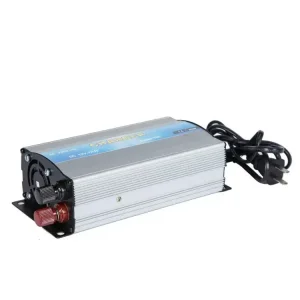
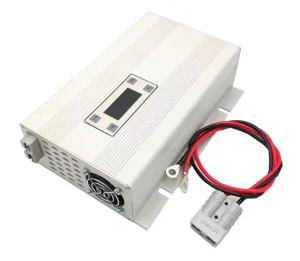
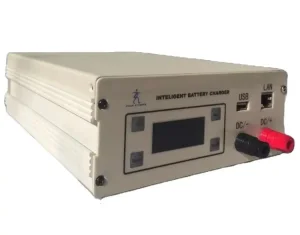
Uruguayan emergency response vehicles, ambulances, and mobile service trucks require rapid recharge capabilities while connected to 220V depot shore power. Our high-amp battery chargers (such as the 12V 50A EV/Vehicle charger models) feature programmable current limiting. This prevents tripping weak branch breakers while pushing maximum safe bulk current into onboard lithium or AGM auxiliary batteries. Integrated USB communication and smart LCD displays give operators real-time visibility into state-of-charge (SoC), voltage absorption thresholds, and fault diagnostics.
Navigating Uruguayan standards, customs clearance, and long-term B2B procurement security.
Importers, municipal contractors, and commercial distributors bringing electrical appliances and industrial power equipment into Uruguay must comply with national regulatory frameworks established by URSEA (Unidad Reguladora de Servicios de Energía y Agua). Chargers and DC power conversion devices must satisfy stringent dielectric insulation tests, low radio frequency interference (EMC/EMI compliance under IEC/EN 61000 standards), and electrical shock protection guidelines aligning with UNIT (Instituto Uruguayo de Normas Técnicas) specifications.
All factory direct exports from our manufacturing facility undergo rigorous pre-shipment quality auditing. Units come equipped with comprehensive CE, RoHS, and SGS test certificates, accompanied by step-down voltage isolation testing documentation to ensure seamless approval by local Uruguayan customs and certification authorities.
Logistics into Uruguay typically route through the deep-water hub of Montevideo Port or via overland freight connections across the MERCOSUR regional trade zone (connecting Brazil and Argentina). To minimize transit damage from maritime salt air during ocean voyages from Ningbo/Shanghai ports, all chargers are shipped in IP30 to IP65 compliant inner packaging, wrapped in moisture-barrier vacuum foil, and packed inside double-walled reinforced corrugated cartons stacked on standardized heat-treated export pallets.
Inside our ISO 9001:2015 certified Suzhou facility: From SMT automated assembly lines to 100% full-load burn-in testing.
High-speed Yamaha surface-mount technology (SMT) lines combined with Automated Optical Inspection (AOI) guarantee zero solder bridging or component misplacement on critical charger driver boards.
Every single manufactured DC-AC charger undergoes a rigorous 100% full-load burn-in aging test inside environmental chambers at 45°C ambient temperature before final packaging sign-off.
We offer customized AC/DC voltage parameters, bespoke casing colors, custom branded aluminum faceplates, localized LCD language options (Spanish/English), and proprietary charging curves.
By leveraging direct raw material supply contracts with tier-1 semiconductor foundries, copper transformer wire mills, and high-temperature capacitor producers in China, our manufacturing hub delivers an unbeatable balance of cost-efficiency, technical sophistication, and supply chain scalability. Global enterprise clients in South America gain direct factory-floor access without middleman markup, supported by dedicated B2B engineering project managers.
How Uruguayan importers, distributors, and system integrators maximize ROI and lifecycle reliability.
When selecting a supplier for DC AC battery chargers and pure sine wave inverters, purchase price represents only a fraction of total life-cycle expenditure. Low-quality chargers with inadequate heat dissipation, poor power factor components, or sub-standard capacitors frequently fail prematurely, causing catastrophic battery bank degradation or thermal runaway.
Our engineering framework addresses TCO across three fundamental pillars:
Direct answers to technical, regulatory, and logistics queries from B2B buyers in South America.
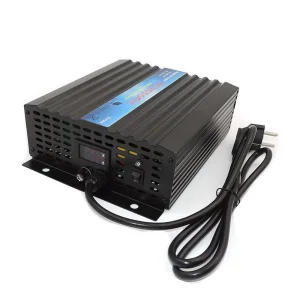
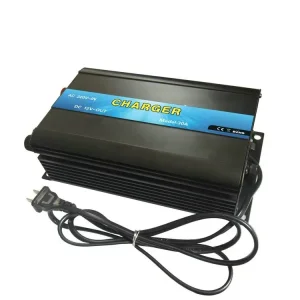
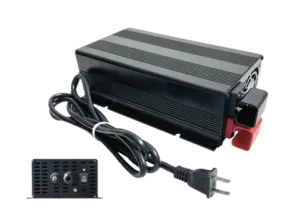
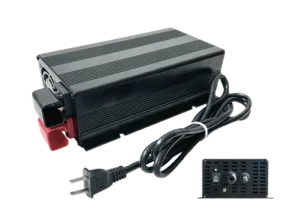
Comprehensive DC-AC conversion systems engineered for reliability across commercial, marine, solar, and automotive applications in Uruguay.
Get direct factory pricing, comprehensive OEM/ODM support, and fast containerized shipping directly to Montevideo. Contact our South American B2B sales team today.
Send Inquiry Now