


High-performance DC voltage conversion, charging intelligence, and dual-battery isolation units optimized for European grid standards, Euro 6/6d vehicle alternators, and tough North Sea marine conditions.
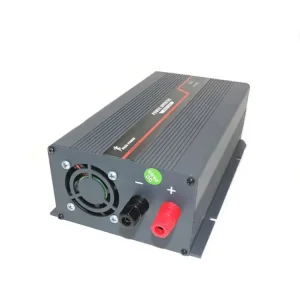
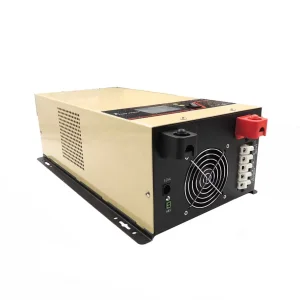
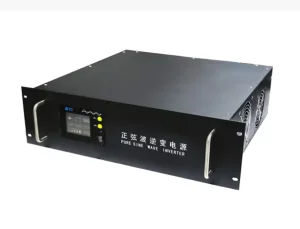
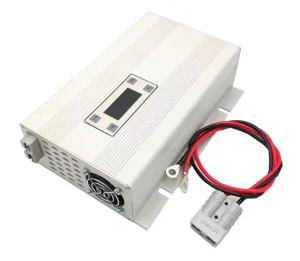
Understanding the unique technical demands, logistics density, and strict regulatory environment governing secondary battery isolation systems across the Benelux region.
Belgium occupies a central position within the European economy, functioning as a primary hub for international trade, logistics, cross-border road freight, and maritime operations. The Port of Antwerp-Bruges, alongside the industrial waterways of Ghent and Liege, forms a dense infrastructure network requiring heavy-duty, highly dependable mobile electrical infrastructure. Within this ecosystem, dual battery isolators serve a critical, non-negotiable role across commercial transport fleets, municipal emergency services (police, fire, EMS across Flanders and Wallonia), refrigerated cold-chain transport vans, marine vessels, and an expanding leisure/campervan conversion industry.
As European bodybuilders and commercial vehicle upfitters modernise their transport assets, the demand for dual battery management hardware has evolved beyond rudimentary mechanical relays. The Belgian market, governed by strict European Union carbon emission mandates and European Road Safety regulations, heavily mandates the integration of Smart Alternators (Euro 6, Euro 6d-TEMP, and emerging Euro 7 standards). Traditional diode isolators—which suffer from severe forward voltage drops ($0.7\text{V}$ to $1.2\text{V}$)—are no longer viable for modern vehicles. When starter battery charge levels drop, or when regenerative braking systems dynamically lower alternator output voltage down to $12.2\text{V}$, legacy isolation relays disengage unexpectedly or fail to charge secondary auxiliary batteries (such as Lithium Iron Phosphate - $\text{LiFePO}_4$ banks or AGM Deep Cycle units).
Furthermore, Belgium’s geographical proximity to the damp, salty North Sea maritime climate necessitates superior environmental protection standards. Industrial dual battery isolators deployed in Belgian utility service trucks or canal barges must feature hermetically sealed epoxy encapsulation, stainless steel terminal studs, and compliance with ISO 8846 Ignition Protection and ECE R10 Electromagnetic Compatibility standards. Exporters targeting the Benelux market must deliver proven hardware that bridges high-current switching capacity with zero thermal degradation under enclosed engine bay ambient temperatures exceeding $+85^\circ\text{C}$.
A rigorous technical evaluation comparing legacy Diode Isolators, Voltage Sensitive Relays (VSR), Solid-State MOSFET Switches, and DC-DC Battery Chargers for modern Benelux fleets.
| Isolation Technology | Voltage Drop Range | Euro 6 Smart Alternator Fit | LiFePO4 Chemistry Fit | Thermal Dissipation Efficiency | Ideal Belgium Application |
|---|---|---|---|---|---|
| Legacy Diode Splitters | 0.7V – 1.2V (High Loss) | Incompatible (Undercharges) | Unsuitable (Causes Cell Imbalance) | Poor ($P = I \times 0.7\text{V}$ Heat) | Legacy 12V/24V Industrial Equipment |
| Microprocessor VSR Relay | < 0.05V (Contact Resistance) | Conditional (Needs Ignition Wire) | Moderate (Requires BMS Cutoff) | Excellent (Minimal Coil Current) | Overland 4x4s, Utility Vans, RVs |
| Solid-State MOSFET Isolator | < 0.01V – 0.03V (Near Zero) | High (Bi-directional Smart Sensing) | High (Zero Voltage Drift) | Superior (Ultra-low $R_{DS(on)}$) | Emergency EMS, Police, Marine Fleet |
| DC-DC Smart Charger / Isolator | Voltage Regulated (Buck-Boost) | Optimal (Full Dynamic Isolation) | Optimal (Custom Multi-Stage Profile) | Active Fan / Heatsink Cooled | Commercial Fleets, Cold-Chain, LiFePO4 |
In traditional dual battery systems, diode-based isolators split current from the alternator to two independent batteries. However, silicon diodes exhibit an intrinsic forward voltage drop according to the Shockley diode equation:
$I = I_S \left( e^{\frac{qV}{nKT}} - 1 \right)$
At high charging currents (e.g., $150\text{A}$), a $0.8\text{V}$ voltage drop across a traditional diode results in over $120\text{W}$ of wasted energy converted purely into heat. More critically, an alternator output regulated to $14.2\text{V}$ delivers only $13.4\text{V}$ to the auxiliary battery. This permanently prevents AGM and Lead-Acid batteries from reaching $100\%$ State of Charge ($\text{SoC}$), causing rapid sulfation and battery capacity decay.
To eliminate thermal losses and voltage starvation, modern dual battery isolators manufactured for the Belgian market utilize high-current, low-resistance N-channel MOSFET arrays arranged in back-to-back configurations. With switch-on drain-to-source resistance ($R_{DS(on)}$) values as low as $0.3\text{ m}\Omega$, static power loss is virtually eliminated ($P = I^2 R$).
Integrated microcontrollers continuously sample starter battery terminal voltage at sampling frequencies above $1\text{kHz}$. When the engine starts and alternator voltage rises above the engage threshold ($13.3\text{V}$ for 12V systems / $26.6\text{V}$ for 24V systems) for a debounce delay of 5 seconds, the isolator closes the solid-state circuit, allowing seamless parallel charging. Conversely, when the engine shuts down and starter voltage drops below the disengage threshold ($12.8\text{V}$ / $25.6\text{V}$), the isolator breaks the connection in less than $10\text{ms}$, isolating the starter battery completely from auxiliary accessory loads.
Analyzing Euro 6d Smart Alternators, Lithium Iron Phosphate ($\text{LiFePO}_4$) transition, and telemetry integration across Belgian commercial transport sectors.
Belgian fleets equipped with modern Mercedes-Benz Sprinter, Ford Transit, and MAN TGE vans utilize smart alternators controlled by ECU regenerative braking routines. Alternator voltage routinely plunges down to $12.0\text{V}$ during acceleration. Advanced isolators incorporate dedicated ignition-sense control wires ($D+$ lines) to maintain smart charging connectivity regardless of transient alternator voltage dips.
Belgian campervan builders, emergency service vehicle fabricators, and mobile service workshops are replacing heavy lead-acid auxiliary banks with high-density Lithium ($\text{LiFePO}_4$) batteries. Dual battery isolators exporting to Belgium must feature low-temperature charge cut-off logic (protecting cells below $0^\circ\text{C}$ in Belgian winters) and high-inrush current dampening to prevent tripping Lithium Battery Management Systems ($\text{BMS}$).
Fleet operators managing logistics corridors across Flanders and Wallonia require real-time monitoring. Modern dual battery isolators now incorporate LIN-bus or CAN-bus (SAE J1939) communication interfaces, broadcasting voltage, charge current, fault diagnostic codes, and thermal status directly to central vehicle telematics portals.
Proven engineering deployments resolving complex auxiliary electrification challenges across key commercial sectors in Belgium.
Refrigerated delivery vans operating along the Antwerp-Brussels-Charleroi industrial belt rely heavily on auxiliary power to sustain active cooling compressors during off-engine unloading stops at supermarkets and pharmaceutical distribution hubs.
Belgian emergency response vehicles carry high-drain electrical gear including defibrillators, mobile command radio relays, high-intensity scene lighting, and hydraulic extraction tools. Auxiliary power failure during a mission is unacceptable.
Commercial tugs, fishing vessels, and private yachts navigating the North Sea Coast (Ostend, Zeebrugge) and inland rivers encounter salt-spray corrosion and high humidity environments that cause rapid oxidation in standard relays.
Belgium’s booming recreational vehicle market across the Ardennes region has created immense demand among OEM campervan manufacturers for sleek, compact dual battery management units that integrate seamlessly with solar panel regulators.
Ensuring seamless import clearance, regulatory compliance, and bulletproof reliability for Belgian automotive bodybuilders and electrical wholesalers.
Exporting electrical power hardware into the Kingdom of Belgium requires strict adherence to European Union safety directives and regional automotive standards. Products marketed without official testing and compliance certification face severe customs holding risks at Belgian port facilities and potential product liability exposure for system integrators.
To support high-volume Belgian importers, our manufacturing facility operates under a certified ISO 9001:2015 Quality Management System. Every dual battery isolator undergoes automated optical inspection (AOI), thermal shock cycling from $-40^\circ\text{C}$ to $+85^\circ\text{C}$, dynamic load testing at $120\%$ rated continuous current, and a 100% full-load burn-in process before final packaging and shipping.
| Quality Verification Phase | Testing Protocol & Parameter | Standard Achieved |
|---|---|---|
| Ingress Protection Testing | High-pressure salt-water jet immersion and dust exposure | IP67 / IP68 Hermetically Sealed |
| Vibration & Shock Endurance | 3-Axis sinusoidal vibration test (10Hz – 500Hz) | MIL-STD-810G / Automotive Grade |
| Thermal Shock Resistance | 100 Cycles of rapid thermal transition ($-40^\circ\text{C} \leftrightarrow +105^\circ\text{C}$) | Zero Component Delamination |
| Transient Surge Protection | ISO 7637-2 Pulse 1, 2a, 3a, 3b load dump protection | Suppression of up to +100V Spikes |
A forward-looking perspective on Gallium Nitride (GaN) power switching, AI predictive battery health algorithms, and microgrid power sharing for European fleets.
Replacing traditional Silicon MOSFETs with wide-bandgap GaN semiconductors reduces switching losses by up to $80\%$, enabling dual battery isolators to shrink in physical size by $50\%$ while operating safely in ambient temperatures reaching $+105^\circ\text{C}$ without active fan cooling.
Future smart isolators will integrate edge-AI microcontrollers that measure subtle dynamic changes in internal battery resistance ($R_{int}$) during charge coupling. Fleet managers will receive automated maintenance alerts before starter or auxiliary batteries experience sudden cell failure.
As commercial transport transitions toward full electrification, secondary battery management systems will evolve into smart bidirectional micro-inverters. They will facilitate Vehicle-to-Load (V2L) energy export from primary EV traction batteries to auxiliary tool systems without compromising main drive range.
Clear, authoritative answers addressing engineering, compliance, installation, and procurement queries from Belgian distributors and fleet operators.
Explore our complete catalog of industrial pure sine wave inverters, solar MPPT converters, and intelligent multi-stage battery chargers supplying global B2B procurement partners.
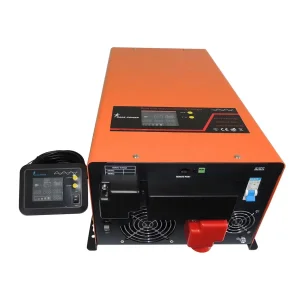
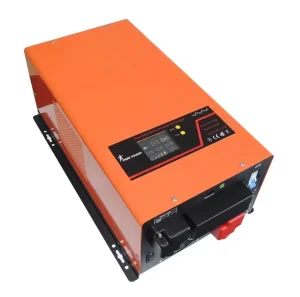
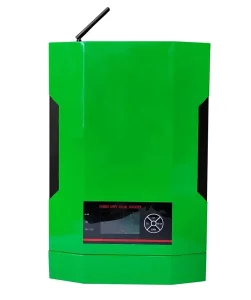
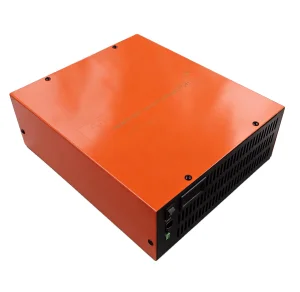
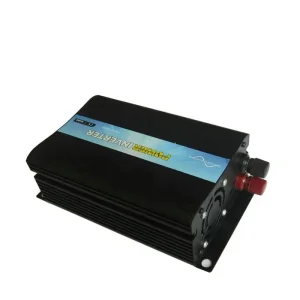
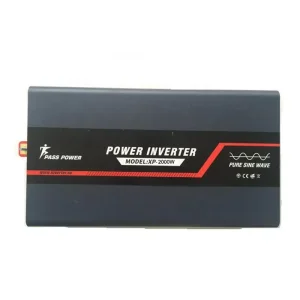
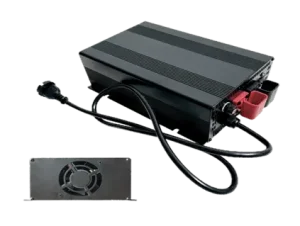
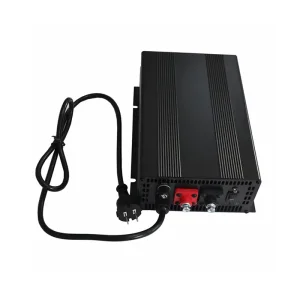
Partner directly with a leading power electronics exporter to supply high-reliability Dual Battery Isolators, Inverters, and Chargers for the Belgium and broader Benelux market. Receive engineering drawings, bulk pricing tiers, and test samples within 48 hours.
Send Inquiry Now