


Engineered to comply with Singapore's stringent maritime standards and urban transport electrification requirements.
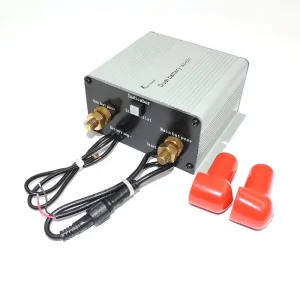
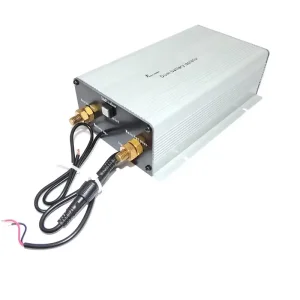
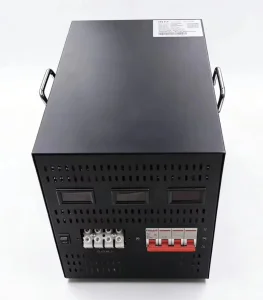
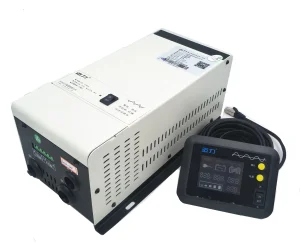
As Southeast Asia’s primary maritime hub and smart urban mobility pioneer, Singapore imposes rigorous thermal, safety, and operational requirements on auxiliary energy management hardware.
Singapore's strategic economic focus on maritime logistics, offshore energy services, emergency fleet responsiveness, and rapid commercial vehicle electrification has created a unique micro-market for advanced DC power distribution. Operating under relentless tropical heat (ambient temperatures averaging 32°C–34°C with 85%–95% relative humidity), standard dual battery switches and mechanical relays suffer from thermal fatigue, contact pitting, and parasitic voltage drops.
Dual battery isolators—acting as automated traffic controllers between primary engine starter batteries and secondary service (auxiliary) banks—must maintain unbroken isolation during engine craning while maximizing alternator charge efficiency. In Singapore’s high-density maritime zones like Tuas Mega Port, Marina South Pier, and Sentosa Cove, marine vessel operators and commercial logistics fleets require zero-drop intelligent isolators to prevent starter drain without overcharging sensitive LiFePO4 (Lithium Iron Phosphate) auxiliary banks.
Designed with high-density aluminium heat-sink housings and silicone epoxy encapsulation to thrive in Singapore’s 90%+ humidity without thermal throttling.
Advanced MOSFET solid-state design eliminates the 0.6V-0.8V voltage drop inherent in diode isolators, ensuring auxiliary batteries receive full alternator charge voltage.
Smart voltage threshold detection algorithms accommodate mixed-chemistry setups (e.g., Lead-Acid starter + Lithium LiFePO4 house battery) with zero cross-leakage.
Understanding the operational tradeoffs between Voltage Sensitive Relays (VSR), Solid-State MOSFET Isolators, and Buck-Boost DC-DC Chargers in Singapore's commercial transport & marine sectors.
| Parameter / Feature | Voltage Sensitive Relay (VSR) | Solid-State FET Isolator | Smart DC-to-DC Battery Charger |
|---|---|---|---|
| Voltage Drop Across Terminals | 0.00V (Mechanical contacts) | < 0.02V (Ultra-low Rds(on) MOSFETs) | Regulated variable output |
| Continuous Current Range | 120A – 400A Surge Handling | 100A – 300A Continuous | 25A – 60A Controlled output |
| Lithium (LiFePO4) Support | Requires specific dual sense cut-out | Full bi-directional voltage sensing | Multi-stage programmable curves |
| Ignition Feed Requirement | No (Automatic voltage sensing) | Optional ignition sense control | Recommended for smart alternators |
| Singapore Climate Reliability | High (Sealed IP65 relay housings) | Maximum (Solid-state IP67 potted) | Medium (Requires cooling fan vents) |
| Primary Ideal Applications | Commercial Trucks, Marine Barges | Luxury Yachts, Emergency Vans | Euro 6 Smart Alternator EV conversions |
Engineering Note for Singapore System Designers: Modern commercial fleets and marine craft across Singapore are increasingly adopting Euro 6 compliant engines and smart alternators (which dynamically drop output voltage to zero while coasting). Traditional mechanical VSRs may disengage unexpectedly under these conditions. Suzhou Maili’s BS-173 series dual battery isolators integrate intelligent Microcontroller Units (MCU) that measure rate-of-change in system voltage rather than absolute thresholds, preventing false disconnections while guaranteeing the primary starter battery never falls below 12.6V (or 25.2V on 24V marine networks).
Custom-engineered isolation solutions deployed across Singapore’s maritime, logistics, utility, and municipal infrastructure.
Operating around Keppel Harbour and Jurong Island, tugboats and passenger launches utilize 24V 400A dual battery isolators to keep radar, marine radio, and bilge pumps powered on dedicated auxiliary banks without compromising engine re-start capabilities.
Refrigerated delivery trucks operating out of Changi Logistics Centre rely on zero-drop dual battery management to supply tail-lift hydraulics and temperature sensors, keeping auxiliary lithium power packs isolated during engine idling.
Emergency medical services (ambulances) and police command vehicles fitted with high-draw defibrillators, mobile lighting towers, and communications hardware use Maili’s BS-173 isolators for automated dual-battery charge prioritization.
Suzhou Maili Electrical Appliance Co., Ltd. (Pass Power) delivers factory-direct pricing, rapid OEM customization, and 4-to-7 day ocean shipping directly to the Port of Singapore.
Located in Suzhou’s advanced industrial belt, Maili operates an ISO 9001:2015 certified manufacturing facility spanning over 2,770m². Every Dual Battery Isolator and Power Inverter undergoes rigorous multi-stage testing:
Where battery isolation, CAN-bus integration, and wide-bandgap semiconductors are heading in Southeast Asia.
Next-gen isolators are incorporating NMEA 2000 and CAN-bus protocols, streaming real-time battery State of Charge (SoC), temperature, and relay state directly to boat chartplotters or vehicle fleet management software.
Transitioning from silicon MOSFETs to GaN semiconductors reduces internal resistance by 70%, permitting ultra-compact 300A isolators with zero active fan cooling required inside cramped boat engine compartments.
Enabling automated bi-directional jump-starting, allowing auxiliary house batteries to boost an engine starter battery with a single push-button remote switch inside the driver cab or marine bridge.
Explore Maili's expanded range of high-efficiency inverters, solar controllers, and dual battery switches suitable for Singapore distributors and engineering contractors.
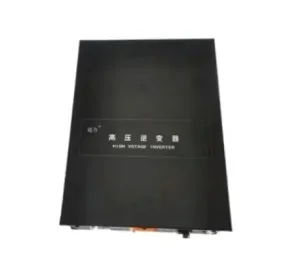
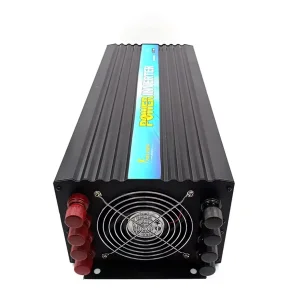
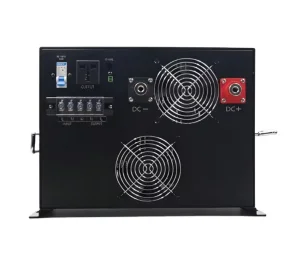
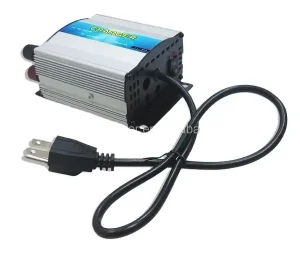
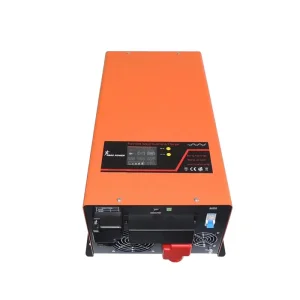
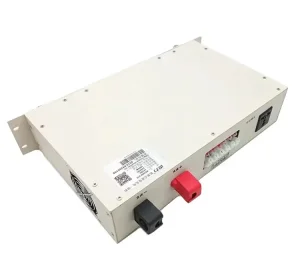
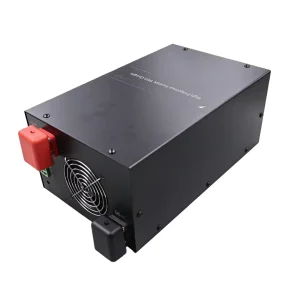
Partnering with Suzhou Maili ensures seamless local compliance, comprehensive technical documentation, and dedicated commercial warranty backing.
All isolators and inverters comply with Land Transport Authority (LTA) electrical modification guidelines for road vehicles and Singapore Maritime and Port Authority (MPA) safety recommendations for small harbor craft.
Printed Circuit Boards (PCBs) are treated with military-grade polyurethane conformal coatings to safeguard delicate micro-electronics against airborne salt corrosion in marine coastal applications.
Supported by advance-replacement component dispatch and direct engineering technical support via email, phone, and video consultations for Singapore system integrators.
Key engineering queries answered regarding dual battery isolator installation, lithium compatibility, and marine deployment.
A Voltage Sensitive Relay (VSR) uses a magnetic coil to physically close mechanical contactors when the main alternator reaches cut-in voltage (typically 13.3V). A solid-state isolator uses high-power MOSFET transistors to route current electronically. Solid-state isolators offer faster switching (<1ms), zero moving parts (immune to road/wave vibration), and lower heat generation, making them ideal for high-humidity Singapore marine applications.
Yes. Maili BS-173 intelligent isolators feature customizable voltage cut-in (13.3V) and cut-out (12.8V) logic. Because lithium batteries maintain a higher rest voltage (~13.2V) than AGM/Lead-Acid (~12.6V), our dual-sensing microprocessor prevents reverse current discharge from the house lithium bank back into the starter battery when the engine is turned off.
The isolator must be rated equal to or higher than the maximum continuous output amperage of your engine alternator. For example, if your vehicle or boat features a 180A alternator, a 200A isolator (such as the BS-153) is required. For heavy industrial workboats with twin alternators or 300A high-output units, our 400A BS-173 model provides adequate safety margin.
Yes. Our manufacturing facilities are ISO 9001:2015 certified, and products carry CE, RoHS, and CB certifications. We supply full technical dossiers, wiring schematics, and test reports to support local Singapore clearance and LTA vehicle inspection procedures.
Standard off-the-shelf isolators ship within 3–5 business days. Custom OEM orders (custom voltage thresholds, specialized wire harnesses, private labeling) typically require 15–20 manufacturing days. Transit via fast sea freight from Shanghai to Port of Singapore takes 4–6 days.
Looking to source dual battery isolators, power inverters, or custom power distribution units for your Singapore marine dealership, fleet modification center, or solar contracting business? Contact our engineering sales team today.
Send Inquiry Now