
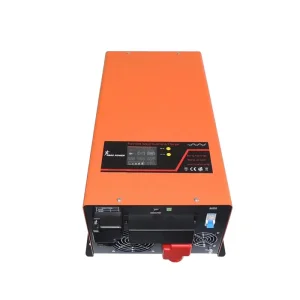


Selected low-frequency pure sine wave and high-frequency power units engineered for industrial resilience, surge capability, and extreme operational reliability.
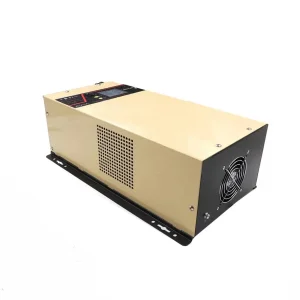
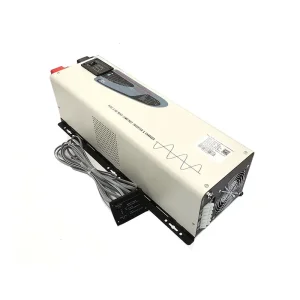
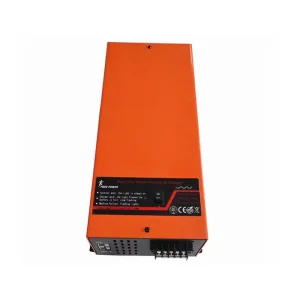
As the Pacific Northwest transitions into advanced decarbonization, maritime electrification, and edge-data backup systems, sourcing industrial-grade DC-to-AC power topologies requires deep analysis of energy conversion dynamics and supply chain resilience.
The Greater Seattle metropolitan area—spanning King, Snohomish, and Pierce counties—presents a unique dual energy challenge. On one hand, high-density tech corridors demand flawless uninterruptible power supplies (UPS) and zero-harmonic interference for edge computing equipment. On the other hand, maritime applications along Puget Sound and off-grid remote developments in the Cascade Mountains require high-surge, ruggedized low-frequency inverters (300W to 6000W) capable of starting heavy inductive loads like bilge pumps, compressors, and power tools under severe environmental stress.
While local Seattle equipment integrators excel at system assembly, procuring raw inverter hardware directly from Tier-1 manufacturing hubs in Suzhou, China delivers a vital economic and technological advantage. By marrying Chinese manufacturing efficiency, vertical integration, and rapid R&D prototyping with localized US grid-compliance standards (UL 1741, IEEE 1547, and NEC 2023), Pacific Northwest enterprises achieve optimal total cost of ownership (TCO) without compromising operational uptime.
Choosing the correct power switching architecture is crucial for system longevity. The trade-off between switching frequency, transformer topology, thermal dissipation, and inductive surge handling dictates field reliability.
| Architecture Parameter | High Frequency (HF) Inverters (300W–8000W) | Low Frequency (LF) Toroidal Inverters (300W–6000W) |
|---|---|---|
| Primary Transformer Topology | Compact Ferrite-Core High-Frequency Transformer | Heavy-Duty Grain-Oriented Toroidal Iron-Core Transformer |
| Switching Frequency | 20 kHz – 100 kHz (Fast MOSFET / IGBT Switching) | 50 Hz / 60 Hz (Line-Frequency Conversion) |
| Surge Handling Capacity | 1.5x to 2x Rated Power (Short-duration < 20ms) | 3x Rated Continuous Power (Sustained up to 20 Seconds) |
| Inductive Load Compatibility | Moderate (Sensitive to back-EMF spikes from motors) | Exceptional (Absorbs heavy motor start spikes, compressors, pumps) |
| Total Harmonic Distortion (THD) | < 3% Pure Sine Wave (Digitally Filtered) | < 2.5% Ultra-Clean Pure Sine Wave (Natural Magnetic Filtering) |
| Weight & Form Factor Density | Ultra-Lightweight, High Power Density (Ideal for Tight Vans/RVs) | Robust, Heavier Mass (Ideal for Stationary, Marine & Heavy Trucks) |
| Thermal & Overload Resilience | Requires Fast Active Cooling; Sensitive to High Ambient Heat | High Thermal Mass; Extremely Forgiving under Sustained Overloads |
High-frequency inverters utilize high-speed Pulse Width Modulation (PWM) to step up low-voltage DC to high-voltage DC (300V-400V) through compact ferrite transformers before converting it to AC output. This eliminates massive copper windings, making them exceptionally compact and efficient (up to 95%) for resistive loads, consumer electronics, telecom equipment, and light-duty mobile workstations throughout Seattle's urban tech sectors.
Low-frequency inverters operate directly at line frequency (50Hz/60Hz) using heavy toroidal transformers. When motor-driven equipment (such as a 2HP air compressor on a Seattle construction site or a refrigeration compressor on a Puget Sound fishing vessel) initializes, it draws instantaneous inrush currents up to 300% of nominal rating. The electromagnetic flywheel effect of the toroidal core absorbs these current spikes without voltage sag or MOSFET breakdown.
Customized inverter topologies tailored to the unique economic drivers of Western Washington state.
Salt-spray resistance and galvanically isolated DC-to-AC conversion are vital for commercial tugboats, ferries, and yacht refits across Elliott Bay and Lake Union. Our low-frequency 3000W–6000W inverter chargers feature conformal-coated PCBs, IP30/IP54 powder-coated enclosures, and built-in automatic transfer switches (ATS) that seamlessly bridge marine generator shore power and battery banks.
Seattle’s tech ecosystem demands zero-latency emergency backup power. High-frequency 3KW to 8KW pure sine wave inverters act as primary or secondary redundant power stages for off-grid edge servers, telecom towers in Bellevue, and emergency communications nodes, delivering pure sine output with THD under 2.5% to protect sensitive microprocessors.
From Seattle Fire Department support units to mobile utility repair trucks operating during winter storm outages, compact 300W–1500W wall-mounted inverter chargers supply clean AC power to power tool chargers, medical monitoring equipment, and field lighting directly from 12V/24V vehicle alternators.
As grid dynamics evolve toward decentralized renewable integration, next-generation inverter design is moving rapidly beyond basic DC-AC inversion.
Transitioning from traditional Silicon MOSFETs to Silicon Carbide (SiC) and Gallium Nitride (GaN) switching devices allows high-frequency inverters to operate above 200 kHz with thermal losses reduced by 40%. This technological shift dramatically reduces passive magnetics sizing while achieving 98%+ conversion efficiency in 3000W-6000W compact footprints.
Integrating machine learning microcontrollers within hybrid low-frequency solar inverters enables real-time impedance scanning of solar arrays during shaded Pacific Northwest winter conditions. Neural network models predict battery degradation, adjust 3-stage charge currents based on ambient temperature sensors, and transmit telemetry via IoT protocols.
Future iterations of 6KW split-phase low-frequency inverters incorporate bi-directional active front ends. This enables Vehicle-to-Grid (V2G) and Vehicle-to-Home (V2H) energy transfer, allowing commercial fleet vans across Seattle to operate as mobile battery energy storage systems (BESS) during utility grid load shedding events.
Meeting updated North American grid interconnection standards requires active power filtering, voltage-ride-through capability, and autonomous frequency regulation. Modern low-frequency hybrid units are equipped with programmable DSP platforms to automatically comply with localized utility rules like Seattle City Light and Puget Sound Energy (PSE) mandates.
Why partnering directly with an established Suzhou OEM/ODM inverter factory guarantees superior cost-performance ratio, high quality control, and rapid custom engineering.
Our ISO 9001:2015 Suzhou production facility integrates toroidal core winding, SMT PCB placement, metal sheet stamping, and harness assembly under one roof. By eliminating third-party sub-assembly markups, we deliver factory-direct pricing that provides Seattle distributors with a 25–40% margin advantage over localized US assemblers.
Every single inverter unit undergo a mandatory 4-hour full-load burn-in aging test inside high-temperature environmental chambers, followed by automated computer-controlled hi-pot safety testing, wave shape harmonic verification, and surge stress tests prior to export packing.
Whether you require custom DC input voltages (12V, 24V, 48V, up to 96V DC), specialized split-phase 110V/220V AC output sockets, private-label silk screening, customized LCD software interfaces, or unique communication protocols (CANbus/RS485), our dedicated R&D engineering team delivers functional prototypes in under 15 working days.
Ensuring international safety standards seamlessly cross over to Pacific Northwest regulatory mandates.
Our complete line of high-frequency and low-frequency power inverters carries extensive international certifications, including CE, RoHS, SAA, CB, and ISO 9001:2015. Products destined for North American deployment are designed to comply with UL 1741, FCC Class B electromagnetic interference limits, and National Electrical Code (NEC 2023) rapid shutdown and grounding requirements.
We provide comprehensive localized logistics support for Seattle buyers—including DDP (Delivered Duty Paid) shipping directly to warehouses in Tacoma, Kent, or Renton. Additionally, we back all enterprise shipments with spare parts kits, circuit board schematics, software programming tools, and 24/7 video engineering support for installation teams.
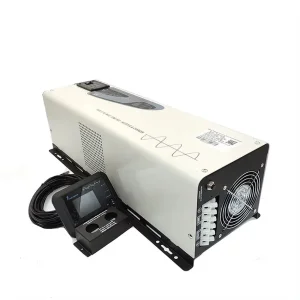
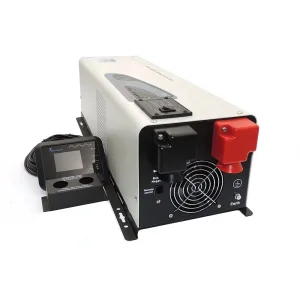
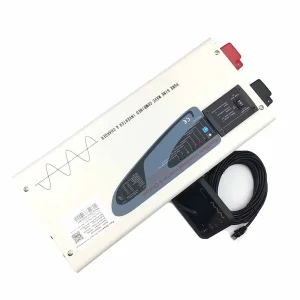
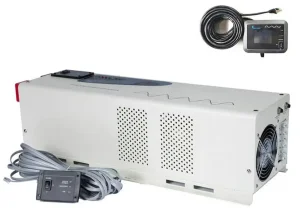
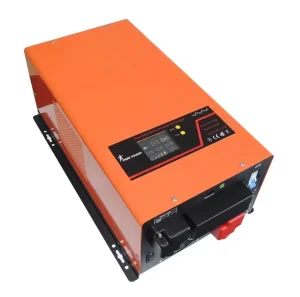
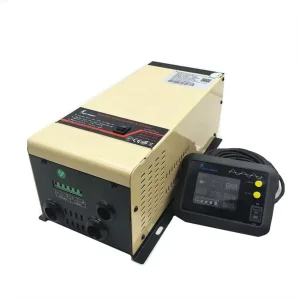
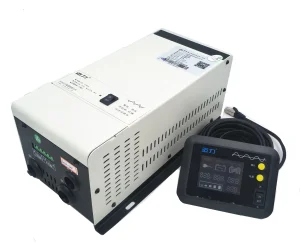
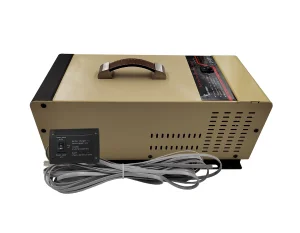
Browse our full catalogue of 300W to 6000W low-frequency transformers, hybrid solar MPPT chargers, and ultra-thin mobile vehicle converters.
Detailed answers to technical queries from Seattle engineering buyers, electrical contractors, and OEM partners.
Seattle maritime applications in Puget Sound often involve high inductive loads such as bilge pumps, anchor winches, air conditioning compressors, and heavy power tools. Low-frequency inverters utilize heavy toroidal transformers capable of sustaining 300% peak surge capacity for up to 20 seconds. This prevents inverter shutdown under massive motor starting loads and provides complete galvanic isolation between DC battery systems and AC vessel wiring.
To power a standard 13,500 BTU or 15,000 BTU roof-top RV air conditioner in Western Washington, a minimum 3000W pure sine wave low-frequency inverter charger with high surge rating is strongly recommended. The initial compressor lock-rotor amp (LRA) draw can briefly exceed 4500W, which a 3000W low-frequency unit absorbs effortlessly without tripping protection circuits.
Our Suzhou factory manufactures products adhering strictly to ISO 9001:2015 quality management protocols. Units built for export to the US market, including Seattle integrators, are engineered to align with UL 1741, FCC Class B EMC emission thresholds, and National Electrical Code (NEC 2023) standards. We provide full test documentation, CE certification reports, and factory inspection clearance prior to shipment.
Yes. All of our pure sine wave inverter chargers feature fully programmable, multi-stage smart battery charger profiles tailored specifically for LiFePO4 (Lithium Iron Phosphate) as well as AGM, Gel, and flooded lead-acid batteries. Charge voltages, cut-off thresholds, and low-voltage disconnect limits can be modified via custom LCD panels or factory firmware presets.
Standard production lead times for customized OEM inverter orders range between 15 to 25 days. Ocean freight transit directly from Ningbo/Shanghai ports to the Port of Seattle or Port of Tacoma typically takes 14 to 18 days. Express air freight options are available for prototyping within 5 to 7 business days.
Partner directly with a certified Tier-1 China inverter manufacturer. Request engineering drawings, custom OEM quotation, or full product catalogues for your Seattle projects.