


High-efficiency power conversion architectures designed to meet CSA and UL safety baselines across Southern Ontario manufacturing, healthcare, and telecommunications hubs.
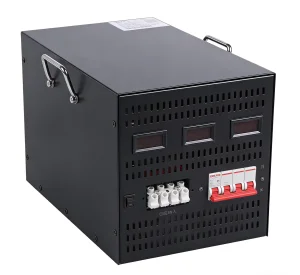
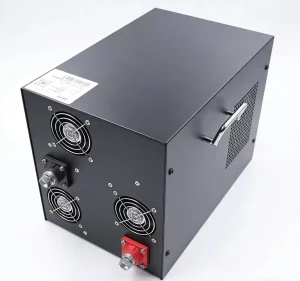
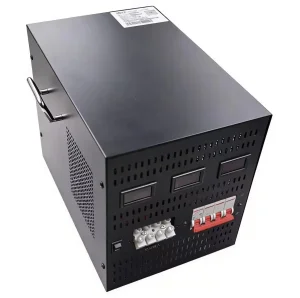
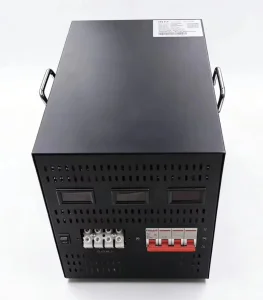
The Greater Toronto Area (GTA)—comprising the City of Toronto, Peel, York, Durham, and Halton regions—serves as Canada’s industrial and financial engine. As North America's third-largest cluster for manufacturing and technology, Toronto houses over 6,000 active manufacturing facilities across Mississauga, Brampton, Vaughan, Scarborough, and Etobicoke. The rapid electrification of transport fleets, continuous expansion of automated cold-storage logistics along the Highway 401 corridor, and aggressive microgrid deployments to offset Ontario’s rising Global Adjustment (GA) electrical charges have fundamentally shifted power dynamics for local facilities.
Unlike standard single-phase residential setups, Toronto’s commercial and light industrial infrastructure demands robust 3-phase AC power topologies (typically 120/208V, 277/480V, or stepped up to Ontario's prevalent 600V industrial distribution lines). Operating machinery such as heavy-duty CNC milling stations, high-capacity HVAC chillers, food processing conveyors, and sensitive data center UPS backups requires 3-phase pure sine wave inverters capable of managing severe inductive load surges, phase imbalance, and harsh ambient temperature shifts common to Canadian winters.
Information Gain Insight: Modern OEM 3-phase inverters engineered for Toronto must balance two distinct electrical realities: high transient surge protection for legacy 600V industrial motors, and ultra-clean digital sine wave modulation (<3% THD) to satisfy Hydro One and Alectra Utilities grid-interconnection harmonic standards under IEEE 519 and CSA C22.2 No. 107.1 guidelines.
How original manufacturers tailor 3-phase power inverter internal electronics to balance efficiency, weight, and extreme transient surge capacity.
When selecting a 3-phase inverter manufacturer for Toronto projects, mechanical and electrical engineering departments must evaluate the fundamental trade-offs between High-Frequency (HF) switching technology and Low-Frequency (LF) heavy-copper toroidal transformer platforms:
Low-frequency 3-phase inverters utilize massive line-frequency toroidal transformers to achieve complete galvanic isolation between the DC battery bank (12V, 24V, 48V, or high-voltage 380V DC) and the 3-phase AC output phases. This physical separation prevents DC leakage into sensitive equipment and provides unparalleled surge capability—often supporting 300% peak output for up to 10 seconds. For Toronto’s industrial plants in Brampton or Scarborough running heavy inductive motors, hydraulic pumps, or refrigeration compressors, LF toroidal inverters remain the gold standard for preventing nuisance tripping caused by high locked-rotor motor currents (LRA).
High-frequency 3-phase inverters replace bulky iron transformers with high-speed electronic switching circuits operating above 20 kHz. Utilizing advanced SiC (Silicon Carbide) MOSFETs or IGBT modules, HF inverters deliver compact footprints, minimal tare loss (idle consumption), and overall operational efficiencies exceeding 93-95%. They are ideal for space-constrained installations such as urban Toronto mobile medical clinics, broadcast units, telecommunications tower shelters, and distributed off-grid solar arrays paired with MPPT charge controllers.
Tailored 3-phase power solutions resolving real-world infrastructure challenges across Ontario’s diverse commercial landscape.
Continuous 3-phase power supplying commercial ammonia/freon cooling compressors during utility outages. Instantaneous automatic transfer switching (<10ms) prevents multi-million dollar perishable inventory loss without triggering voltage sags across phase lines.
Delivering uncompromised pure sine wave output with strict voltage regulation (±1%) for sensitive 3-phase CNC lathes, laser cutters, and robotic arms, eliminating harmonic distortion that causes micro-stuttering in automated tooling.
Heavy-duty off-grid 3-phase hybrid inverters integrating PV solar arrays, diesel generator backup, and lithium battery storage (LiFePO4). Built to operate flawlessly at extreme winter temperatures (-40°C) with conformal-coated PCB board protection.
Compact high-frequency split-phase to 3-phase power units mounted inside mobile command centers, utility repair trucks, and emergency service vehicles to operate heavy hydraulic rescue tools and diagnostic computers simultaneously.
As Ontario accelerates its power grid decarbonization targets and expanding electrification projects demand smarter power conversion technologies, 3-phase inverter manufacturing is entering a new era of intelligence and integration. OEM buyers and procurement managers servicing the Greater Toronto Area should align with factories pioneering the following technical vectors:
Transitioning from conventional 48V low-voltage battery banks to 380V/600V HVDC architectures reduces copper cable thickness by over 75%, significantly lowering installation labor costs and I²R thermal losses in large Toronto warehouse installations.
Modern 3-phase inverters now features native RS485, CAN bus, and Wi-Fi/Ethernet telematics, allowing facility engineers in Downtown Toronto to monitor per-phase load balancing, harmonic distortion levels, and battery state-of-health in real time via cloud platforms.
To avoid massive Ontario Global Adjustment tariff surges, smart 3-phase inverters automatically inject battery power into plant distribution systems during peak utility demand windows while maintaining zero-export capability to satisfy local utility net-metering caps.
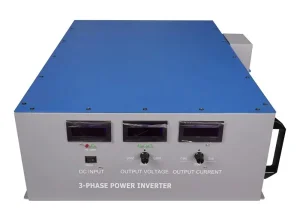
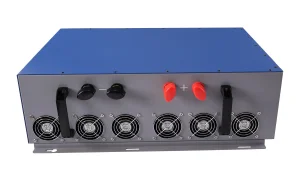
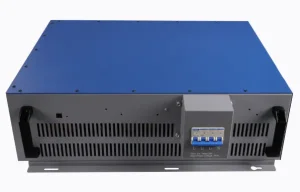
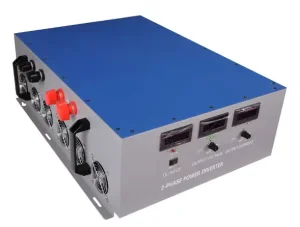
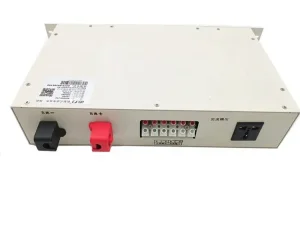
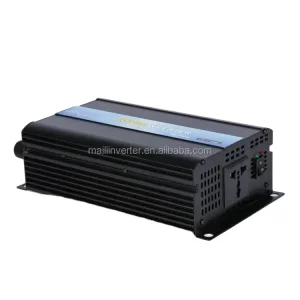
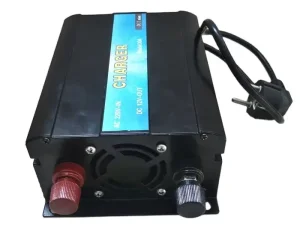
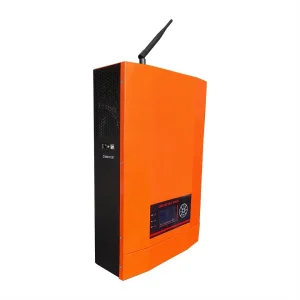
Direct factory supply of high-power 3-phase inverters, rack-mount systems, intelligent battery chargers, and solar controllers backed by ISO 9001:2015 quality control.
Direct technical answers from senior OEM power engineers addressing compliance, local grid integration, and thermal management.
Standard commercial services in Toronto typically supply 120/208V 3-phase or 347/600V 3-phase (prevalent in heavy industrial facilities across Ontario). Our factory offers direct output configuration in 3-phase 190V/380V or 208V/415V AC. For 600V Canadian industrial environments, our 3-phase inverters are seamlessly paired with step-up dry-type transformers, providing galvanic isolation while stepping up pure sine wave 208V/380V AC to match local 600V distribution panels without introducing phase angle distortion or neutral displacement.
In Canada, electrical equipment installed in commercial or industrial premises must meet safety standards established by the Canadian Electrical Code (CEC). Standard certification pathways include CSA C22.2 No. 107.1 (General Use Power Supplies) and UL 1741 for grid-tied/hybrid systems. While our global production lines carry international CE, CB, RoHS, and ISO 9001:2015 certifications, we fully support Toronto OEM clients and distributors with customized PCB layouts, field-labeling readiness, and pre-testing required for ESA (Electrical Safety Authority) Field Evaluation approval in Ontario.
Sub-zero temperatures (down to -40°C in Northern Ontario and winter GTA cold snaps) increase component stress and drastically lower lead-acid/lithium battery capacity. Our industrial 3-phase low-frequency inverters feature smart multi-stage temperature-compensated charging, thermal-controlled dual smart cooling fans, and conformal coating on electronic circuit boards to prevent condensation short-circuits during rapid ambient warming cycles.
Yes. In real-world Toronto factory settings, single-phase auxiliary equipment is often connected between one phase line and neutral, causing phase unbalance. Our 3-phase inverters utilize independent vector-control inverter bridges and a dedicated microcontroller to maintain phase-voltage regulation within ±2% even under up to 100% unbalanced load conditions on an individual phase.
We provide full structural and electronic OEM customization: DC input voltage tailoring (12V, 24V, 48V, up to high-voltage 380V DC), custom AC output sockets (NEMA L15-30, hardwire terminal blocks), personalized LCD display interface branding, adjustable charge current limits, CAN/RS485 communication protocols, and custom powder-coated chassis colors designed for your company’s private label program.
Direct factory pricing, custom engineering support, and rapid global logistics serving Toronto, the Greater Golden Horseshoe, and international energy markets. Speak with an application engineer today.
