


Designed to withstand extreme ambient temperatures up to 55°C and handle severe electrical surge loads, these primary systems provide localized energy autonomy across Omani residential, agricultural, and commercial sectors.
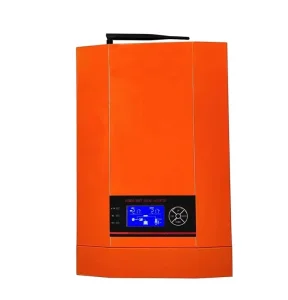
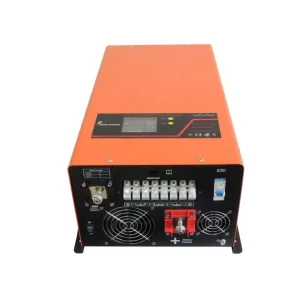
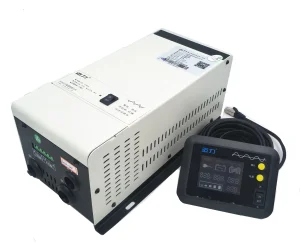
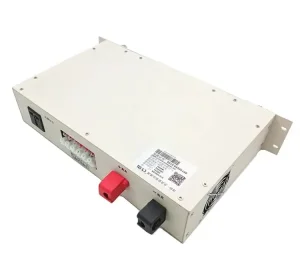
Under the ambitious framework of Oman Vision 2040, the Sultanate of Oman is undergoing a rapid structural transformation aimed at diversifying its national economy away from absolute hydrocarbon dependency. Central to this strategy is the aggressive adoption of renewable energy technologies, the expansion of green hydrogen initiatives, and the massive industrialization of key economic corridors such as the Special Economic Zone at Duqm (SEZAD), the Sohar Port and Freezone, and the Salalah Industrial Estate.
However, Oman's geographic topography—ranging from hyper-arid desert plains (Rub' al Khali perimeter) and rugged mountain ranges (Jebel Akhdar and Jebel Shams) to extensive coastal zones—presents distinct engineering challenges for power electronics. Grid distribution across remote interior regions often faces severe voltage drops, frequent harmonic distortions, and exposure to ambient temperatures exceeding 50°C during summer peaks.
Consequently, standard high-frequency inverters often experience high thermal derating and premature component failure in Omani operations. Low frequency inverters—built around heavy-duty copper toroidal transformers—have emerged as the definitive hardware standard for Omani commercial, agricultural, marine, and industrial off-grid deployment. Their unmatched thermal inertia, galvanically isolated architecture, and extraordinary peak surge capacity make them essential for sustaining uninterrupted power across critical national infrastructure.
Globally, the solar power market has seen a surge in lightweight, high-frequency (HF) switching inverters due to lower shipping weight and smaller form factors. While HF topologies excel in air-conditioned residential setups in temperate climates, they rely heavily on high-voltage MOSFETs and small ferrite cores that operate under extreme high-frequency stress. In Oman's ambient conditions, where dust accumulation reduces heat sink efficiency and ambient temperatures regularly hit 45°C–52°C, HF inverters face rapid capacitor degradation and thermal trip-outs.
Low Frequency (LF) pure sine wave inverters, by contrast, utilize a heavy iron-core toroidal transformer operating at the fundamental power frequency (50Hz/60Hz). This design provides a robust physical buffer between the DC battery bank and AC loads. Below is a detailed technical matrix highlighting why global EPCs and Omani exporters prioritize LF architecture for Gulf region projects:
| Electrical & Thermal Metric | High Frequency (HF) Inverters | Low Frequency (LF) Toroidal Inverters | Oman Field Impact & Advantage |
|---|---|---|---|
| Surge Capacity Rating | 150% – 200% for < 2 seconds | 300% – 500% for up to 20 seconds | Crucial for starting heavy air conditioners, deep-well pumps, and compressors without inverter shutdown. |
| Thermal Resilience at 50°C | Rapid linear power derating (up to 40%) | High thermal mass; minimal derating (<15%) | Sustains rated operational output in non-air-conditioned outdoor enclosures and desert installations. |
| Galvanic Isolation | Transformerless or high-frequency link (No full isolation) | Full physical isolation via heavy copper windings | Protects battery storage systems and sensitive control electronics from lightning surges and grid feedback spikes. |
| Tolerance to Dusty/Sandy Environments | High fan velocity increases particulate ingress | Lower airflow required due to massive passive heat absorption | Significantly reduces internal short-circuit risk from fine Omani silica dust accumulation. |
| Lifespan in Middle East Ambients | 3 to 5 Years under continuous load | 10 to 15+ Years under continuous load | Dramatically lowers Total Cost of Ownership (TCO) for commercial off-grid installations. |
As a leading exporter and technical partner to Omani distributors, our low-frequency energy conversion systems incorporate several critical engineering enhancements specifically aimed at GCC operational requirements:
Equipped with dual 32-bit DSP controllers, our inverters produce a clean, pure sine wave with Total Harmonic Distortion (THD) under 3%. This prevents overheating in sensitive Omani refrigeration units, precision laboratory gear, and commercial variable-frequency drives (VFDs).
Featuring customizable charging profiles for Lead-Acid, AGM, Gel, and advanced LiFePO4 battery banks. Integrated BMS communication via RS485/CAN bus ensures optimal charging parameters even when battery temperatures fluctuate significantly during desert day-night cycles.
Built-in ultra-fast transfer switches (< 10ms) allow seamless transition between solar PV, stored battery power, local Omani utility grids, or backup diesel generators, eliminating downtime for critical telecommunications and medical sites.
Our low frequency inverters and hybrid MPPT converters are deployed across a wide spectrum of specialized environments throughout the Sultanate:
Agricultural estates in Barka, Sohar, and Salalah rely heavily on submersible groundwater pumps. Starting these high-horsepower motor pumps requires immense initial current. Our 6kW to 10kW low frequency units comfortably absorb 3x inrush surge currents while regulating PV input, enabling 100% diesel replacement during peak daylight hours.
In remote interior desert concessions managed by Petroleum Development Oman (PDO) contractors, equipment reliability is non-negotiable. Heavy-duty rack-mounted and standalone low-frequency inverters supply isolated power to monitoring rigs, site housing cabins, and communication relays where grid access is nonexistent.
Oman’s expanding maritime industry requires marine-grade inverter chargers resistant to high humidity and saltwater corrosion. Featuring conformal-coated PCBs and isolated round transformers, our units power onboard navigation, refrigeration, and crew utilities across Omani fishing fleets and commercial vessels.
Luxury eco-camps operating in the Wahiba Sands demand completely silent, zero-emission power during night hours. Our hybrid low frequency systems charge battery arrays via solar during the day and run high-capacity HVAC systems smoothly overnight without noisy diesel generators.
Navigating regulatory frameworks in the Middle East requires strict adherence to international and regional safety standards. As a dedicated OEM/ODM manufacturer and global exporter, our full product line complies with Omani and Gulf Cooperation Council (GCC) quality metrics:
Looking ahead, the convergence of Green Hydrogen production, smart grid expansion, and high-density Lithium Iron Phosphate (LiFePO4) storage is reshaping Oman’s electrical landscape. Our R&D pipeline is focused on next-generation hybrid topologies:
Integrating SiC MOSFETs into the primary switching stages of low-frequency transformers to boost baseline efficiency beyond 96% while retaining heavy transformer-based surge immunity.
Deploying IoT-enabled communication modules to monitor internal temperatures, transformer load curves, and grid quality in real time, alerting Omani plant engineers before thermal events occur.
Expanding our high-voltage DC input series to reduce cabling losses across large-scale commercial solar arrays deployed in Oman's interior solar parks.
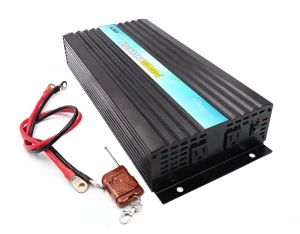
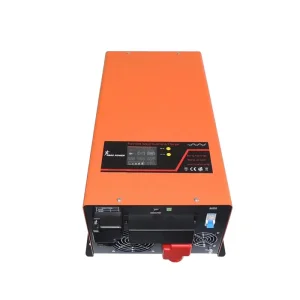
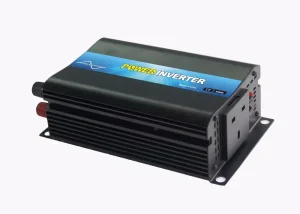
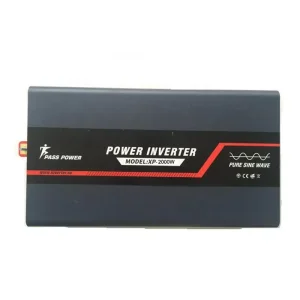
Explore our complete catalog of certified low frequency, high frequency, and intelligent charging products available for wholesale supply and direct export to the Sultanate of Oman.
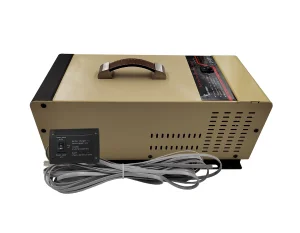
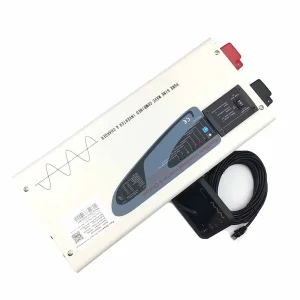
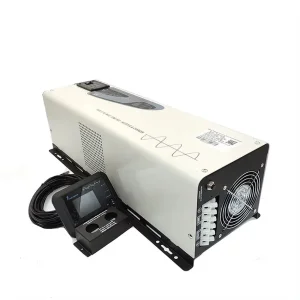
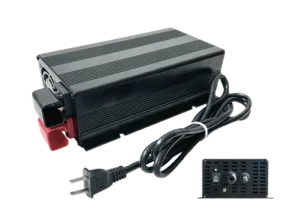
Key engineering insights for Omani importers, electrical contractors, and solar EPC system integrators.
Oman’s interior regions experience extreme ambient heat (up to 50°C+) and fine silica dust storm exposure. Low-frequency inverters use heavy toroidal copper transformers that handle high operating temperatures with lower thermal derating. Furthermore, their 300% to 500% surge capacity allows them to start heavy inductive loads—such as air conditioners and submersible water pumps—without tripping or overheating sensitive power switching components.
Oman operates primarily on a 240V single-phase (or 230V nominal) and 415V three-phase grid system at a fundamental frequency of 50Hz. Our low-frequency inverters exported to Oman can be factory-configured to precise 230V/240V AC 50Hz outputs with tight voltage regulation (±3%), guaranteeing full compatibility with Omani domestic appliances and industrial tools.
Yes. Our low-frequency inverter chargers feature integrated automatic transfer switches (ATS) and programmable dry contacts for generator auto-start. When solar output drops or battery banks reach a preset Low Voltage Disconnect (LVD), the inverter automatically signals the generator to start, synchronizes AC phase input, supplies load power, and recharges the battery bank concurrently.
Galvanic isolation physically separates the direct current (DC) battery circuit from the alternating current (AC) output circuit using copper transformer windings. This prevents high DC voltages from leaking into household AC wiring during a fault, protects the battery management system (BMS) from AC grid voltage spikes, and dramatically reduces EMI noise in telecommunication setups.
Standard OEM production lead times range from 15 to 25 business days depending on custom specifications (e.g., custom branding, voltage tuning, or enclosure color). Sea freight shipments from Shanghai/Ningbo ports to Sohar Port or Port Sultan Qaboos typically take 18 to 22 days, supported by complete shipping documentation (Form E/COO, CE certificates, packing lists) for streamlined customs processing.
Whether you are expanding an off-grid solar supply business in Muscat, sourcing heavy-duty power electronics for PDO oilfield projects, or outfitting agricultural farms in Salalah, our engineering team provides full OEM/ODM technical backing and factory-direct pricing.
Send Inquiry Now